Dr. Gymbro
A calm, modern editorial still life shot from a slightly elevated angle on a pale oak tabletop, bathed in soft natural window light from the left. At center sits a clear glass of water beside a small matte ceramic bowl holding a mound of fine white creatine powder, with a wooden scoop resting next to it and a few loose grains dusted across the surface. To the right, a neatly arranged printed lab report on cream paper, with blurred rows of numbers and a single line highlighted in soft coral pink marker, partially overlapped by a minimalist silver pen. A folded pair of thin-framed glasses sits at the edge of the paper. In the foreground, a small glass vial with a pale amber liquid sample and a second empty vial stand upright, suggesting blood and urine testing, with gentle refraction and soft caustic light on the wood. Behind them, a sprig of eucalyptus in a small stone vase adds a touch of green. The background is a softly blurred, warm off-white wall with a gentle gradient shadow and a hint of a window frame. The palette is muted and refined: warm creams, sage green, soft coral, pale amber, and light oak, with crisp whites in the powder. Shallow depth of field, with the powder bowl and highlighted lab line in sharp focus and the edges falling away into creamy blur. Generous negative space on the right third of the composition for text overlay. The overall feel is clean, trendy health-journal photography, tactile and editorial, with subtle film-like grain, natural shadows, and a quiet, reassuring mood. No people, no text legible, no futuristic elements.
supplements

Creatina elevou marcadores renais em 26 estudos – provavelmente não causa danos

Dr. Gymbro · · 5 min read

Imagine: você toma creatina há alguns meses, faz um exame de sangue de rotina e a creatinina está mais alta. Seu eGFR – número que os médicos usam para avaliar a função renal – parece pior do que deveria para um praticante saudável. É um jeito fácil de se convencer a abandonar um suplemento que tem bastante evidência a seu favor.

Uma nova revisão sistemática e meta‑análise publicada em International Urology and Nephrology (2026) explica por que isso acontece. Ela reuniu 26 ensaios controlados randomizados, totalizando 1.036 participantes. A creatina realmente elevou a creatinina sérica e reduziu o eGFR calculado a partir da creatinina. Mas, quando os pesquisadores mensuraram a filtração renal com um método mais direto, a queda não se manifestou.

Os Números Alarmantes

Em comparação ao placebo, a suplementação com creatina esteve associada a:

  • Creatinina sérica aumentada em 0,14 mg/dL (IC 95 % 0,05 a 0,22; P = 0,002)
  • GFR baseado em creatinina reduzido em 10,75 mL/min (IC 95 % –17,48 a –4,02; P = 0,002)

Se você vir esses valores em um laudo sem contexto, pode entrar em pânico. Uma queda de cerca de 11 mL/min no eGFR é o tipo de mudança que faria um médico investigar mais a fundo. O detalhe está no que mais os autores mediram.

O Giro: GFR de Referência Não Mudou

A equipe separou os resultados de eGFR conforme o método de medição. Equações baseadas em creatinina estimam a filtração a partir de um marcador sanguíneo. O GFR por Cr‑EDTA usa um traçador para mensurar a filtração de forma mais direta e é geralmente considerado o método de referência.

Pelo Cr‑EDTA, não houve diferença significativa entre creatina e placebo (diferença média 5,89 mL/min; IC 95 % –0,30 a 12,08; P = 0,06). A estimativa pontual tende a um GFR maior com creatina, embora não tenha atingido significância e o intervalo seja amplo.

Os demais marcadores renais também não mostraram diferenças significativas: ureia sérica, albuminúria, proteinúria e creatinina urinária. Os autores concluíram que os achados "provavelmente refletem alteração no metabolismo da creatinina, e não lesão renal".

Por que a Creatina Faz a Creatinina Parecer Pior

A creatinina é um produto de degradação da creatina. Seu corpo converte continuamente uma pequena fração do estoque de creatina – que fica majoritariamente nos músculos – em creatinina, que os rins então eliminam. Ao suplementar com creatina, você aumenta a matéria‑prima, de modo que mais creatinina pode aparecer no sangue mesmo que os rins estejam filtrando exatamente como antes.

O problema é que as equações padrão de eGFR assumem que a creatinina reflete apenas a depuração renal, com massa muscular e dieta em médias gerais. Elas não sabem que você está suplementando. Quando a creatinina sobe por razões metabólicas, a fórmula interpreta isso como filtração reduzida. É um artefato de medida, não evidência de dano.

Os dados urinários corroboram essa interpretação. Os autores não encontraram mudanças relevantes na albuminúria ou proteinúria, que são marcadores que normalmente se alteram quando o tecido renal está estressado ou lesionado.

Advertências: Heterogeneidade e Limites

Isso não é um cheque em branco, e o artigo tem limitações que vale a pena apontar.

  • Os resultados de creatinina sérica foram altamente heterogêneos (I² = 93,9 %). Os ensaios diferiram bastante quanto ao aumento da creatinina, de modo que os 0,14 mg/dL são uma média, não uma garantia.
  • O eGFR baseado em creatinina foi consistente entre os estudos (I² = 0 %), e a heterogeneidade do Cr‑EDTA foi baixa (I² = 6,3 %).
  • O intervalo de confiança do Cr‑EDTA é amplo e seu valor‑p está em 0,06. Isso não prova a ausência de efeito, apenas que não detectamos dano nos dados disponíveis.
  • O resumo não detalha os protocolos de dose ou a duração dos ensaios, portanto não pode falar sobre uso muito prolongado ou doses muito altas.

Os autores descrevem este trabalho como a meta‑análise mais abrangente sobre o tema até hoje, e a primeira a estratificar o eGFR pelo método de medição. Essa estratificação é a principal contribuição.

E Quanto às Pessoas com Doença Renal?

A revisão incluiu tanto pessoas saudáveis quanto pacientes com doença renal crônica (DRC). No subgrupo de hemodiálise, a creatina foi associada a um aumento significativo da creatinina sérica, enquanto a ureia sérica foi significativamente reduzida. Não indica dano, mas é um achado específico desse subgrupo e não deve ser generalizado para todas as pessoas com problemas renais.

Se você tem DRC, transplante, um rim único ou qualquer condição renal diagnosticada, converse com seu nefrologista antes de suplementar. A creatinina é o marcador que eles usam para acompanhar a doença, e a creatina pode confundi‑lo. Eles podem preferir outra estratégia de monitoramento.

Dicas Práticas para Levantadores

  1. Use doses baseadas em evidência. A faixa padrão é de 3 a 5 g/dia de creatina monohidratada. Mais não significa mais benefício.
  2. Informe ao seu médico que você toma creatina antes dos exames de sangue. Uma anotação no formulário de intake pode evitar um susto desnecessário e uma cascata de exames adicionais.
  3. Pergunte sobre a cistatina C. Esse marcador de função renal não depende da massa muscular nem da ingestão de creatina como a creatinina, oferecendo uma leitura mais limpa. Um eGFR baseado em cistatina C é uma opção razoável se o número baseado em creatinina parecer estranho.
  4. Olhe o quadro completo. Ureia normal, ausência de proteína na urina e ausência de albuminúria contam tanto quanto um único valor de creatinina.
  5. Hidrate‑se adequadamente e evite combinar com outros estressores renais, como uso intenso de AINES sem orientação médica.
  6. Se você já tem doença renal, obtenha liberação médica primeiro. Este é o único grupo em que "provavelmente seguro" não é padrão suficiente para auto‑experimentação.

Conclusão

A creatina altera os números do seu exame de sangue. Em 26 ensaios randomizados ela elevou a creatinina sérica e diminuiu o eGFR baseado em creatinina, mas a filtração medida diretamente, a ureia, a albuminúria e a proteinúria não mostraram mudanças significativas. A explicação mais plausível é que seu teste laboratorial está captando o metabolismo da creatina, não lesão renal.

Para levantadores saudáveis, isso é tranquilizador, desde que o médico saiba o que você está tomando e interprete os resultados de forma adequada. Para quem tem doença renal, é motivo para uma conversa mais cuidadosa, não para abandonar a suplementação.
Original study

Read the original research on pubmed.ncbi.nlm.nih.gov →

This article summarizes published research for general information. It is not medical advice.

DG

Written by

Dr. Gymbro

Dr. Gymbro writes for Dr. Gymbro: science-backed fitness, nutrition & performance.

Related Articles

A bright, modern editorial still life shot from a slightly elevated angle on a pale warm-gray stone countertop, bathed in soft natural window light with gentle diffused shadows. In the center, a small glass bowl holds a scatter of translucent golden-amber fish oil softgel capsules, a few spilled casually onto the surface and catching the light like tiny glowing beads. Beside the bowl sits a single chrome dumbbell with a matte finish, slightly out of focus, and a neatly folded charcoal gym towel. To the left, a clean arrangement of alternative "better spent" items: a ceramic dish of raw eggs, a wedge of salmon fillet on a wooden board with a sprig of dill, and a small bowl of Greek yogurt with a spoon, all styled with restraint. A minimalist notebook with a thin pen lies at the right edge, with faint, abstract pencil-drawn bar charts and a flat horizontal line suggesting "no effect," legible only as soft shapes with no readable text. The color palette is muted and sophisticated: warm cream, soft sage green, sandy beige, and pops of golden amber from the capsules, with a single accent of coral from the salmon. Shallow depth of field keeps the capsules crisp while the background melts into a creamy blur of a sunlit kitchen with a hint of green plant leaves. The composition leaves generous negative space on the right third for title overlay, in a 16:9 landscape format. The mood is calm, thoughtful, and quietly skeptical, in the style of a contemporary health and science magazine, with a crisp editorial photography look, fine grain, and natural color grading. No people, no futuristic elements, and no text.
science research

Óleo de Peixe para Ganhos? 8 Estudos Dizem: Não Conte com Ele

BY DR. GYMBRO ·

O óleo de peixe tem sido divulgado como potencializador de recuperação e crescimento muscular, mas uma nova meta‑análise publicada em *Nutrition* demonstra que as evidências não sustentam essa promessa. Ao analisar quatro ensaios sobre massa magra e oito ensaios (22 efeitos) sobre força em adultos saudáveis não obesos, os pesquisadores não encontraram benefício claro em nenhum dos dois. O resultado para força ficou praticamente nulo, enquanto a estimativa para massa magra foi imprecisa demais para tirar conclusões. A certeza da evidência é muito baixa, o que não prova a ausência de efeito, mas também não justifica comprar óleo de peixe para ganhar músculo. Veja o que os números realmente significam e onde seu dinheiro rende melhor.

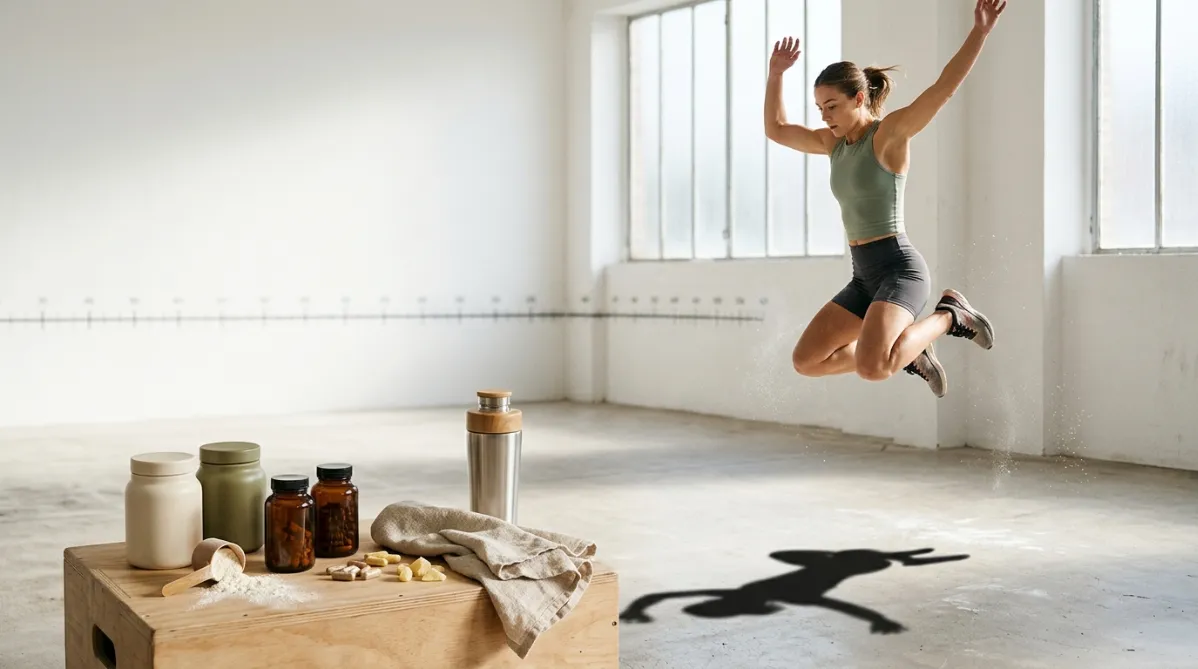
A wide, editorial-style photograph of a female athlete captured mid-jump in a bright, minimalist indoor training space with pale concrete floors and tall frosted windows that let in soft diffused morning light. She is frozen at the peak of a countermovement jump, knees tucked slightly, arms swinging upward, wearing a fitted sage-green training top and charcoal shorts. Her shadow stretches long on the floor below her, which emphasizes the height of the leap.

In the foreground at the lower left, a clean arrangement of supplement items sits on a light oak wooden plyo box: several matte, unlabeled ceramic jars and small amber glass bottles in cream, terracotta, and muted olive tones. Loose white powder is spilled in a soft arc beside a wooden scoop. A few capsules and a small pile of pale yellow beet-colored crystals add texture. Beside them are a folded linen towel and a stainless steel shaker bottle. The items are slightly out of focus, which creates shallow depth of field and leads the eye toward the athlete in the mid-ground.

The color palette is warm and modern: creamy off-white, soft sand, sage green, and subtle terracotta accents, with gentle natural shadows. The background is a clean, slightly blurred wall with a thin horizontal line of light, which suggests a measuring-stick rhythm without literal numbers. Fine particles of chalk dust hang in the air around her feet, lit by a shaft of sunlight.

The composition follows the rule of thirds, with the athlete on the right third and open negative space on the upper left, suitable for headline overlay. The style is contemporary lifestyle and sports-science journal photography, with a crisp, high-resolution, soft-contrast, matte finish and a subtle film-like grain. The mood is calm, premium, and trustworthy, in the spirit of a modern health and performance publication.
science research

Melhores Suplementos para Altura de Salto e Potência: A Surpresa do HMB e da Betaína

BY DR. GYMBRO ·

Uma enorme meta‑análise de rede com 119 ensaios avaliou suplementos para salto e potência e revelou resultados inesperados. O HMB liderou o ganho de potência (64,7 W) e a betaína ficou em primeiro no salto com contra‑movimento (+3,7 cm). Creatina, beta‑alanina, vitamina D e cafeína também apresentaram benefícios, embora a confiança nas evidências fosse baixa na maioria das comparações. O destaque para o ferro vem de um único estudo, devendo ser interpretado com cautela.

A softly lit, minimalist strength-training studio photographed in a modern editorial style. In the foreground, a matte black barbell loaded with weight plates rests on a light oak platform, with fine chalk dust floating in warm morning light. Beside it on a pale concrete bench sits a simple ceramic scoop of white creatine powder, with a small spill of fine crystals catching the light, next to a minimal frosted glass jar with no label. A matte sage-green shaker bottle and a folded cream towel sit nearby. In the soft-focus background, tall windows let in diffused golden sunlight, casting long, gentle shadows across the floor. A rack of neatly arranged dumbbells is blurred in muted charcoal tones.

The color palette is calm and sophisticated: warm off-white, sand, sage green, soft charcoal, and touches of terracotta. A small open notebook with a pencil lies on the bench, suggesting research and data tracking, with abstract hand-drawn bar graph lines faintly visible on the page but not legible. The composition follows the rule of thirds, with the barbell and powder on the left and generous negative space on the right for headline text. Shallow depth of field, crisp textures on the metal knurling and powder grains, subtle film grain, and a contemporary wellness-magazine look. Clean, airy, and editorial, with a grounded, scientific yet approachable mood. Landscape 16:9 composition.
science research

Creatina e Levantamento: Mais Força, sem Estratégia de Dosagem Vencedora

BY DR. GYMBRO ·

Uma meta‑análise de 63 estudos com 1.489 participantes investigou quanto a creatina acrescenta ao treinamento de resistência. O ganho de força foi moderado e consistente tanto na parte superior quanto na inferior do corpo, enquanto o aumento da massa magra foi menor e a massa de gordura não mudou significativamente. Surpreendentemente, a estratégia de dosagem, a dose diária e o protocolo não influenciaram os resultados. A idade foi o único indício exploratório, com efeitos de força maiores em participantes mais jovens. Veja o que o estudo realmente encontrou e o que ele não pode afirmar.

A bright, minimalist flat-lay photograph of two supplement scoops on a pale warm-gray stone surface, shot from directly above in soft natural window light. On the left, a matte ceramic scoop holds fine white creatine monohydrate powder, heaped in a clean mound. On the right, a second scoop of the same shape holds slightly coarser off-white beta-alanine powder, with a small, deliberate gap between the two. Each scoop sits in its own soft shadow, which suggests separation rather than combination. Between them, a thin brushed-brass ruler or a single slim line of fine powder runs across the surface and subtly divides the composition.

Around the scoops, a few restrained props in a muted editorial palette of sage green, cream, terracotta, and soft charcoal: a small glass jar with a minimalist label that has no readable text, a folded linen napkin, a single sprig of eucalyptus, and a stainless-steel shaker bottle softly out of focus in the upper corner. A few loose powder grains are scattered naturally across the stone. A small stack of blank cream index cards with a pencil rests in the lower right, hinting at research and note-taking without any legible writing.

The composition follows a clean rule-of-thirds layout, with generous negative space on the right third for headline overlay. The lighting is gentle and diffused, with long, soft shadows falling to the lower left. The color grading is calm and slightly desaturated, with creamy highlights and a subtle film-like grain. The overall look is a modern wellness and science journal cover, with an airy, trustworthy, contemporary editorial feel, shallow depth of field, and crisp detail on the powders.
nutrition

Creatina + Beta‑Alanina: O Bônus de Combinação que os Pesquisadores Não Encontraram

BY DR. GYMBRO ·

A combinação de creatina e beta‑alanina é divulgada como o casal‑potência para a performance, mas uma nova meta‑análise de rede com 52 ensaios randomizados não encontrou sinergia entre elas. A creatina, isolada, melhorou significativamente sprint, salto, sprints repetidos e resistência muscular da parte superior em comparação ao placebo. Os efeitos da beta‑alanina foram não significativos ou dependentes do contexto, e a combinação não acrescentou nada além da criatina. Veja o que o estudo fez, suas limitações e o que isso significa para o seu orçamento de suplementos.

This page is available in