Dr. Gymbro
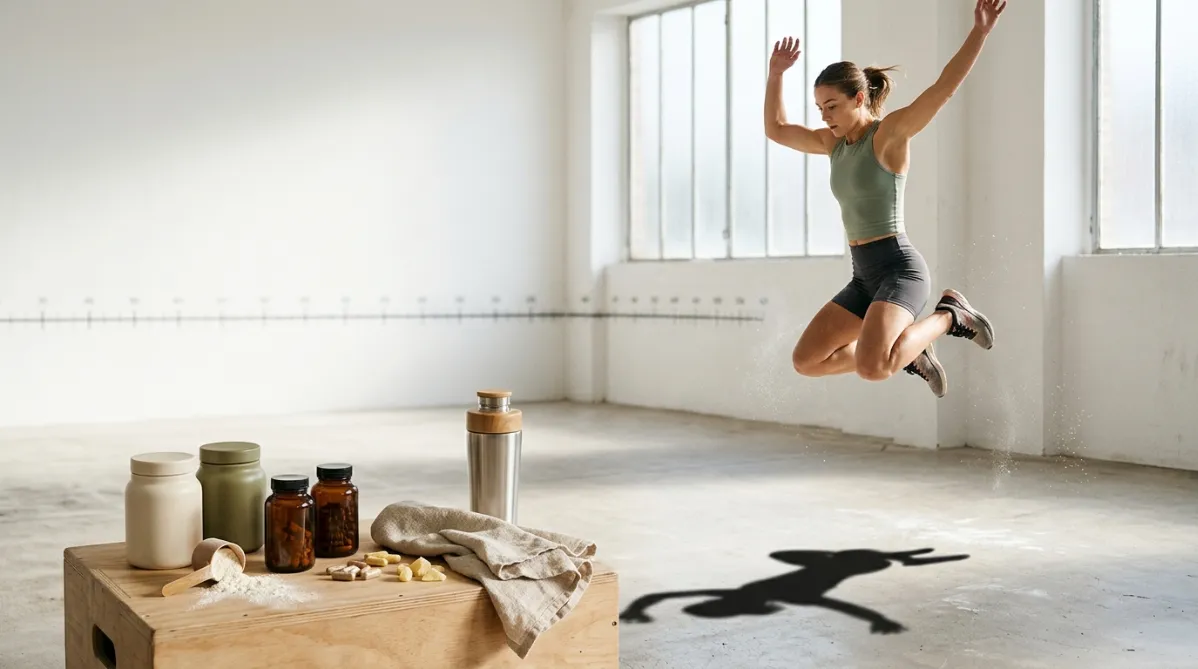
A wide, editorial-style photograph of a female athlete captured mid-jump in a bright, minimalist indoor training space with pale concrete floors and tall frosted windows that let in soft diffused morning light. She is frozen at the peak of a countermovement jump, knees tucked slightly, arms swinging upward, wearing a fitted sage-green training top and charcoal shorts. Her shadow stretches long on the floor below her, which emphasizes the height of the leap.

In the foreground at the lower left, a clean arrangement of supplement items sits on a light oak wooden plyo box: several matte, unlabeled ceramic jars and small amber glass bottles in cream, terracotta, and muted olive tones. Loose white powder is spilled in a soft arc beside a wooden scoop. A few capsules and a small pile of pale yellow beet-colored crystals add texture. Beside them are a folded linen towel and a stainless steel shaker bottle. The items are slightly out of focus, which creates shallow depth of field and leads the eye toward the athlete in the mid-ground.

The color palette is warm and modern: creamy off-white, soft sand, sage green, and subtle terracotta accents, with gentle natural shadows. The background is a clean, slightly blurred wall with a thin horizontal line of light, which suggests a measuring-stick rhythm without literal numbers. Fine particles of chalk dust hang in the air around her feet, lit by a shaft of sunlight.

The composition follows the rule of thirds, with the athlete on the right third and open negative space on the upper left, suitable for headline overlay. The style is contemporary lifestyle and sports-science journal photography, with a crisp, high-resolution, soft-contrast, matte finish and a subtle film-like grain. The mood is calm, premium, and trustworthy, in the spirit of a modern health and performance publication.
Science & Research

Melhores Suplementos para Altura de Salto e Potência: A Surpresa do HMB e da Betaína

Dr. Gymbro · · 4 min read

Melhores Suplementos para Altura de Salto e Potência: A Surpresa do HMB e da Betaína

Se você perguntar à maioria dos praticantes de musculação qual suplemento faz você saltar mais alto, a resposta costuma ser creatina, e pouca gente menciona outra coisa. Uma nova meta‑análise bayesiana de rede, publicada no Journal of the International Society of Sports Nutrition, complica essa história. Ao reunir 119 ensaios randomizados, os autores descobriram que o HMB liderou em potência máxima e a betaína ficou em primeiro no salto com contra‑movimento, enquanto a creatina mostrou-se uma opção sólida, porém menos dominante. O título chama a atenção; o que realmente importa é o detalhamento dos resultados.

O que o estudo fez

Pesquisadores da Guangzhou Sport University e colaboradores buscaram, em quatro bases de dados principais, ensaios controlados randomizados com pessoas saudáveis, fisicamente ativas e atletas. Construíram quatro redes distintas, uma para cada desfecho: potência máxima (PP), potência máxima relativa (RPP), salto vertical (VJ) e salto com contra‑movimento (CMJ). As redes continham, respectivamente, 47, 33, 31 e 44 estudos; alguns ensaios alimentaram mais de uma rede.

Uma meta‑análise de rede permite comparar suplementos que nunca foram testados frente a frente ao vinculá‑los por um placebo comum. Isso é poderoso, mas também estica dados escassos. A equipe avaliou a confiança usando o CINeMA e o risco de viés com o RoB 2. Essa é a lente pela qual todos os números abaixo devem ser lidos.

O ranking por desfecho

Potência máxima (absoluta, em watts)

  1. HMB: +64,7 W vs. placebo (IC 95% = 19,15 a 110,50)
  2. Beta‑alanina: efeito favorável

Potência máxima relativa (W/kg)

  1. HMB: +0,84 W/kg (IC 95% = 0,42 a 1,28)
  2. Creatina: efeito favorável
  3. Vitamina D: efeito favorável

Salto com contra‑movimento (CMJ)

  1. Betaína: +3,72 cm (IC 95% = 1,24 a 6,18)
  2. Creatina, cafeína, cafeína + Rhodiola rosea, palmitoiletanolamida e suplementos multi‑ingrediente também apresentaram intervalos credíveis que excluíam zero.

Salto vertical (VJ)

  1. Ferro: +6,81 cm (IC 95% = 0,84 a 12,83) – veja a ressalva abaixo.

Os autores não publicaram um pódio geral e alertam que rankings isolados não devem guiar regimes individuais. As listas acima apenas mostram quais compostos superaram o limiar dentro de cada rede.

Por que o HMB é a surpresa

O HMB, metabólito da leucina frequentemente divulgado para preservação muscular e recuperação, liderou ambas as redes de potência. Mais importante, foi a descoberta mais robusta: o efeito do HMB para potência máxima relativa manteve‑se em múltiplas análises de sensibilidade, e as comparações de HMB para PP e RPP receberam classificação de certeza moderada. Em um conjunto onde 1.564 de 1.636 comparações pareadas foram avaliadas como de certeza muito baixa, moderado faz diferença.

Uma explicação plausível é que os benefícios do HMB surgem em praticantes treinados durante blocos de treino pesado, quando menor dano muscular e melhor recuperação se traduzem em maior output de potência ao longo de semanas. Essa é uma hipótese, não algo que a análise prova.

Betaína e creatina: o contexto importa

O ganho de 3,7 cm da betaína no CMJ é grande para um composto barato e amplamente disponível. Contudo, os autores observaram que algumas comparações favoráveis tinham intervalos de predição que incluíam zero ou enfraqueciam em análises de sensibilidade. Ou seja, um futuro ensaio poderia plausivelmente não encontrar efeito algum. A betaína parece promissora, ainda não está resolvida.

A creatina não "perdeu" tanto; ela melhorou a potência máxima relativa e o salto com contra‑movimento, e tem, de longe, a base de evidências mais sólida para força e composição corporal fora deste artigo. Um modelo de rede que distribui crédito entre muitos compostos não apaga décadas de dados. O sinal da beta‑alanina para potência máxima e o da vitamina D para potência relativa são consistentes com a literatura existente, embora a vitamina D provavelmente ajude principalmente quem está deficiente.

O resultado do ferro: leia com cautela

O maior aumento de salto, +6,81 cm com ferro, baseia‑se em apenas um estudo direto. O intervalo credível amplo (0,84 a 12,83) reflete alta incerteza. O ferro é vital para quem tem deficiência, e corrigir essa deficiência pode restaurar desempenho. Não é um impulsionador de salto comprovado para atletas com níveis adequados de ferro, e suplementação desnecessária traz riscos reais. Considere isso como hipótese para populações deficientes e nada mais.

Avisos de certeza

Só 17 de 1.636 comparações foram avaliadas com certeza moderada, 55 com baixa e o restante com muito baixa. Os autores também ressaltam que diferenças entre redes não podem estabelecer que o tipo de desfecho altera o efeito de um suplemento. Um composto que aparece em uma rede e não em outra pode refletir quais estudos mediram qual teste. As ligações exploratórias entre nível de treinamento e esporte foram limitadas por escassez de dados.

Dicas práticas por suplemento

  • HMB: opção defensável para potência, sobretudo em atletas treinados em fases de carga alta. Espere ganhos modestos e graduais, não transformações da noite para o dia.
  • Betaína: baixo custo e vale a tentativa se o objetivo for altura de salto. Monitore seu próprio CMJ por algumas semanas para verificar resposta.
  • Creatina: ainda a base mais segura e estudada. Seus benefícios de salto e potência relativa são um acréscimo aos ganhos de força.
  • Beta‑alanina: mais relevante para esforços de duração moderada; seu efeito aqui foi sobre potência máxima.
  • Vitamina D: teste seus níveis antes. Suplementar se estiver baixo, ao invés de esperar aumento de potência quando já está suficiente.
  • Cafeína: auxílio agudo confiável; o efeito no salto é menor e menos certo.
  • Ferro: só se exames de sangue revelarem deficiência e um profissional de saúde concordar.

Conclusão

Esta meta‑análise indica que HMB e betaína merecem mais atenção do que recebem, mas não derrubam a creatina, e a maior parte das evidências é de baixa qualidade. Construa sua potência com treino, sono e nutrição completa, e trate os suplementos como pequenos experimentos testáveis.
Original study

Read the original research on pubmed.ncbi.nlm.nih.gov →

This article summarizes published research for general information. It is not medical advice.

DG

Written by

Dr. Gymbro

Dr. Gymbro writes for Dr. Gymbro: science-backed fitness, nutrition & performance.

Related Articles

A bright, modern editorial still life shot from a slightly elevated angle on a pale warm-gray stone countertop, bathed in soft natural window light with gentle diffused shadows. In the center, a small glass bowl holds a scatter of translucent golden-amber fish oil softgel capsules, a few spilled casually onto the surface and catching the light like tiny glowing beads. Beside the bowl sits a single chrome dumbbell with a matte finish, slightly out of focus, and a neatly folded charcoal gym towel. To the left, a clean arrangement of alternative "better spent" items: a ceramic dish of raw eggs, a wedge of salmon fillet on a wooden board with a sprig of dill, and a small bowl of Greek yogurt with a spoon, all styled with restraint. A minimalist notebook with a thin pen lies at the right edge, with faint, abstract pencil-drawn bar charts and a flat horizontal line suggesting "no effect," legible only as soft shapes with no readable text. The color palette is muted and sophisticated: warm cream, soft sage green, sandy beige, and pops of golden amber from the capsules, with a single accent of coral from the salmon. Shallow depth of field keeps the capsules crisp while the background melts into a creamy blur of a sunlit kitchen with a hint of green plant leaves. The composition leaves generous negative space on the right third for title overlay, in a 16:9 landscape format. The mood is calm, thoughtful, and quietly skeptical, in the style of a contemporary health and science magazine, with a crisp editorial photography look, fine grain, and natural color grading. No people, no futuristic elements, and no text.
science research

Óleo de Peixe para Ganhos? 8 Estudos Dizem: Não Conte com Ele

BY DR. GYMBRO ·

O óleo de peixe tem sido divulgado como potencializador de recuperação e crescimento muscular, mas uma nova meta‑análise publicada em *Nutrition* demonstra que as evidências não sustentam essa promessa. Ao analisar quatro ensaios sobre massa magra e oito ensaios (22 efeitos) sobre força em adultos saudáveis não obesos, os pesquisadores não encontraram benefício claro em nenhum dos dois. O resultado para força ficou praticamente nulo, enquanto a estimativa para massa magra foi imprecisa demais para tirar conclusões. A certeza da evidência é muito baixa, o que não prova a ausência de efeito, mas também não justifica comprar óleo de peixe para ganhar músculo. Veja o que os números realmente significam e onde seu dinheiro rende melhor.

A calm, modern editorial still life shot from a slightly elevated angle on a pale oak tabletop, bathed in soft natural window light from the left. At center sits a clear glass of water beside a small matte ceramic bowl holding a mound of fine white creatine powder, with a wooden scoop resting next to it and a few loose grains dusted across the surface. To the right, a neatly arranged printed lab report on cream paper, with blurred rows of numbers and a single line highlighted in soft coral pink marker, partially overlapped by a minimalist silver pen. A folded pair of thin-framed glasses sits at the edge of the paper. In the foreground, a small glass vial with a pale amber liquid sample and a second empty vial stand upright, suggesting blood and urine testing, with gentle refraction and soft caustic light on the wood. Behind them, a sprig of eucalyptus in a small stone vase adds a touch of green. The background is a softly blurred, warm off-white wall with a gentle gradient shadow and a hint of a window frame. The palette is muted and refined: warm creams, sage green, soft coral, pale amber, and light oak, with crisp whites in the powder. Shallow depth of field, with the powder bowl and highlighted lab line in sharp focus and the edges falling away into creamy blur. Generous negative space on the right third of the composition for text overlay. The overall feel is clean, trendy health-journal photography, tactile and editorial, with subtle film-like grain, natural shadows, and a quiet, reassuring mood. No people, no text legible, no futuristic elements.
supplements

Creatina elevou marcadores renais em 26 estudos – provavelmente não causa danos

BY DR. GYMBRO ·

Você começa a tomar creatina, faz exames de sangue e vê a creatinina subir enquanto o eGFR parece pior. Uma meta‑análise de 2026, com 26 ensaios randomizados (1.036 participantes), encontrou exatamente isso: a creatinina aumentou 0,14 mg/dL e o GFR baseado em creatinina caiu cerca de 10,75 mL/min. Contudo, quando a filtração renal foi medida com Cr‑EDTA, a queda não apareceu, e ureia, albuminúria e proteinúria permaneceram inalteradas. Veja por que esse número de laboratório engana, o que dizer ao seu médico e quem deve consultar um nefrologista primeiro.

A softly lit, minimalist strength-training studio photographed in a modern editorial style. In the foreground, a matte black barbell loaded with weight plates rests on a light oak platform, with fine chalk dust floating in warm morning light. Beside it on a pale concrete bench sits a simple ceramic scoop of white creatine powder, with a small spill of fine crystals catching the light, next to a minimal frosted glass jar with no label. A matte sage-green shaker bottle and a folded cream towel sit nearby. In the soft-focus background, tall windows let in diffused golden sunlight, casting long, gentle shadows across the floor. A rack of neatly arranged dumbbells is blurred in muted charcoal tones.

The color palette is calm and sophisticated: warm off-white, sand, sage green, soft charcoal, and touches of terracotta. A small open notebook with a pencil lies on the bench, suggesting research and data tracking, with abstract hand-drawn bar graph lines faintly visible on the page but not legible. The composition follows the rule of thirds, with the barbell and powder on the left and generous negative space on the right for headline text. Shallow depth of field, crisp textures on the metal knurling and powder grains, subtle film grain, and a contemporary wellness-magazine look. Clean, airy, and editorial, with a grounded, scientific yet approachable mood. Landscape 16:9 composition.
science research

Creatina e Levantamento: Mais Força, sem Estratégia de Dosagem Vencedora

BY DR. GYMBRO ·

Uma meta‑análise de 63 estudos com 1.489 participantes investigou quanto a creatina acrescenta ao treinamento de resistência. O ganho de força foi moderado e consistente tanto na parte superior quanto na inferior do corpo, enquanto o aumento da massa magra foi menor e a massa de gordura não mudou significativamente. Surpreendentemente, a estratégia de dosagem, a dose diária e o protocolo não influenciaram os resultados. A idade foi o único indício exploratório, com efeitos de força maiores em participantes mais jovens. Veja o que o estudo realmente encontrou e o que ele não pode afirmar.

A bright, minimalist flat-lay photograph of two supplement scoops on a pale warm-gray stone surface, shot from directly above in soft natural window light. On the left, a matte ceramic scoop holds fine white creatine monohydrate powder, heaped in a clean mound. On the right, a second scoop of the same shape holds slightly coarser off-white beta-alanine powder, with a small, deliberate gap between the two. Each scoop sits in its own soft shadow, which suggests separation rather than combination. Between them, a thin brushed-brass ruler or a single slim line of fine powder runs across the surface and subtly divides the composition.

Around the scoops, a few restrained props in a muted editorial palette of sage green, cream, terracotta, and soft charcoal: a small glass jar with a minimalist label that has no readable text, a folded linen napkin, a single sprig of eucalyptus, and a stainless-steel shaker bottle softly out of focus in the upper corner. A few loose powder grains are scattered naturally across the stone. A small stack of blank cream index cards with a pencil rests in the lower right, hinting at research and note-taking without any legible writing.

The composition follows a clean rule-of-thirds layout, with generous negative space on the right third for headline overlay. The lighting is gentle and diffused, with long, soft shadows falling to the lower left. The color grading is calm and slightly desaturated, with creamy highlights and a subtle film-like grain. The overall look is a modern wellness and science journal cover, with an airy, trustworthy, contemporary editorial feel, shallow depth of field, and crisp detail on the powders.
nutrition

Creatina + Beta‑Alanina: O Bônus de Combinação que os Pesquisadores Não Encontraram

BY DR. GYMBRO ·

A combinação de creatina e beta‑alanina é divulgada como o casal‑potência para a performance, mas uma nova meta‑análise de rede com 52 ensaios randomizados não encontrou sinergia entre elas. A creatina, isolada, melhorou significativamente sprint, salto, sprints repetidos e resistência muscular da parte superior em comparação ao placebo. Os efeitos da beta‑alanina foram não significativos ou dependentes do contexto, e a combinação não acrescentou nada além da criatina. Veja o que o estudo fez, suas limitações e o que isso significa para o seu orçamento de suplementos.

This page is available in