Dr. Gymbro
A wide, editorial-style flat lay photographed from above on a pale warm-gray concrete surface, lit by soft natural window light with gentle long shadows. On the left, two matte ceramic bowls in muted sage green and cream sit side by side. One holds fine white crystalline powder, the other holds slightly coarser off-white powder. Between them, a small brass measuring scoop rests on the surface, dusted with powder. Behind the bowls, two simple amber glass jars with minimal cream labels and no legible text stand slightly out of focus.

On the right side, a pair of chalk-dusted black hex dumbbells and a worn leather lifting strap curve across the frame. A folded charcoal gym towel sits beneath them. A rumpled matte-black shaker bottle lies on its side near the top edge. A slice of watermelon, the natural source of citrulline, sits on a small white ceramic plate in the lower center. Its vivid coral-pink flesh and dark seeds add a saturated pop of color against the neutral palette. A few loose watermelon seeds and a scattering of white powder dust trail across the surface toward the dumbbells, tying the composition together.

In the lower left corner, an open notebook with blank cream pages holds a slim silver pen and a minimalist analog stopwatch. A thin line of hand-drawn tally marks suggests counted reps, with no readable words or numbers.

The palette is restrained and contemporary: warm grays, sage, cream, charcoal, and amber, with the watermelon's coral-pink as the single bright accent. The mood is calm, clean, and precise, like a modern wellness or science-journal feature. Shallow depth of field keeps the powder bowls and watermelon crisp while the background items soften slightly. Generous negative space across the upper center leaves room for a headline overlay. The photograph looks high-end and tactile, with a subtle film-grain finish.
Nutrition

L‑citrulina vs citrulina malato: a virada na resistência de parte superior

Dr. Gymbro · · 5 min read

L‑citrulina vs citrulina malato: a virada na resistência de parte superior

Você já deve ter visto nas prateleiras dos suplementos duas opções: L‑citrulina pura e citrulina malato. Uma costuma ser mais barata por grama de citrulina; a outra vem combinada com o chamado malato, que muitos veem como um diferencial. O marketing das marcas insiste que a forma importa. Um estudo recente de seis semanas, realizado com homens já habituados ao treinamento de resistência, mostra que a realidade é mais sutil – e ao mesmo tempo mais limitada – do que a propaganda sugere.

O estudo em resumo

Publicado em 2025 no Journal of the International Society of Sports Nutrition, o ensaio duplo‑cego, controlado por placebo, foi liderado por Bayat, Azizi, Behpour e Tinsley. Trinta e três praticantes de resistência foram distribuídos aleatoriamente em três grupos diários:

  • L‑citrulina (LC): 8 g por dia
  • Citrulina DL‑malato (CM): 12 g por dia
  • Placebo (PL)

Todos seguiram o mesmo programa de treinamento de resistência durante seis semanas. As avaliações foram feitas antes e depois da intervenção e incluíram:

  • Força: 1RM no hack squat e no bench press
  • Endurance muscular: repetições até a falha no hack squat, leg extension, bench press e incline press
  • Rating of perceived exertion (RPE)
  • Marcadores sanguíneos: lactato, ureia e metabólitos de óxido nítrico (NOx)

O resultado marcante: repetições na parte superior do corpo

O ponto alto do estudo ficou nos exercícios de empurrar. Quando somamos as repetições até a falha no bench press e no incline press, ambos os grupos de citrulina superaram o placebo.

  • LC vs. placebo: p < 0,001
  • CM vs. placebo: p = 0,026

Nos exercícios de perna, o efeito foi menos claro. Para a soma de repetições até a falha no hack squat e no leg extension, o grupo LC apresentou apenas uma tendência (p = 0,070), ou seja, sugestão de benefício, mas sem confirmação estatística.

Em suma, a citrulina parece melhorar a capacidade de fazer mais repetições nos exercícios de empurrão, enquanto a evidência para a parte inferior permanece incerta.

O lado do NOx

Os metabólitos de óxido nítrico (NOx) são usados como proxy sanguíneo para estimar a disponibilidade de óxido nítrico, molécula ligada ao aumento do fluxo sanguíneo e ao “pump” buscado pelos praticantes.

Os dados revelaram:

  • Um efeito ao longo do tempo significativo para NOx nos grupos LC (p = 0,014) e CM (p = 0,003); o placebo não apresentou alteração.
  • Para NOx pós‑exercício ao final do estudo, o CM foi significativamente maior que o placebo (p = 0,009), enquanto o LC ficou apenas marginalmente diferente (p = 0,057).

Os autores concluíram que a citrulina parece elevar tanto a endurance muscular de parte superior quanto a resposta de NOx pós‑exercício, sem diferença clara entre LC e CM nesses desfechos.

O que a citrulina não fez

Esta parte interessa a quem busca ganhar força máxima. O resumo indica que não houve diferenças entre os grupos para nenhuma das demais medidas avaliadas, incluindo:

  • Força 1RM: nenhum grupo teve vantagem no hack squat ou no bench press;
  • RPE: sem diferença;
  • Lactato e ureia: sem diferença.

Se o seu único objetivo é aumentar o peso máximo que você consegue levantar, este estudo não fornece evidência de que a citrulina vá ajudá‑lo. O benefício observado foi restrito ao desempenho em repetições.

A forma importa?

Segundo os autores, não houve diferença aparente entre as duas formas para a endurance de parte superior ou para o NOx pós‑exercício. Alguns detalhes são relevantes:

  • O grupo LC mostrou um sinal estatístico mais forte nas repetições de parte superior (p < 0,001 vs. p = 0,026), mas o artigo não afirma que seja superior.
  • O grupo CM apresentou a maior diferença no NOx pós‑exercício em relação ao placebo.
  • As doses não foram equivalentes (8 g vs. 12 g). Como o citrulina malato contém malato, 12 g de CM entregam menos citrulina pura que 12 g de L‑citrulina.

Na prática, o que vale é saber quanto de citrulina real há em cada dose e comparar o preço por grama efetivo. Não há necessidade de se preocupar excessivamente com a forma, desde que o rótulo seja claro.

Dicas práticas para levantadores

  • Dose: o estudo utilizou 8 g/dia de L‑citrulina ou 12 g/dia de citrulina malato, consumidos diariamente ao longo de seis semanas. Essas são as doses com suporte científico no contexto analisado.
  • Timing: a suplementação foi diária, sem horário pré‑treino definido. Muitos praticantes preferem tomar antes do treino por hábito, mas isso é convenção, não um achado deste ensaio. O que realmente foi testado foi a consistência ao longo das seis semanas.
  • Para quem é indicado:
    • Levantadores que buscam melhorar o número de repetições em exercícios de empurrar (fisiculturistas, praticantes de alta‑repetição);
    • Homens treinados, semelhante à amostra estudada;
    • Quem deseja apoiar os marcadores de óxido nítrico ao redor do treino.
  • Quem deve moderar as expectativas:
    • Atletas focados em força máxima (1RM);
    • Quem espera um grande salto nos treinos de perna, já que o efeito nas pernas foi apenas uma tendência.

Limitações

Antes de repor o estoque, considere as restrições do estudo:

  • Amostra pequena: 33 participantes divididos em três grupos é modesto; ensaios pequenos podem exagerar ou perder efeitos.
  • Apenas homens treinados: os resultados não se aplicam automaticamente a mulheres, iniciantes ou idosos.
  • Duração curta: seis semanas dão pouca informação sobre efeitos a longo prazo.
  • Doses desbalanceadas: 8 g de LC vs. 12 g de CM dificulta comparações diretas.
  • Marcadores sanguíneos não são músculo: NOx é medida indireta, e o artigo não demonstra que níveis mais altos tenham causado as repetições extras.

Conclusão

Neste ensaio, tanto a L‑citrulina (8 g/dia) quanto a citrulina malato (12 g/dia) ajudaram homens treinados a executar mais repetições em exercícios de parte superior ao longo de seis semanas e aumentaram as respostas de NOx, sem que uma forma se mostrasse claramente superior. Elas não aumentaram a força máxima, o RPE, o lactato ou a ureia em comparação ao placebo. Trata‑se de um sinal promissor para a endurance muscular, mas um único estudo pequeno não fornece a palavra final. Replicações em grupos maiores e mais diversificados esclarecerão o real alcance desses achados.
Original study

Read the original research on pubmed.ncbi.nlm.nih.gov →

This article summarizes published research for general information. It is not medical advice.

DG

Written by

Dr. Gymbro

Dr. Gymbro writes for Dr. Gymbro: science-backed fitness, nutrition & performance.

Related Articles

A bright, minimalist editorial still life shot from a slightly elevated three-quarter angle on a pale oat-colored stone countertop, bathed in soft natural window light with gentle long shadows. In the center sit two matching matte white supplement scoops, side by side. One is heaped with fine white crystalline powder, the other holds an almost identical pile, so the viewer is invited to compare them. Beside them are two simple frosted glass tumblers of cloudy water, each with a small whisper of powder swirling at the bottom. A third glass of clear water sits slightly apart, as a quiet nod to the placebo.

Scattered around the scene are fresh, sliced watermelon wedges with vivid coral-pink flesh and pale green rinds, and a few sliced green apples with crisp white interiors, hinting at the natural sources of citrulline and malic acid. A small brushed-brass measuring spoon and a minimalist matte sage-green shaker bottle rest at the edge of the frame. Off to one side, a clean ceramic dish holds a few loose grains of powder, and a slim linen notebook with a pencil lies open to a blank page, suggesting data and study notes without any legible text.

The color palette is soft and modern: warm cream, blush coral, sage green, and touches of brass, with a faintly blurred background of a sunlit kitchen or studio with a pale plaster wall. Shallow depth of field keeps the scoops tack sharp while the background melts into a creamy bokeh. The composition leaves generous negative space on the left third of the frame for a title overlay. The overall mood is calm, trustworthy, and trendy, like a contemporary wellness and science journal cover, with crisp detail, subtle film-like grain, and a clean, airy, balanced feel.
science research

Citrulina Malato vs L‑Citrulina: o Malato Realmente Importa?

BY DR. GYMBRO ·

Citrulina malato ou L‑citrulina pura? Um ensaio clínico randomizado, duplo‑cego e cruzado, com 43 praticantes treinados comparou as duas formas ao placebo. Nenhuma delas melhorou força, potência, salto, repetições ou a percepção de esforço, e o malato não trouxe nenhum benefício adicional à citrulina. Confira o que foi medido, as doses usadas e as limitações que impedem conclusões definitivas. Se ainda está em dúvida sobre o que colocar no shaker, este é o ponto de partida.

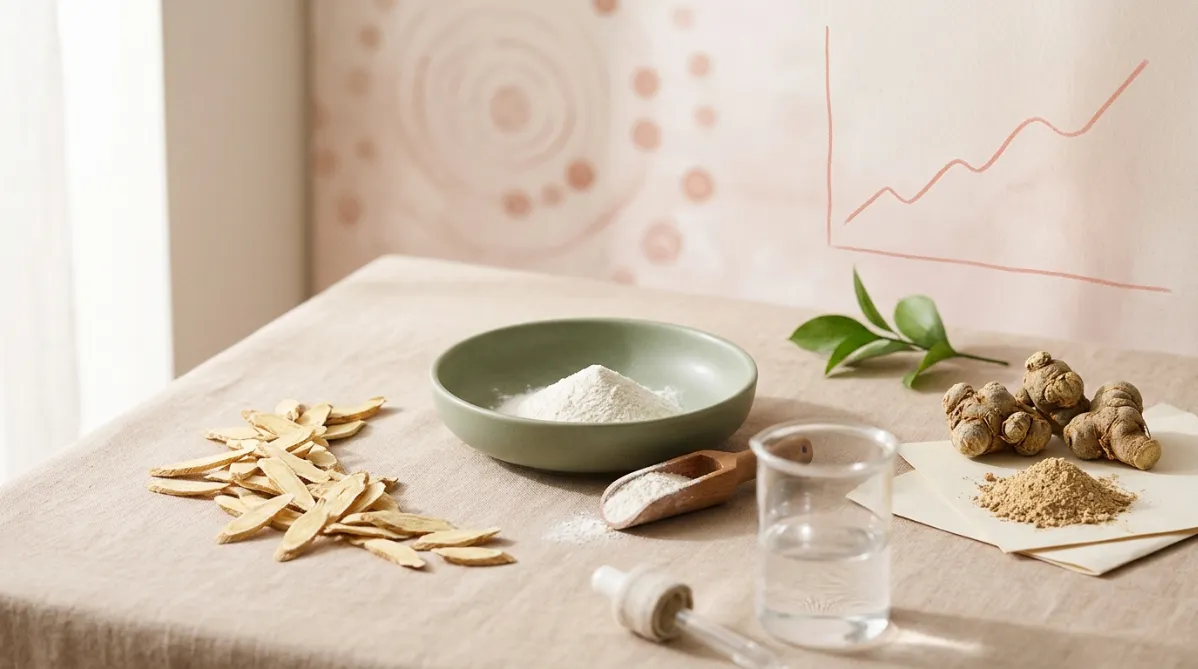
A landscape editorial still life on a soft, warm oat-colored linen surface, lit by diffused natural window light from the left. In the center sits a shallow matte ceramic bowl in muted sage green holding a small mound of fine white arginine powder. Beside it rests a wooden scoop dusted with powder. To the left, a loose arrangement of dried Astragalus root slices, pale golden and delicate, fans out in a graceful curve. To the right, a few whole Panax notoginseng roots, knobbly and earthy brown, sit next to a small pile of finely ground tan powder on a folded cream paper. A single sprig of fresh green leaf adds a gentle accent in the background.

In the foreground, a minimalist glass beaker with clear water and a thin linen-wrapped glass dropper sit slightly out of focus. Behind the objects, a softly blurred backdrop in pale blush and sand tones carries a faint, abstract pattern of soft circular shapes, like ripples or molecular dots drawn in subtle terracotta ink. A thin hand-drawn line graph in dusty coral rises gently across the upper right of the background, as if sketched on textured paper, with no readable text.

The composition uses generous negative space on the upper left, which leaves room for a headline overlay. The palette is earthy and calm: sage, cream, terracotta, honey gold, and soft blush. The shallow depth of field gives creamy bokeh. Gentle shadows fall to the right. The overall feel is clean and contemporary, like a wellness and science journal cover, with subtle film grain, high-end editorial photography, and tactile natural textures.
nutrition

O suplemento que elevou a absorção de arginina em 17 % em um pequeno estudo

BY DR. GYMBRO ·

Um estudo crossover de 2023 revelou que a combinação de 5 g de arginina com saponinas de Astrágalo e Panax notoginseng aumentou a absorção de arginina em 17,3 % e elevou a relação arginina/ADMA em 167,1 %. Os marcadores urinários de óxido nítrico – nitrato e cGMP – também subiram. Contudo, apenas 24 participantes foram analisados depois da exclusão de seis indivíduos por diferenças individuais marcantes, e nenhum teste de performance foi realizado. Descubra o que os dados realmente mostram, o que fica de fora e para quem pode valer a pena reconsiderar a inclusão desse aditivo.

A wide, editorial-style still life photographed on a pale limestone countertop in soft morning window light. At the center sits a matte white scoop of fine white powder resting beside a frosted glass tumbler of cloudy, pale pink-orange water, with a few watermelon slices and a halved wedge showing glossy coral flesh and thin green rind, a nod to citrulline's natural source. To the left, a neatly folded charcoal gym towel and a brushed steel dumbbell rest at the edge of the frame, slightly out of focus. To the right, a minimalist open notebook with a few hand-drawn tally marks and a simple line graph sketched in black ink rises toward the right edge, next to a slim mechanical pencil and a small analog stopwatch with a clean white face. A few loose grains of powder are scattered across the stone, catching the light. Soft diagonal shadows fall across the surface from a nearby window, and a gentle sage-green wall in the background adds calm contrast. The palette is warm cream, watermelon coral, sage green, and soft graphite gray, with plenty of negative space on the upper left for headline overlay. Shallow depth of field, crisp focus on the powder scoop and watermelon, subtle film grain, natural tones, and a clean, modern wellness-journal aesthetic. Shot at eye level with a slight downward angle, like a contemporary health and science magazine cover. No text, no logos, no people.
nutrition

8 g de Citrulina Malato = 53 % Mais Repetições e 40 % Menos Dor Muscular? O Que o Estudo Revela

BY DR. GYMBRO ·

Um ensaio cruzado de 2010 constatou que 8 g de citrulina malato foram associados a cerca de 53 % a mais de repetições no supino na última série avaliada e aproximadamente 40 % menos de dor muscular 24 h e 48 h depois. O detalhe importante é que o maior ganho de repetições apareceu apenas nas fases finais da sessão, quando a fadiga já estava instalada. A seguir, explicamos o que realmente foi testado, como usar a dose e o timing de forma sensata, quem pode se beneficiar e por que a taxa de 14,63 % de desconforto gastrointestinal e as limitações do estudo merecem atenção.

A wide, softly lit editorial still life on a pale warm-gray concrete surface, shot from a slightly elevated three-quarter angle. In the center-left, two matte ceramic scoops sit side by side. One holds fine ivory whey powder, the other holds slightly coarser, pale golden collagen peptide powder. A small, elegant dusting of both powders spills between them and blends into a soft swirl. Behind them, three minimalist cream and sage-green supplement tubs with no legible text stand in a staggered row, with a frosted glass shaker bottle of creamy liquid beside them.

On the right, a brushed-steel barbell plate and a compact chalk-dusted kettlebell rest slightly out of focus, suggesting resistance training. Pale wisps of chalk hang in the air. A folded charcoal gym towel and a pair of worn leather lifting straps lie in the foreground. A single cross-section of a clean white bone model, a stylized vertebra, rests on a small oak block at the far right. It subtly signals the bone-density theme without looking clinical.

Natural window light enters from the left, casting long, gentle shadows and a warm highlight on the powders. The palette is muted and modern: oatmeal, bone white, sage green, soft charcoal, and touches of warm amber. Shallow depth of field keeps the scoops tack-sharp and melts the background into creamy blur. Leave generous negative space in the upper right for headline overlay. The overall feel is a premium health and science journal cover: clean, tactile, minimalist, with fine film-like grain and a calm, editorial mood.
nutrition

Whey + colágeno supera qualquer outro suplemento em levantadores — mas há uma pegadinha

BY DR. GYMBRO ·

Misturar 30 g de whey com 10 g de colágeno superou whey sozinho, colágeno sozinho e placebo em todos os desfechos em um novo estudo de 8 semanas com homens treinados em resistência. A combinação acrescentou 2,66 kg de músculo (por BIA), elevou a DMO da coluna lombar e melhorou agachamento, supino e marcadores de turnover ósseo. O colágeno sozinho movimentou o osso, o whey sozinho o músculo. Porém, com apenas 40 participantes, totais de proteína desiguais e um salto inesperadamente grande na DMO, há uma pegadinha. Veja o que a combinação ganhou, para quem pode ser adequada e quem deve evitá‑la.

This page is available in