Dr. Gymbro
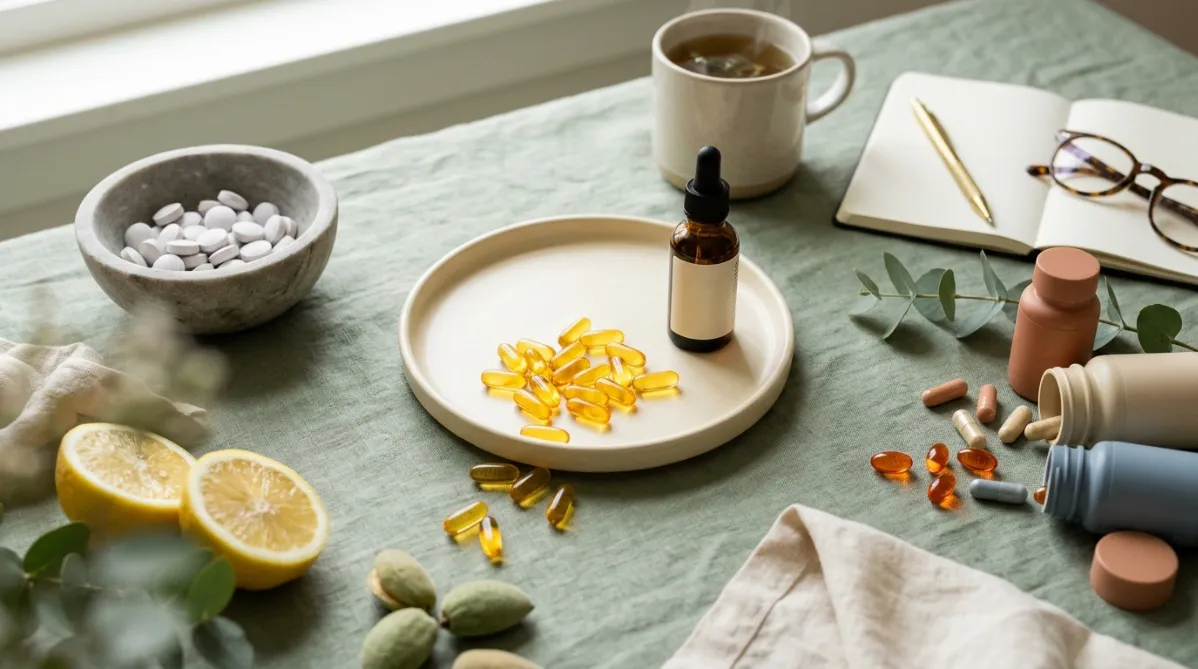
A bright, modern editorial still life shot from slightly above on a soft sage-green linen surface, in a wide landscape composition. At the center sits a small, elegant glass amber dropper bottle and a handful of vivid golden-yellow riboflavin capsules spilling from a minimalist ceramic dish, glowing warmly as the focal point. To the left, a scattering of pale, chalky white magnesium tablets rests in a muted gray stone bowl, pushed slightly out of focus and cooler in tone, suggesting they are less important. On the right, a few small, neatly arranged supplement bottles and capsules in soft terracotta, cream and dusty blue tones stand in a loose row, with a few orange CoQ10 softgels catching the light.

Around the supplements, fresh natural ingredients add texture: a halved lemon, a few green almonds, a sprig of eucalyptus, and a folded cream-colored linen napkin. A ceramic mug of herbal tea sits near the edge, with delicate steam. A small, open notebook with a pen and a pair of round tortoiseshell glasses sits in the upper corner, hinting at research and reading, with no legible text.

Lighting is soft, diffused natural window light from the upper left, creating gentle long shadows and a calm, airy mood. Color palette: warm butter yellow, sage green, soft cream, and muted terracotta, with a touch of cool gray. Shallow depth of field with crisp focus on the golden capsules and creamy blurred edges. The overall feel is clean, trendy wellness-journal photography, with generous negative space on the right side for headline overlay, minimalist, calm, and sophisticated, high resolution, 16:9.
Science & Research

Magnésio Não Mostrou Benefício; Riboflavina 400 mg Reduz Enxaquecas

Dr. Gymbro · · 4 min read

Você talvez tenha magnésio guardado como tratamento para enxaqueca. Uma nova meta‑análise de rede indica que ele pode não ser o suplemento em que se deve confiar. O mesmo estudo identificou uma vitamina ainda mais discreta, a riboflavina (B2), cuja evidência é a mais confiável para a redução das crises.

O artigo, publicado na Headache (DOI: 10.1111/head.70268), comparou vitaminas e nutracêuticos na prevenção da enxaqueca. Os resultados são mais sutis do que a narrativa simplista de “suplemento X funciona”.

O que os pesquisadores realmente fizeram

A equipe agrupou 20 ensaios clínicos randomizados, duplo‑cego (1.829 participantes randomizados, 1.600 analisados) em uma meta‑análise de rede registrada no PROSPERO. Uma meta‑análise de rede permite comparar tratamentos que nunca foram testados diretamente entre si, ligando‑os por meio de braços de placebo comuns.

A principal questão foi a frequência mensal de crises de enxaqueca em adultos, baseada em 10 ensaios adultos. Os desfechos secundários incluíram a proporção de pessoas que reduziram as crises em pelo menos 50 % ("respondedores"), duração das crises, intensidade da dor e dias com enxaqueca. Os autores também avaliaram o grau de confiança em cada resultado usando a estrutura CINeMA.

A principal descoberta: Riboflavina 400 mg

Em adultos, riboflavina 400 mg mostrou a redução mais confiável na frequência das crises. Ela diminuiu o número de crises em cerca de 1,95 por mês (IC 95 % −2,42 a −1,49). A certeza da evidência foi moderada, a melhor classificação entre todas as opções analisadas.

Outros suplementos apresentaram estimativas pontuais maiores, mas vêm acompanhados de grandes ressalvas (veja abaixo). A riboflavina 400 mg destacou‑se pela consistência e qualidade da evidência. As doses menores de riboflavina, 100 mg e 200 mg, não apresentaram dados de frequência de crises em adultos. O sinal de 200 mg relatado anteriormente provinha de um ensaio pediátrico.

Os números maiores que merecem ceticismo

  • Vitamina B12 500 μg: −2,50 crises por mês (IC 95 % −4,35 a −0,65)
  • Vitamina B6 80 mg: −2,33 crises por mês (IC 95 % −4,19 a −0,48)
  • Vitamina D3: −2,29 crises por mês (IC 95 % −3,03 a −1,54)

Antes de se empolgar, observe a origem desses números. As estimativas de B12 e B6 baseiam‑se cada uma em um único ensaio pequeno. A estimativa de vitamina D3 provém de dois ensaios pequenos. Todas foram classificadas com certeza baixa a muito baixa, e os intervalos de confiança amplos para B12 e B6 mostram quão imprecisas são. Um efeito maior em um conjunto de dados diminuto não equivale a um tratamento mais eficaz. São pistas para pesquisas futuras, não vencedores comprovados.

CoQ10: Interessante, mas com cautela

A coenzima Q10 apresentou benefícios em outros desfechos:

  • CoQ10 300 mg foi a única intervenção com vantagem estatisticamente significativa para alcançar ≥50 % de respondedores em adultos (odds ratio 4,83, IC 95 % 1,17–19,89). A certeza foi muito baixa, e o intervalo amplo reflete uma rede escassa e imprecisa.
  • CoQ10 400 mg encurtou a duração das crises em cerca de 3,3 h (IC 95 % −5,72 a −0,88; certeza baixa, rebaixada por imprecisão).
  • CoQ10 400 mg também reduziu a intensidade da dor (diferença média padronizada −0,70, IC 95 % −1,12 a −0,27; certeza baixa).

Assim, o CoQ10 pode ajudar a tornar as crises mais curtas e menos dolorosas, em vez de menos frequentes. Isso seria útil, mas a evidência ainda é limitada. Os autores alertam que os achados sobre respondedores, em particular, devem ser interpretados com cautela.

A surpresa do magnésio

O magnésio é um dos suplementos mais conhecidos para enxaqueca, por isso esse resultado pode surpreender. Nesta análise, o magnésio não mostrou benefício detectado em nenhum desfecho.

Os autores também relataram que a proporção de eventos adversos foi maior para o magnésio. Eles enfatizam que esses números são apenas descritivos e não evidência comparativa, portanto não devem ser interpretados como prova de que o magnésio seja menos seguro. "Nenhum benefício detectado" também não prova que o magnésio nunca possa ajudar um indivíduo; indica apenas que os ensaios agrupados não demonstraram efeito.

Classificação das evidências em um relance

Ordenado pela confiança na evidência, e não pelo tamanho do efeito:

  1. Riboflavina 400 mg: menos crises por mês; certeza moderada.
  2. CoQ10 400 mg: crises mais curtas e menor intensidade da dor; certeza baixa.
  3. Vitamina D3, B12 500 μg, B6 80 mg: reduções maiores na frequência, porém certeza baixa a muito baixa a partir de poucos ensaios pequenos.
  4. CoQ10 300 mg: mais respondedores; certeza muito baixa.
  5. Magnésio: sem benefício detectado.

Principais conclusões práticas

  • Doses testadas: A evidência mais robusta é para riboflavina 400 mg. O CoQ10 foi avaliado em 300 mg (respondedores) e 400 mg (duração e intensidade da dor).
  • Conheça a certeza: Apenas a riboflavina 400 mg atingiu certeza moderada. Considere os achados de B12, B6, D3 e CoQ10 como preliminares.
  • Tenha paciência: Intervenções preventivas geralmente levam semanas a meses para mostrar efeitos, portanto não julgue um suplemento após poucos dias.
  • Urina amarelo‑viva: A riboflavina costuma colorir a urina de amarelo intenso. É inofensivo.
  • Mantenha um diário: Registre frequência, duração e intensidade das crises para verificar se algo está funcionando.
  • Consulte um médico: Se as enxaquecas são frequentes, discuta opções de prevenção com um profissional antes de iniciar suplementos, especialmente se já usar outros medicamentos, estiver grávida ou possuir outras condições de saúde.

Detalhes importantes

Os autores afirmam que suas conclusões devem ser interpretadas com cautela. Várias comparações foram informadas por apenas alguns estudos, e as estimativas de respondedores foram imprecisas. Os ensaios pediátricos foram resumidos separadamente da rede adulta. Eles solicitam ensaios maiores, padronizados e com poder estatístico adequado para confirmar quais opções realmente funcionam melhor e quão seguras são.

Por enquanto, a mensagem é equilibrada: entre os suplementos avaliados, a riboflavina 400 mg tem a evidência mais confiável para reduzir o número de crises de enxaqueca em adultos, o CoQ10 pode ajudar na duração e na dor das crises, e o magnésio não apresentou benefício detectável nesta análise.

Original study

Read the original research on pubmed.ncbi.nlm.nih.gov →

This article summarizes published research for general information. It is not medical advice.

DG

Written by

Dr. Gymbro

Dr. Gymbro writes for Dr. Gymbro: science-backed fitness, nutrition & performance.

Related Articles

A wide, editorial-style still life photographed on a pale warm-gray concrete surface in soft morning window light. In the center sits an open, matte white supplement tub with a scoop resting beside it, a small mound of fine white powder spilling onto the surface. Next to it is a clear glass of water with a faint cloudy swirl of dissolved powder. A few loose capsules in muted coral and cream tones are scattered casually in the foreground. Behind them, slightly out of focus, is a clean running track lane in terracotta red with crisp white lines curving across the background. A pair of minimalist off-white sprint spikes rests on the edge of the track, laces loosely undone. A stopwatch with a brushed metal casing lies partially in frame at the right, its face reading a blurred, indistinct time.

The composition uses generous negative space on the left third, leaving a calm area of soft gray and cream for headline text. Shadows are long, gentle, and slightly cool, contrasting with the warm terracotta of the track. The palette is restrained: terracotta, bone white, soft sage green accents from a small leaf sprig tucked near the tub, and charcoal gray details. Shallow depth of field with a crisp focus on the scoop and powder, creamy bokeh behind. The mood is thoughtful, skeptical, and calm, like a modern wellness or science journal cover. Subtle film grain, natural color grading, and a tactile, tangible feel, with no text, no logos, and no futuristic elements.
nutrition

Beta‑alanina está em quase todos os pré‑treinos; dados de sprints sugerem que pode não funcionar

BY DR. GYMBRO ·

A beta‑alanina está presente em quase todos os suplementos pré‑treino, e o formigamento que provoca costuma nos levar a crer que está funcionando. Contudo, uma meta‑análise multilevel de 2026 que reuniu 17 ensaios controlados randomizados não encontrou benefício algum para a capacidade de sprint repetido, seja medindo desempenho médio, pico ou declínio de fadiga. Dose, duração e nível de treinamento não alteraram esse panorama. Os autores sugerem que a limitação nos sprints repetidos está mais relacionada à recuperação de fosfocreatina do que à acidose, alvo da beta‑alanina. Veja quem ainda pode se beneficiar, quem pode dispensar o suplemento e o que o estudo não pode nos dizer.

A wide, editorial-style still life photographed in soft natural window light on a pale oak gym bench. In the foreground, a small rustic ceramic bowl in warm sand tones holds a mound of fine golden-beige ashwagandha root powder, with a few dried gnarled ashwagandha roots and a sprig of green leaves with tiny orange-red berries resting beside it. A wooden scoop dusted with powder lies at an angle. Just behind, a matte black barbell with a single chalk-dusted steel plate sits slightly out of focus, a light haze of white chalk hanging in the air and catching the sunlight.

On the left side, a neat stack of printed research papers with a sharp black pen and a few muted sage-green sticky tabs. One page shows a simple, abstract forest-plot-style line graph with small squares and horizontal lines, subtly out of focus, hinting at statistics without legible text. A pair of minimal round reading glasses rests on the pages. A small linen gym towel is folded near the edge of the bench.

The palette is restrained and modern: warm cream, soft sage green, muted terracotta, charcoal black, and brushed steel highlights. The background is a softly blurred minimalist studio space with a pale plaster wall and a long soft shadow cast by a window frame, giving a calm, contemplative mood. Shallow depth of field, crisp detail on the powder and roots, gentle film-like grain, and generous negative space on the right third of the frame for a headline overlay. The overall look is a clean, trendy health-and-science journal cover, thoughtful and skeptical rather than promotional, balancing the natural herbal element against the discipline of strength training.
nutrition

Ashwagandha para Levantadores: Impulso de Força ou Miragem Estatística?

BY DR. GYMBRO ·

Ashwagandha é promovida como potenciador de força e volume para quem levanta pesos. Uma nova meta‑análise de ensaios clínicos de treinamento de resistência mostrou ganhos de 1RM em supino e agachamento que parecem impressionantes no papel. Contudo, apenas três estudos com 161 participantes puderam ser combinados e os efeitos perderam significância em testes mais rigorosos. A classificação GRADE apontou evidência de baixa a muito baixa, sem efeito confiável sobre a gordura corporal. Veja o que realmente os dados demonstram e quem ainda pode se interessar em experimentar.

A lone trail runner pauses on a high alpine ridge at dawn, holding a small enamel camp mug of steaming coffee, with thin ribbons of steam curling into crisp, cold air. She wears a fitted charcoal running vest and a muted sage windbreaker, and her breath is faintly visible. Behind her, layered mountain ranges fade into soft blue and lavender haze, and a sea of low clouds fills the valley below. Warm golden sunlight skims the ridgeline and rim-lights her profile, shoulders, and the rising steam. In the foreground, a scattering of dried alpine grasses and lichen-covered stones is in sharp focus, with a worn trail snaking toward the summit. Near the mug sits a small pair of trail running shoes with dusty soles and a simple analog wristwatch resting on a flat rock.

The composition follows a wide 16:9 editorial layout. The subject sits slightly right of center on the rule of thirds, leaving generous negative space in the pale peach-and-powder-blue sky on the left, where headline text could sit. The palette is restrained and modern: warm amber, soft cream, dusty sage, slate blue, and a touch of terracotta. The look is cinematic but natural, with shallow depth of field on the foreground details, gentle film grain, and a slightly matte finish. It evokes a high-end outdoor lifestyle magazine or a contemporary wellness journal. The mood is calm, focused, and quietly determined, capturing the contrast between thin, cold altitude air and the warmth of a coffee ritual. The image has no text, logos, or futuristic elements, and no gym equipment, only natural light, texture, and atmosphere.
nutrition

Cafeína no Ar Rarefeito: O Impulso de Endurance que a Hipóxia Não Apaga

BY DR. GYMBRO ·

O ar rarefeito compromete a resistência, mas uma nova meta‑análise indica que a cafeína pode recuperar parte desse déficit. Ao agrupar nove estudos controlados por placebo em desenho cruzado (117 participantes), os pesquisadores observaram um aumento de desempenho moderado a grande em hipóxia (g = 0.76). Surpreendentemente, a saturação de oxigênio e a percepção de esforço permaneceram inalteradas, enquanto a frequência cardíaca, o lactato e a ventilação aumentaram. A evidência tem baixa certeza e apenas 19 participantes eram mulheres, portanto o achado é promissor, não definitivo. A seguir, quem pode se beneficiar, quem deve evitar e como pensar em dose e timing.

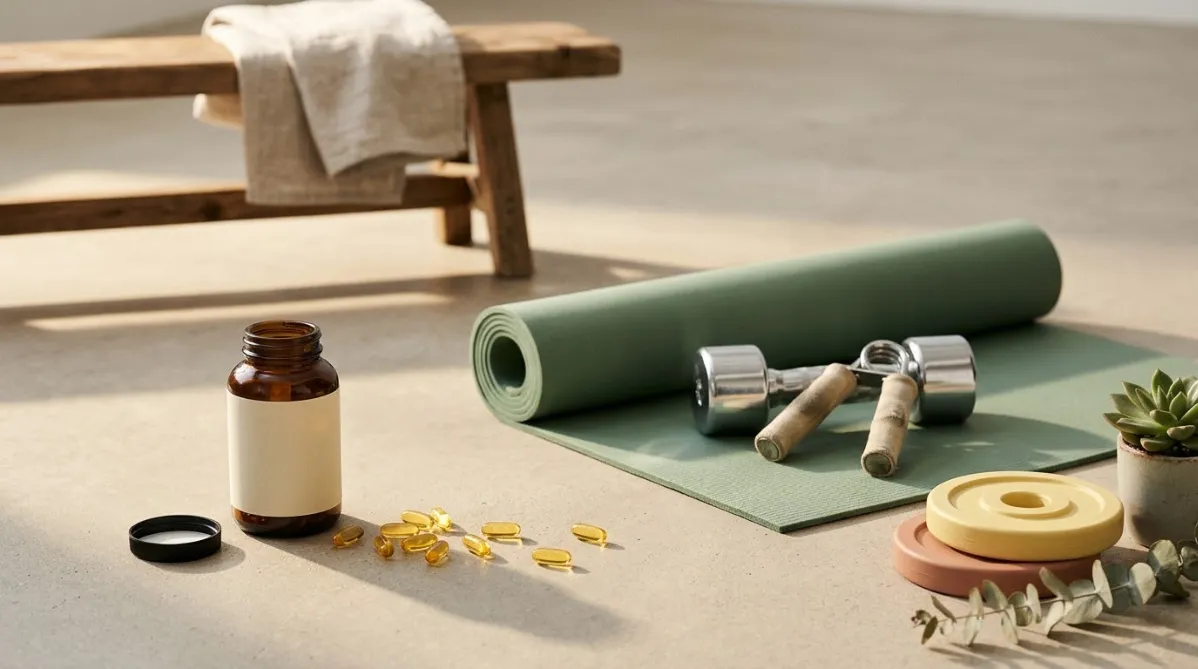
A soft-lit editorial still life on a pale warm-gray concrete surface, shot from a slightly elevated three-quarter angle in a wide landscape frame. On the left, a single amber glass supplement bottle with a minimalist cream label, its lid set beside it. A few golden-yellow softgel capsules are scattered in a loose arc across the surface, catching the light like small drops of honey. At the center-right, a matte sage-green yoga mat is partly unrolled, with a polished chrome dumbbell resting on it. Next to the dumbbell sits a worn canvas hand gripper, a nod to the handgrip finding. Behind them, a wooden gym bench is slightly out of focus, and a folded linen towel sits on top of it.

Warm morning sunlight enters from the upper left through a large window. It casts long, gentle diagonal shadows and a faint golden glow across the scene, a quiet reference to vitamin D and sunshine. A sprig of dried eucalyptus or a small potted succulent adds an organic touch near the bottom right. A small, neatly stacked pile of two or three matte pastel-toned weight plates in butter yellow and dusty terracotta adds color blocking.

The palette is muted and modern: butter yellow, sage, warm sand, soft terracotta, and off-white, with a single strong amber accent from the bottle. The depth of field is shallow, with crisp focus on the capsules and bottle and a creamy blur falling off toward the background. The negative space on the upper right is clean and uncluttered, which leaves room for a headline overlay. The overall feel is calm, minimalist, and contemporary, like a premium health and wellness magazine or a trendy online journal. The grain is subtle, the contrast gentle, and the textures tactile: brushed metal, frosted glass, linen, and concrete. There are no people, no text, and no futuristic elements.
science research

Vitamina D não vai definir seu corpo nem construir músculos, exceto em um caso

BY DR. GYMBRO ·

Uma meta‑análise de dose‑resposta com 28 ensaios randomizados e 1.675 adultos avaliou se a suplementação de vitamina D potencializa os efeitos do exercício. Os níveis sanguíneos de 25(OH)D subiram cerca de 34 nmol/L, mas peso, IMC, massa gorda, percentual de gordura e massa magra não melhoraram além do treinamento isolado. A força no leg press também não teve benefício. A única exceção foi um ganho modesto na extensão do joelho (+4,36 kg) e melhorias na preensão manual em idosos que receberam doses mais altas. Veja quem realmente pode se beneficiar e o que fazer antes de comprar outro frasco.

This page is available in