Dr. Gymbro
A bright, modern editorial still life shot from a slightly elevated angle on a pale warm-gray stone countertop, bathed in soft natural window light with gentle diffused shadows. In the center, a small glass bowl holds a scatter of translucent golden-amber fish oil softgel capsules, a few spilled casually onto the surface and catching the light like tiny glowing beads. Beside the bowl sits a single chrome dumbbell with a matte finish, slightly out of focus, and a neatly folded charcoal gym towel. To the left, a clean arrangement of alternative "better spent" items: a ceramic dish of raw eggs, a wedge of salmon fillet on a wooden board with a sprig of dill, and a small bowl of Greek yogurt with a spoon, all styled with restraint. A minimalist notebook with a thin pen lies at the right edge, with faint, abstract pencil-drawn bar charts and a flat horizontal line suggesting "no effect," legible only as soft shapes with no readable text. The color palette is muted and sophisticated: warm cream, soft sage green, sandy beige, and pops of golden amber from the capsules, with a single accent of coral from the salmon. Shallow depth of field keeps the capsules crisp while the background melts into a creamy blur of a sunlit kitchen with a hint of green plant leaves. The composition leaves generous negative space on the right third for title overlay, in a 16:9 landscape format. The mood is calm, thoughtful, and quietly skeptical, in the style of a contemporary health and science magazine, with a crisp editorial photography look, fine grain, and natural color grading. No people, no futuristic elements, and no text.
Science & Research

Óleo de Peixe para Ganhos? 8 Estudos Dizem: Não Conte com Ele

Dr. Gymbro · · 4 min read

Você já viu a propaganda que afirma que os ácidos \u03c9‑3 reduzem a inflamação, aumentam a síntese proteica muscular e favorecem a recuperação e o crescimento? Assim, um frasco de óleo de peixe no armário parece estar discretamente impulsionando seus ganhos, certo? Uma nova revisão sistemática e meta‑análise publicada em Nutrition indica que você não deve contar com isso. Entre os ensaios randomizados disponíveis em adultos saudáveis sem obesidade, a suplementação com \u03c9‑3 não mostrou benefício claro para massa magra nem para força muscular.

O que foi realmente testado

A equipe de pesquisa, liderada por Silva com os colegas Simões e Artioli, de universidades brasileiras, buscou responder a uma pergunta bem restrita: a suplementação com ácidos graxos \u03c9‑3 isolados altera a massa magra (FFM) ou a força muscular em adultos saudáveis que não são obesos? Eles vasculharam PubMed, Embase, CINAHL e Web of Science desde o início dos registros até 25 de fevereiro de 2026.

Foram elegíveis apenas ensaios randomizados, controlados por placebo, que utilizassem \u03c9‑3 puro. Isso elimina confundidores como combinações de suplementos ou mudanças drásticas na dieta. O risco de viés foi avaliado com a ferramenta Cochrane RoB 2, e a certeza da evidência foi classificada usando o GRADE – padrões rigorosos para esse tipo de estudo.

Os números

Para massa magra, quatro estudos foram incluídos na meta‑análise. O efeito combinado foi uma diferença média padronizada (SMD) de 0,26, com intervalo de confiança de 95 % entre –1,14 e 1,66 (p = 0,60). Esse intervalo é enorme: abrange desde uma perda significativa até um grande ganho, de modo que os dados simplesmente não permitem determinar um efeito.

Para força muscular, oito estudos contribuíram com 22 efeitos dependentes, analisados com um modelo de efeitos aleatórios de três níveis. O SMD foi –0,02 (IC 95 % –0,38 a 0,34; p = 0,92). Essencialmente zero, e o intervalo é bem mais estreito que o da massa magra, ainda que permita um pequeno efeito em qualquer direção. Os autores classificaram a certeza da evidência como muito baixa para esses achados.

Por que o hype existia

O entusiasmo não saiu do ar. Os ácidos graxos \u03c9‑3 são gorduras poli‑insaturadas que integram os fosfolipídios da membrana celular, e pesquisadores propuseram que eles exercem efeitos anabólicos e anti‑inflamatórios. Em teoria, mudar a composição da membrana poderia influenciar como as células musculares respondem a nutrientes e ao treinamento. Menor inflamação poderia, por sua vez, favorecer a recuperação.

Essa é uma narrativa mecanística elegante, e o marketing de suplementos adora histórias bem arrumadinhas. Mas um mecanismo plausível não é o mesmo que um retorno prático. Biologia que parece promissora em estudos celulares ou em populações específicas – como idosos ou grupos clínicos – frequentemente não se traduz em benefício para pessoas saudáveis, treinadas ou recreativamente ativas. Esta meta‑análise lembra que a transição do mecanismo para um ganho muscular significativo é onde muitos suplementos falham.

Leia a letra pequena: "nenhuma evidência clara" não é "comprovado zero"

A sinceridade é fundamental aqui. A conclusão dos autores é cuidadosa: as evidências atuais são insuficientes para afirmar que \u03c9‑3 melhora a FFM ou a força. Isso não equivale a provar que \u03c9‑3 não faz nada.

A análise da FFM baseia‑se em apenas quatro ensaios, e seu intervalo de confiança é tão amplo que um benefício ou dano real não podem ser descartados. A certeza da evidência foi considerada muito baixa, o que significa que estudos futuros, melhor desenhados, podem mudar o panorama. Diferenças de dose, duração, nível de treinamento e métodos de mensuração entre os ensaios também podem turvar os resultados. A leitura justa é: não há boa razão para esperar um retorno em massa ou força, e a pesquisa ainda não demonstrou isso.

Quem ainda poderia consumir \u03c9‑3

Nada disso torna o óleo de peixe inútil. As pessoas tomam \u03c9‑3 por motivos que nada têm a ver com levantar pesos. Quem tem baixa ingestão de peixes gordurosos pode querer suprir essa lacuna nutricional, e \u03c9‑3 é frequentemente mencionado no contexto de saúde cardiovascular e bem‑estar geral. Esta revisão simplesmente não avaliou esses desfechos, e não deve ser interpretada como um veredicto sobre eles.

Se você já curte salmão, sardinha ou uma cápsula de óleo de peixe por razões de saúde geral, este estudo não é motivo para entrar em pânico ou jogar o frasco fora. O ponto é mais restrito: não gaste dinheiro esperando que ele construa músculo ou aumente seu agachamento.

Conclusões práticas

  • Não compre óleo de peixe para músculo ou força. As melhores evidências disponíveis em adultos saudáveis não apoiam essa finalidade.
  • Priorize a proteína. Atender a uma meta diária consistente de proteína ainda é a base para construir e manter massa magra.
  • Treine duro e progressivamente. O treino de resistência com sobrecarga progressiva gera força e FFM muito mais que qualquer cápsula.
  • Considere a creatina. Ela tem um histórico bem mais robusto para força e massa magra que \u03c9‑3, e ainda é barata.
  • Sono e calorias totais importam. Recuperação e ingestão energética silenciosamente decidem se o treino se traduz em progresso.
  • Mantenha \u03c9‑3 para outros fins, se houver. Trate‑o como uma escolha de saúde geral, não como ferramenta de ganhos.

Conclusão final

Oito ensaios e 22 efeitos mostraram força praticamente plana, e quatro ensaios não puderam estabelecer qualquer efeito na FFM. Com certeza muito baixa e base de evidência reduzida, a porta não está fechada de forma definitiva, mas o ônus da prova agora recai sobre o suplemento. Até que ensaios mais robustos digam o contrário, direcione seu dinheiro e esforço para o que realmente funciona: proteína, treino progressivo e creatina.
Original study

Read the original research on pubmed.ncbi.nlm.nih.gov →

This article summarizes published research for general information. It is not medical advice.

DG

Written by

Dr. Gymbro

Dr. Gymbro writes for Dr. Gymbro: science-backed fitness, nutrition & performance.

Related Articles

A softly lit, minimalist strength-training studio photographed in a modern editorial style. In the foreground, a matte black barbell loaded with weight plates rests on a light oak platform, with fine chalk dust floating in warm morning light. Beside it on a pale concrete bench sits a simple ceramic scoop of white creatine powder, with a small spill of fine crystals catching the light, next to a minimal frosted glass jar with no label. A matte sage-green shaker bottle and a folded cream towel sit nearby. In the soft-focus background, tall windows let in diffused golden sunlight, casting long, gentle shadows across the floor. A rack of neatly arranged dumbbells is blurred in muted charcoal tones.

The color palette is calm and sophisticated: warm off-white, sand, sage green, soft charcoal, and touches of terracotta. A small open notebook with a pencil lies on the bench, suggesting research and data tracking, with abstract hand-drawn bar graph lines faintly visible on the page but not legible. The composition follows the rule of thirds, with the barbell and powder on the left and generous negative space on the right for headline text. Shallow depth of field, crisp textures on the metal knurling and powder grains, subtle film grain, and a contemporary wellness-magazine look. Clean, airy, and editorial, with a grounded, scientific yet approachable mood. Landscape 16:9 composition.
science research

Creatina e Levantamento: Mais Força, sem Estratégia de Dosagem Vencedora

BY DR. GYMBRO ·

Uma meta‑análise de 63 estudos com 1.489 participantes investigou quanto a creatina acrescenta ao treinamento de resistência. O ganho de força foi moderado e consistente tanto na parte superior quanto na inferior do corpo, enquanto o aumento da massa magra foi menor e a massa de gordura não mudou significativamente. Surpreendentemente, a estratégia de dosagem, a dose diária e o protocolo não influenciaram os resultados. A idade foi o único indício exploratório, com efeitos de força maiores em participantes mais jovens. Veja o que o estudo realmente encontrou e o que ele não pode afirmar.

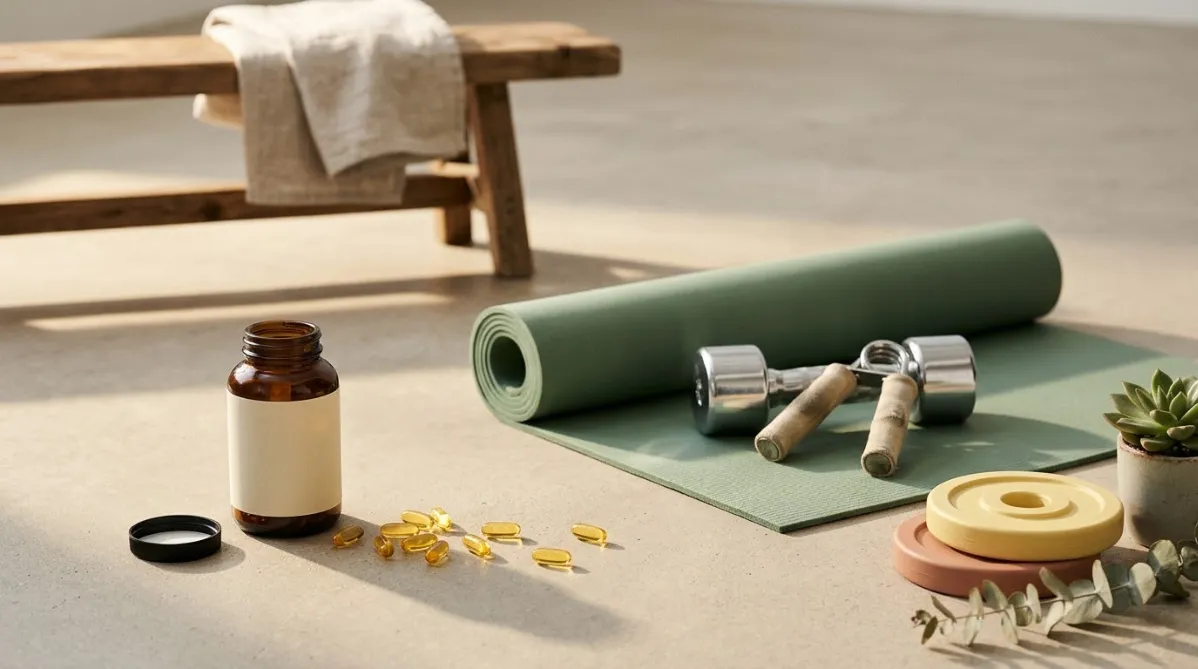
A soft-lit editorial still life on a pale warm-gray concrete surface, shot from a slightly elevated three-quarter angle in a wide landscape frame. On the left, a single amber glass supplement bottle with a minimalist cream label, its lid set beside it. A few golden-yellow softgel capsules are scattered in a loose arc across the surface, catching the light like small drops of honey. At the center-right, a matte sage-green yoga mat is partly unrolled, with a polished chrome dumbbell resting on it. Next to the dumbbell sits a worn canvas hand gripper, a nod to the handgrip finding. Behind them, a wooden gym bench is slightly out of focus, and a folded linen towel sits on top of it.

Warm morning sunlight enters from the upper left through a large window. It casts long, gentle diagonal shadows and a faint golden glow across the scene, a quiet reference to vitamin D and sunshine. A sprig of dried eucalyptus or a small potted succulent adds an organic touch near the bottom right. A small, neatly stacked pile of two or three matte pastel-toned weight plates in butter yellow and dusty terracotta adds color blocking.

The palette is muted and modern: butter yellow, sage, warm sand, soft terracotta, and off-white, with a single strong amber accent from the bottle. The depth of field is shallow, with crisp focus on the capsules and bottle and a creamy blur falling off toward the background. The negative space on the upper right is clean and uncluttered, which leaves room for a headline overlay. The overall feel is calm, minimalist, and contemporary, like a premium health and wellness magazine or a trendy online journal. The grain is subtle, the contrast gentle, and the textures tactile: brushed metal, frosted glass, linen, and concrete. There are no people, no text, and no futuristic elements.
science research

Vitamina D não vai definir seu corpo nem construir músculos, exceto em um caso

BY DR. GYMBRO ·

Uma meta‑análise de dose‑resposta com 28 ensaios randomizados e 1.675 adultos avaliou se a suplementação de vitamina D potencializa os efeitos do exercício. Os níveis sanguíneos de 25(OH)D subiram cerca de 34 nmol/L, mas peso, IMC, massa gorda, percentual de gordura e massa magra não melhoraram além do treinamento isolado. A força no leg press também não teve benefício. A única exceção foi um ganho modesto na extensão do joelho (+4,36 kg) e melhorias na preensão manual em idosos que receberam doses mais altas. Veja quem realmente pode se beneficiar e o que fazer antes de comprar outro frasco.

A calm, modern editorial still life shot from a slightly elevated angle on a pale oak tabletop, bathed in soft natural window light from the left. At center sits a clear glass of water beside a small matte ceramic bowl holding a mound of fine white creatine powder, with a wooden scoop resting next to it and a few loose grains dusted across the surface. To the right, a neatly arranged printed lab report on cream paper, with blurred rows of numbers and a single line highlighted in soft coral pink marker, partially overlapped by a minimalist silver pen. A folded pair of thin-framed glasses sits at the edge of the paper. In the foreground, a small glass vial with a pale amber liquid sample and a second empty vial stand upright, suggesting blood and urine testing, with gentle refraction and soft caustic light on the wood. Behind them, a sprig of eucalyptus in a small stone vase adds a touch of green. The background is a softly blurred, warm off-white wall with a gentle gradient shadow and a hint of a window frame. The palette is muted and refined: warm creams, sage green, soft coral, pale amber, and light oak, with crisp whites in the powder. Shallow depth of field, with the powder bowl and highlighted lab line in sharp focus and the edges falling away into creamy blur. Generous negative space on the right third of the composition for text overlay. The overall feel is clean, trendy health-journal photography, tactile and editorial, with subtle film-like grain, natural shadows, and a quiet, reassuring mood. No people, no text legible, no futuristic elements.
supplements

Creatina elevou marcadores renais em 26 estudos – provavelmente não causa danos

BY DR. GYMBRO ·

Você começa a tomar creatina, faz exames de sangue e vê a creatinina subir enquanto o eGFR parece pior. Uma meta‑análise de 2026, com 26 ensaios randomizados (1.036 participantes), encontrou exatamente isso: a creatinina aumentou 0,14 mg/dL e o GFR baseado em creatinina caiu cerca de 10,75 mL/min. Contudo, quando a filtração renal foi medida com Cr‑EDTA, a queda não apareceu, e ureia, albuminúria e proteinúria permaneceram inalteradas. Veja por que esse número de laboratório engana, o que dizer ao seu médico e quem deve consultar um nefrologista primeiro.

A wide, editorial-style photograph of a female athlete captured mid-jump in a bright, minimalist indoor training space with pale concrete floors and tall frosted windows that let in soft diffused morning light. She is frozen at the peak of a countermovement jump, knees tucked slightly, arms swinging upward, wearing a fitted sage-green training top and charcoal shorts. Her shadow stretches long on the floor below her, which emphasizes the height of the leap.

In the foreground at the lower left, a clean arrangement of supplement items sits on a light oak wooden plyo box: several matte, unlabeled ceramic jars and small amber glass bottles in cream, terracotta, and muted olive tones. Loose white powder is spilled in a soft arc beside a wooden scoop. A few capsules and a small pile of pale yellow beet-colored crystals add texture. Beside them are a folded linen towel and a stainless steel shaker bottle. The items are slightly out of focus, which creates shallow depth of field and leads the eye toward the athlete in the mid-ground.

The color palette is warm and modern: creamy off-white, soft sand, sage green, and subtle terracotta accents, with gentle natural shadows. The background is a clean, slightly blurred wall with a thin horizontal line of light, which suggests a measuring-stick rhythm without literal numbers. Fine particles of chalk dust hang in the air around her feet, lit by a shaft of sunlight.

The composition follows the rule of thirds, with the athlete on the right third and open negative space on the upper left, suitable for headline overlay. The style is contemporary lifestyle and sports-science journal photography, with a crisp, high-resolution, soft-contrast, matte finish and a subtle film-like grain. The mood is calm, premium, and trustworthy, in the spirit of a modern health and performance publication.
science research

Melhores Suplementos para Altura de Salto e Potência: A Surpresa do HMB e da Betaína

BY DR. GYMBRO ·

Uma enorme meta‑análise de rede com 119 ensaios avaliou suplementos para salto e potência e revelou resultados inesperados. O HMB liderou o ganho de potência (64,7 W) e a betaína ficou em primeiro no salto com contra‑movimento (+3,7 cm). Creatina, beta‑alanina, vitamina D e cafeína também apresentaram benefícios, embora a confiança nas evidências fosse baixa na maioria das comparações. O destaque para o ferro vem de um único estudo, devendo ser interpretado com cautela.

This page is available in