Dr. Gymbro
A calm, editorial-style landscape photograph of an athlete's bedroom at dawn, shot with soft natural light. In the foreground, a minimalist wooden bedside table holds a small frosted glass of pale amber drink beside a slim matte-white bottle with no label, a worn pair of running shoes tucked just beneath it. Soft morning light filters through sheer linen curtains, casting long, gentle gold and peach gradients across rumpled off-white bedding in the background, slightly out of focus. A folded gray training towel and a simple analog wristwatch rest on the table edge. On the wall above, a single abstract print in muted sage and terracotta tones adds a trendy, curated feel. The color palette is warm neutrals, oat, soft sage green, and dusty amber, with gentle shadows and a shallow depth of field. The composition uses generous negative space on the right third, ideal for headline overlay. The mood is quiet, restorative, and contemporary, like a lifestyle and wellness magazine cover. Fine film grain, natural textures of linen, oak, and glass, crisp but soft focus, high-end editorial photography.
Recovery

Treino intenso reduz silenciosamente o sono REM; bebida cetônica impede a queda

Dr. Gymbro · · 4 min read

Você pode registrar horas perfeitas na cama e ainda perder a fase do sono que mais importa. Um novo estudo publicado na Medicine & Science in Sports and Exercise indica que um bloco de treinamento intenso e progressivo pode corroer o sono REM, e que uma bebida de éster de cetona consumida após o treino e antes de dormir pode impedir esse declínio.

A descoberta é intrigante, mas provém de um ensaio pequeno, e o resumo é cauteloso quanto ao que realmente demonstra.

O que os pesquisadores fizeram

Uma equipe da KU Leuven e da Hasselt University, liderada por Chiel Poffé, conduziu um ensaio duplo‑cego com 24 atletas masculinos treinados. Todos completaram um programa de treinamento de 7 semanas em que a carga aumentou gradualmente. Doze atletas receberam 25 g de uma bebida controle e doze receberam 25 g do monoéster de cetona (R)-3‑hydroxybutyl‑(R)-3‑hydroxybutyrate.

A bebida foi ingerida após cada sessão de treinamento e 30 minutos antes de dormir. O sono foi medido com polissonografia – o padrão‑ouro de laboratório – no início, na terceira semana e ao final. O estresse percebido e a recuperação foram acompanhados com o questionário REST‑Q. Nos dias de teste, o horário, a duração e a intensidade relativa do exercício foram idênticos para todos.

Esse protocolo segue trabalhos anteriores do mesmo grupo, que mostraram que um único dia de treino intenso perturba a eficiência do sono e reduz o sono REM, e que a suplementação com éster de cetona contrabalança esse efeito. O novo estudo investigou se o benefício persiste ao longo de semanas de carga crescente.

O que aconteceu com o sono e a recuperação

O treinamento claramente cobrou seu preço no bem‑estar dos atletas. O balanço percebido de estresse‑recuperação caiu em ambos os grupos, passando de 73 ± 21 no início para 40 ± 37 ao final (p < 0,001; tamanho de efeito grande).

O sono contou uma história mais detalhada:

  • Início (semana 1‑3): a eficiência do sono melhorou 3 % em ambos os grupos, e o tempo acordado após o início do sono diminuiu 2 %. As cetonas não acrescentaram nada a isso.
  • Final (semana 7): o sono REM total diminuiu 2 % no grupo controle, mas aumentou 3 % no grupo que recebeu o éster de cetona (p = 0,002 para a diferença entre grupos; Hedges' g = 0,939 – efeito grande).
  • Qualidade percebida do sono: não houve diferença entre os grupos em nenhum momento.

A conclusão dos autores é equilibrada. O éster de cetona não amplificou os modestos benefícios de sono decorrentes do aumento de carga, mas evitou a queda do REM quando a carga subiu ainda mais.

Por que o REM vale a pena cuidar

O resumo não explora os mecanismos nem as consequências downstream da perda de REM, portanto trate tudo além dos dados como contexto, não como prova. O REM é um componente da arquitetura do sono, e sua redução durante treinos pesados indica que o estresse corporal pode remodelar o sono mesmo quando o tempo total na cama parece adequado. Aqui, a eficiência do sono dos atletas melhorou no início, mas o REM ainda escorregou depois, mostrando por que observar os estágios do sono pode revelar mais do que apenas as horas na cama.

Quem pode se beneficiar

O público‑alvo mais plausível são atletas treinados em fases deliberadas de sobrecarga ou blocos de alta carga, como períodos de construção pré‑temporada ou semanas de pico de treinamento. Essas são as pessoas mais propensas a ver o REM deteriorar à medida que volume e intensidade sobem. A população estudada era composta por homens treinados, então esse é o grupo ao qual os achados se aplicam diretamente.

O protocolo em um relance

  • Dose: 25 g de monoéster de cetona por dose
  • Timing: após cada sessão de treinamento e 30 minutos antes de dormir
  • Duração: 7 semanas, durante um aumento progressivo da carga de treinamento
  • Forma: o monoéster (R)-3‑hydroxybutyl‑(R)-3‑hydroxybutyrate

Uma cautela quanto à praticidade: o resumo não informa quantas doses os atletas tomaram ao dia ou como toleraram a bebida, nem menciona custos. Os ésteres de cetona são geralmente suplementos premium; uma dose noturna mais doses pós‑treino ao longo de sete semanas pode encarecer, embora os preços variem e isso não seja resultado do estudo. Consulte o texto completo antes de copiar o protocolo.

Limitações que você deve ter em mente

  • Amostra pequena: 12 atletas por grupo, e a diferença de REM foi de poucos por cento; a replicação é crucial.
  • Só homens: os resultados não podem ser generalizados para mulheres ou não‑atletas.
  • Nenhum “resgate” de recuperação: as pontuações de estresse‑recuperação caíram em ambos os grupos, e a qualidade percebida do sono não variou. No resumo, as cetonas não fizeram os atletas se sentirem melhor nem dormirem melhor segundo sua própria percepção.
  • Sem dados de desempenho no resumo: não há informação se a proteção do REM se traduziu em melhor adaptação, performance ou saúde.
  • Estudo único, mas bem desenhado: trata‑se de um ensaio randomizado, duplo‑cego em humanos, o que é uma força. Contudo, a população foi restrita.

Dicas práticas

  1. Se você está aumentando a carga de treinamento, espere que o sono mude de formas que você pode não perceber. O REM pode cair mesmo quando a eficiência do sono parece boa.
  2. O éster de cetona foi a única intervenção testada; o efeito observado foi específico ao REM, não à qualidade geral do sono ou à recuperação percebida.
  3. Não veja isso como substituto da gestão de carga. As pontuações de estresse‑recuperação diminuíram em ambos os grupos, independentemente da bebida.
  4. Caso tenha curiosidade, trate‑o como ferramenta experimental para blocos intensos e pese o custo contra evidências ainda preliminares.

Conclusão

O estudo oferece um resultado limpo e direcionado: em atletas submetidos a um bloco progressivo de 7 semanas, o éster de cetona evitou a queda do sono REM enquanto o grupo controle perdeu terreno. É um indício interessante para quem treina pesado, mas permanece um ensaio pequeno, e as grandes questões sobre desempenho e benefício real ainda estão em aberto.
Original study

Read the original research on pubmed.ncbi.nlm.nih.gov →

This article summarizes published research for general information. It is not medical advice.

DG

Written by

Dr. Gymbro

Dr. Gymbro writes for Dr. Gymbro: science-backed fitness, nutrition & performance.

Related Articles

A wide, editorial-style still life shot from a slightly elevated three-quarter angle on a pale oak gym bench, lit by soft morning window light. In the foreground sits a minimalist matte-white glass beaker of clear, faintly amber liquid, with a few condensation droplets on its surface. Beside it rests a small ceramic dish of white crystalline powder and a stainless steel scoop. In the middle ground, a chalk-dusted steel barbell with black bumper plates rests on the bench's edge. A pair of worn leather lifting straps and a small notebook with a pencil lie nearby, suggesting data logging. Behind them, softly blurred, is a bright, airy studio with concrete walls, a wooden plyo box, and a tall leafy plant catching the light.

The palette is warm and muted: cream, sand, soft sage green, and charcoal, with one small accent of burnt orange in the amber liquid and a terracotta towel draped over the bench. Fine chalk dust floats in sunbeams that cut diagonally across the frame. The shallow depth of field keeps the beaker and barbell sharp while the background melts into creamy bokeh. Composition follows the rule of thirds, with the beaker on the left third and generous negative space on the right for headline text. The mood is calm, premium, and contemporary, like a high-end wellness and sports-science magazine photograph with subtle film grain, natural shadows, and realistic textures.
nutrition

Cetonas Mantiveram a Taxa de Desenvolvimento de Força 8 % Maior, Mas Saltos Não Mudaram

BY DR. GYMBRO ·

Cinquenta gramas de um precursor de cetona mantiveram a taxa de desenvolvimento de força 8 % mais alta uma hora depois, mas não melhoraram o salto em contra‑movimento. O estudo cruzado, randomizado, com 20 adultos ativos mostrou cetonas sanguíneas em torno de 2,2 mM aos 120 minutos, além de queda de 24 % na glicose e aumento de 13 bpm na frequência cardíaca. Esses resultados são interessantes para quem realiza esforços máximos repetidos, embora ainda seja um estudo pequeno e agudo. Veja o que os dados revelam, quem pode se interessar e quem deve esperar.

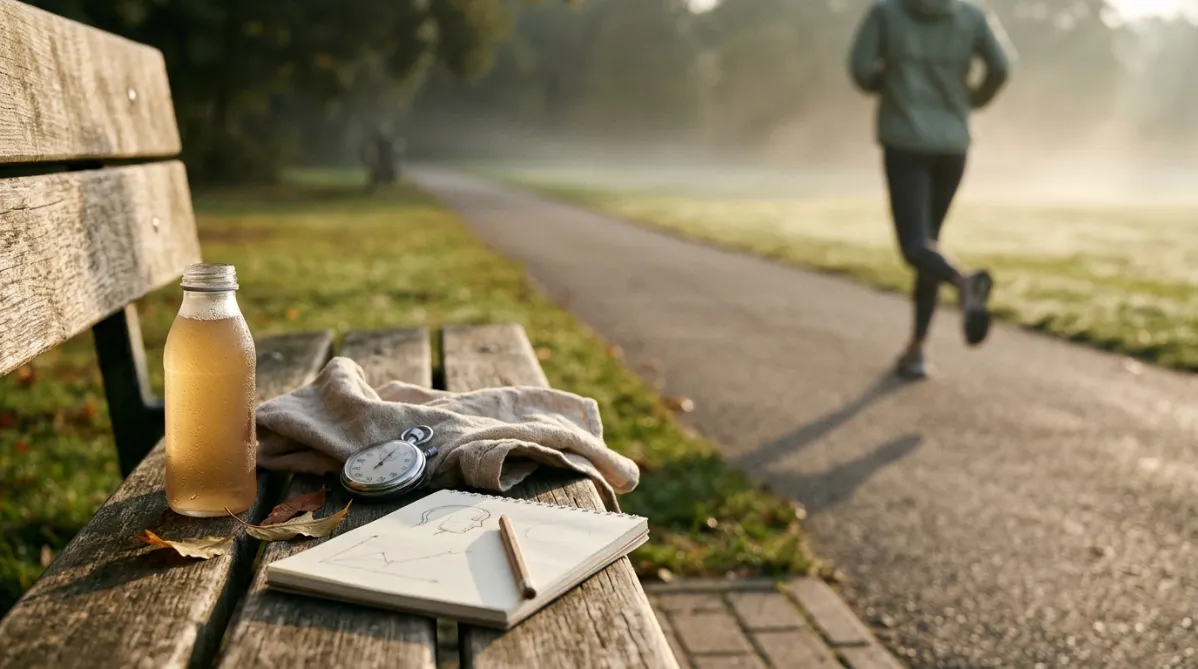
A wide, editorial-style photograph of a runner's morning ritual on a quiet paved path at the edge of a park, shot in soft golden-hour light with a shallow depth of field. In the foreground, a small frosted glass bottle of pale amber liquid sits on a weathered wooden bench, beside a sleek analog stopwatch and a folded linen towel. Condensation beads on the glass and catches warm sunlight. The background melts into a creamy blur of a lone runner in a muted sage-green jacket and charcoal tights, mid-stride, heading away along a tree-lined track, with soft mist hovering above the grass.

The color palette is calm and modern: warm honey and amber tones, soft sage green, off-white, and touches of deep navy in the shadows. Subtle film grain and gentle natural contrast give it a contemporary lifestyle-magazine feel. Long, delicate shadows stretch across the path.

On the bench, a small open notebook with a loose hand-drawn sketch of a head profile and a simple line graph sits next to a pencil, hinting at cognition and measurement without any text legible. A few fallen autumn leaves add texture. The composition follows the rule of thirds, with the bottle and stopwatch on the left third, negative space on the right for headline overlay, and the runner small in the distance to suggest that speed is not the story.

The mood is thoughtful, clean, and quietly intelligent, evoking wellness science journalism: minimal, airy, organic, and refined. No futuristic elements, no neon, no digital effects, just natural light, tactile materials, and a considered, understated aesthetic.
supplements

Ester de Cetona Não Acelerou os Corredores — Mas Aguçou a Mente

BY DR. GYMBRO ·

Bebidas com éster de cetona são vendidas como atalho para correr mais rápido, mas um ensaio de 31 dias não mostrou melhora no 5 km. O que mudou foi notável: respostas mais rápidas em testes de Stroop e troca de tarefas, glicemia reduzida em 15 % e VO₂ maior em teste incremental, mesmo após o término da suplementação. O ponto fraco do estudo é o tamanho da amostra – apenas 18 corredores recreacionais em um desenho single‑blind. Veja o que os dados revelam, o que eles não mostram e quem deve evitar um regime de 90 g/dia.

A wide, softly lit editorial still life on a warm off-white stone countertop. In the center sits a matte ceramic bowl of fine pale cream whey protein powder with a wooden scoop resting in it, a few fine grains dusted across the surface. To the left, a clear glass shaker bottle filled with a creamy, lightly frothy shake catches a gentle highlight. To the right, a minimalist arrangement of fresh produce and wellness cues: a halved lemon, a sprig of green rosemary, and a small folded sage-green linen towel. In the soft-focus background, a neatly rolled yoga mat and a pair of brushed-steel dumbbells rest on a pale oak floor beside a tall window. Morning sunlight streams in diagonally, creating long, gentle shadows and a luminous, airy atmosphere.

Subtle nods to the "liver" and "lab results" themes come through in tasteful, abstract ways: a small sheet of cream paper with a simple, hand-drawn downward-trending line graph in muted terracotta ink sits beside the bowl, with a slim brass pen laid across it. A delicate terracotta-colored ceramic dish nearby evokes organic form without being anatomical.

The color palette is calm and modern: warm creams, soft sand, sage green, muted terracotta, and touches of brushed brass. Shallow depth of field, crisp focus on the powder and scoop, with a creamy blurred background. Shot in a clean, contemporary magazine style with natural film-like grain, gentle contrast, and generous negative space on the left and right edges for headline overlay. Feels trustworthy, fresh, and approachable, like a trendy health and science journal cover.
supplements

A proteína whey destrói seu fígado? 59 atletas dizem o contrário

BY DR. GYMBRO ·

Acha que a proteína whey faz mal ao seu fígado? Um ensaio randomizado, duplo‑cego com 59 atletas treinados encontrou o caminho oposto: após 8 semanas com 30 g/dia, ALT, AST e CK diminuíram, enquanto os grupos placebo permaneceram estáveis ou subiram. Apenas o ALT mostrou diferença real entre atletas de força e de resistência, e o resultado do CRP foi apenas uma tendência dentro do grupo. Veja o que o estudo realmente demonstra, o que os marcadores não podem provar e quem ainda deve ter cautela.

A softly lit bedroom nightstand scene in landscape format, photographed in a modern editorial lifestyle style. In the center of the frame sits a handmade ceramic mug in warm oatmeal tones, filled with a pale creamy drink. A thin wisp of steam rises from it. Beside the mug, a small wooden scoop rests on a matte linen-textured surface with a fine dusting of white collagen powder. A minimal amber glass jar with a cream label stands just behind, with no readable text. The nightstand is pale oak with subtle grain.

To the left, a neatly folded pair of gray cotton athletic socks and a worn leather-bound training journal with a pen on top hint at a lifter's routine. A small brass alarm clock reads about 9:30 and is slightly out of focus. On the right side, a sheer curtain filters the last blue-violet twilight from a window, while a warm bedside lamp with a linen shade casts a honey-colored glow across the scene. The glow contrasts gently with the cool dusk tones.

Behind the nightstand, the edge of a rumpled bed with soft white and sand-colored bedding is visible, with a dumbbell resting quietly on the floor in the soft-focus background to suggest recovery after training. The depth of field is shallow, with the mug and scoop in crisp focus and the background dissolving into creamy bokeh.

The palette is calm and earthy: warm beige, soft cream, muted terracotta, and dusk blue accents. The lighting is cinematic and low-key, with gentle highlights on the ceramic rim and a subtle rim light on the steam. The composition follows the rule of thirds, with the mug placed on the left third and generous negative space on the right for title overlay. The mood is serene, restorative, and quietly scientific without any clinical elements. The finish is clean, high-end, and magazine-worthy, with fine film grain and natural color grading, like a wellness feature in a contemporary online journal.
recovery

O truque do colágeno de 15 g antes de dormir que reduziu os despertares noturnos em 27 %

BY DR. GYMBRO ·

Acordar repetidamente durante a noite pode sabotar silenciosamente sua recuperação, mesmo quando treino e nutrição estão alinhados. Um pequeno ensaio revelou que 15 g de peptídeos de colágeno consumidos uma hora antes de deitar reduziram os despertares registrados por polisomnografia de 29,3 para 21,3, cerca de 27 % a menos. Os participantes também tiveram desempenho melhor no teste Stroop matinal. Contudo, o tempo total de sono, a latência e a eficiência do sono não mudaram, e o estudo contou apenas com 13 homens durante 7 noites, usando um produto fornecido pela indústria. Veja o que os dados realmente mostram e como os praticantes de musculação podem testá‑lo com segurança.

This page is available in