Dr. Gymbro
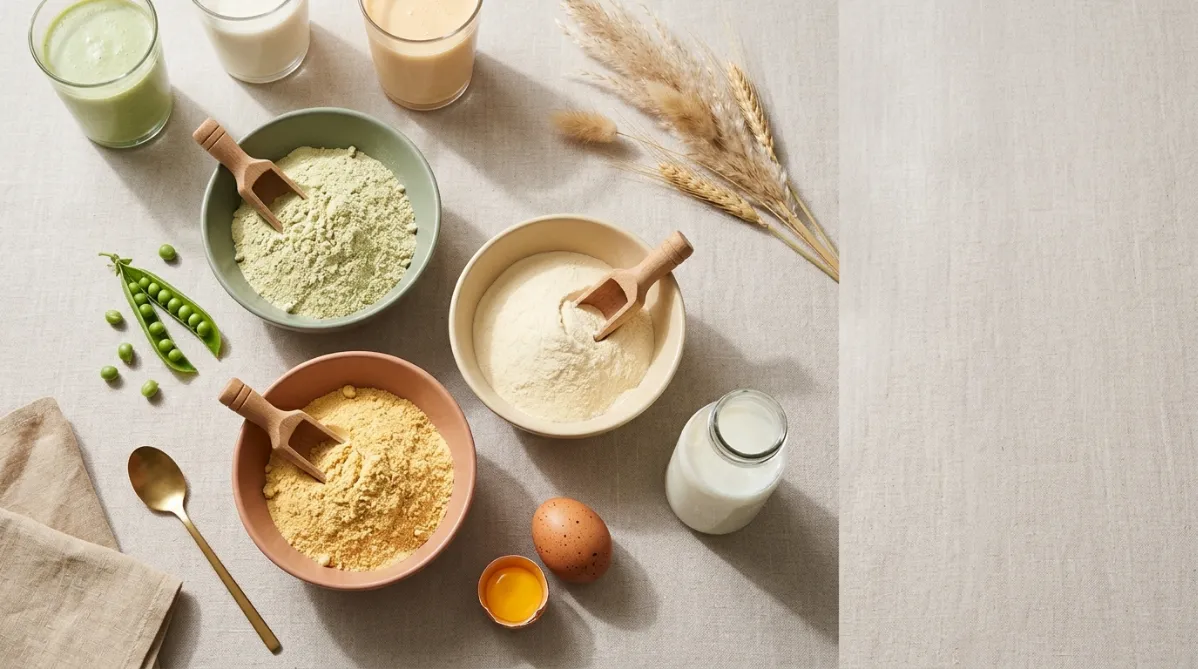
A overhead flat-lay photograph in a modern editorial style, shot on a pale oatmeal-colored linen surface with soft, diffused natural window light coming from the upper left, casting gentle, elongated shadows. Three ceramic bowls in matte, muted tones sit in a loose, balanced triangle composition: one in dusty sage green holding fine pale-green pea protein powder, one in warm cream holding silky ivory whey powder, and one in soft terracotta holding golden-yellow egg protein powder. Each bowl has a small wooden scoop resting against its rim, with a few powder specks scattered naturally across the linen.

Around the bowls, subtle ingredient cues add storytelling without clutter: a handful of fresh green peas in their open pod beside the sage bowl, a small glass bottle of milk with a faint condensation sheen near the cream bowl, and two brown speckled eggs, one whole and one cracked open to reveal a bright yolk, near the terracotta bowl. A sprig of dried wheat or pampas grass enters the frame from the top right corner for texture and height.

Three glass tumblers of smoothie-like shakes in slightly different hues, soft green, creamy white, and pale apricot, stand along the upper edge of the frame, slightly out of focus, creating depth and a gentle rhythm. A thin brass spoon and a folded sand-colored napkin add a refined touch in the lower left.

The palette is warm and earthy: sage, cream, terracotta, butter yellow, and soft beige, with tiny accents of brass. Negative space is left on the right third of the composition for possible title overlay, keeping the layout airy and uncluttered. The overall mood is calm, thoughtful, and approachable, like a contemporary wellness magazine or minimalist food journal, with crisp focus on the bowls, shallow depth of field toward the edges, subtle film-like grain, and a clean, sophisticated, slightly matte finish.
Fitness

Whey vs Ervilha vs Ovo: 51 Estudos Avaliam Qual Proteína Constrói Músculo Após o Treino

Coach Ryan · · 4 min read

A Grande Descoberta

Você esperaria que um confronto entre whey, proteína de ervilha e clara de ovo coroasse um vencedor claro. Mas não foi o que aconteceu, e a razão é mais interessante que uma simples classificação.

Uma equipe da Universidade de Viena reuniu 51 ensaios baseados em traçadores para comparar como diferentes fontes de proteína estimulam a síntese de proteína muscular (MPS) após um treino de resistência. Várias proteínas, tanto animais quanto vegetais, ficaram próximas umas das outras. Contudo, apenas uma, o whey protein padrão, produziu um efeito estatisticamente significativo.

Como o Estudo Foi Conduzido

O artigo, publicado no Journal of the International Society of Sports Nutrition (2026), é uma revisão sistemática com meta‑análises de rede padrão e de dose‑resposta (NMAs). Uma meta‑análise de rede permite comparar tratamentos que nunca foram testados diretamente, ligando‑os por meio de comparadores comuns.

  • Bases de busca: PubMed, EBSCOhost (MEDLINE, SPORTDiscus, CINAHL) e Scopus.
  • Participantes: adultos saudáveis com 18 anos ou mais.
  • Protocolo: um treino agudo de resistência seguido de um único bolo de proteína, sem ingestão adicional de alimentos entre eles.
  • Medida: biópsias musculares antes e depois, com taxas horárias de MPS mensuradas via técnicas de traçador.
  • Exclusões: misturas de proteínas e produtos enriquecidos com agentes anabólicos.
  • Amostra: 51 ensaios atenderam aos critérios.

Os autores declararam ausência de conflitos de interesse.

O Ranking

As proteínas foram classificadas pelo P‑score, um índice de 0 a 1 que reflete a probabilidade estimada de ficar bem posicionada para a taxa horária de MPS pós‑exercício:

Proteína P‑score Diferença média (%/h)
Native whey 0.81 0,05 [0,00; 0,10]
Ervilha 0.77 0,05 [-0,02; 0,11]
Ovo inteiro 0.72 0,04 [-0,01; 0,09]
Micoproteína 0.66 0,03 [-0,02; 0,08]
Whey (padrão) 0.58 0,02 [0,01; 0,04]

A certeza da evidência foi avaliada como baixa a moderada.

Por que a Proteína com Posição Mais Baixa foi a Única "Significativa"

Aqui está a reviravolta: o whey padrão ficou em quinto lugar, mas foi o único com intervalo de confiança que exclui zero (0,01 a 0,04). Native whey, ervilha, ovo e micoproteína apresentaram estimativas pontuais tão altas ou até maiores, porém seus intervalos eram amplos o suficiente para incluir zero ou apenas tangenciá‑lo.

A explicação provável é precisão estatística, não superioridade biológica. O whey é estudado continuamente, portanto sua estimativa é estreita. Já ervilha e micoproteína contam com muito menos ensaios, o que gera maior incerteza. Os autores alertam que fontes sustentadas por poucos estudos devem ser interpretadas com cautela.

Os P‑scores indicam ranking, não magnitude. Um P‑score de 0,77 para a ervilha não significa que ela está comprovadamente melhor; indica apenas que, com os dados atuais, a ervilha tende a ficar perto do topo.

A Dose Ideal: 18 a 25 g

A análise de dose‑resposta encontrou as respostas de MPS mais altas previstas entre 18 e 25 g para native whey, ovo inteiro, ervilha e micoproteína. Tanto fontes animais quanto vegetais apareceram nessa faixa, sugerindo que a quantidade pode ser tão importante quanto a origem para a resposta aguda.

O Que Isso Significa para Você

  • Dose: procure ingerir cerca de 18 a 25 g de proteína na refeição pós‑treino. É nessa faixa que o modelo previu o pico de MPS para as fontes com melhor desempenho.
  • Timing: os ensaios testaram um único bolo logo após o treino de resistência. O artigo apoia a ingestão pós‑treino, mas não define uma "janela anabólica" rígida, então não se preocupe com minutos.

Recomendações práticas

  • Quem tolera laticínios: o whey tem a evidência estatística mais robusta aqui.
  • Veganos ou intolerantes a laticínios: ervilha e micoproteína ficaram competitivas no ranking e na dose‑resposta, embora a evidência seja mais fraca.
  • Consumidores de ovos: o ovo inteiro ficou em terceiro lugar e também se encaixa na mesma faixa de dose.

Quem deve ter cautela

  • Pessoas alérgicas a laticínios, ovos ou ervilha devem evitar a fonte correspondente.
  • Quem tem doença renal ou outras condições que limitam a ingestão de proteína deve consultar um profissional de saúde antes de mudar a dose.
  • Quem espera que este artigo sirva de propaganda para alguma marca ou mistura específica. Misturas foram excluídas, logo combinações como ervilha + arroz não foram avaliadas.

Limitações Importantes

  • MPS aguda ≠ crescimento muscular. Os ensaios mediram taxas de síntese de proteína de curto prazo, não resultados ao longo de meses de treinamento. Um aumento de MPS nas primeiras horas não garante mais músculo ou força, pois a ingestão diária total de proteína, a qualidade do treinamento, o balanço calórico e a recuperação também são determinantes.
  • Diferenças pequenas. As variações médias ficaram entre 0,02 e 0,05 pontos percentuais por hora. São estatisticamente detectáveis, mas podem não ter relevância prática.
  • Qualidade da evidência modesta. Certeza baixa a moderada indica que futuros ensaios podem mudar os rankings, especialmente para as proteínas menos estudadas.

Conclusão

Nenhuma proteína destronou o whey, mas nenhuma foi descartada. O whey é a única fonte com efeito estatisticamente significativo nesta análise, enquanto ervilha, micoproteína e ovo inteiro surgem como alternativas credíveis que ainda precisam de mais pesquisas. Se você busca simplicidade, tome uma porção de 18 a 25 g de proteína após o treino, de uma fonte que tolere e goste, e mantenha seu consumo total diário e seu treinamento consistentes — são esses fatores que impulsionam os ganhos a longo prazo.
Original study

Read the original research on pubmed.ncbi.nlm.nih.gov →

This article summarizes published research for general information. It is not medical advice.

CR

Written by

Coach Ryan

Coach Ryan writes for Dr. Gymbro: science-backed fitness, nutrition & performance.

Related Articles

A wide landscape editorial photograph of a clean, sunlit kitchen counter in soft morning light, shot from a slightly elevated three-quarter angle with shallow depth of field. In the foreground, a small matte ceramic dish holds a handful of pale cream-colored supplement capsules, with a few spilled casually onto a pale oak surface. Beside them sits an unlabeled amber glass bottle with its cap off. A folded gray linen napkin and a glass of water with delicate condensation add a calm, everyday feel.

In the softly blurred midground, a pair of well-worn running shoes in muted sage green rests beside a rolled yoga mat in dusty terracotta. A small notebook lies open with a pencil resting across it, its pages showing faint hand-drawn bar charts that are nearly flat, with one or two slightly taller bars. The charts are suggestive rather than legible.

The background is a bright window with sheer white curtains, casting long, gentle shadows across the counter. A potted eucalyptus sprig in a simple white vase adds a touch of organic green.

The palette is restrained and modern: warm creams, soft sage, terracotta, muted oatmeal, and pale wood tones, with subtle highlights on the glass and ceramic. The mood is thoughtful, skeptical, and quietly informative, like a contemporary health and science magazine feature. Natural film-like grain, soft contrast, and generous negative space on the right third of the frame leave room for headline text. There are no people, no logos, no text, and no futuristic elements, only a minimalist, trendy, lifestyle-journal aesthetic.
fitness

2 g de Carnosina ao Dia por 12 Semanas: O Ensaio com 299 Pessoas Quase Não Apresentou Resultados

BY IRON MARCUS ·

As cápsulas de carnosina são promovidas como potencializadores da resistência muscular. Um estudo randomizado, controlado por placebo, com 299 participantes testou a dose de 2 g/dia durante 12 semanas e, na maior parte, não detectou efeitos. Alguns sinais surgiram em subgrupos específicos, mas devem ser interpretados com cautela.

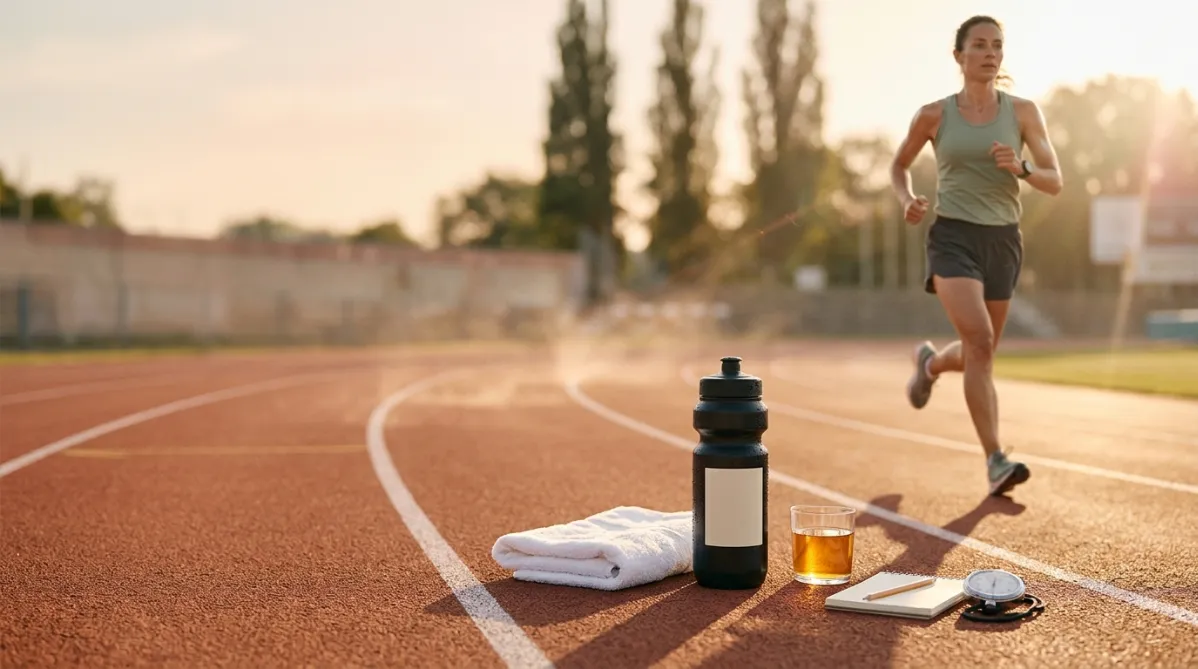
A sunlit outdoor running track in late afternoon, shot from a low angle with shallow depth of field. In the foreground, a matte black bottle with a minimal off-white label sits on the edge of a warm terracotta-colored track lane, beside a folded white towel and a small glass of amber liquid catching golden light. Condensation beads on the bottle. A faint heat shimmer rises from the track surface and softens the background.

In the midground, slightly out of focus, a lean athlete in a sage-green tank top and charcoal shorts runs on a treadmill-like stretch of track, a thin sheen of sweat on their shoulders, their expression focused and calm. Their motion is gently blurred, suggesting endurance and rhythm. Long soft shadows stretch across the lane lines.

The background fades into hazy peach, apricot, and pale yellow tones, with the suggestion of tall trees and a distant stadium wall. Warm sun flare enters from the upper right, creating a subtle glow and a few soft light streaks across the frame.

Subtle editorial touches: a small notebook with a pencil and a stopwatch rest beside the bottle, hinting at data and timing without any text legible. The color palette is warm and muted, with terracotta, cream, sage, and charcoal accents, and a fine film-like grain. The composition leaves open negative space on the left third for a headline overlay. The overall mood is clean, modern, and health-journal inspired, natural and aspirational, with a calm scientific curiosity rather than hype.
nutrition

Bebidas de Cetona no Calor: Mais Resistência e Memória Mais Aguçada?

BY DR. GYMBRO ·

Bebidas de cetona costumam ser associadas a biohackers que queimam gordura, mas um novo estudo sob estresse térmico indica que elas podem ajudar a terminar sessões mais intensas. Em 17 homens treinados, a combinação de cetona monoéster e cafeína aumentou o tempo até a exaustão para 8,9 minutos contra 7,0 minutos com carboidrato e cafeína, após 90 minutos de corrida em esteira a 34 °C. A precisão da memória de trabalho no teste de 1‑back também melhorou, enquanto frequência cardíaca e temperatura central não apresentaram diferenças relevantes. Contudo, não houve benefício no teste de 2‑back, no tempo de reação ou na tarefa de acertar e evitar. O estudo foi pequeno, apenas com homens e de sessão única. Veja o que os dados realmente revelam e o que ainda não foi comprovado.

A clean, modern editorial flat-lay on a pale oat-colored linen surface, shot from slightly above in soft diffused natural window light. At the center sits an amber glass supplement bottle with a minimalist cream label, unbranded, with a few capsules spilling onto the fabric in soft greens and ivory tones. Around it are fresh botanical elements: a sprig of green tea leaves, sliced ginger root, a small bundle of dried hibiscus petals, and a few pale green pineapple and papaya slices hinting at digestive enzymes. A small ceramic bowl of creamy plain yogurt with a wooden spoon suggests probiotics. To the left, a flexible tailor's measuring tape in soft blush pink loosely curls across the linen, with a slim brushed-brass scale partly visible at the frame edge. On the right, a minimalist white notebook lies open with a hand-drawn simple line chart showing two diverging lines, one trending downward and one flat, with no readable text. A pair of reading glasses with thin gold frames rests beside it, and a tiny pair of balanced brass scales sits in the background, subtly suggesting weighing evidence and caution.

The palette is muted sage green, warm cream, soft terracotta, and touches of blush and brass. Shadows are gentle and long, the depth of field is shallow with a creamy blurred background, and the negative space on the left third of the frame leaves room for a headline overlay. The overall feel is a contemporary health and science journal, calm, trustworthy, and slightly skeptical, in the style of a premium wellness magazine photographed with a 50mm lens, with crisp texture on linen, glass, and botanicals.
nutrition

SlimSEB: mistura probiótica e enzimática supera placebo — mas tem uma ressalva

BY DR. GYMBRO ·

Uma combinação de probióticos, enzimas e compostos botânicos, chamada SlimSEB, superou o placebo em um ensaio aleatorizado de 12 semanas com 87 adultos em risco de diabetes tipo 2. Os participantes obesos perderam 4,5 kg a mais que o grupo placebo e reduziram a circunferência da cintura em 11 cm, além de apresentarem melhora nos níveis de colesterol e na resistência à insulina. Contudo, o produto foi fornecido pelo próprio fabricante, o estudo foi pequeno e de curta duração, e a fórmula múltipla impede que se atribua o efeito a um único ingrediente. Acompanhe a seguir os detalhes dos dados, a comparação com os fármacos GLP‑1 e quem deve repensar o uso.

A bright, airy editorial still life photographed from slightly above on a pale oat-colored linen surface, in soft natural window light with gentle long shadows. In the foreground, a rustic ceramic bowl holds halved and whole oranges, glossy red bell pepper slices, and a few kiwi halves with emerald flesh. Beside it sit loose strawberries and a small pile of bright yellow lemon wedges. Their colors pop against the muted neutral palette. A single clear glass of water with a slice of orange rests nearby, catching the light.

On the right side of the frame, a pair of well-worn but clean walking sneakers in sage green and cream sits casually on the surface, with one lace loosely trailing. Behind them, a simple wooden chair with a light ash finish is partly visible and slightly out of focus, a quiet nod to the sit-to-stand test. A small stainless-steel stopwatch lies next to the shoes, with a subtle reflective glint.

A minimalist ceramic dish holds a few small, round, pale-yellow vitamin capsules, kept understated. A sprig of green leaves and a folded cotton napkin in soft terracotta add a warm accent. A small open notebook with a pencil rests in the upper left, its page blank except for faint, abstract pencil lines suggesting a simple rising graph, with no legible text.

The composition leaves generous negative space on the left third for title overlay, with a soft cream-to-peach gradient background. The mood is fresh, healthy, and contemplative, like a modern wellness magazine or a trendy online journal. The color palette is warm citrus orange, sunny yellow, sage green, and soft cream, with gentle terracotta accents. The depth of field is shallow, with crisp focus on the fruit and shoes and a creamy blur in the background. The overall look is clean, natural, and editorial, with fine film-like grain, true-to-life color, and a calm, optimistic tone. Landscape 16:9 framing.
nutrition

Vitamina C barata associada a pernas mais fortes à medida que você envelhece

BY DR. GYMBRO ·

Um amplo estudo britânico com mais de 5 mil adultos entre 48 e 92 anos mostrou que quem tem níveis ótimos de vitamina C no sangue (≥ 50 µmol/L) caminha mais rápido e se levanta de uma cadeira com mais agilidade que quem apresenta níveis baixos. Nas mulheres, a força de preensão manual ajustada à altura também foi maior; nos homens, não houve essa associação. A ingestão de vitamina C pelos alimentos correlacionou-se apenas de forma irregular e somente nas mulheres. Como o desenho do estudo é transversal, não há evidência de causa‑efeito. Veja o que os números revelam, o que eles não mostram e por que pode valer a pena conferir seu nível sanguíneo.

This page is available in