Dr. Gymbro
←

#caffeine gum

2 articles
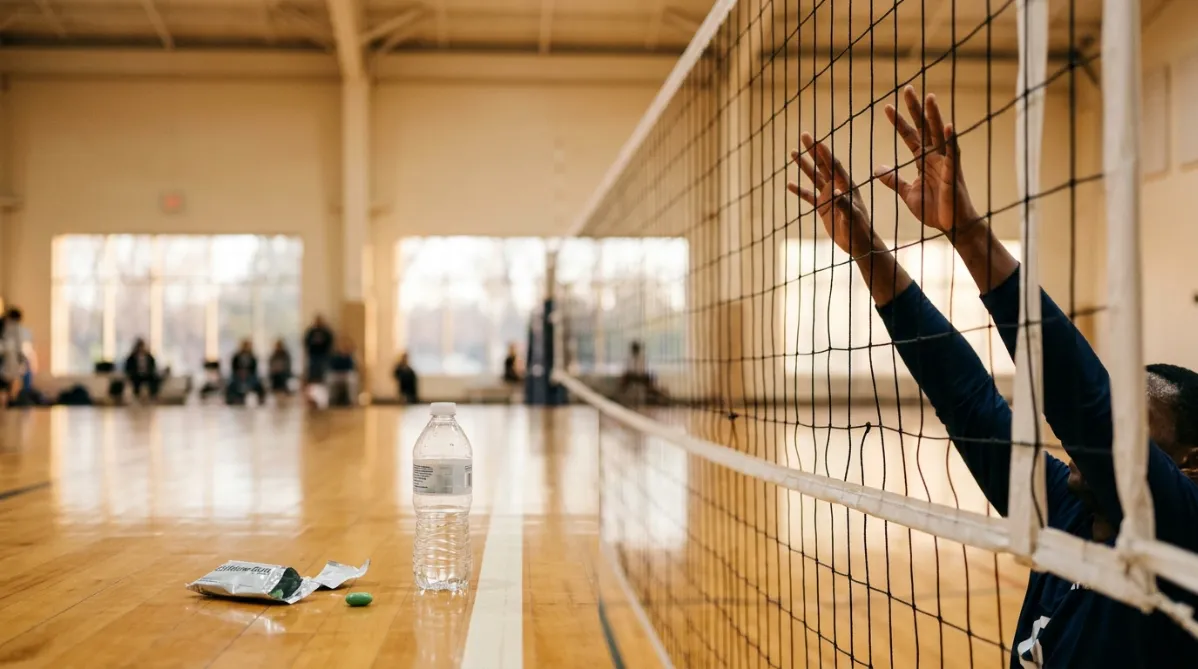
A landscape editorial photograph of a volleyball net in a softly lit indoor gym, shot from a low angle on the court. In the foreground, a pair of athletic hands in mid-block reach above the net, fingers spread, caught in crisp focus. The athlete's face is out of frame, so the attention stays on the hands and the net. In the lower left foreground, a small open foil pack of caffeine chewing gum sits on the polished maple floor, with two mint-green gum pieces beside it and a clear water bottle. The pack is unbranded and minimal.

The background is a warm blur of honey-toned hardwood, pale gym walls, and tall windows with diffused late-afternoon light streaming in. Dust motes glow in the light shafts. The palette is muted and modern: warm wood amber, soft cream, sage green, and a touch of deep navy from the athlete's jersey. Shallow depth of field and gentle film grain give the image a refined, magazine-like feel. The composition follows the rule of thirds, with the hands and net on the right and open negative space on the left, where headline text could sit.

The mood is calm, focused, and slightly cinematic, like a feature in a contemporary sports science journal. The lighting is soft and natural, with long gentle shadows across the court lines. No futuristic or digital elements, no charts, no text. The overall look is clean, tactile, and editorial.
nutrition

Fadiga reduziu reações em 18 %; goma de cafeína limitou a 3 %

BY DR. GYMBRO ·

Após um rigoroso protocolo de fadiga por bloqueio repetido, jogadoras de vôlei de elite que usaram placebo tiveram a sequência de bloqueio reativa 18,4 % mais lenta. Com goma de cafeína de 6 mg/kg, a desaceleração foi de apenas 3,0 %, e com 3 mg/kg ficou em 6,4 %. A potência do salto de bloqueio e a rigidez do salto de queda também se mantiveram melhores com cafeína. Contudo, o estudo contou apenas 15 atletas, o cegamento foi incompleto e os efeitos colaterais foram mais frequentes na dose maior, sem que nenhuma dose fosse considerada a melhor. Veja o que esses números significam em miligramas reais e quem pode realmente se beneficiar.
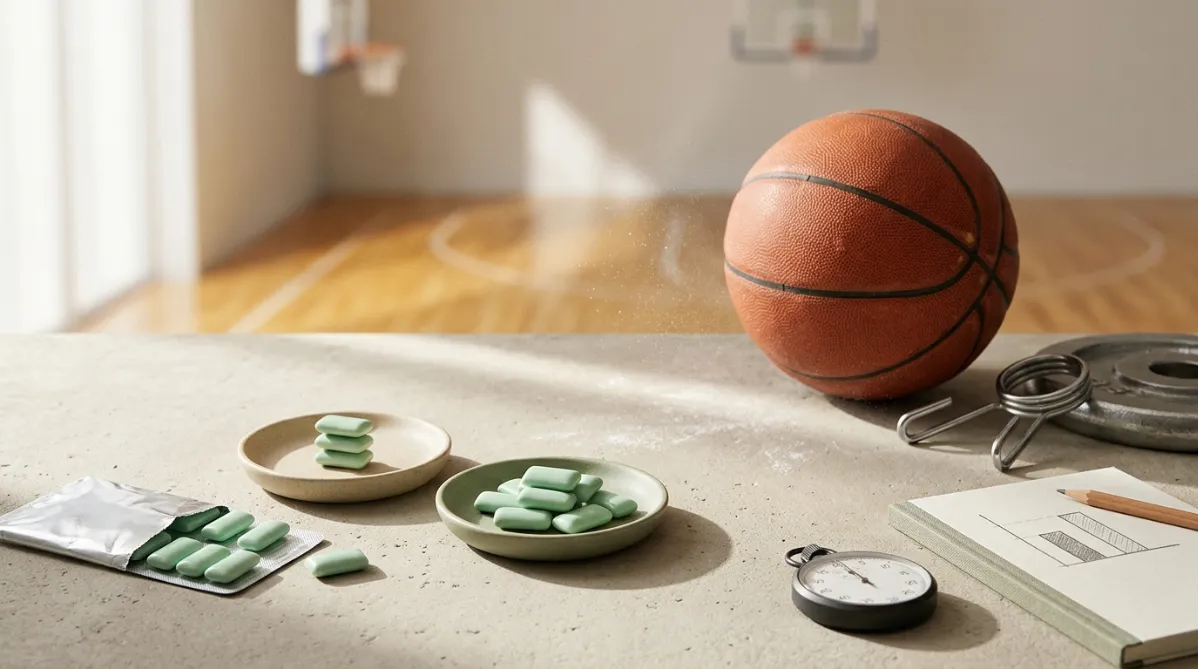
A landscape editorial still life on a pale warm-gray concrete surface, shot from a slightly elevated three-quarter angle in soft diffused morning window light. In the foreground left, a small open foil blister pack of mint-green caffeine gum sits beside two neatly arranged piles of gum pieces, one with three pieces and one with six, each on a small matte ceramic dish in oat and sage tones. The pieces are slightly glossy, rounded rectangles with crisp shadows. In the center-right, a worn leather basketball rests on the surface with deep amber-orange tones and visible pebbled texture. Next to it is a loosely chalked barbell collar and a single steel weight plate edge, partly out of focus. A minimalist analog stopwatch with a matte white face and a thin black hand lies at the lower right, and a slim notebook with a pencil rests nearby. The page shows a simple hand-drawn bar graph of two equal bars, with no legible text. In the soft-focus background, a blurred indoor basketball court with warm honey-colored hardwood and distant hoop lines fades into creamy bokeh. A narrow band of sunlight crosses the scene diagonally and picks out chalk dust particles in the air. The palette is muted and modern: sage green, warm oat, terracotta orange, charcoal, and cream. The composition leaves open negative space on the upper left for title overlay. Shallow depth of field, fine film grain, and a calm, clean magazine aesthetic like a contemporary health and science journal. No people, no text, no futuristic elements.
science research

Goma de cafeína e desempenho no mesmo dia: por que 3 mg/kg igualou 6

BY DR. GYMBRO ·

Um novo estudo crossover com jogadores de basquete descobriu que a goma de cafeína a 3 mg/kg melhorou a força, potência, velocidade de sprint e agilidade reativa no mesmo dia quase tanto quanto uma dose de 6 mg/kg. Ambas as doses também aumentaram a velocidade da barra durante o aquecimento pesado com agachamento. Contudo, aos 24 e 48 horas o benefício desapareceu. O estudo não incluiu teste de linha de base nem um grupo somente com cafeína, o que exige leitura cuidadosa dos resultados. Veja o que isso implica em termos de dose, timing e quem pode se beneficiar.

This page is available in