Dr. Gymbro
←

#clinical-research

2 articles
A wide, editorial-style photograph of a clean, bright clinical consultation space with a modern wellness-journal feel. In the foreground, a minimalist matte white tabletop holds a small glass vial with a soft gray label and a sterile syringe laid parallel beside it. Next to them sits a neatly folded stack of printed research pages, with a few subtle sage-green highlighted lines and a simple bar chart in muted tones. A slim stainless steel measuring tape curls loosely nearby, and a fine-point pen rests on the pages.

In the softly blurred midground, the torso of an athletic person in a fitted charcoal training top stands slightly out of focus. One hand rests lightly at the waist, which suggests body composition without showing a face. A weighted matte-black kettlebell and a folded gray gym towel sit on a pale oak bench to one side, a quiet reference to lifters and training.

The background is a calm wall in warm off-white and pale stone, with a tall window to the left. It lets in diffused morning daylight that casts long, gentle shadows across the table. A single green leafy plant in a ceramic pot adds a touch of organic color on the right edge.

The palette is restrained and contemporary: soft whites, warm beige, sage green, charcoal, and a small accent of muted coral. The composition follows the rule of thirds, with the vial and syringe on the left third and open negative space on the right, where headline text could sit. Use shallow depth of field, crisp focus on the vial's glass edges, and subtle highlights on the glass. The mood is thoughtful, credible, and analytical, in the style of a premium health and science magazine. Shoot it as if with a 50mm lens at f/2.8, with natural light, fine grain, and a clean, uncluttered finish.
science research

Injeções de perda de gordura CBL‑514: o ensaio de fase 2 que os praticantes devem ler

BY DR. GYMBRO ·

Um ensaio de fase 2, controlado por placebo, mostrou que as injeções da droga investigacional CBL‑514 reduziram a gordura subcutânea abdominal medida por ultrassom, enquanto o peso corporal praticamente não mudou. Após 8 semanas, 69,6 % dos participantes que permaneceram no grupo tratado perderam ao menos 150 mL de gordura, contra 0 % no placebo, mas o estudo foi cego único, quase metade dos tratados abandonou o protocolo e o acompanhamento foi curto. O composto ainda é experimental, não é um queimador de gordura e não possui aprovação regulatória. Este artigo resume o que realmente foi testado, quais foram os achados e o que um praticante em fase de definição deve extrair dessa pesquisa. Não se trata de orientação médica.
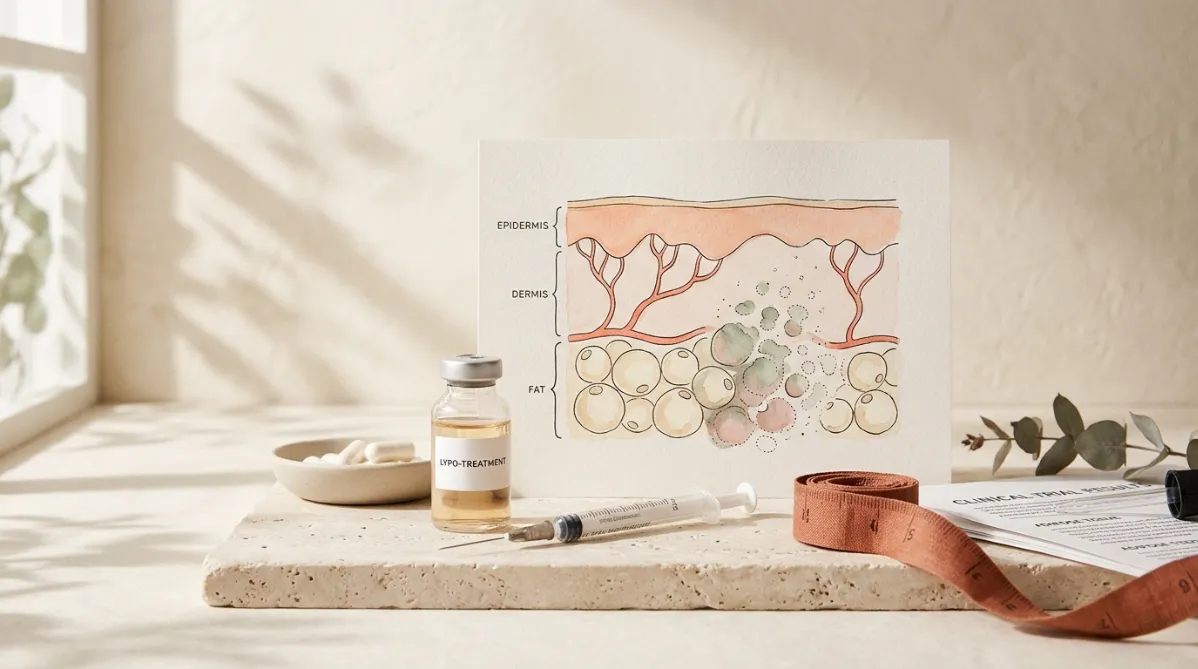
A softly lit, minimalist editorial still life on a warm off-white textured paper backdrop. In the center, a clean glass laboratory vial with a pale amber liquid sits beside a slim, sterile syringe with a fine needle, both placed on a pale travertine stone slab. Behind them, a large translucent cross-section illustration of skin layers is rendered as a delicate, hand-painted watercolor and ink diagram: soft peach epidermis, creamy yellow subcutaneous fat lobules shaped like clustered round cells, and thin coral capillary lines. A few of the fat cells in the diagram are gently fading, with dissolving edges and tiny dotted outlines to suggest cells quietly breaking down, painted in muted sage green and dusty rose.

On the left, a small ceramic dish holds a handful of matte white capsules, set aside and out of focus, hinting at what the treatment is not. On the right, a folded linen measuring tape in soft terracotta drapes across the stone, and a small stack of research papers with blurred text sits beneath a sprig of dried eucalyptus. Subtle botanical shadows from a window fall diagonally across the scene, creating a calm, natural-light atmosphere.

Color palette: warm cream, soft peach, sage green, muted terracotta, dusty rose, and touches of amber. The composition is balanced, with generous negative space on the upper left for title overlay. Shot as if with a 50mm lens, shallow depth of field, crisp focus on the vial and syringe, gentle film grain, and a refined, modern health-journal aesthetic. Contemporary, calm, trustworthy, and tactile. Landscape 16:9 format.
science research

Como o CBL‑514 funciona? A ciência por trás

BY DR. GYMBRO ·

CBL‑514 não é um estimulante, nem um termogênico, nem um GLP‑1. Trata‑se de um injetável investigacional que visa desencadear a apoptose de adipócitos em uma região subcutânea específica. O mecanismo, que envolve inibição de DYRK1b e regulação positiva de caspase‑3 e da via Bax/Bcl‑2, foi descrito em estudos pré‑clínicos divulgados pelo patrocinador. No ensaio de fase 2, o volume de gordura abdominal medido por ultrassom diminuiu, enquanto o peso corporal médio praticamente não variou. A seguir, veja o que a ciência comprova, o que ainda não demonstra e por que as evidências humanas do mecanismo permanecem indiretas.

This page is available in