
Dr. Gymbro
←

#placebo effect

2 articles
A landscape editorial photograph in a bright, modern gym studio with soft natural light pouring through tall windows. In the foreground, a matte ceramic cup and a small glass jar of plain white powder sit on a light oak bench, with a wooden scoop resting beside them and a few loose grains dusted across the wood. The jar has no label, which hints at mystery without being heavy-handed. Slightly out of focus behind them, a female athlete in a sage green athletic set stands at a barbell, chalked hands gripping the bar, her expression calm and focused. A male cyclist on a stationary bike is blurred in the far background. The palette is warm neutrals: cream, soft sand, pale oak, muted sage, and a touch of terracotta, with gentle golden-hour highlights and soft shadows. The composition follows the rule of thirds, with the cup and jar in the lower left, the athlete on the right, and open negative space in the upper area for headline text. The depth of field is shallow, with a creamy bokeh background. The mood is contemplative, curious, and trendy, like a contemporary health and science magazine cover. Fine film grain, subtle matte finish, clean minimalist styling, and no text or logos.
science research

Cafeína Falsa Ainda Deixa Atletas Mais Fortes e Mais Rápidos

BY DR. GYMBRO ·

E se parte do impulso do seu pré‑treino vier da sua cabeça e não da colher? Uma meta‑análise de 2026, com 17 estudos, descobriu que um placebo que os atletas acreditavam ser cafeína ainda melhorou o desempenho esportivo (d = 0.49) em supino, provas de ciclismo contra‑relógio e sprints repetidos. Os efeitos foram maiores quando os pesquisadores estavam cegos e em estudos com mais mulheres, embora a evidência seja de baixa certeza e alto risco de viés. Isso não é motivo para abandonar a cafeína real na dose de 3‑6 mg/kg, mas lembra que a expectativa também é uma variável de performance. Veja o que os dados mostram e quem deve ter cautela.
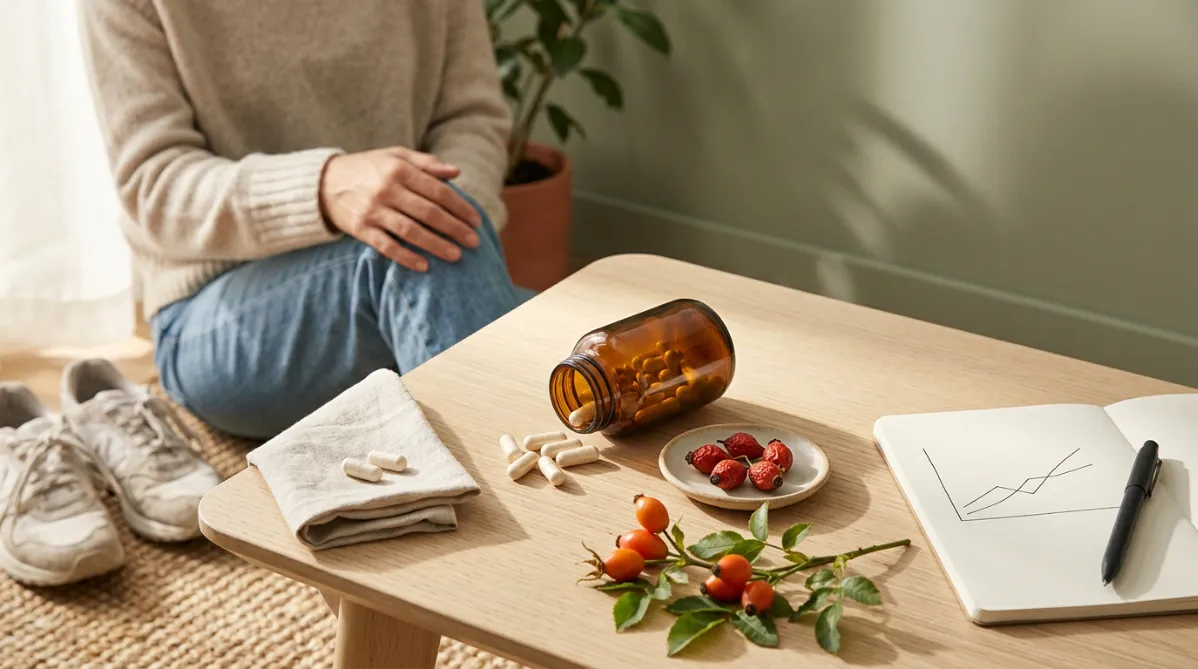
A softly lit editorial still life on a pale oak table, shot from a slightly elevated three-quarter angle in a wide landscape frame. In the center sits an open amber glass supplement bottle on its side, with a small scatter of cream-colored capsules spilling onto the wood. Next to it is a ceramic dish holding a few dried rosehips in deep coral red, and a sprig of fresh rosehip with glossy orange-red berries and green leaves lies across the foreground. On the left, a neat pair of matching white capsules rests on a folded linen napkin, a quiet visual nod to the placebo and treatment groups. Behind them, slightly out of focus, a woman's hands in a soft oatmeal knit sweater rest on a knee in relaxed denim, suggesting everyday movement without showing a face. A pair of worn, clean running shoes sits at the edge of the frame on a woven jute rug. On the right side of the table, a minimalist notebook lies open with a hand-drawn simple line graph, two gently rising lines nearly overlapping, next to a matte black pen. Morning window light streams from the left, casting long, soft shadows and a warm golden glow with gentle highlights on the glass bottle. The background is a muted sage-green wall with a hint of a leafy plant in a terracotta pot, creamy bokeh throughout. The palette is earthy and calm: warm beige, sage, terracotta, coral red, and soft white. The mood is thoughtful, trustworthy, and quietly skeptical, like a modern health and science journal. Clean composition with generous negative space on the upper right for headline overlay. Fine-grain film texture, shallow depth of field, natural color grading, high-end lifestyle magazine photography.
nutrition

O Suplemento para Joelhos que Errou o Alvo, Mas Ainda Chamou a Atenção

BY DR. GYMBRO ·

Um novo ensaio randomizado avaliou um suplemento de cartilagem de frango hidrolisada e roseira em 138 adultos ativos com dor no joelho, e o desfecho principal não mostrou diferença. Tanto o grupo que recebeu o suplemento quanto o que recebeu placebo melhoraram mais de dois pontos em uma escala de 10 pontos. Análises exploratórias sugeriram benefícios para a dor nas atividades diárias, sobretudo em mulheres pós‑menopáusicas, mas esses sinais provêm de subgrupos pequenos e não são conclusivos. O estudo foi escrito por funcionários das empresas responsáveis pelo produto. Veja o que os dados revelam, o que não revelam e como pensar em experimentá‑lo.

This page is available in