Dr. Gymbro
←

#potassium

1 article
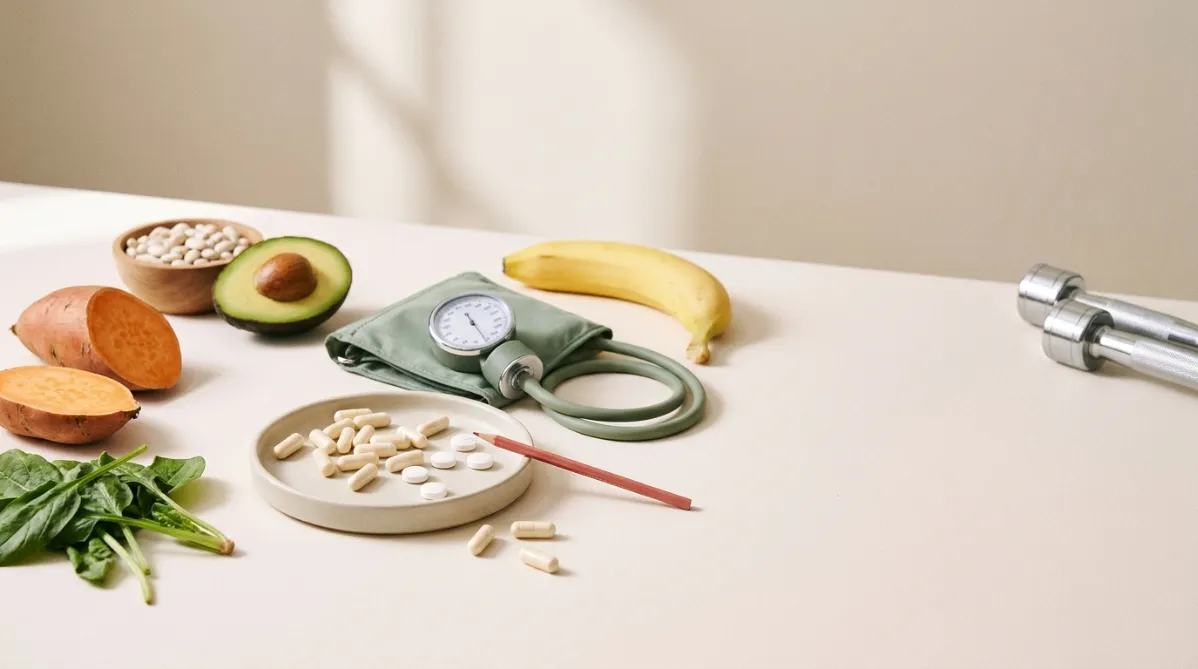
A bright, minimalist editorial still life on a soft warm-white surface, shot from a slightly elevated angle in natural morning light. In the center-left, a small matte ceramic dish holds a handful of pale cream capsules and tablets, a few spilling casually onto the surface. Beside it sits a sleek analog blood pressure cuff, softly coiled, in muted sage green fabric. Fresh potassium-rich foods are arranged in a loose, balanced composition around the pills: a halved ripe avocado with its pit, a peeled banana, a cut sweet potato with glowing orange flesh, a few leafy spinach stems, and a small cluster of white beans in a wooden bowl. A single slim pair of chrome dumbbell handles or a small chalked kettlebell rests discreetly at the right edge, hinting at the lifter audience without dominating the frame.

The palette is soft and modern: warm cream, sage green, terracotta orange, and buttery yellow, with subtle blush-pink shadows. The background is a smooth, out-of-focus pale oatmeal wall with a gentle diagonal shadow from a window, creating a calm, airy mood. The right third of the frame has generous negative space for headline text. A faint, delicate line of hand-drawn-style red accent, such as a small red ribbon or a thin red pencil resting near the pills, adds a quiet "caution" note without feeling alarming.

The overall look is clean, contemporary health-journal photography with shallow depth of field, crisp focus on the pills and produce, soft diffused highlights, and fine natural texture in the ceramic, linen, and food surfaces. Subtle film-like grain, editorial styling, and a calm, trustworthy, slightly cautionary tone. 16:9 landscape composition.
science research

Comprimidos de Potássio Reduzem Pressão Arterial em 5 mmHg em 4 Semanas, Mas Há um Problema

BY DR. GYMBRO ·

Uma meta‑análise recente de 19 ensaios randomizados mostrou que o potássio oral diminui a pressão sistólica clínica em cerca de 5 mmHg após quatro semanas. No entanto, as leituras ambulatoriais tiveram redução menor e os efeitos adversos ocorreram em 12,8 % dos participantes, contra 3,2 % nos grupos controle. Os achados aplicam‑se à hipertensão primária não tratada, e suplementos de potássio podem ser perigosos para quem tem doença renal ou faz uso de inibidores da ECA, ARBs ou diuréticos poupadores de potássio. A seguir, veja o que os dados revelam, o que ainda não sabem e como quem treina com dietas pobres em frutas e legumes deve encarar a questão.

This page is available in