Dr. Gymbro
←

#concurrent training

1 article
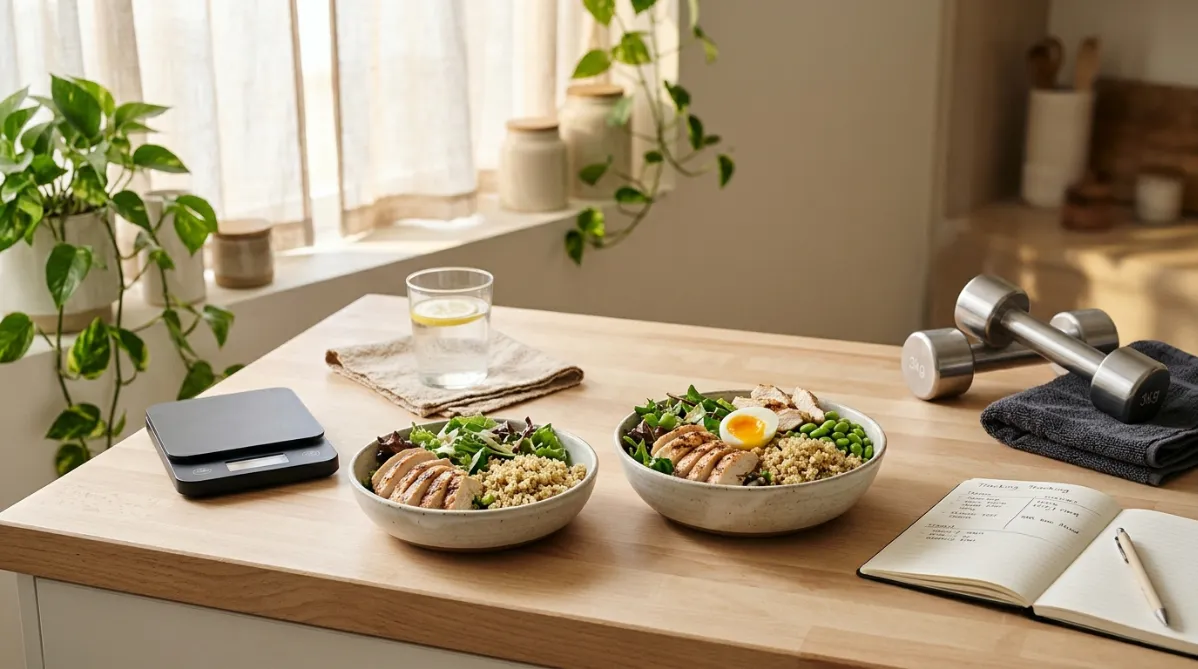
A wide landscape editorial photograph of a clean, sunlit kitchen counter in soft natural morning light, styled like a modern wellness journal cover. In the foreground, two matching ceramic bowls sit side by side on a pale oak butcher block. The left bowl holds a modest portion of sliced grilled chicken breast, quinoa, and greens. The right bowl holds a noticeably larger, double-sized portion of the same ingredients, with extra chicken, a soft-boiled egg, and edamame. The contrast in portion size is clear but elegant. Beside the bowls are a matte black digital kitchen scale, a tall glass of water with a lemon slice, and a small linen napkin in warm oatmeal tone. A pair of sleek brushed-steel dumbbells rests slightly out of focus on the counter's edge, and a folded charcoal gym towel sits next to them. In the soft-focus background, a large window with sheer curtains lets in diffused golden light, and a trailing green pothos plant adds an organic touch. A small, minimal notebook with a pen lies open to the side, suggesting careful tracking. The color palette is muted and cohesive: warm creams, sage green, soft terracotta, charcoal, and natural wood. Shallow depth of field, crisp focus on the bowls, gentle shadows, and subtle film-like grain. Composition follows the rule of thirds with generous negative space on the upper right for headline text. The mood is calm, thoughtful, and trustworthy, like a contemporary health and science magazine feature. There are no people, no text, and no futuristic elements.
nutrition

3,2 г/кг белка в течение 16 недель: навредили ли почкам атлеты?

BY DR. GYMBRO ·

Употребление вдвое большего количества белка, чем обычно, может представлять риск для почек? В 16‑недельном рандомизированном исследовании с 44 мужчинами, занимающимися силовыми тренировками, сравнивали дозу 3,2 г/кг и 1,6 г/кг. Статистический анализ не выявил значимых различий в почечных маркерах, независимо от того, тренировались ли участники только с отягощениями или сочетали силовые занятия с кардио. Однако в группах с высоким потреблением наблюдались небольшие повышения уровня BUN и цистатина C и небольшие падения eGFR, которые авторы называют лишь описательными. Ниже — что это значит, какие вопросы остаются открытыми и кому стоит быть особенно осторожным.

This page is available in