Dr. Gymbro
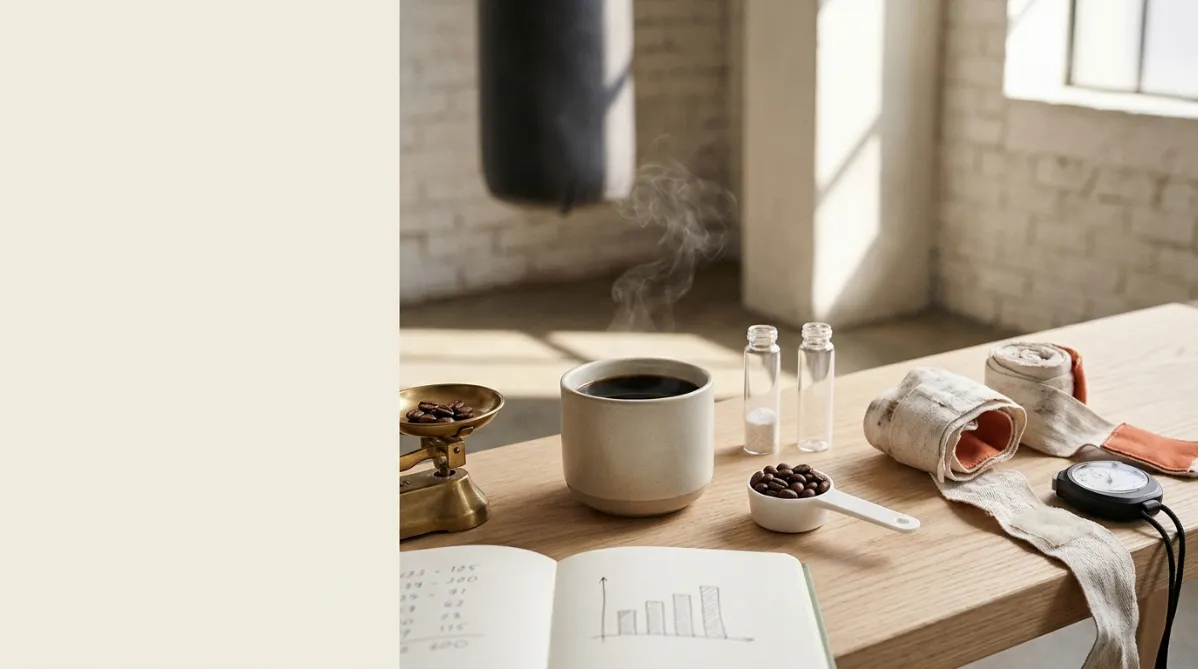
A landscape editorial photograph with a modern, clean magazine feel, shot on a pale warm-gray concrete surface in soft natural window light from the left. In the foreground, two matte white ceramic espresso cups sit side by side. The left cup holds a small amount of dark espresso with golden crema. The right cup is filled twice as high. Beside them, two small stainless steel scoops hold fine coffee-colored powder, one half full and one heaped, suggesting a dose comparison without any text or labels. A pair of worn red leather boxing gloves rests slightly out of focus behind the cups, laces loosely draped, with a white hand wrap rolled neatly beside them. A minimalist digital kitchen scale in matte black sits at the edge of the frame, with a few roasted coffee beans scattered across the surface. In the soft-focus background, a boxing gym corner appears: a hanging heavy bag in muted charcoal, pale wood plank flooring, and a tall window with diffused morning light. The palette is warm cream, espresso brown, brick red, and soft slate gray, with gentle shadows and a shallow depth of field. The composition follows the rule of thirds, with the cups and scoops in the lower left third and open negative space on the right for headline overlay. The look is tactile and refined, like a high-end health and performance journal. It has natural grain, subtle contrast, and a calm, confident mood. There are no people, no text, no logos, and no futuristic elements.
Nutrition

双倍咖啡因对拳击手帮助有限——真相揭秘

Dr. Gymbro · · 1 min read

你以为预训练粉加双倍咖啡因就能让表现翻倍吗?

最新的实验在竞技拳击手中给出了答案——可能并不成立。研究人员将 3 mg/kg 与 6 mg/kg 的咖啡因与安慰剂进行比较,发现两种剂量都能提升跳跃表现,但 更高剂量并未带来持续的额外提升。

研究到底是怎么做的

  • 发表期刊:Journal of the International Society of Sports Nutrition(2026)
  • 作者:Tuerhongjiang 等人
  • 设计:随机、双盲、安慰剂对照、交叉
  • 受试者:15 名男性拳击手,全部达到中国国家二级及以上运动员标准

每位拳击手按随机顺序完成三种处理,之间间隔一周洗脱期:

  1. 安慰剂
  2. 3 mg/kg 咖啡因(CAF3)
  3. 6 mg/kg 咖啡因(CAF6)

研究团队测量了 下蹲跳(CMJ)、弹力俯卧撑(BPU) 以及优势侧肩部和膝关节的等速峰扭矩(PT)。测试在基线以及摄入后 30 分钟 与 60 分钟 进行。统计上使用 Holm 校正,对 10 项预设交互检验进行多重比较,以控制假阳性率。

头条结论:两种剂量在 60 分钟时都有效

在计划的 60 分钟评估 中,3 mg/kg 与 6 mg/kg 均显著高于安慰剂,提升了 CMJ 的跳高、峰功率以及相对峰功率。两者之间没有显著差异。这说明对下肢爆发力而言,较低剂量已经足以捕获可观察的收益,剂量翻倍并未带来额外的可检测提升。

6 mg/kg 领先的几项指标

  • 弹力俯卧撑:CAF6 在 60 分钟时的向心冲量、平均功率和峰功率均高于安慰剂,而 CAF3 未出现显著差异。
  • 膝伸展扭矩:这是最明确的剂量特异性结果,CAF6 在 60 分钟时同时优于安慰剂和 CAF3。
  • 肩部扭矩:在部分时间点,屈伸峰扭矩在摄入咖啡因后上升,但未出现一致的剂量优势。

作者总结,响应模式随剂量和任务而异,6 mg/kg 并未在整体上优于 3 mg/kg。更大剂量只在少数指标上略有优势,不能算作全线提升。

毫克/公斤速查表

以下是不同体重对应的咖啡因剂量(毫克):

体重 3 mg/kg 6 mg/kg
60 kg(132 lb) 180 mg 360 mg
70 kg(154 lb) 210 mg 420 mg
80 kg(176 lb) 240 mg 480 mg
90 kg(198 lb) 270 mg 540 mg
100 kg(220 lb) 300 mg 600 mg

检查你的预训练粉标签。许多产品标示每份 200–400 mg,并常与其他兴奋剂混合。如果一次取两勺、再加一杯咖啡和一罐能量饮料,摄入量很可能已经超过 6 mg/kg 而不自知。

时间安排:大约 60 分钟前摄入

显著效果主要出现在 60 分钟评估 时段,这是本研究最有力的窗口。因此在训练前约一小时摄入咖啡因最为合适。摘要特别强调了 60 分钟而非 30 分钟,所以不要指望刚开始运动时就能获得顶峰效益。

过量的陷阱:剂量更大不一定更好

本研究的摘要未报告副作用,以下内容仅为一般背景,而非本文的直接发现。高剂量咖啡因常伴随颤抖、焦虑、心率升高、胃部不适以及睡眠紊乱。对拳击手而言,过度兴奋可能削弱专注和恢复,夜间摄入更会影响睡眠质量。

如果 3 mg/kg 已经带来大部分可测收益,提升至 6 mg/kg 只会在有限的额外收益中增加副作用风险。对膝伸展扭矩等少数指标可能值得一试,但这并非免费升级。

适用人群

  • 力量‑爆发和格斗类运动员,寻找一个合理的起始剂量。
  • 举重爱好者和健身者,怀疑自己的预训练粉剂量已超需求。
  • 对咖啡因敏感的人,更倾向于从低剂量开始。

实用做法是先以 约 3 mg/kg 为基准,在训练前约一小时摄入,只有在明确需求且耐受良好时才考虑上调。咖啡因反应因人而异,务必先在平时训练中试验,而不要在赛事当天首次使用。

需要留意的局限性

  • 未测试拳击技术动作。 作者说明结果仅针对选定的神经肌肉指标,不能直接等同于拳击或比赛表现的提升。
  • 样本量小。 仅 15 名男性拳击手,结果可能不适用于女性或其他水平的运动员。
  • 实验室环境。 跳跃、俯卧撑和等速扭矩是受控指标,无法完整复制实战情境。
  • 剂量‑任务交互不一致。 摘要指出个体响应分类仍属探索阶段。
  • 日常咖啡因摄入未控制。 研究未说明受试者平时的咖啡因摄入量,个人耐受性仍是未知数。

结论

在受过训练的男性拳击手中,3 mg/kg 的咖啡因在 60 分钟时对跳跃表现的提升几乎等同于 6 mg/kg。更高剂量仅在少数项目(如弹力俯卧撑功率和膝伸展扭矩)上表现出优势。想要加大剂量前,请先算好自己的 mg/kg,确保在训练前约一小时摄入,并记住目前仍缺乏证据表明这会直接转化为更有力度的拳击表现。

来源:Tuerhongjiang 等. Acute effects of 3 and 6 mg·kg⁻¹ caffeine on strength‑power performance and isokinetic peak torque in competitive male boxers: a randomized, double‑blind, placebo‑controlled crossover trial. J Int Soc Sports Nutr. 2026. DOI: 10.1080/15502783.2026.2743368 | PubMed
Original study

Read the original research on pubmed.ncbi.nlm.nih.gov →

This article summarizes published research for general information. It is not medical advice.

DG

Written by

Dr. Gymbro

Dr. Gymbro writes for Dr. Gymbro: science-backed fitness, nutrition & performance.

Related Articles

A wide editorial still life on a pale, warm-toned concrete surface in soft morning window light. In the center-left, a shallow matte ceramic bowl holds a small pile of bright red coffee cherries with glossy skins, a few sliced open to reveal pale mucilage and paired green-tan beans. Beside it, a small glass dish of fine, golden-brown powdered extract with a tiny wooden scoop resting on its edge. A sprig of coffee plant leaves, deep green and waxy, arcs across the foreground.

On the right side, slightly out of focus, a sleek road cyclist's handlebar and a matte black water bottle lean against a light plaster wall, suggesting athletic training without showing a person. A minimalist analog stopwatch with a clean white face and thin black hands sits in the mid-ground, angled toward the camera, its hands paused near the fifteen-minute mark. A folded linen cloth in oatmeal beige and a single small espresso cup with a thin crema ring add quiet texture.

The color palette is restrained and modern: cherry red, sage green, cream, soft terracotta, and charcoal accents. Light comes from the left, casting long, gentle shadows with a subtle warm glow and a hint of dust in the air. Shallow depth of field with crisp focus on the cherries and stopwatch, creamy bokeh in the background. Composition leaves open negative space in the upper right for a headline overlay. The overall feel is a clean, trendy health-and-science magazine cover: tactile, natural, minimal, and calm, shot in a 16:9 landscape frame with fine film-like grain and true-to-life tones.
nutrition

咖啡樱桃提取物:200 mg 咖啡因提升骑行功率 4.6%

BY DR. GYMBRO ·

摄入 200 mg 全咖啡果提取物(含同等量咖啡因)后,受过训练的骑手在 15 分钟计时赛中的功率输出提升约 4.6%。然而,关于该提取物能加速糖原再合成的说法并未得到实验验证。该随机、双盲、交叉设计的试验仅招募 12 名骑手,且由行业赞助,缺少单独咖啡因对照组。以下将阐明数据说明了什么、未说明什么,以及哪些人可能想尝试。

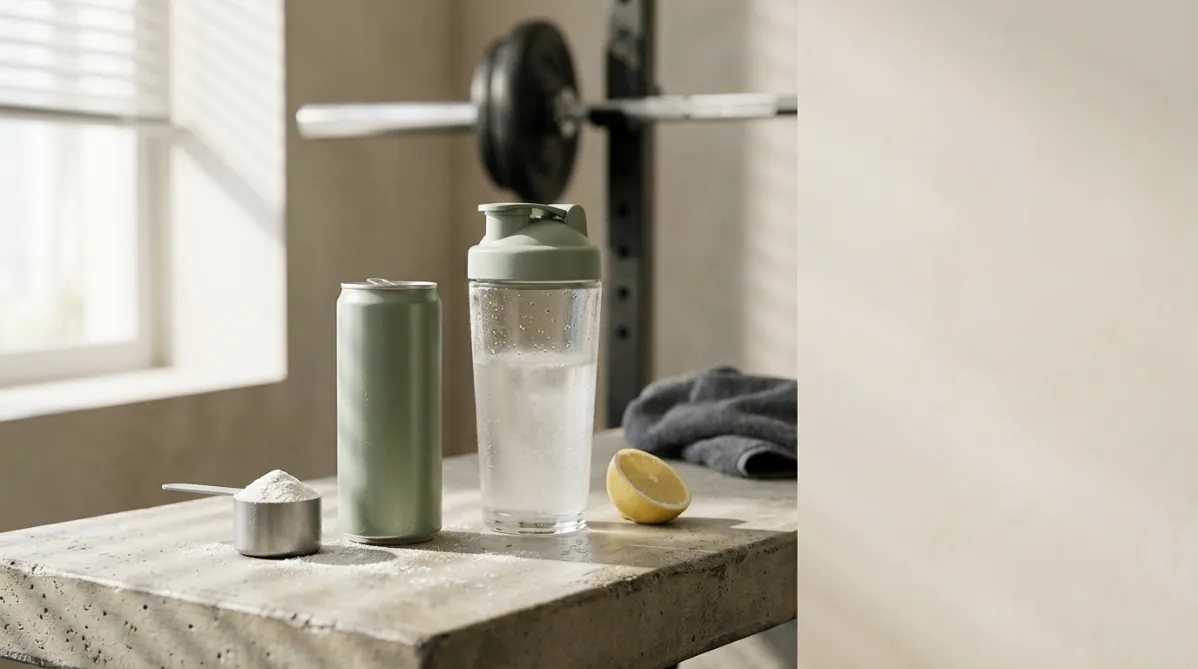
A sleek aluminum energy drink can and a matte scoop of white pre-workout powder sit side by side on a pale concrete gym bench, lit by soft morning window light. The can is slim and minimalist, with a muted sage green label and no legible text. Beside it is a clear glass shaker half full of cloudy, lightly frothy liquid with condensation beading on its surface. A few fine grains of powder are scattered across the bench, catching the light. Behind them, slightly out of focus, a stainless steel barbell rests on a rack, and a folded charcoal gym towel sits at the edge of the frame.

The color palette is warm neutral: oatmeal, soft gray, and sage, with a single accent of pale citrus yellow from a halved lemon wedge placed near the glass. A thin, elegant shadow from the window blinds falls diagonally across the scene, giving it an editorial, magazine-style rhythm. The composition leaves generous negative space on the right third of the frame, a smooth blurred wall in warm off-white, suitable for headline text overlay.

The shot is a low-angle, shallow depth-of-field product-style photograph, as if taken with an 85mm lens at f/2. The foreground objects are tack sharp and the background melts into creamy blur. The mood is calm, clean, and modern, like a wellness or science journal feature. Subtle film grain and gentle contrast add a tactile, contemporary lifestyle feel. There are no people, no logos, and no futuristic or sci-fi elements, just a quiet, considered still life that suggests the choice between a canned drink and a scooped supplement.
nutrition

你的能量饮料或许能当健身前补剂——但有一点关键

BY DR. GYMBRO ·

咖啡因和牛磺酸常一起出现在能量饮料和健身前补剂中,但它们真的能提升运动表现吗?一项纳入 11 项随机对照试验(共 234 名受试者)的最新元分析显示,峰值功率和耐力时间有中等幅度的提升,且主观用力感下降;心率无显著变化,反应时间的结果因研究异质性大而难以得出可靠结论。由于样本量有限,尚不能确认牛磺酸在咖啡因之外是否还有额外作用。下面给出具体数据并说明哪些人需要慎重考虑。

A wide, editorial-style still life shot from a slightly elevated angle on a pale oak gym bench, bathed in soft morning window light. In the center sits a matte ceramic cup of black coffee with delicate steam curling upward, flanked by a small white scoop of coffee beans and two identical glass vials, one filled with a few grains of fine powder and one empty, hinting at dose comparison. Next to the cup rests a pair of worn white boxing hand wraps, loosely coiled, and a slim black stopwatch with its face softly visible. In the foreground, a minimalist notebook lies open with blurred handwritten numbers and a simple pen sketch of a bar graph with bars of equal height, subtle and unreadable, suggesting a null result without any legible text. A small brass kitchen scale sits to the side with a few coffee beans on its tray.

In the soft-focus background, a boxing gym interior is visible: a hanging heavy bag in muted charcoal, exposed brick wall painted off-white, and tall windows casting long diagonal light across the floor. The color palette is warm and restrained: cream, sand, espresso brown, soft charcoal, with a single accent of muted terracotta orange in the hand wraps and a faint sage green in the notebook cover. Shallow depth of field with creamy bokeh, fine film grain, and gentle shadows give it a contemporary lifestyle-magazine and wellness-journal feel. The composition leaves generous negative space on the left third for headline overlay. Clean, calm, trendy, and tactile, with natural textures like wood grain, ceramic glaze, and cotton fabric. No people, no text, no futuristic elements.
science research

低剂量咖啡因咖啡对精英格斗选手冲刺表现无提升

BY DR. GYMBRO ·

你真的以为赛前咖啡能让冲刺更有力吗?一项针对 15 名国家级格斗运动员的随机、双盲交叉试验发现,剂量为 1.5 和 3 mg/kg(约 68 kg 运动员对应 100 和 200 mg)的咖啡因并未提升表现。峰值功率、平均功率、疲劳指数以及估算的能量系统贡献均与无咖啡因对照没有差异。不过这只是一次样本量较小的阴性结果,不能证明咖啡因无效,而大多数显示正面效果的研究使用的是 3‑6 mg/kg 的胶囊剂量。下面列出剂量计算、研究局限以及下一次训练前该怎么做。

A wide, editorial-style flat lay photographed from slightly above on a pale oak gym bench with a soft matte finish. On the left, a small white ceramic cup of black coffee sits on a matching saucer, with a thin curl of steam rising and catching warm window light. Beside it is a second, slightly larger handleless stoneware mug in muted sage green, also filled with coffee, so the pair suggests one to two cups. In the center-right foreground rests a sleek matte-black steel barbell plate, partly overlapping a brushed-steel dumbbell with fine knurling. A folded charcoal gym towel and a clean white chalk-dusted wrist strap lie casually to one side. A small scatter of whole roasted coffee beans spills across the bench in front of the cups, glossy and deep brown. Near the bottom edge, a minimalist analog kitchen scale in soft cream with a thin black needle hints at precise dosing, without any readable numbers or text.

Soft morning sunlight streams in from the upper left, creating long, gentle shadows and a warm golden glow against cool neutral tones. The background is a softly blurred, airy home gym or boutique training studio with out-of-focus squat rack uprights, pale concrete walls, and a leafy green plant in a terracotta pot adding a touch of organic color. The palette is restrained and modern: warm cream, espresso brown, charcoal, sage green, and hints of brushed silver. Shallow depth of field keeps the cups and beans tack sharp while the background melts into creamy bokeh. The composition leaves generous negative space on the right third for a title overlay, with a balanced, calm, premium magazine feel, like a contemporary wellness and sports science journal. High-resolution, natural color grading, subtle film grain, realistic textures on ceramic, steel, and coffee crema.
nutrition

举重前该摄入多少咖啡因?元分析显示 1–2 mg/kg 仍有效

BY DR. GYMBRO ·

标准的举重前咖啡因用量是 3–6 mg/kg,通常需要喝好几杯咖啡或大勺预训练补剂。2022 年对 12 项试验的元分析发现,仅 0.9–2 mg/kg 的剂量也能提升力量(d≈0.17)、耐力(d≈0.21)和平均杠速(d≈0.56)。对大多数训练者而言,这相当于一到两杯咖啡。虽然效果不算大,且数据来自单次急性实验,但结果暗示少量咖啡因同样能带来收益。

This page is available in