Dr. Gymbro
A clean, editorial still life shot from a slightly elevated angle on a pale oatmeal-colored stone countertop, lit by soft natural window light from the left that casts long, gentle shadows. In the center sits an open, unlabeled amber glass supplement bottle on its side, with a small scatter of cream and white capsules spilling toward the viewer. Beside it, a matte ceramic dish holds a few capsules and a pinch of coarse sea salt. To the right, a neatly arranged group of whole foods that are natural zinc and magnesium sources: halved oysters on a small slate board, a small bowl of pumpkin seeds, a handful of raw cashews, and a few dark green spinach leaves. In the left foreground, a worn leather gym notebook lies open with minimal handwritten tally marks and a simple hand-drawn flat line graph in dark ink, with a brass pen resting across it. A single chrome dumbbell handle edges into the frame at the far left, softly out of focus, and a folded charcoal gym towel sits at the top right corner. The palette is warm and muted: sand, cream, sage green, amber, and charcoal, with a subtle terracotta accent in the ceramic dish. The depth of field is shallow, with the capsules and bottle in crisp focus and the background gently blurred into a soft beige haze. The mood is calm, thoughtful, and skeptical, like a modern health and science magazine feature. The composition leaves generous negative space on the upper right for headline text. The texture is tactile and fine-grained, with a subtle film-like softness and natural contrast. Wide landscape 16:9 framing.
Science & Research

ZMA for Testosterone? 8 Weeks in Lifters Found Nothing

Dr. Gymbro · · 4 min read

ZMA has one of the more colorful backstories in the supplement aisle. It is a bedtime blend of zinc, magnesium and vitamin B6. It rose to fame in the early 2000s on the back of bold claims about testosterone and strength, and it was tied to the notorious BALCO operation through its founder, Victor Conte. An early study in college football players reported impressive gains and fueled the hype. Then a more tightly controlled trial in resistance-trained men came along and found essentially nothing.

That trial, by Wilborn and colleagues, was published in 2004 in the Journal of the International Society of Sports Nutrition. It remains a useful reality check for anyone hoping a nightly capsule will move the needle on hormones or muscle.

What ZMA Actually Is

ZMA stands for zinc magnesium aspartate. It is a commercial formula taken 30 to 60 minutes before sleep. The pitch is simple. Zinc and magnesium are minerals involved in hundreds of enzymatic reactions, and hard-training athletes may lose or under-consume them. Replenish them at night, the theory goes, and you support recovery and the hormonal environment that drives muscle growth, testosterone in particular.

The marketing leaned on an earlier study in American football players. It reported higher testosterone and greater strength gains with ZMA during training. That result was widely cited in supplement advertising, but a single early study in a specific population is not the same as a replicated finding. The Wilborn trial was designed to test the claim more directly.

Inside the Study Design

The researchers recruited 42 resistance-trained men. They averaged 27 years old, about 178 cm tall and 85 kg, with roughly 18.6% body fat. Participants were matched according to fat-free mass and then randomly assigned, in a double-blind fashion, to take either ZMA or a dextrose placebo before bed. Both groups followed the same standardized resistance-training program for eight weeks.

Testing took place at baseline, week 4 and week 8. The battery was thorough:

  • Body composition measured by dual-energy X-ray absorptiometry (DXA)
  • Strength measured by one-rep max on the bench press and leg press
  • Muscular endurance on both upper- and lower-body lifts
  • Anaerobic power measured with a Wingate cycling test
  • Blood work covering zinc and magnesium status, anabolic and catabolic hormones, and general health markers

Data were analyzed using repeated-measures ANOVA, which is appropriate for comparing changes over time between groups.

The Results: No Edge Anywhere

The one nudge in ZMA's favor was serum zinc. It rose 11 to 17% in the ZMA group, but the difference was not statistically significant (p = 0.12). So even the most basic expected effect, getting more zinc into the bloodstream, did not clearly separate the groups.

Everything downstream was flat. The authors reported no significant between-group differences in:

  • Anabolic or catabolic hormone status, including testosterone
  • Body composition
  • 1RM bench press and leg press
  • Upper- or lower-body muscular endurance
  • Cycling anaerobic capacity

The authors concluded that ZMA supplementation during training does not appear to enhance training adaptations in resistance-trained populations. Both groups presumably improved from the training itself, but ZMA added nothing measurable on top.

Where Deficiency Fits In (Context, Not a Finding)

It would be a mistake to read this study as proof that zinc and magnesium don't matter. The trial did not show that. It tested whether adding ZMA improves training outcomes in trained men, and the answer was no.

As general nutritional context, people who are truly low in zinc or magnesium may be in a different situation. Correcting a real shortfall can matter for health, and low zinc status is generally discussed in connection with hormone function. This paper does not demonstrate that ZMA helps deficient lifters. It was not designed to answer that, and the abstract does not frame its results around deficiency. The sensible reading is that supplementing nutrients you already get enough of is unlikely to act as a performance booster. If you suspect a shortfall because of restrictive dieting, heavy sweating or a limited food variety, the first steps are to look at your diet and consider getting tested.

Limitations Worth Keeping in Mind

This was an eight-week trial in 42 men who were already resistance-trained. The results do not automatically extend to women, older adults, beginners, or people in a prolonged calorie deficit. It also tested one commercial product. Still, the study was double-blind, placebo-controlled and used objective measures such as DXA and a wide performance battery. That makes it a stronger test of the claims than the marketing built on the earlier football study.

Practical Takeaways

  • Don't buy ZMA as a testosterone booster. In this trial it did not change testosterone or other measured anabolic and catabolic hormones.
  • Don't expect strength or size gains. 1RM, endurance, anaerobic capacity and lean mass were all unchanged relative to placebo.
  • Put the money into the basics. Progressive training, adequate protein and calories, and consistent sleep have far better evidence behind them.
  • Cover your mineral needs through food first. Meat, shellfish, legumes, nuts, seeds, whole grains and leafy greens supply zinc and magnesium. If you suspect a deficiency, get it assessed rather than guessing.
  • Treat early, flashy results with caution. A single positive study, especially one used to sell a product, deserves replication before you believe it.

Source

Wilborn et al. (2004). Effects of Zinc Magnesium Aspartate (ZMA) Supplementation on Training Adaptations and Markers of Anabolism and Catabolism. Journal of the International Society of Sports Nutrition. DOI: 10.1186/1550-2783-1-2-12 | PubMed: 18500945
Original study

Read the original research on pubmed.ncbi.nlm.nih.gov →

This article summarizes published research for general information. It is not medical advice.

DG

Written by

Dr. Gymbro

Dr. Gymbro writes for Dr. Gymbro: science-backed fitness, nutrition & performance.

Related Articles

A bright, minimalist editorial still life shot from a slightly elevated three-quarter angle on a pale oat-colored stone countertop, bathed in soft natural window light with gentle long shadows. In the center sit two matching matte white supplement scoops, side by side. One is heaped with fine white crystalline powder, the other holds an almost identical pile, so the viewer is invited to compare them. Beside them are two simple frosted glass tumblers of cloudy water, each with a small whisper of powder swirling at the bottom. A third glass of clear water sits slightly apart, as a quiet nod to the placebo.

Scattered around the scene are fresh, sliced watermelon wedges with vivid coral-pink flesh and pale green rinds, and a few sliced green apples with crisp white interiors, hinting at the natural sources of citrulline and malic acid. A small brushed-brass measuring spoon and a minimalist matte sage-green shaker bottle rest at the edge of the frame. Off to one side, a clean ceramic dish holds a few loose grains of powder, and a slim linen notebook with a pencil lies open to a blank page, suggesting data and study notes without any legible text.

The color palette is soft and modern: warm cream, blush coral, sage green, and touches of brass, with a faintly blurred background of a sunlit kitchen or studio with a pale plaster wall. Shallow depth of field keeps the scoops tack sharp while the background melts into a creamy bokeh. The composition leaves generous negative space on the left third of the frame for a title overlay. The overall mood is calm, trustworthy, and trendy, like a contemporary wellness and science journal cover, with crisp detail, subtle film-like grain, and a clean, airy, balanced feel.
science research

Citrulline Malate vs L-Citrulline: Does Malate Actually Matter?

BY DR. GYMBRO ·

Citrulline malate or plain L-citrulline? A new randomized, double-blind, placebo-controlled crossover trial in 43 trained adults tested both against placebo, and the answer might save you money. Neither form improved strength, power, jump performance, rep output, or perceived exertion, and malate added nothing on top of matched citrulline. Here is what the study measured, what the doses were, and the caveats that keep this from being the final word. If you are deciding what to put in your shaker, start here.

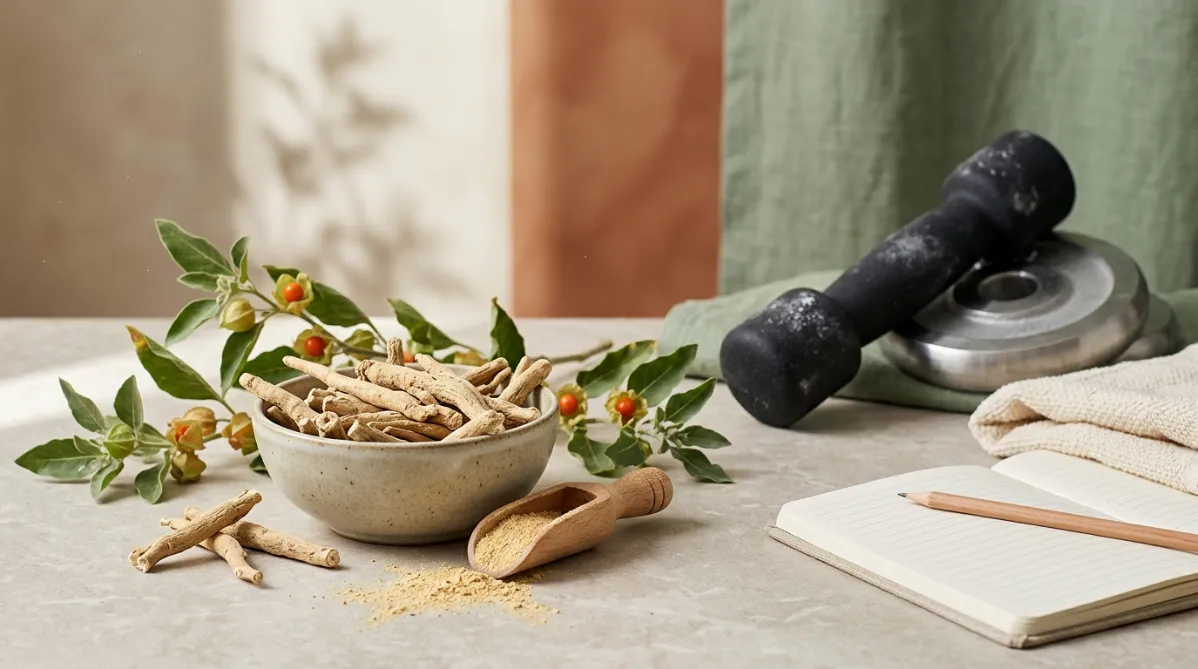
A wide editorial still life on a pale, warm-gray stone surface lit by soft morning window light from the left. In the foreground, a rustic ceramic bowl in matte oatmeal glaze holds dried ashwagandha roots, pale tan and gnarled, with a few scattered beside it. A small wooden scoop dusted with fine golden-beige powder rests next to the bowl. Behind them, a few olive-green ashwagandha sprigs with small orange-red berries in papery husks arc across the frame, adding a quiet pop of color.

Midground right: a matte black chalk-dusted dumbbell handle and a single brushed-steel weight plate lean casually against a linen-textured backdrop in muted sage. A folded cream cotton towel and a slim notebook with a pencil suggest a training log. The notebook is open to blank, softly lined pages with no legible text.

The background fades into a gentle blur of neutral beige and soft terracotta tones, with a hint of a plant shadow cast across the wall in dappled light. Fine dust and powder particles float in the light beams, giving a tactile, organic feel.

The composition follows the rule of thirds: botanical elements on the left and center, gym elements on the right, and negative space in the upper right for headline overlay. Shallow depth of field, crisp focus on the roots and powder, creamy bokeh behind. Color palette: sage green, warm sand, terracotta, charcoal black, and a touch of burnt orange. The mood is calm, modern, and trustworthy, like a premium wellness and science magazine. Photographed on a 50mm lens, natural grain, subtle film-like contrast, clean minimalist styling, high-end editorial photography.
nutrition

The Ancient Herb That Beat Placebo in an 8-Week Lifting Trial: Strength, Muscle Size and Testosterone

BY DR. GYMBRO ·

Could a centuries-old Ayurvedic root really out-lift a placebo? In an 8-week randomized trial of 57 novice lifters, men taking 300 mg of ashwagandha extract twice daily gained more bench-press strength, more arm and chest size, and a bigger testosterone rise than the placebo group. They also lost more body fat. The catch is that the study was small, short and limited to beginner men. Here's what the data show, how the dosing worked, who might benefit and why you should stay skeptical.

A wide, editorial-style flat lay photographed from above on a pale warm-gray linen surface in soft natural window light. At the center, a small open amber glass jar tips gently onto its side, spilling a few cream-colored capsules across the fabric. Next to the jar sits a loose arrangement of fresh mushrooms: a cluster of golden-tan reishi with glossy, lacquered caps, a few slender white enoki stems, a halved shiitake showing its pale gills, and a curl of turkey tail with concentric bands of rust, cream, and charcoal. A small wooden scoop holds a pile of fine beige mushroom powder.

On the left third of the frame, a matte black sports watch with a minimal face lies beside a folded sage-green running shirt and a pair of lightweight off-white running shoes, hinting at athletic training without showing a person. A slim white notebook with a single pencil rests nearby, open to a blank page with a faint hand-drawn line graph trending upward, in thin graphite strokes.

On the right side, a pair of clear glass beakers and a single small petri dish with a soft amber-tinted liquid add a subtle laboratory note, kept calm and organic. A single sprig of dried herbs and a few scattered oat-colored grains add texture.

The palette is earthy and refined: oatmeal, soft sage, terracotta, warm amber, and charcoal accents against the muted neutral background. Shadows are soft and diffused, with a gentle highlight on the glass and the glossy reishi cap. The composition leaves generous negative space in the upper right for a headline overlay. Shallow depth of field blurs the edges slightly, while the central mushrooms and capsules stay crisp. The overall feel is modern, clean, and trendy, like a wellness and science magazine cover, with tactile natural textures, minimal styling, and a quiet sense of curiosity and skepticism.
science research

A Mushroom Capsule Lifted VO2max 14.8%—But There's a Big Catch

BY DR. GYMBRO ·

A mushroom capsule, 40 days, and a 14.8% rise in VO2max sounds almost too good to be true. In this new Antioxidants paper, 50 young male athletes taking 320 mg/day of a beta-glucan-rich multi-mushroom extract improved from 46.26 to 53.12 mL/kg/min. The big catch is that there was no placebo group, no randomization and no blinding, and the athletes kept training throughout. Cell experiments on rat heart cells add a hypoxia-related hint, but they tested single compounds, not the capsule. Here's what the study found, what it can't tell us, and who should think twice.

A wide, softly lit editorial still life on a pale warm-gray concrete surface, shot from a slightly elevated three-quarter angle. In the center-left, two matte ceramic scoops sit side by side. One holds fine ivory whey powder, the other holds slightly coarser, pale golden collagen peptide powder. A small, elegant dusting of both powders spills between them and blends into a soft swirl. Behind them, three minimalist cream and sage-green supplement tubs with no legible text stand in a staggered row, with a frosted glass shaker bottle of creamy liquid beside them.

On the right, a brushed-steel barbell plate and a compact chalk-dusted kettlebell rest slightly out of focus, suggesting resistance training. Pale wisps of chalk hang in the air. A folded charcoal gym towel and a pair of worn leather lifting straps lie in the foreground. A single cross-section of a clean white bone model, a stylized vertebra, rests on a small oak block at the far right. It subtly signals the bone-density theme without looking clinical.

Natural window light enters from the left, casting long, gentle shadows and a warm highlight on the powders. The palette is muted and modern: oatmeal, bone white, sage green, soft charcoal, and touches of warm amber. Shallow depth of field keeps the scoops tack-sharp and melts the background into creamy blur. Leave generous negative space in the upper right for headline overlay. The overall feel is a premium health and science journal cover: clean, tactile, minimalist, with fine film-like grain and a calm, editorial mood.
nutrition

Whey Plus Collagen Beat Either Alone in Lifters—With a Catch

BY DR. GYMBRO ·

Mixing 30 g of whey with 10 g of collagen beat whey alone, collagen alone and placebo on every outcome in a new 8-week trial of resistance-trained men. The stack added 2.66 kg of muscle (by BIA), lifted lumbar spine BMD and improved squat, bench and bone turnover markers. Collagen alone moved bone, and whey alone moved muscle. But with only 40 participants, unmatched protein totals and a surprisingly big BMD jump, there is a catch. Here is what the stack won, who it may suit and who should skip it.

This page is available in