Dr. Gymbro
←

#anxiety

1 article
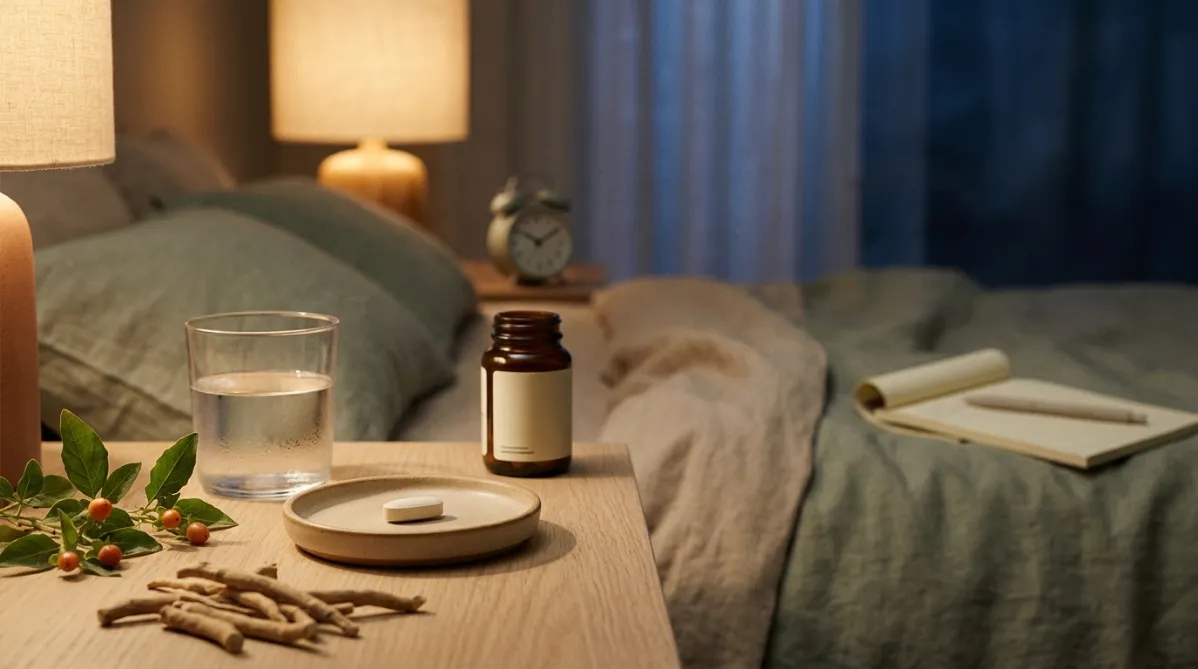
A soft, editorial still life photographed in a calm bedside setting at dusk, in landscape format. On a pale oak nightstand sits a single smooth, off-white oval caplet resting on a small matte ceramic dish in warm oatmeal tones. Next to it is a half-full glass of water with delicate condensation. Behind them, a small amber glass supplement bottle with a minimal cream label stands slightly out of focus. A few dried ashwagandha roots and a sprig of green leaves with small orange-red berries are arranged loosely across the wood grain in the foreground, adding an organic, botanical feel.

The background is a softly blurred bedroom with linen bedding in muted sage and sand tones. A warm lamp with a paper shade casts a golden glow from the left. Through a sheer curtain, deep blue twilight hints at evening. The light is gentle and directional, with long soft shadows and a subtle film-grain texture.

A small analog alarm clock with a muted face sits in the blurred distance, suggesting nighttime without dominating the scene. To the right, a folded cream notepad and a slim pen suggest research and note-taking, adding a quiet editorial touch. The composition follows the rule of thirds, with the caplet and dish in the lower-left third and generous negative space on the right for headline overlay.

The palette is earthy and restrained: sage green, warm beige, soft terracotta, and muted navy. The mood is thoughtful, trustworthy, and wellness-focused, like a modern health journal or a minimalist lifestyle magazine. Shallow depth of field with a crisp focus on the caplet, shot at eye level with an 85mm lens aesthetic, and high-end, natural, and tactile.
science research

Ein Ashwagandha‑Caplet pro Nacht schlägt Placebo – das sollten Sie vor dem Kauf wissen

BY DR. GYMBRO ·

In einer doppelblinden Studie mit 226 Teilnehmenden zeigte ein tägliches Ashwagandha‑Caplet nach dem Essen, idealerweise nachts, signifikante Verbesserungen bei Stress, Angst und psychischem Wohlbefinden gegenüber Placebo. Die Unterschiede erreichten p < 0,0001 sowohl in der ITT‑ als auch in der Per‑Protocol‑Analyse, und es traten keine ernsthaften oder medikamentenbezogenen Nebenwirkungen auf. Der Abstract nennt jedoch weder die Dosierung noch die Art des Extrakts, und zwei Autor*innen sind beim Hersteller angestellt. Wir zeigen, was die Studie tatsächlich belegt, welche Informationen fehlen und für wen sie mit Vorsicht zu genießen ist.

This page is available in