Dr. Gymbro
←

#anxiety

1 article
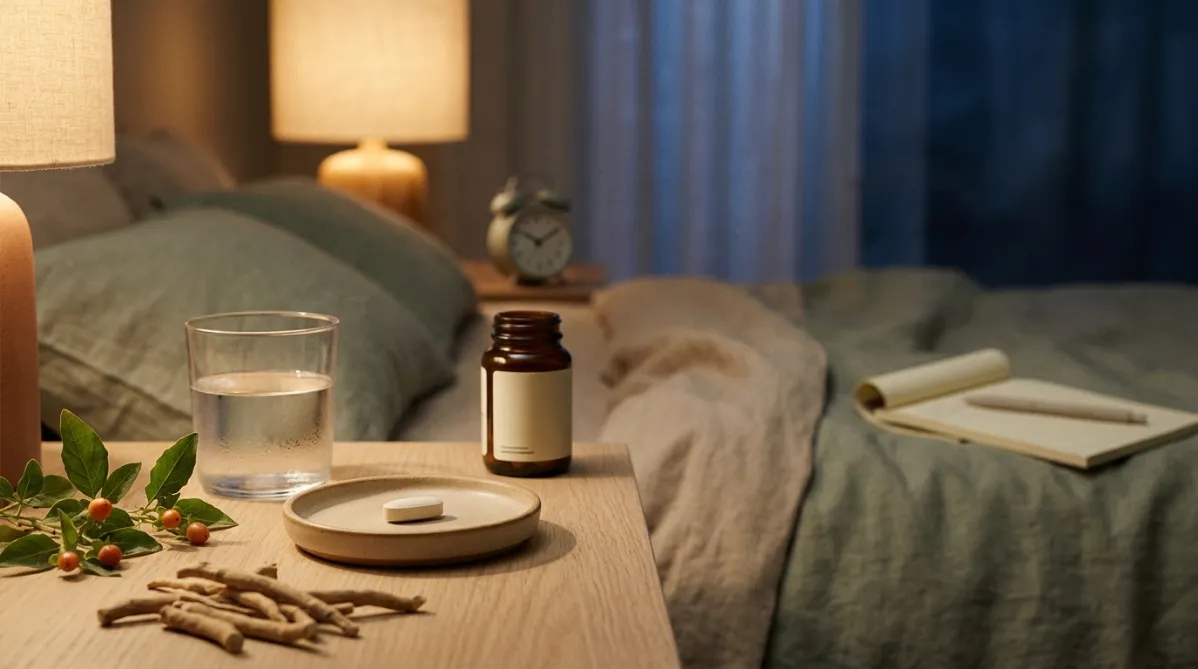
A soft, editorial still life photographed in a calm bedside setting at dusk, in landscape format. On a pale oak nightstand sits a single smooth, off-white oval caplet resting on a small matte ceramic dish in warm oatmeal tones. Next to it is a half-full glass of water with delicate condensation. Behind them, a small amber glass supplement bottle with a minimal cream label stands slightly out of focus. A few dried ashwagandha roots and a sprig of green leaves with small orange-red berries are arranged loosely across the wood grain in the foreground, adding an organic, botanical feel.

The background is a softly blurred bedroom with linen bedding in muted sage and sand tones. A warm lamp with a paper shade casts a golden glow from the left. Through a sheer curtain, deep blue twilight hints at evening. The light is gentle and directional, with long soft shadows and a subtle film-grain texture.

A small analog alarm clock with a muted face sits in the blurred distance, suggesting nighttime without dominating the scene. To the right, a folded cream notepad and a slim pen suggest research and note-taking, adding a quiet editorial touch. The composition follows the rule of thirds, with the caplet and dish in the lower-left third and generous negative space on the right for headline overlay.

The palette is earthy and restrained: sage green, warm beige, soft terracotta, and muted navy. The mood is thoughtful, trustworthy, and wellness-focused, like a modern health journal or a minimalist lifestyle magazine. Shallow depth of field with a crisp focus on the caplet, shot at eye level with an 85mm lens aesthetic, and high-end, natural, and tactile.
science research

Una capsula di Ashwagandha assunta di notte batte il placebo – Leggi questo prima di comprare

BY DR. GYMBRO ·

In una sperimentazione doppio cieco su 226 persone, una capsula di ashwagandha assunta una volta al giorno dopo i pasti, preferibilmente la sera, ha superato il placebo in termini di stress, ansia e benessere mentale per otto settimane. Le differenze hanno raggiunto p<0,0001 sia nell'analisi per intenzione di trattamento (ITT) sia in quella per protocollo (PP), e non sono stati segnalati eventi avversi gravi o correlati al prodotto. Tuttavia l'abstract non indica né la dose né il tipo di estratto, e due autori sono dipendenti dal produttore. Di seguito vediamo cosa dimostra lo studio, cosa omette e chi dovrebbe pensarci due volte prima di provarlo.

This page is available in