Dr. Gymbro
←

#blood flow restriction

1 article
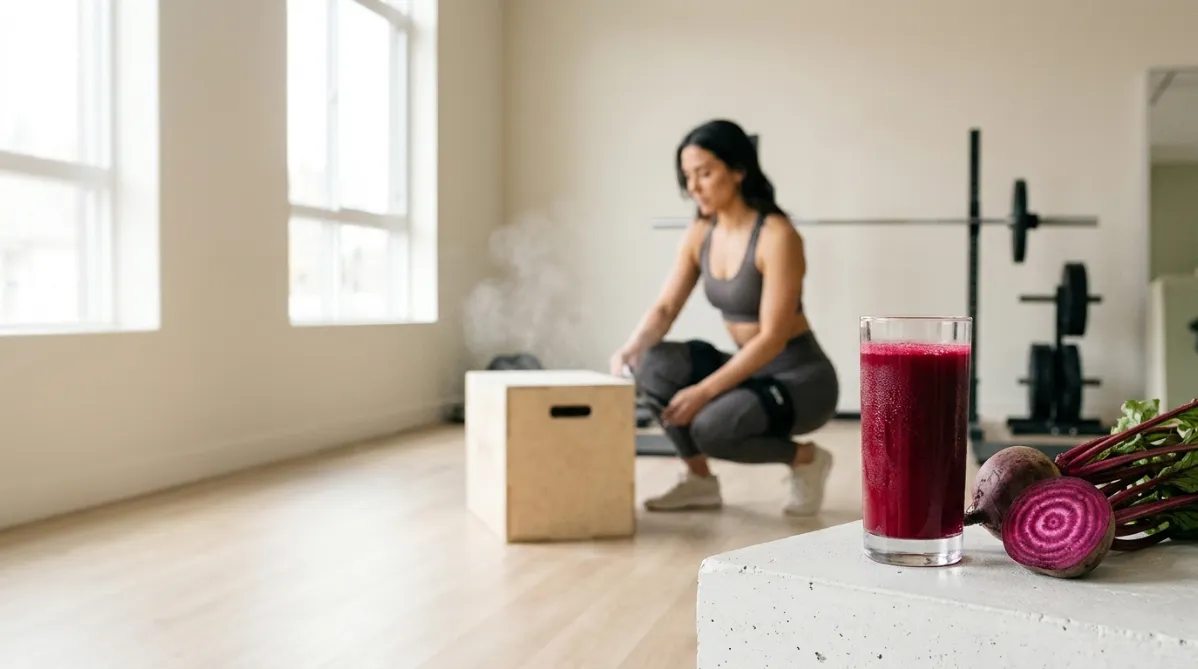
A bright, modern editorial photograph of a minimalist athletic studio with pale oak flooring and soft diffused daylight pouring in from tall windows on the left. In the foreground, slightly off-center to the right, a tall glass of deep magenta-crimson beetroot juice sits on a matte white concrete surface, condensation beading on the glass, a few fresh whole beets with leafy stems and one halved beet showing vivid concentric purple rings arranged beside it. Behind them, softly blurred with shallow depth of field, an athlete in neutral-toned athletic wear (charcoal and cream) crouches mid-prep, with slim black blood flow restriction cuff bands wrapped around the upper thighs. A clean wooden plyo box and a simple barbell rack are subtly visible in the background. A thin arc of chalk dust hangs in the air, suggesting a recent jump. The color palette is restrained and trendy: warm off-white, soft sage green, charcoal gray, with the beetroot magenta as the single bold accent. Composition follows a wide 16:9 landscape layout with generous negative space on the left third for title overlay. Lighting is natural, gentle, and slightly golden, with soft shadows and a subtle film-grain texture. The overall feel is a contemporary wellness and sports science magazine cover: clean, calm, sophisticated, tactile, with crisp detail on the juice and beets and a dreamy blur on the athlete.
science research

Rote-Bete‑Saft + BFR‑Training: Der verpasste Vorteil beim ermüdeten Sprung

BY DR. GYMBRO ·

Man geht davon aus, dass Rote‑Bete‑Saft in Kombination mit Blood‑Flow‑Restriction‑Training (BFR) größere Kraftzuwächse bewirkt. Eine randomisierte, doppelblinde Studie zeigte jedoch etwas Spezifischeres: Beide Gruppen wurden stärker, doch nur die Gruppe, die zusätzlich Rote‑Bete‑Saft erhielt, verbesserte die Sprunghöhe im ermüdeten Counter‑Movement‑Jump signifikant. Die Studie nutzte 8 mmol Nitrate pro Tag, eine einwöchige Ladephase und ein vierwöchiges BFR‑Programm. Im Folgenden das Protokoll, mögliche Zielgruppen, Gegenanzeigen und ein kritischer Blick auf die Evidenz einer Studie mit nur 20 Teilnehmenden.

This page is available in