Dr. Gymbro
←

#blood-glucose

1 article
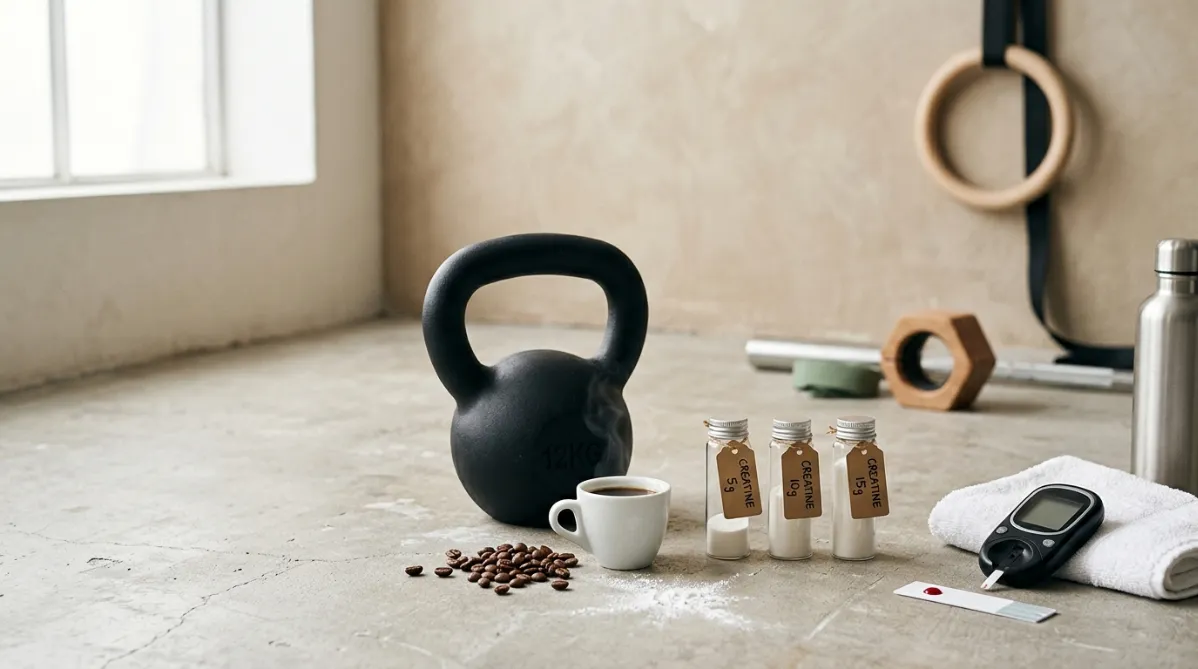
A wide, editorial-style still life photographed in soft natural window light, set on a pale concrete gym floor with a warm oatmeal-toned wall behind it. In the center foreground, a matte black kettlebell sits beside a white ceramic espresso cup filled with dark coffee, a thin wisp of steam rising. Next to the cup, three small glass vials of increasing fill levels stand in a neat row, containing fine white powder, each tied with a small kraft paper tag. Scattered nearby are a few roasted coffee beans and a pinch of chalk dust that catches the light.

On the right side, a minimalist glucose meter with a small blank screen rests next to a folded white towel and a stainless steel water bottle. A single drop of bright crimson blood on a clean test strip adds a subtle focal accent. A wooden barbell collar and a loop of gymnastic rings hang softly out of focus in the background, suggesting a CrossFit box without showing any people.

The palette is warm and restrained: cream, charcoal, terracotta, and muted sage green, with one pop of coral red from the droplet. The composition uses generous negative space on the left third for headline overlay, a shallow depth of field, and gentle long shadows falling across the floor. The mood is calm, clean, and modern, like a premium health and science magazine cover: crisp textures, subtle film grain, natural color grading, and a slightly elevated three-quarter camera angle in landscape 16:9 format.
nutrition

6 oder 9 mg/kg Koffein vor dem CrossFit? Was Ihr Blutzucker sagt

BY DR. GYMBRO ·

Viele gehen davon aus, dass eine Megadosierung von Koffein vor einer intensiven CrossFit‑Einheit den Körper ordentlich durchrüttelt. In einer randomisierten, doppelblinden Studie wurden 3, 6 und 9 mg/kg bei 26 CrossFit‑Athlet*innen getestet und ein klares Signal gefunden: der Blutzucker. Nach dem Training stieg der Glukosespiegel bei 6 und 9 mg/kg stärker an als beim Placebo, während die Blutzell‑Parameter keine koffein‑spezifischen Änderungen zeigten. Calcium, Magnesium und Phosphate folgten hauptsächlich dem Training, nicht dem Koffein. Das bedeutet für die Wahl der Dosis, das Timing und für wen man zweimal überlegen sollte.

This page is available in