Dr. Gymbro
←

#cutting

2 articles
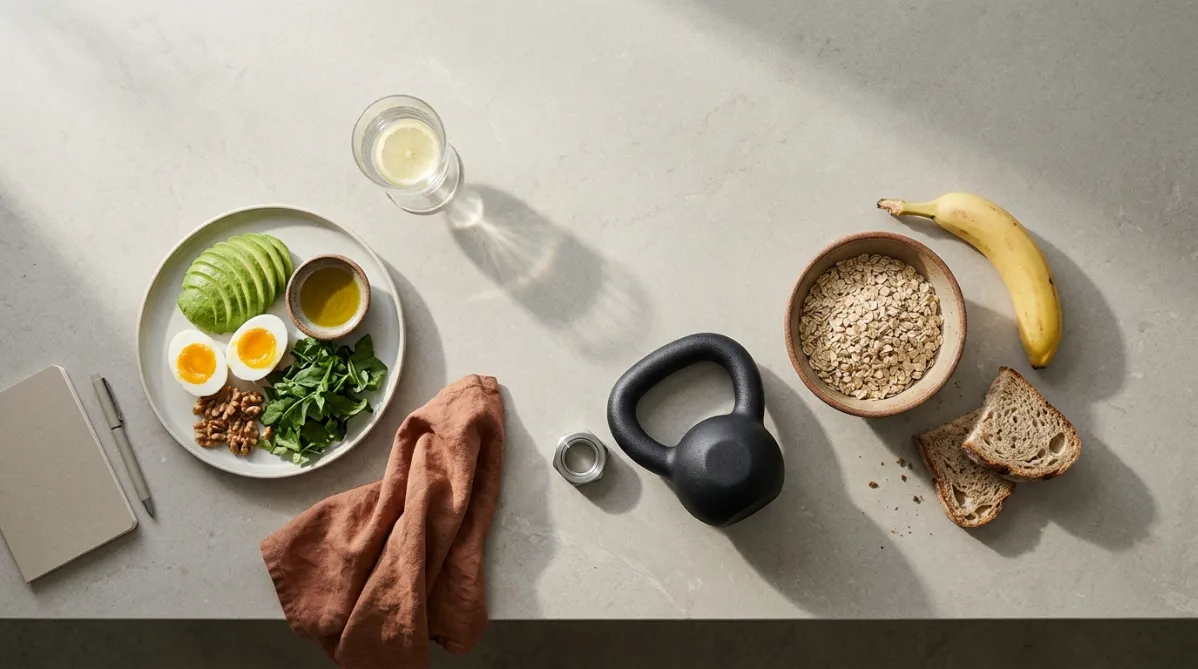
A wide, editorial-style flat lay photographed from above on a pale warm-gray stone countertop, bathed in soft natural window light with gentle long shadows. On the left half, a minimalist keto plate: sliced avocado fanned out in creamy green, two soft-boiled eggs halved to reveal golden yolks, a small pile of dark leafy greens, a few walnuts, and a glossy drizzle of olive oil in a small ceramic dish. On the right half, a contrasting arrangement of carbohydrates: a rustic bowl of oats, a ripe banana, and a few slices of sourdough, arranged with equal visual weight. Between the two sides, a matte black kettlebell sits at the center, and a slim brushed-steel barbell collar rests nearby, suggesting resistance training without a gym setting. A simple, elegant glass of water with a lemon slice catches the light and casts a delicate refracted glow, hinting at water weight and glycogen. A linen napkin and a small, neutral-toned notebook with a pen add a journal-like touch. The palette is muted and modern: sage green, cream, terracotta, charcoal, and soft butter yellow. The composition is clean and balanced with generous negative space across the top and bottom edges, suitable for headline overlay. The mood is calm, thoughtful, and science-informed, like a contemporary health and wellness magazine cover. Shallow depth of field, crisp textures on the food, subtle film-like grain, and high-end, trendy food photography styling.
nutrition

Keto für Kraftsportler: Fett sinkt, aber fettfreie Masse fällt um 1,4 kg

BY DR. GYMBRO ·

Eine Auswertung von 50 Studien zeigt, dass ketogene Diäten das Fett reduzieren und die Kraft weitgehend erhalten. Bei krafttrainierten Erwachsenen war die fettfreie Masse jedoch etwa 1,37 kg geringer als bei nicht‑keto‑Ernährung. Die Autoren stuften das Ergebnis als unsicher ein und betonen, dass es keinen Nachweis für Muskelverlust liefert, weil Glykogen und Wasser den Großteil erklären können. Die Leistung bei hochintensiven Belastungen war ebenfalls häufiger unverändert oder beeinträchtigt. Im Folgenden erfahren Sie, für wen Keto beim Cutting geeignet sein könnte, wer darauf verzichten sollte und wie man fettfreie Masse schützt.
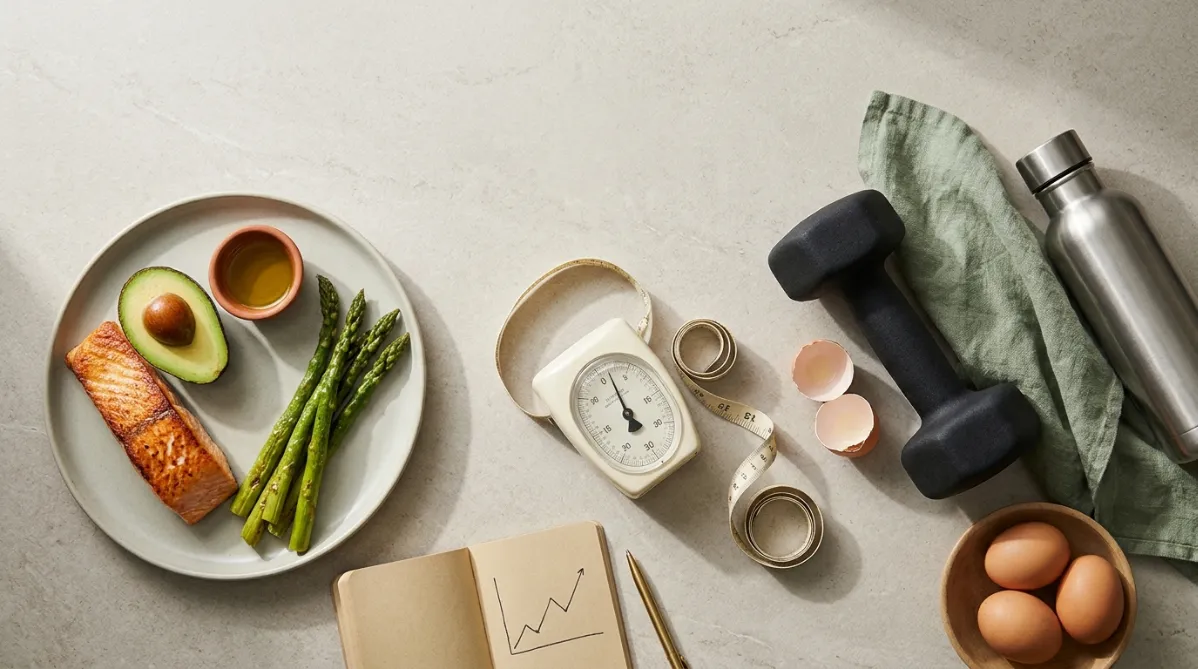
A bright, minimalist editorial flat-lay photographed from above on a pale warm-gray stone countertop in soft natural window light. On the left, a ceramic plate holds a keto-style meal: a seared salmon fillet with crisp skin, half an avocado with a glossy pit, a scattering of bright green asparagus spears, and a small dish of golden olive oil. On the right, a matte black dumbbell rests beside a folded sage-green linen towel and a slim stainless steel water bottle. A raw egg and a few whole eggs in a shallow wooden bowl add a protein cue. In the center, a clean analog kitchen scale and a flexible cream-colored measuring tape curl gracefully in a loose spiral, hinting at body composition tracking. A small open notebook with a minimal hand-drawn line graph, with no legible text, sits at the lower edge with a thin brass pen.

The palette is calm and modern: muted sage green, creamy ivory, warm terracotta accents from a small clay ramekin, and deep charcoal from the dumbbell. Shadows are soft and long, falling diagonally, giving gentle depth. The composition leaves generous negative space at the top and right for title placement. Shallow depth of field, crisp focus on the salmon and dumbbell, subtle film-like grain, and a refined, trendy health-journal look reminiscent of contemporary wellness magazines. Natural, airy, balanced, and slightly editorial, with no people, no text, and no futuristic elements.
nutrition

Schont Keto die Muskeln beim Cutting? Die Daten zur fettfreien Masse überraschen

BY DR. GYMBRO ·

Keto wird oft als muskel‑schützende Methode zum Abnehmen präsentiert, dank der vermeintlichen anti‑katabolen Wirkung von Ketonen. Eine neue Narrative‑Review in *Nutrients* prüft diese Annahme anhand klinischer Daten und kommt zu einem anderen Ergebnis. Ketogene Diäten reduzieren vor allem das Fett, doch Metaanalysen zeigen leicht größere Verluste an fettfreier Masse im Vergleich zu nicht‑ketogenen Ernährungsweisen. Das Problem: DXA und BIA können Muskel von Wasser und Glykogen nicht trennen, sodass der wahre Effekt auf die Muskulatur unklar bleibt. Was das magere Gewebe wirklich schützt, ist die vertraute Dreierkombination aus ausreichender Proteinzufuhr, Krafttraining und einem moderaten Kaloriendefizit.

This page is available in