Dr. Gymbro
←

#cutting

2 articles
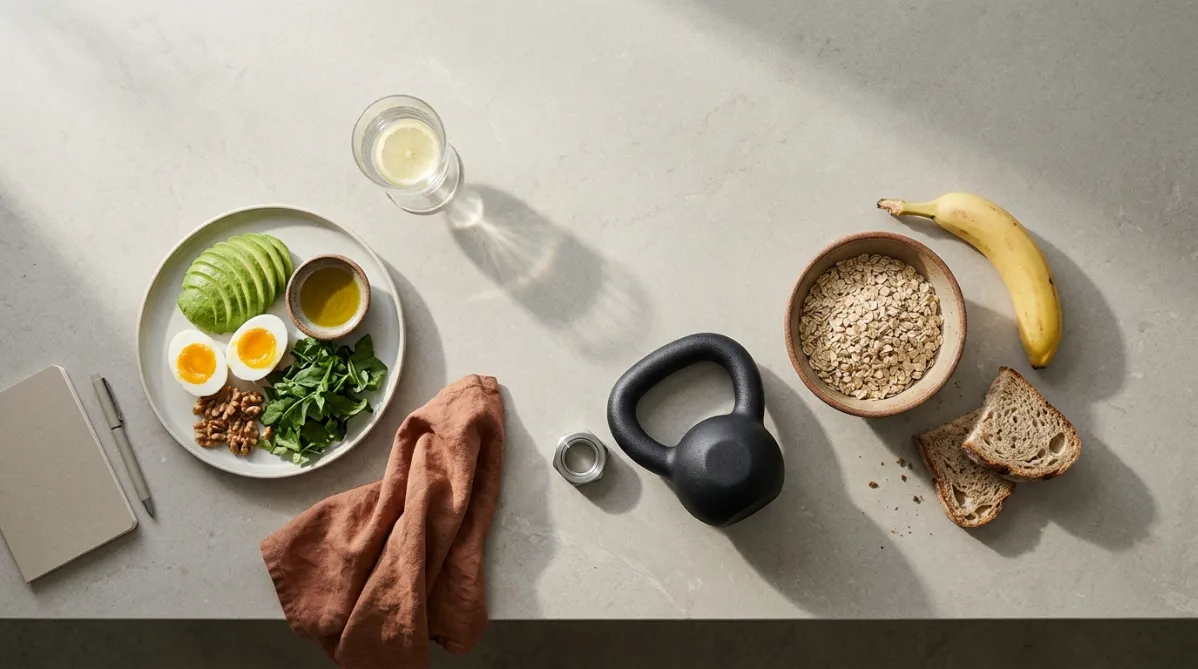
A wide, editorial-style flat lay photographed from above on a pale warm-gray stone countertop, bathed in soft natural window light with gentle long shadows. On the left half, a minimalist keto plate: sliced avocado fanned out in creamy green, two soft-boiled eggs halved to reveal golden yolks, a small pile of dark leafy greens, a few walnuts, and a glossy drizzle of olive oil in a small ceramic dish. On the right half, a contrasting arrangement of carbohydrates: a rustic bowl of oats, a ripe banana, and a few slices of sourdough, arranged with equal visual weight. Between the two sides, a matte black kettlebell sits at the center, and a slim brushed-steel barbell collar rests nearby, suggesting resistance training without a gym setting. A simple, elegant glass of water with a lemon slice catches the light and casts a delicate refracted glow, hinting at water weight and glycogen. A linen napkin and a small, neutral-toned notebook with a pen add a journal-like touch. The palette is muted and modern: sage green, cream, terracotta, charcoal, and soft butter yellow. The composition is clean and balanced with generous negative space across the top and bottom edges, suitable for headline overlay. The mood is calm, thoughtful, and science-informed, like a contemporary health and wellness magazine cover. Shallow depth of field, crisp textures on the food, subtle film-like grain, and high-end, trendy food photography styling.
nutrition

Keto para levantadores: la grasa disminuye, pero la masa magra retrocede 1,4 kg

BY DR. GYMBRO ·

Una revisión de 50 estudios muestra que las dietas cetogénicas reducen la grasa y, en general, mantienen la fuerza. Sin embargo, en adultos entrenados en resistencia, la masa magra resultó aproximadamente 1,37 kg menor que con dietas no cetogénicas. Los autores califican ese hallazgo como de baja certeza y advierten que no prueba pérdida muscular, pues el glucógeno y el agua pueden explicar gran parte de la diferencia. El rendimiento de alta intensidad también fue más a menudo inalterado o deteriorado. Aquí tienes quiénes pueden beneficiarse del keto al cortar, quiénes deberían evitarlo y cómo proteger la masa magra.
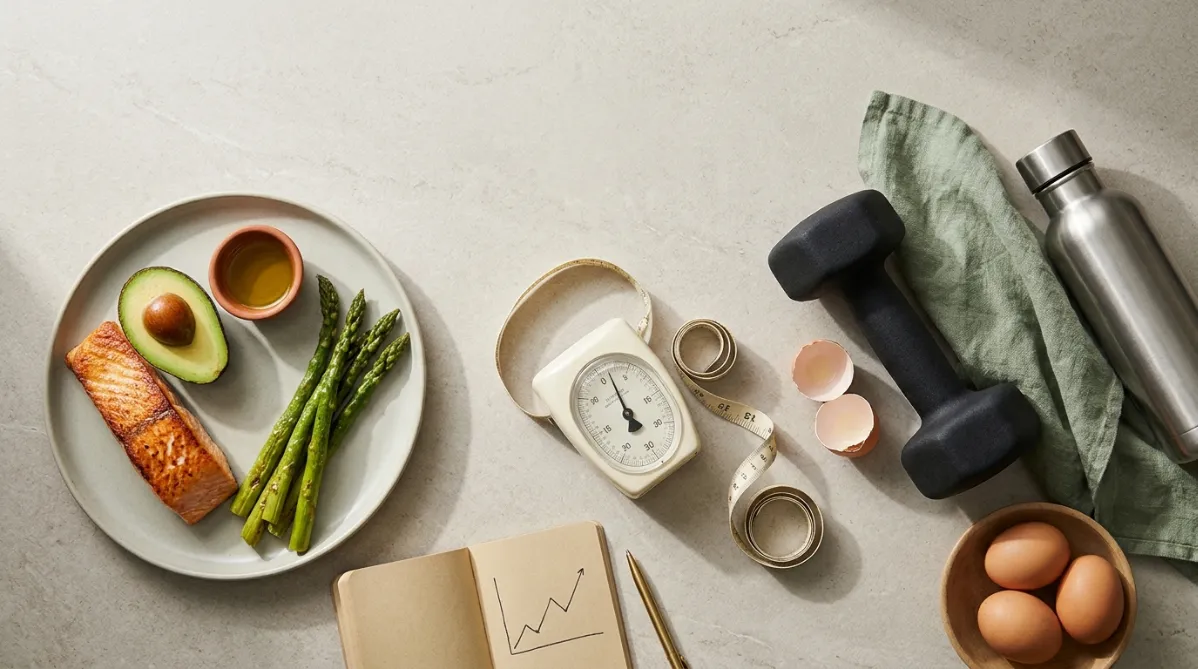
A bright, minimalist editorial flat-lay photographed from above on a pale warm-gray stone countertop in soft natural window light. On the left, a ceramic plate holds a keto-style meal: a seared salmon fillet with crisp skin, half an avocado with a glossy pit, a scattering of bright green asparagus spears, and a small dish of golden olive oil. On the right, a matte black dumbbell rests beside a folded sage-green linen towel and a slim stainless steel water bottle. A raw egg and a few whole eggs in a shallow wooden bowl add a protein cue. In the center, a clean analog kitchen scale and a flexible cream-colored measuring tape curl gracefully in a loose spiral, hinting at body composition tracking. A small open notebook with a minimal hand-drawn line graph, with no legible text, sits at the lower edge with a thin brass pen.

The palette is calm and modern: muted sage green, creamy ivory, warm terracotta accents from a small clay ramekin, and deep charcoal from the dumbbell. Shadows are soft and long, falling diagonally, giving gentle depth. The composition leaves generous negative space at the top and right for title placement. Shallow depth of field, crisp focus on the salmon and dumbbell, subtle film-like grain, and a refined, trendy health-journal look reminiscent of contemporary wellness magazines. Natural, airy, balanced, and slightly editorial, with no people, no text, and no futuristic elements.
nutrition

¿El keto protege el músculo en una fase de corte? Los datos de masa magra sorprenden

BY DR. GYMBRO ·

Keto suele presentarse como una forma que protege el músculo durante una fase de corte, gracias a los supuestos efectos anticatabólicos de los cuerpos cetónicos. Una nueva revisión narrativa en *Nutrients* pone a prueba esa idea con datos clínicos y la encuentra insuficiente. Las dietas cetogénicas reducen mayormente la grasa, pero los meta‑análisis muestran pérdidas ligeramente mayores de masa libre de grasa que las dietas no cetogénicas. El problema es que DXA y BIA no pueden separar el músculo del agua y del glucógeno, por lo que el efecto real sobre el músculo sigue sin estar claro. Lo que realmente protege el tejido magro es el conocido trío de proteína adecuada, entrenamiento de fuerza y un déficit moderado.

This page is available in