Dr. Gymbro
←

#kidney health

2 articles
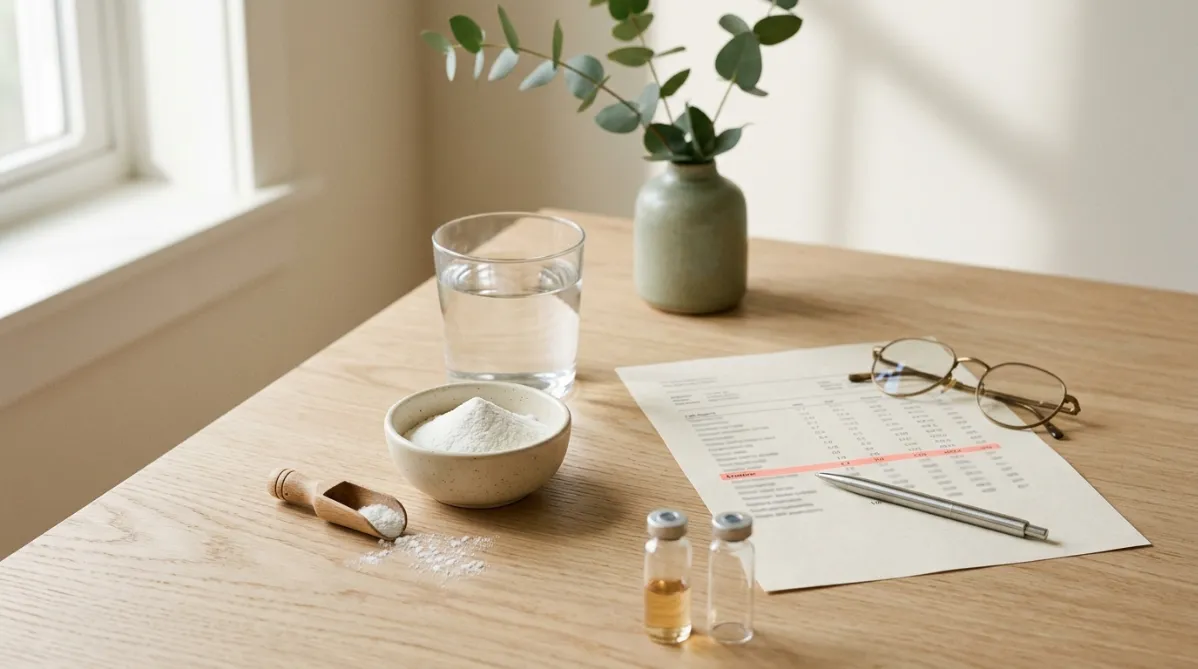
A calm, modern editorial still life shot from a slightly elevated angle on a pale oak tabletop, bathed in soft natural window light from the left. At center sits a clear glass of water beside a small matte ceramic bowl holding a mound of fine white creatine powder, with a wooden scoop resting next to it and a few loose grains dusted across the surface. To the right, a neatly arranged printed lab report on cream paper, with blurred rows of numbers and a single line highlighted in soft coral pink marker, partially overlapped by a minimalist silver pen. A folded pair of thin-framed glasses sits at the edge of the paper. In the foreground, a small glass vial with a pale amber liquid sample and a second empty vial stand upright, suggesting blood and urine testing, with gentle refraction and soft caustic light on the wood. Behind them, a sprig of eucalyptus in a small stone vase adds a touch of green. The background is a softly blurred, warm off-white wall with a gentle gradient shadow and a hint of a window frame. The palette is muted and refined: warm creams, sage green, soft coral, pale amber, and light oak, with crisp whites in the powder. Shallow depth of field, with the powder bowl and highlighted lab line in sharp focus and the edges falling away into creamy blur. Generous negative space on the right third of the composition for text overlay. The overall feel is clean, trendy health-journal photography, tactile and editorial, with subtle film-like grain, natural shadows, and a quiet, reassuring mood. No people, no text legible, no futuristic elements.
supplements

Kreatin erhöhte Nierenmarker in 26 Studien – Wahrscheinlich kein Schaden

BY DR. GYMBRO ·

Du nimmst Kreatin, machst ein Blutbild und dein Kreatinin steigt, während das eGFR schlechter erscheint. Eine Metaanalyse von 26 randomisierten Studien (1.036 Teilnehmende) zeigte, dass das Kreatinin um 0,14 mg/dL anstieg und das kreatininbasierte eGFR um etwa 10,75 mL/min sank. Misst man die Filtration jedoch mit Cr‑EDTA, fällt dieser Rückgang weg und Harnstoff, Albuminurie sowie Proteinurie bleiben unverändert. Der Artikel erklärt, warum das Laborergebnis irreführend ist, was du deinem Arzt sagen solltest und wer vorher einen Nephrologen konsultieren sollte.
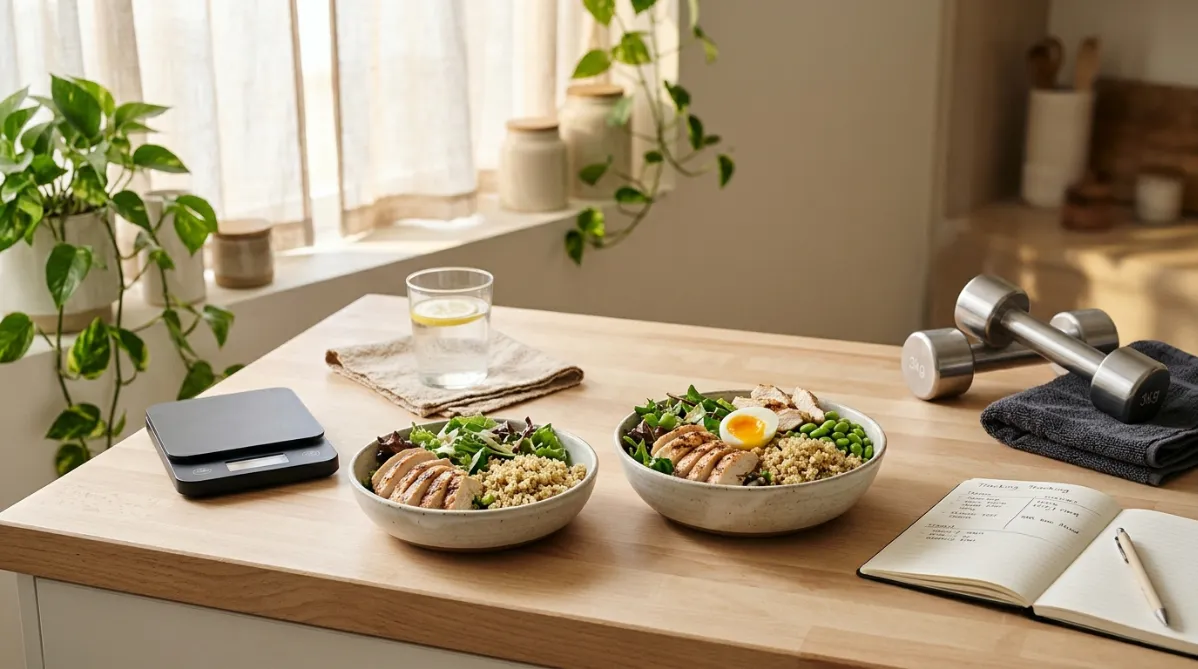
A wide landscape editorial photograph of a clean, sunlit kitchen counter in soft natural morning light, styled like a modern wellness journal cover. In the foreground, two matching ceramic bowls sit side by side on a pale oak butcher block. The left bowl holds a modest portion of sliced grilled chicken breast, quinoa, and greens. The right bowl holds a noticeably larger, double-sized portion of the same ingredients, with extra chicken, a soft-boiled egg, and edamame. The contrast in portion size is clear but elegant. Beside the bowls are a matte black digital kitchen scale, a tall glass of water with a lemon slice, and a small linen napkin in warm oatmeal tone. A pair of sleek brushed-steel dumbbells rests slightly out of focus on the counter's edge, and a folded charcoal gym towel sits next to them. In the soft-focus background, a large window with sheer curtains lets in diffused golden light, and a trailing green pothos plant adds an organic touch. A small, minimal notebook with a pen lies open to the side, suggesting careful tracking. The color palette is muted and cohesive: warm creams, sage green, soft terracotta, charcoal, and natural wood. Shallow depth of field, crisp focus on the bowls, gentle shadows, and subtle film-like grain. Composition follows the rule of thirds with generous negative space on the upper right for headline text. The mood is calm, thoughtful, and trustworthy, like a contemporary health and science magazine feature. There are no people, no text, and no futuristic elements.
nutrition

3,2 g/kg Protein für 16 Wochen: Hat es die Nieren von Liftern geschädigt?

BY DR. GYMBRO ·

Ist das Essen von doppelt so viel Protein, wie im Bodybuilding üblich, heimlich schädlich für deine Nieren? In einer 16‑wöchigen randomisierten Studie mit 44 krafttrainierten Männern wurde 3,2 g/kg Protein gegen 1,6 g/kg getestet. Der statistische Vergleich zeigte keinen signifikanten Unterschied bei den Nierenmarkern – unabhängig davon, ob die Männer ausschließlich Krafttraining oder zusätzlich Ausdauer machten. Die Hoch‑Protein‑Gruppen wiesen jedoch leichte Anstiege von BUN und Cystatin C sowie geringe Abnahmen der eGFR auf, die die Autoren lediglich als beschreibend einordnen. Hier erfährst du, was das bedeutet, welche Fragen die Studie nicht beantwortet und wer vorsichtig sein sollte.

This page is available in