Dr. Gymbro
←

#kidney health

2 articles
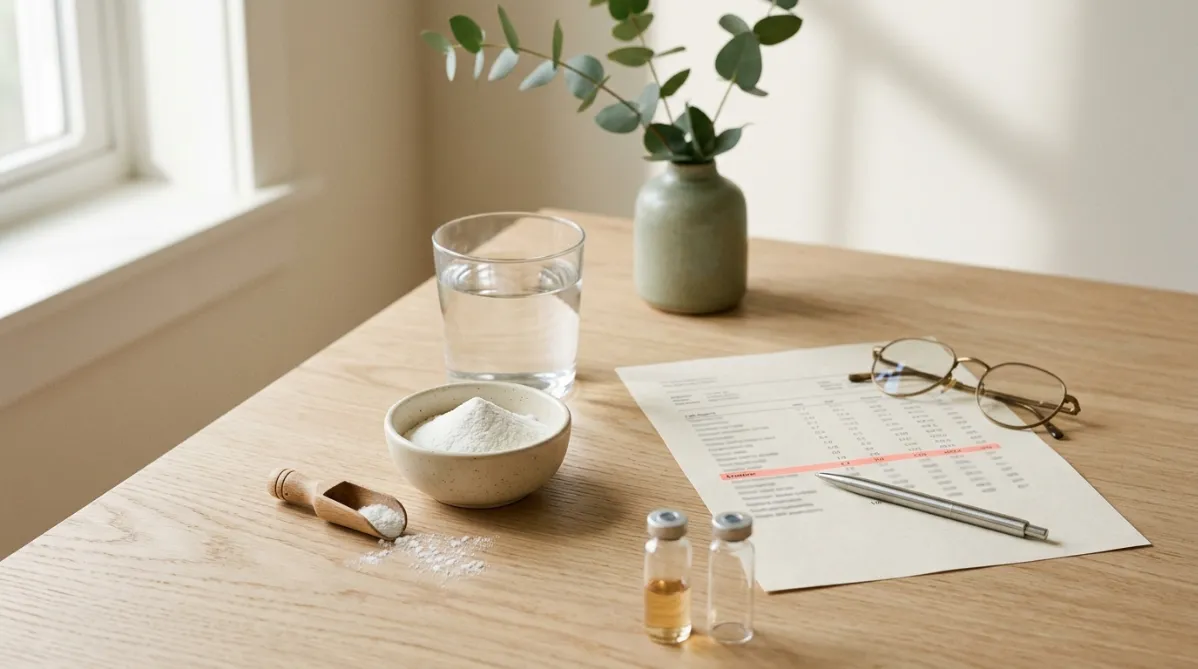
A calm, modern editorial still life shot from a slightly elevated angle on a pale oak tabletop, bathed in soft natural window light from the left. At center sits a clear glass of water beside a small matte ceramic bowl holding a mound of fine white creatine powder, with a wooden scoop resting next to it and a few loose grains dusted across the surface. To the right, a neatly arranged printed lab report on cream paper, with blurred rows of numbers and a single line highlighted in soft coral pink marker, partially overlapped by a minimalist silver pen. A folded pair of thin-framed glasses sits at the edge of the paper. In the foreground, a small glass vial with a pale amber liquid sample and a second empty vial stand upright, suggesting blood and urine testing, with gentle refraction and soft caustic light on the wood. Behind them, a sprig of eucalyptus in a small stone vase adds a touch of green. The background is a softly blurred, warm off-white wall with a gentle gradient shadow and a hint of a window frame. The palette is muted and refined: warm creams, sage green, soft coral, pale amber, and light oak, with crisp whites in the powder. Shallow depth of field, with the powder bowl and highlighted lab line in sharp focus and the edges falling away into creamy blur. Generous negative space on the right third of the composition for text overlay. The overall feel is clean, trendy health-journal photography, tactile and editorial, with subtle film-like grain, natural shadows, and a quiet, reassuring mood. No people, no text legible, no futuristic elements.
supplements

Креатин повышает маркеры почек в 26 исследованиях: вероятно, без вреда

BY DR. GYMBRO ·

Вы начинаете принимать креатин, сдаёте анализ крови, и уровень креатинина повышается, а eGFR выглядит хуже. Мета‑анализ 2026 года, включающий 26 рандомизированных исследований (1 036 участников), показал именно это: креатинин поднялся на 0,14 мг/дл, а eGFR, рассчитанный по креатинину, упал примерно на 10,75 мл/мин. При измерении фильтрации почек методом Cr‑EDTA падения не наблюдалось, а уровень азота, альбуминурия и протеинурия остались неизменными. Ниже объясняется, почему лабораторный показатель вводит в заблуждение, что сказать врачу и кому следует сначала проконсультироваться с нефрологом.
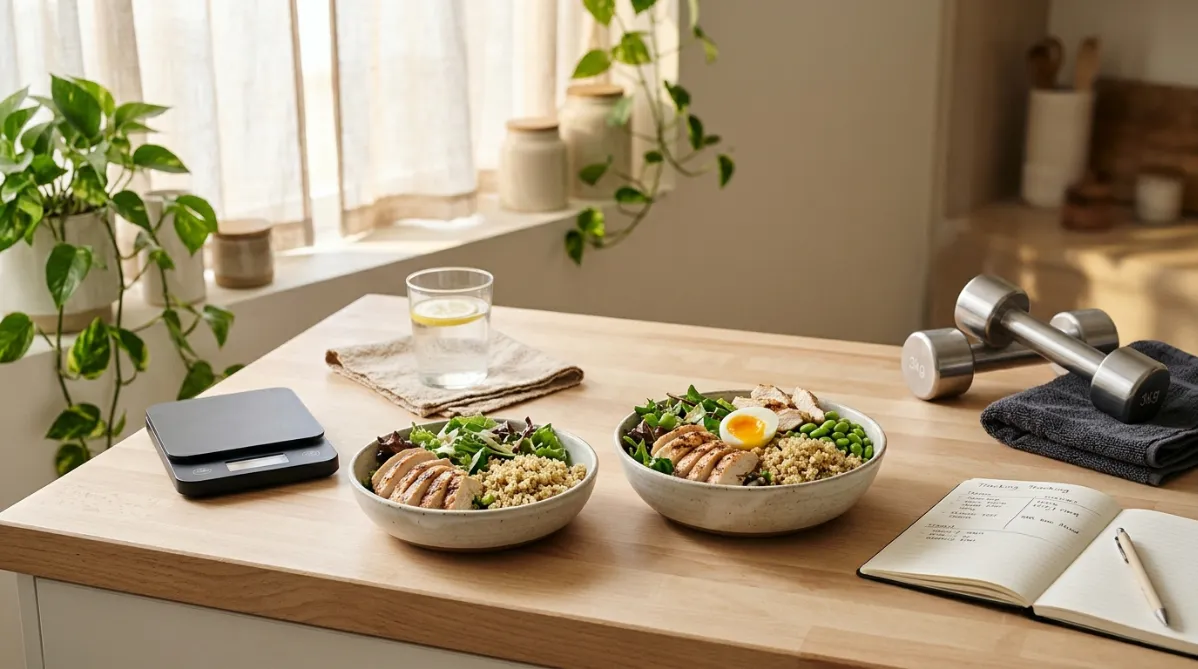
A wide landscape editorial photograph of a clean, sunlit kitchen counter in soft natural morning light, styled like a modern wellness journal cover. In the foreground, two matching ceramic bowls sit side by side on a pale oak butcher block. The left bowl holds a modest portion of sliced grilled chicken breast, quinoa, and greens. The right bowl holds a noticeably larger, double-sized portion of the same ingredients, with extra chicken, a soft-boiled egg, and edamame. The contrast in portion size is clear but elegant. Beside the bowls are a matte black digital kitchen scale, a tall glass of water with a lemon slice, and a small linen napkin in warm oatmeal tone. A pair of sleek brushed-steel dumbbells rests slightly out of focus on the counter's edge, and a folded charcoal gym towel sits next to them. In the soft-focus background, a large window with sheer curtains lets in diffused golden light, and a trailing green pothos plant adds an organic touch. A small, minimal notebook with a pen lies open to the side, suggesting careful tracking. The color palette is muted and cohesive: warm creams, sage green, soft terracotta, charcoal, and natural wood. Shallow depth of field, crisp focus on the bowls, gentle shadows, and subtle film-like grain. Composition follows the rule of thirds with generous negative space on the upper right for headline text. The mood is calm, thoughtful, and trustworthy, like a contemporary health and science magazine feature. There are no people, no text, and no futuristic elements.
nutrition

3,2 г/кг белка в течение 16 недель: навредили ли почкам атлеты?

BY DR. GYMBRO ·

Употребление вдвое большего количества белка, чем обычно, может представлять риск для почек? В 16‑недельном рандомизированном исследовании с 44 мужчинами, занимающимися силовыми тренировками, сравнивали дозу 3,2 г/кг и 1,6 г/кг. Статистический анализ не выявил значимых различий в почечных маркерах, независимо от того, тренировались ли участники только с отягощениями или сочетали силовые занятия с кардио. Однако в группах с высоким потреблением наблюдались небольшие повышения уровня BUN и цистатина C и небольшие падения eGFR, которые авторы называют лишь описательными. Ниже — что это значит, какие вопросы остаются открытыми и кому стоит быть особенно осторожным.

This page is available in