Dr. Gymbro
←

#randomised-controlled-trial

1 article
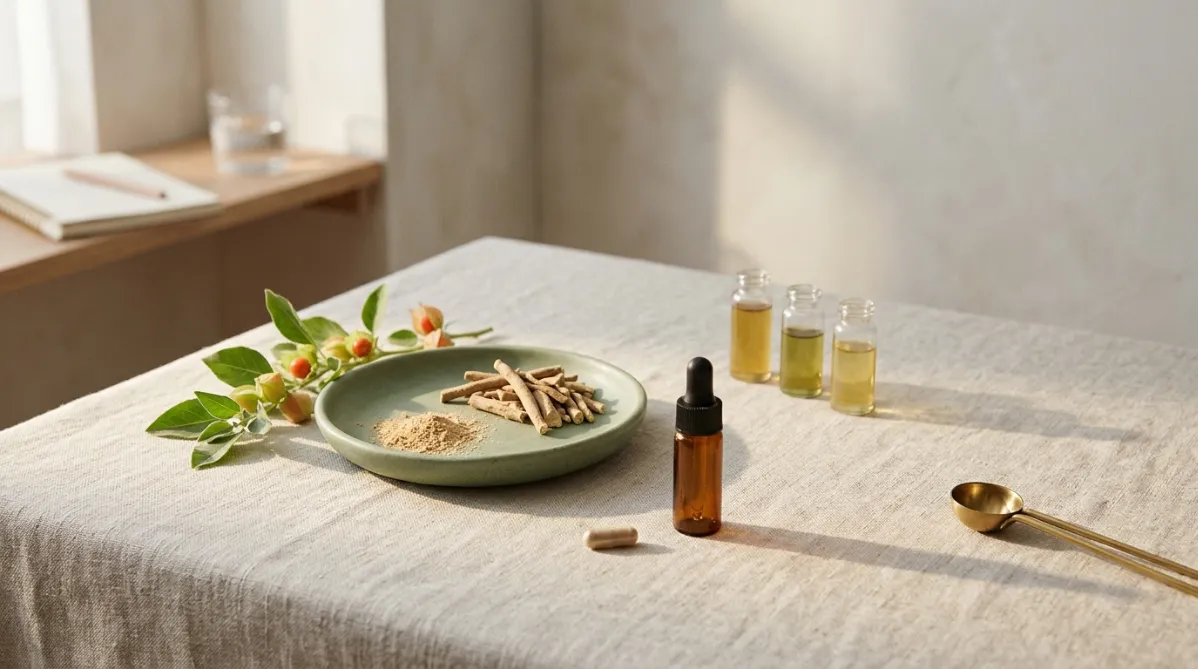
A softly lit, minimalist editorial still life on a pale oat-colored linen surface, shot from a slightly elevated three-quarter angle. In the center-left, a small handmade ceramic dish in matte sage green holds a modest pile of dried ashwagandha root pieces and a scattering of fine tan powder. A few fresh ashwagandha sprigs, with delicate green leaves and small orange-red berries in papery husks, rest beside it. In front, a single tiny capsule sits alone on the linen, with a slim glass dropper bottle in amber tint just behind it, suggesting a very small dose. To the right, a neat row of three small glass vials stands slightly out of focus, their contents a muted gold, hinting at comparison without any labels or text. A delicate brass measuring spoon lies at the edge of the frame, catching a thin highlight.

Soft morning window light falls from the upper left, casting long, gentle shadows and a warm glow across the textures: rough linen weave, matte ceramic, glossy glass, and the powdery root. The color palette is calming and earthy, with sage green, warm cream, soft terracotta, amber, and touches of muted coral from the berries. In the background, a blurred, airy room with a pale plaster wall and a hint of a wooden shelf holding a notebook and a small glass of water, adding a quiet wellness-journal atmosphere. Shallow depth of field, crisp focus on the dish and capsule, and generous negative space on the right third of the frame for headline overlay. The overall mood is calm, thoughtful, and slightly skeptical, like a contemporary health and science magazine feature, with natural, realistic photography, fine grain, and subtle film-like color grading.
science research

Nur 30 mg Ashwagandha reduzieren Stress in vier Wochen – das ist der Haken

BY DR. GYMBRO ·

Die meisten Studien zu Ashwagandha nutzen 250–600 mg pro Tag. Diese Untersuchung hingegen setzte lediglich 30 mg über 28 Tage bei 60 gestressten Erwachsenen ein. Die Ashwagandha‑Gruppe berichtete von weniger Stress und ihr Speichel‑Cortisol blieb stabil, während das Placebo‑Team einen Anstieg zeigte. Der Haken: Die p‑Werte liegen zwischen 0,04 und 0,047, die Per‑Protocol‑Analyse war nicht signifikant und die meisten anderen Messwerte zeigten keinen Unterschied. Zudem wurde die Studie vom Hersteller des Extrakts finanziert.

This page is available in