Dr. Gymbro
←

#randomised-controlled-trial

1 article
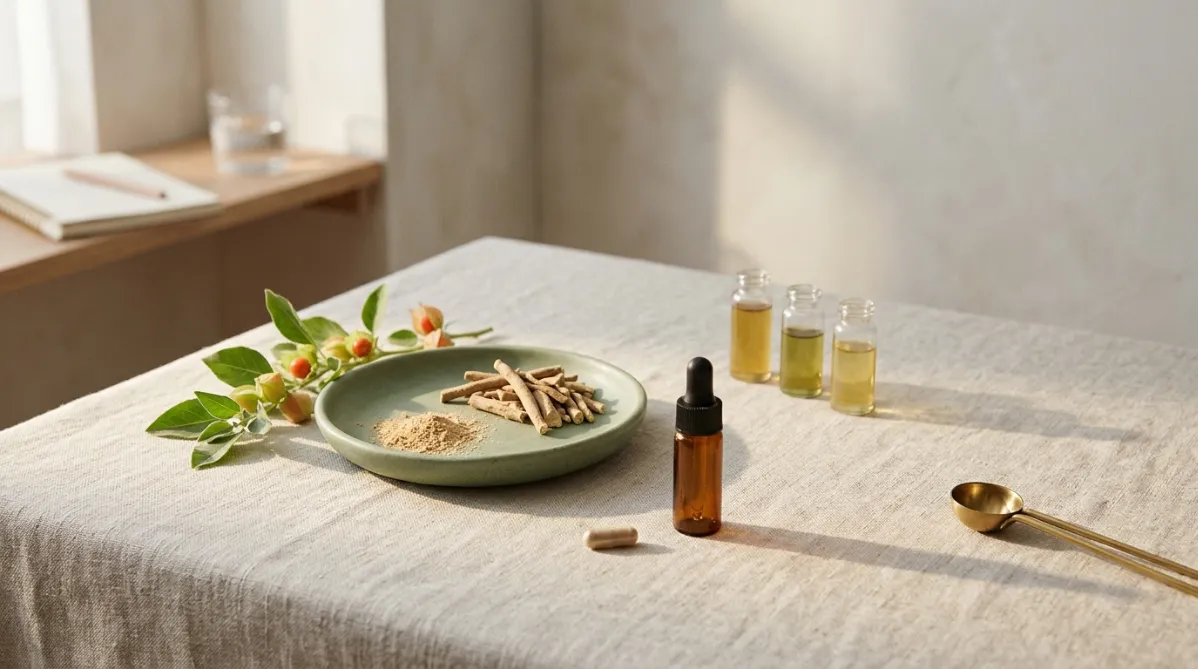
A softly lit, minimalist editorial still life on a pale oat-colored linen surface, shot from a slightly elevated three-quarter angle. In the center-left, a small handmade ceramic dish in matte sage green holds a modest pile of dried ashwagandha root pieces and a scattering of fine tan powder. A few fresh ashwagandha sprigs, with delicate green leaves and small orange-red berries in papery husks, rest beside it. In front, a single tiny capsule sits alone on the linen, with a slim glass dropper bottle in amber tint just behind it, suggesting a very small dose. To the right, a neat row of three small glass vials stands slightly out of focus, their contents a muted gold, hinting at comparison without any labels or text. A delicate brass measuring spoon lies at the edge of the frame, catching a thin highlight.

Soft morning window light falls from the upper left, casting long, gentle shadows and a warm glow across the textures: rough linen weave, matte ceramic, glossy glass, and the powdery root. The color palette is calming and earthy, with sage green, warm cream, soft terracotta, amber, and touches of muted coral from the berries. In the background, a blurred, airy room with a pale plaster wall and a hint of a wooden shelf holding a notebook and a small glass of water, adding a quiet wellness-journal atmosphere. Shallow depth of field, crisp focus on the dish and capsule, and generous negative space on the right third of the frame for headline overlay. The overall mood is calm, thoughtful, and slightly skeptical, like a contemporary health and science magazine feature, with natural, realistic photography, fine grain, and subtle film-like color grading.
science research

Solo 30 mg di Ashwagandha riduce lo stress in 4 settimane — Ecco il trucco

BY DR. GYMBRO ·

La maggior parte degli studi sull’ashwagandha utilizza dosi di 250‑600 mg al giorno, ma questo ha testato solo 30 mg per 28 giorni su 60 adulti stressati. Il gruppo che ha assunto l’ashwagandha ha riportato un livello di stress più basso e il cortisolo salivare è rimasto stabile durante un test di stress in laboratorio, mentre quello del gruppo placebo è aumentato. Il punto critico è che i p‑value si aggirano tra 0,04 e 0,047, l’analisi per‑protocollo non è risultata significativa e la maggior parte degli altri esiti non ha mostrato differenze. Inoltre, lo studio è stato finanziato dal produttore dell’estratto. Ecco cosa supportano i dati, a chi potrebbero essere utili e cosa non dimostrano.

This page is available in