Dr. Gymbro
←

#sprinting

1 article
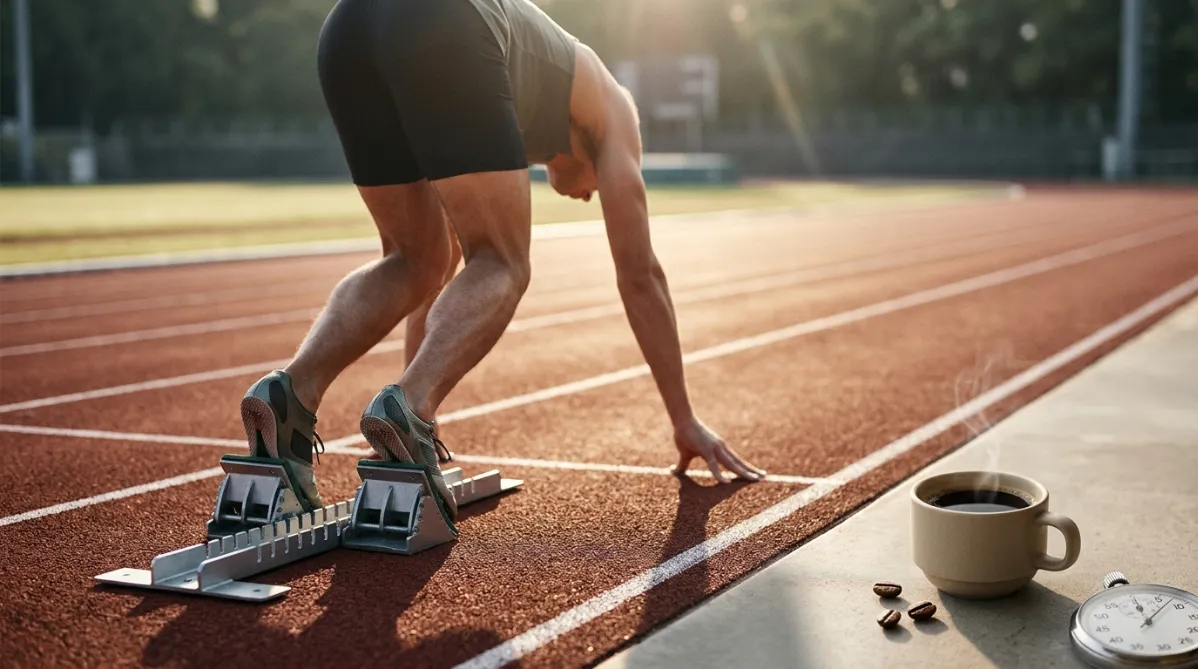
A wide, editorial-style photograph of a sprinter crouched in starting blocks on a deep terracotta-red running track, shot from a low angle at the side as the first morning light rakes across the lanes. The athlete is mid-set, hips lifted, hands poised behind crisp white lane lines, with a soft focus on their muscular calves and spiked shoes in the foreground. Warm golden sunlight creates long, elegant shadows and subtle lens flare, while the distant lanes fade into a creamy bokeh.

In the lower right foreground, slightly out of focus, sits a minimalist still life on a matte concrete ledge beside the track: a small ceramic cup of black coffee with a thin wisp of steam, two loose roasted coffee beans, and a simple stopwatch with a clean white face. The ceramic is a muted sand color, adding a refined, modern lifestyle touch.

The color palette is restrained and trendy: terracotta, warm cream, soft charcoal, and a hint of sage green from trees blurred in the far background. The composition uses generous negative space across the upper left, ideal for headline text overlay. The look is similar to a contemporary health and sports science magazine: natural film-like grain, gentle contrast, shallow depth of field, and a calm, focused mood. No text, no logos, no graphics, and no futuristic elements, just a realistic, tactile, sunlit scene that suggests precision, preparation, and explosive speed.
science research

Doppelte Koffeinmenge, schnellere Sprints? Was 6 mg/kg wirklich bewirkt

BY DR. GYMBRO ·

Eine randomisierte, doppelblinde Crossover‑Studie verglich 3 mg/kg mit 6 mg/kg Koffein bei 21 trainierten männlichen Sprintern. Beide Dosen übertrafen das Placebo, doch die höhere Dosis steigerte die Geschwindigkeit nur über die ersten 30 m und 60 m – nicht bei den ersten 10 m. Außerdem brachte sie einen zusätzlichen Nutzen für Sprunghöhe und die Kraftentwicklung im Startblock, jedoch keinen weiteren Gewinn bei Reaktionszeit oder Wingate‑Spitzenleistung. Im Folgenden erfahren Sie, was die Dosen in Milligramm für einen 70‑ bis 80‑kg‑Athleten bedeuten, wann sie einzunehmen sind, für wen die Evidenz gilt und welche Nebenwirkungen nicht untersucht wurden.

This page is available in