Dr. Gymbro
←

#sprinting

1 article
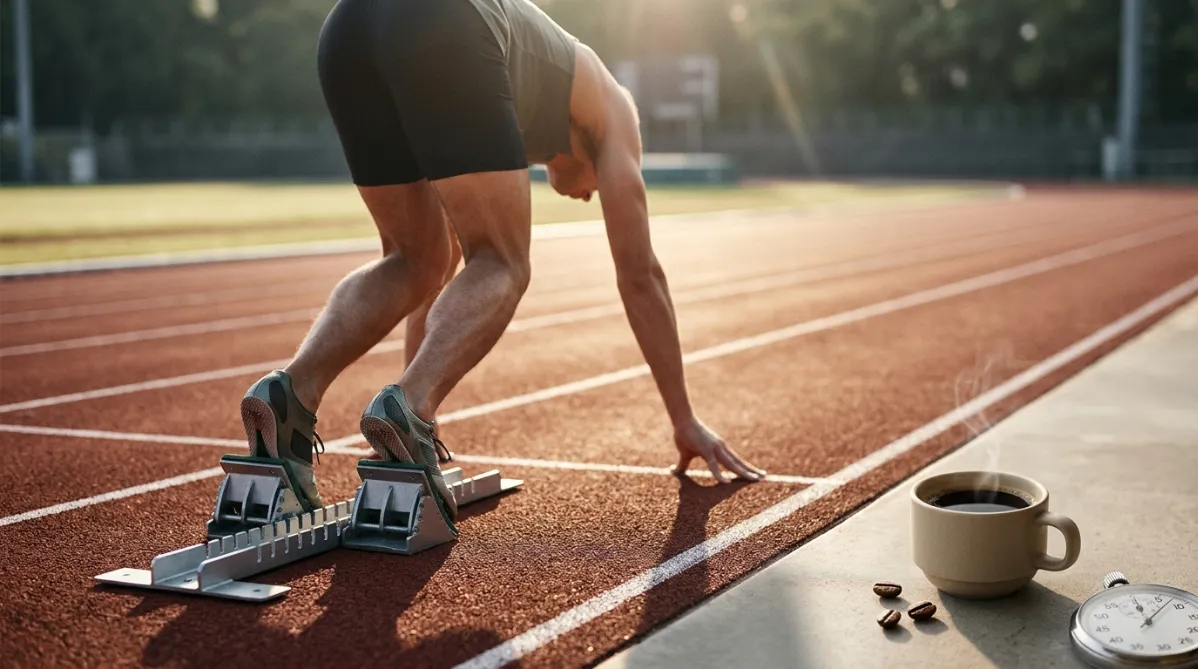
A wide, editorial-style photograph of a sprinter crouched in starting blocks on a deep terracotta-red running track, shot from a low angle at the side as the first morning light rakes across the lanes. The athlete is mid-set, hips lifted, hands poised behind crisp white lane lines, with a soft focus on their muscular calves and spiked shoes in the foreground. Warm golden sunlight creates long, elegant shadows and subtle lens flare, while the distant lanes fade into a creamy bokeh.

In the lower right foreground, slightly out of focus, sits a minimalist still life on a matte concrete ledge beside the track: a small ceramic cup of black coffee with a thin wisp of steam, two loose roasted coffee beans, and a simple stopwatch with a clean white face. The ceramic is a muted sand color, adding a refined, modern lifestyle touch.

The color palette is restrained and trendy: terracotta, warm cream, soft charcoal, and a hint of sage green from trees blurred in the far background. The composition uses generous negative space across the upper left, ideal for headline text overlay. The look is similar to a contemporary health and sports science magazine: natural film-like grain, gentle contrast, shallow depth of field, and a calm, focused mood. No text, no logos, no graphics, and no futuristic elements, just a realistic, tactile, sunlit scene that suggests precision, preparation, and explosive speed.
science research

Doble de cafeína, ¿sprints más rápidos? Qué aporta realmente 6 mg/kg

BY DR. GYMBRO ·

Un ensayo aleatorizado, doble ciego y cruzado comparó 3 mg/kg con 6 mg/kg de cafeína en 21 velocistas masculinos entrenados. Ambas dosis superaron al placebo, pero la dosis alta sólo aportó velocidad extra en los primeros 30 y 60 m, no en los 10 m. También mejoró la altura del salto y la tasa de desarrollo de fuerza en el bloque, sin efectos adicionales en el tiempo de reacción ni en la potencia máxima del test de Wingate. A continuación se muestra cuánto representa cada dosis en miligramos para atletas de 70‑80 kg, cuándo tomarlas, a quiénes aplican los resultados y qué se sabe (o no) de los efectos secundarios.

This page is available in