Dr. Gymbro
←

#subcutaneous-fat

1 article
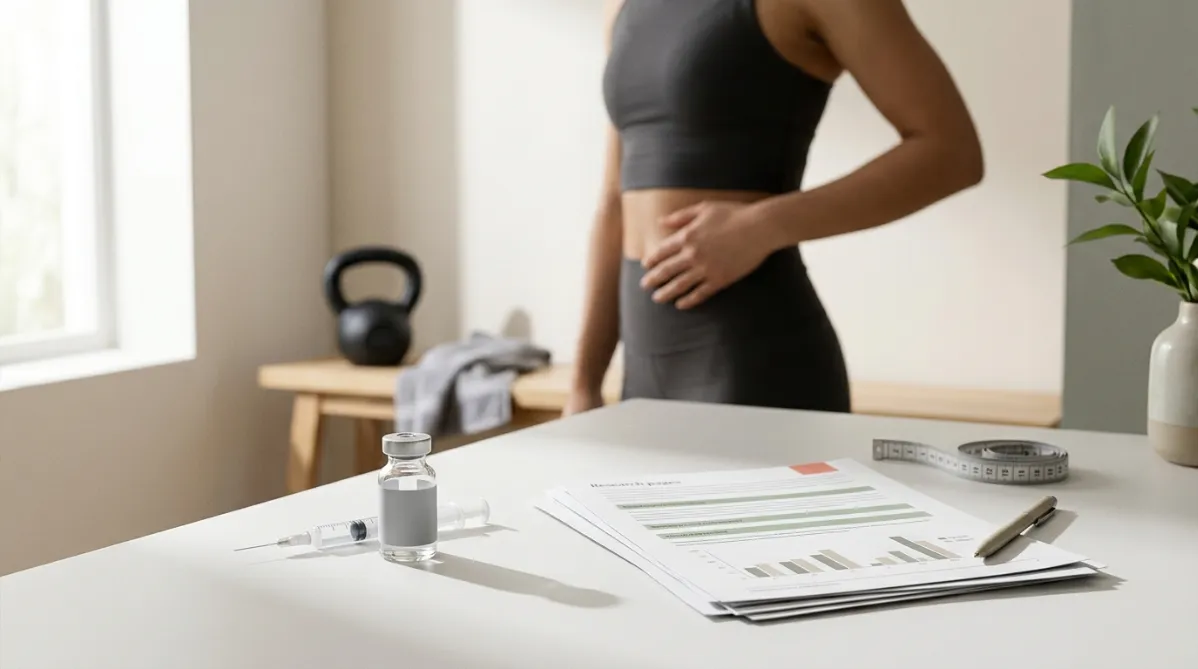
A wide, editorial-style photograph of a clean, bright clinical consultation space with a modern wellness-journal feel. In the foreground, a minimalist matte white tabletop holds a small glass vial with a soft gray label and a sterile syringe laid parallel beside it. Next to them sits a neatly folded stack of printed research pages, with a few subtle sage-green highlighted lines and a simple bar chart in muted tones. A slim stainless steel measuring tape curls loosely nearby, and a fine-point pen rests on the pages.

In the softly blurred midground, the torso of an athletic person in a fitted charcoal training top stands slightly out of focus. One hand rests lightly at the waist, which suggests body composition without showing a face. A weighted matte-black kettlebell and a folded gray gym towel sit on a pale oak bench to one side, a quiet reference to lifters and training.

The background is a calm wall in warm off-white and pale stone, with a tall window to the left. It lets in diffused morning daylight that casts long, gentle shadows across the table. A single green leafy plant in a ceramic pot adds a touch of organic color on the right edge.

The palette is restrained and contemporary: soft whites, warm beige, sage green, charcoal, and a small accent of muted coral. The composition follows the rule of thirds, with the vial and syringe on the left third and open negative space on the right, where headline text could sit. Use shallow depth of field, crisp focus on the vial's glass edges, and subtle highlights on the glass. The mood is thoughtful, credible, and analytical, in the style of a premium health and science magazine. Shoot it as if with a 50mm lens at f/2.8, with natural light, fine grain, and a clean, uncluttered finish.
science research

CBL‑514‑Fettabbau‑Injektionen: Die Phase‑2‑Studie, die Kraftsportler lesen sollten

BY DR. GYMBRO ·

Eine placebokontrollierte Phase‑2‑Studie zeigte, dass CBL‑514‑Injektionen das subkutane Bauchfett im Ultraschall deutlich reduzierten, während das Körpergewicht kaum verändert wurde. Nach 8 Wochen erreichten 69,6 % der verbleibenden behandelten Teilnehmenden mindestens 150 mL Fettverlust, gegenüber 0 % in der Placebo‑Gruppe. Die Studie war jedoch einfach blind, fast die Hälfte der behandelten Teilnehmenden schloss die Untersuchung nicht ab und die Nachbeobachtung war kurz. Das Medikament ist experimentell, kein Fettverbrenner und nicht zugelassen. Hier ist, was Kraftsportler im Kaloriendefizit daraus mitnehmen sollten.

This page is available in