Dr. Gymbro
←

#subcutaneous-fat

1 article
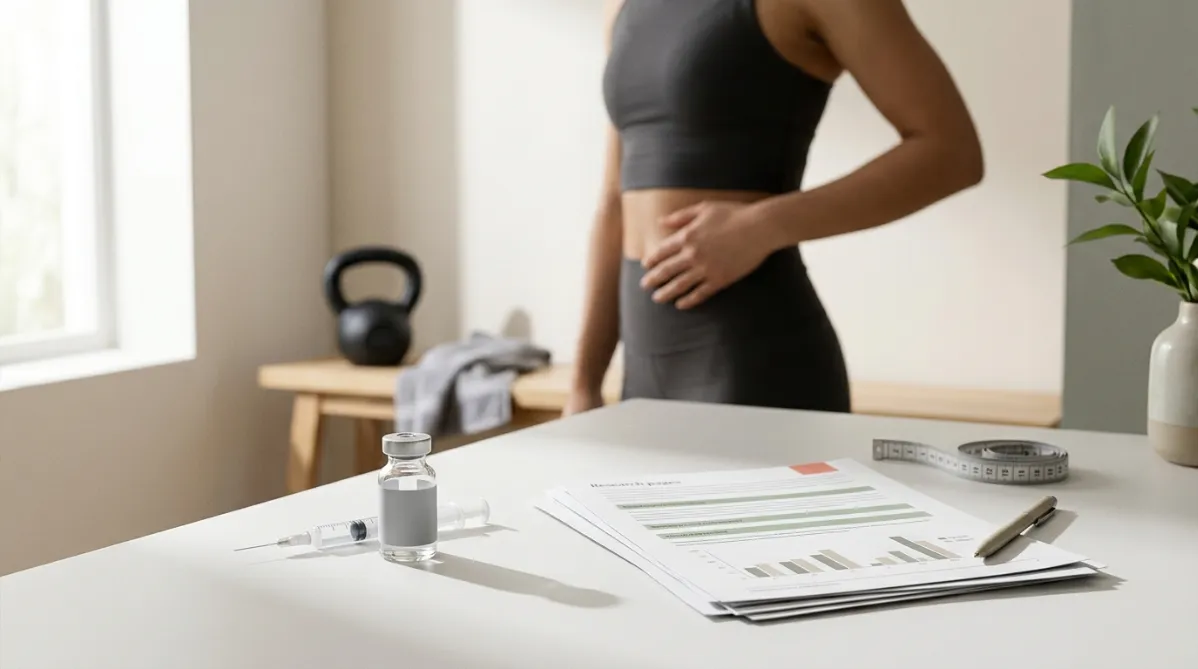
A wide, editorial-style photograph of a clean, bright clinical consultation space with a modern wellness-journal feel. In the foreground, a minimalist matte white tabletop holds a small glass vial with a soft gray label and a sterile syringe laid parallel beside it. Next to them sits a neatly folded stack of printed research pages, with a few subtle sage-green highlighted lines and a simple bar chart in muted tones. A slim stainless steel measuring tape curls loosely nearby, and a fine-point pen rests on the pages.

In the softly blurred midground, the torso of an athletic person in a fitted charcoal training top stands slightly out of focus. One hand rests lightly at the waist, which suggests body composition without showing a face. A weighted matte-black kettlebell and a folded gray gym towel sit on a pale oak bench to one side, a quiet reference to lifters and training.

The background is a calm wall in warm off-white and pale stone, with a tall window to the left. It lets in diffused morning daylight that casts long, gentle shadows across the table. A single green leafy plant in a ceramic pot adds a touch of organic color on the right edge.

The palette is restrained and contemporary: soft whites, warm beige, sage green, charcoal, and a small accent of muted coral. The composition follows the rule of thirds, with the vial and syringe on the left third and open negative space on the right, where headline text could sit. Use shallow depth of field, crisp focus on the vial's glass edges, and subtle highlights on the glass. The mood is thoughtful, credible, and analytical, in the style of a premium health and science magazine. Shoot it as if with a 50mm lens at f/2.8, with natural light, fine grain, and a clean, uncluttered finish.
science research

Zastrzyki CBL‑514 na redukcję tłuszczu: badanie fazowe II, które powinien przeczytać kulturysta

BY DR. GYMBRO ·

Badanie fazowe II kontrolowane placebo wykazało, że zastrzyki CBL‑514 zmniejszyły podskórny tłuszcz brzucha w badaniu ultrasonograficznym, podczas gdy waga ciała praktycznie nie uległa zmianie. Po 8 tygodniach 69,6 % uczestników otrzymujących lek osiągnęło utratę co najmniej 150 ml tłuszczu, w przeciwieństwie do 0 % w grupie placebo. Jednak badanie było jedynie jednowymiarowo ślepe, prawie połowa uczestników nie ukończyła go, a okres obserwacji był krótki. Lek jest wciąż eksperymentalny, nie jest spalaczem tłuszczu i nie ma zatwierdzenia. Oto co kulturysta na diecie redukcyjnej powinien z tego wyciągnąć.

This page is available in