Dr. Gymbro
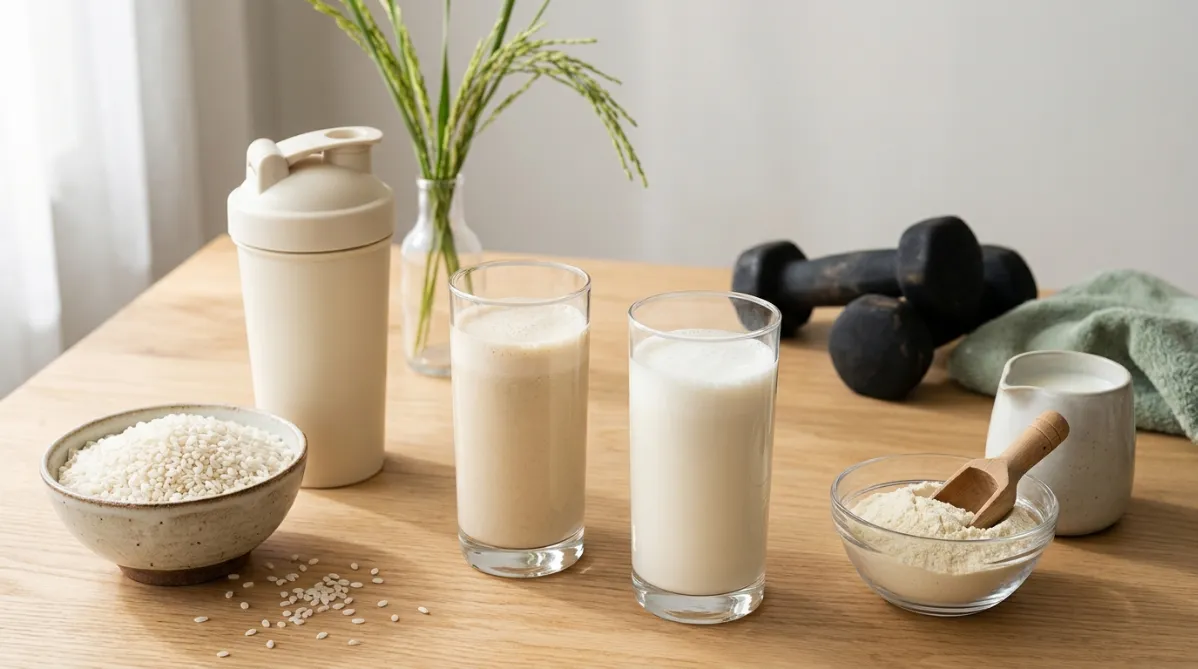
A bright, minimalist editorial still life on a pale oak table, shot from a slightly elevated three-quarter angle in soft natural window light. On the left sits a rustic ceramic bowl of uncooked short-grain white rice, with a few grains scattered across the wood. Beside it is a matte cream-colored shaker bottle. On the right is a small glass bowl of fine ivory whey powder with a wooden scoop resting in it, and a small pitcher of milk behind it. Two identical tall glasses of creamy, lightly frothed shake stand side by side in the center, one a touch warmer beige and the other a soft white. They suggest equal outcomes without any text or labels. A pair of worn black neoprene-coated dumbbells and a folded sage-green gym towel sit slightly out of focus in the background. A sprig of green rice stalks in a slim vase adds a fresh, natural accent.

The palette is warm neutrals: cream, oatmeal, soft sage, and muted terracotta, with gentle shadows and a shallow depth of field. The surface has subtle grain, and fine powder dust is caught in the light. The composition is clean and balanced, with generous negative space on the upper right for a headline overlay. The mood is calm, modern, and health-forward, like a contemporary nutrition magazine or wellness journal. Photorealistic, crisp detail, creamy bokeh, and a gentle matte film-like finish.
Nutrition

48 g de proteína de arroz igualaron a la whey en músculo y fuerza tras 8 semanas

Dr. Gymbro · · 5 min read

El estudio que desafía la idea de "whey o nada"

La proteína vegetal suele considerarse inferior a la whey. La whey es rica en leucina, se digiere rápidamente y cuenta con un amplio historial de investigación en hipertrofia muscular. La proteína de arroz, por su parte, se describe frecuentemente como la opción más débil, principalmente por su menor contenido de leucina y un perfil de aminoácidos menos favorable.

Un ensayo de 2013 liderado por Joy y colaboradores, publicado en Nutrition Journal, puso a prueba esa suposición bajo condiciones favorables para el arroz. El resultado: 48 g de aislado de proteína de arroz generaron las mismas mejoras en masa magra, grosor muscular, fuerza y potencia que 48 g de aislado de whey durante ocho semanas de entrenamiento.

Qué hicieron los investigadores

El equipo reclutó a 24 hombres jóvenes entrenados en resistencia y los dividió aleatoriamente en dos grupos iguales. Cada grupo consumió 48 g de aislado de proteína de arroz o de whey en los días de entrenamiento. Ambos suplementos estaban equilibrados en calorías y nitrógeno, de modo que la energía total y el contenido proteico fueran idénticos.

El programa de entrenamiento fue periodizado, con variación diaria, tres veces por semana durante ocho semanas. Los participantes tomaron su suplemento inmediatamente después de cada sesión.

Los investigadores midieron:

  • Grosor muscular mediante ecografía
  • Composición corporal mediante absorciometría dual de rayos X (DXA)
  • Fuerza de la parte superior e inferior del cuerpo mediante press de banca y prensa de piernas
  • Rendimiento de potencia
  • Recuperación percibida, dolor y disposición para entrenar alrededor de la primera sesión de entrenamiento

La composición corporal, la fuerza y el grosor se evaluaron en las semanas 0, 4 y 8.

Qué encontraron

Ambos grupos mejoraron significativamente con el tiempo. La masa corporal magra, la masa muscular, la fuerza y la potencia aumentaron, mientras que la masa grasa disminuyó. El hallazgo clave es lo que no ocurrió: no hubo interacción grupo‑tiempo, es decir, ningún suplemento superó al otro. Las valoraciones de recuperación, dolor y disposición para entrenar también fueron similares entre los grupos.

El diseño es valioso porque elimina factores confusores habituales. Con calorías, nitrógeno, momento de ingesta y entrenamiento equiparados, la única variable diferente fue la fuente de proteína, y no generó diferencias detectables en los resultados medidos.

Por qué la dosis importa

Los autores enmarcaron el estudio alrededor de una brecha específica. Investigaciones previas sugerían que la proteína animal podía superar a la vegetal en dosis pequeñas a moderadas. Este ensayo utilizó una dosis grande, lo que podría explicar por qué el arroz rindió tan bien.

El mecanismo probable es la leucina, el aminoácido más asociado con la activación de la síntesis de proteína muscular. La whey contiene más leucina por gramo, pero una porción suficientemente grande de proteína de arroz puede cerrar esa brecha al aportar la cantidad total de leucina y de aminoácidos esenciales necesaria para superar el umbral que desencadena una fuerte respuesta anabólica. Es una explicación plausible, aunque el estudio no la demostró directamente. Además, una ración de 48 g es mayor que la que muchas personas consumen después del entrenamiento.

Limitaciones

Antes de cambiar tu suplemento, ten en cuenta los siguientes puntos:

  • Muestra pequeña. Veinticuatro participantes (12 por grupo) pueden pasar por alto diferencias modestas. "No hay diferencia significativa" no es lo mismo que "son idénticos".
  • Duración corta. Ocho semanas son suficientes para observar adaptaciones tempranas, pero no permiten inferir tendencias a largo plazo.
  • Sólo hombres jóvenes entrenados. Los resultados pueden no extrapolarse a mujeres, adultos mayores o principiantes.
  • Posibles vínculos industriales. Los ensayos de suplementos suelen estar financiados por empresas que venden el producto probado. Revisa las declaraciones de conflicto de intereses y de financiamiento antes de extraer conclusiones.
  • Dosis grande. Porciones menores de arroz (por ejemplo, 20‑25 g) podrían no igualar a la whey porque aportarían menos leucina. Este estudio no evaluó esas cantidades.
  • Otros factores dietéticos. La ingesta total diaria de proteína y la composición de la dieta no fueron el foco principal del estudio, de modo que otras influencias nutricionales no pueden descartarse por completo.

Conclusiones prácticas

Dosis: El estudio utilizó 48 g de aislado de proteína de arroz en los días de entrenamiento. Si deseas reproducir el resultado, apunta a una cantidad cercana, no a una cucharada pequeña.

Momento: Los participantes la consumieron inmediatamente después del entrenamiento. No hay evidencia aquí de que el timing sea esencial; lo que más importa es el total diario de proteína, pero ese fue el protocolo que funcionó.

A quién beneficia: Es particularmente relevante para veganos, personas intolerantes a la lactosa o alérgicas a las proteínas de leche, y cualquiera que prefiera productos de origen vegetal. Para estos deportistas, el estudio sugiere que renunciar a la whey no implica renunciar a las ganancias, siempre que la dosis sea adecuada.

Si tomas menos: Considera una porción mayor, combina la proteína de arroz con otras fuentes vegetales o añade una fuente de leucina. Esa es una inferencia razonable basada en la lógica de la leucina, no un hallazgo del ensayo.

Si toleras la whey: Nada aquí indica que el arroz sea mejor. El estudio encontró equivalencia, así que elige según digestión, precio, sabor y valores personales.

Conclusión final

Este ensayo muestra que la antigua jerarquía que coloca a la whey por encima de la proteína vegetal no es absoluta. Cuando la dosis, las calorías y el nitrógeno están equiparados y la cantidad es alta, el aislado de proteína de arroz respaldó aumentos de masa magra, fuerza y potencia comparables a los de la whey en hombres entrenados durante ocho semanas. La muestra es pequeña, el periodo breve y la dosis elevada limitan la generalización. Sin embargo, para los atletas basados en plantas representa una evidencia alentadora de que un batido de proteína de arroz bien dosificado puede cumplir el objetivo.

Resumen rápido:

  • 48 g de aislado de proteína de arroz igualaron a 48 g de aislado de whey en un ensayo aleatorizado con 24 hombres entrenados.
  • La masa magra, el grosor muscular, la fuerza y la potencia mejoraron en ambos grupos sin diferencias entre ellos.
  • La gran dosis probablemente ayudó al arroz a competir; no asumas que porciones pequeñas rinden igual.
  • Revisa los conflictos de interés y trata los hallazgos como prometedores, no definitivos.
Original study

Read the original research on pubmed.ncbi.nlm.nih.gov →

This article summarizes published research for general information. It is not medical advice.

DG

Written by

Dr. Gymbro

Dr. Gymbro writes for Dr. Gymbro: science-backed fitness, nutrition & performance.

Related Articles

A wide, softly lit editorial still life on a pale warm-gray concrete surface, shot from a slightly elevated three-quarter angle. In the center-left, two matte ceramic scoops sit side by side. One holds fine ivory whey powder, the other holds slightly coarser, pale golden collagen peptide powder. A small, elegant dusting of both powders spills between them and blends into a soft swirl. Behind them, three minimalist cream and sage-green supplement tubs with no legible text stand in a staggered row, with a frosted glass shaker bottle of creamy liquid beside them.

On the right, a brushed-steel barbell plate and a compact chalk-dusted kettlebell rest slightly out of focus, suggesting resistance training. Pale wisps of chalk hang in the air. A folded charcoal gym towel and a pair of worn leather lifting straps lie in the foreground. A single cross-section of a clean white bone model, a stylized vertebra, rests on a small oak block at the far right. It subtly signals the bone-density theme without looking clinical.

Natural window light enters from the left, casting long, gentle shadows and a warm highlight on the powders. The palette is muted and modern: oatmeal, bone white, sage green, soft charcoal, and touches of warm amber. Shallow depth of field keeps the scoops tack-sharp and melts the background into creamy blur. Leave generous negative space in the upper right for headline overlay. The overall feel is a premium health and science journal cover: clean, tactile, minimalist, with fine film-like grain and a calm, editorial mood.
nutrition

Whey + colágeno supera a cualquiera por separado en levantadores: hay una trampa

BY DR. GYMBRO ·

Mezclar 30 g de suero con 10 g de colágeno superó al suero solo, al colágeno solo y al placebo en todos los resultados de un ensayo de 8 semanas con hombres entrenados en resistencia. La combinación aportó 2,66 kg de masa muscular (según BIA), aumentó la densidad mineral ósea de la columna lumbar y mejoró la sentadilla, el press de banca y los marcadores de recambio óseo. El colágeno solo benefició al hueso y el suero solo al músculo. Sin embargo, con solo 40 participantes, totales de proteína desiguales y un aumento de DMO inesperadamente grande, hay una trampa. A continuación se muestra lo que ganó la combinación, a quién le puede convenir y a quién debería evitarla.

A wide, softly lit bedroom scene at dusk, styled like a modern editorial photograph. In the foreground, a rumpled bed with textured oatmeal linen sheets and a single dented pillow sits beside a light oak nightstand. On the nightstand is a tall glass of creamy, milky white protein shake, a small wooden scoop and a matte ceramic tub with no readable label, beside a minimalist analog alarm clock. The clock's hands show a late hour, and it casts a faint shadow on the wall. A pair of clean white running shoes rests on the floor by the bed. A folded gray athletic hoodie lies at the foot of the bed, suggesting an athlete's lifestyle.

Warm amber light from a bedside lamp mixes with cool blue-gray twilight from a tall window with sheer curtains. The glow lands on the glass and gives the milky surface a soft sheen. Through the window, a muted city skyline fades into evening haze.

The palette is calm and sophisticated: warm cream, soft sage green, dusty blue, and a touch of terracotta from a small ceramic vase holding dried pampas grass. The composition follows the rule of thirds, with the glass and clock in the right third and open negative space on the left for headline text. Shallow depth of field keeps the glass and clock crisp while the background blurs gently.

The mood is quiet, slightly restless, and thoughtful, hinting at a night that does not go as planned. A subtle detail, a half-drawn curtain letting in a thin stripe of light across the rumpled sheets, suggests interrupted sleep. The look is clean, contemporary, and magazine-quality, with fine film grain, natural tones, and soft shadows, like a lifestyle wellness journal cover. No people, no text, no futuristic elements.
recovery

La “proteína del sueño” que hizo que los que duermen mal se despertaran con mayor frecuencia

BY DR. GYMBRO ·

Alpha‑lactalbumina se comercializa como la “proteína del sueño” y estudios agudos anteriores sugerían que podría ayudar a los deportistas a dormir y rendir mejor. Un nuevo ensayo aleatorizado cruzado la puso a prueba en 24 atletas con verdaderos problemas de sueño. Tras una semana de 40 g tomados 2 horas antes de acostarse, no hubo mejora del sueño; los despertares aumentaron ligeramente (11,01 vs 10,25) y la altura del salto disminuyó (27,68 vs 28,58 cm). El único aspecto positivo fue la reducción del estado de ánimo negativo por la noche. Aquí se explica qué se evaluó, qué muestran los datos y a quién conviene evitarlo.

A bright, airy, minimalist kitchen counter in soft morning light, shot from a slightly elevated three-quarter angle in a wide landscape composition. Two matching ceramic bowls sit side by side on a pale oak butcher-block surface. The left bowl holds fine, creamy-beige pea protein powder with a small wooden scoop resting in it. The right bowl holds smooth, ivory-white whey powder with an identical scoop. Between and slightly behind them sits a third, smaller empty bowl with a plain scoop, hinting at the placebo. Scattered around the bowls are fresh green pea pods, some split open to reveal bright, round peas, and a small glass bottle of milk with delicate condensation. A sage-green linen napkin is folded loosely at the edge of the frame.

In the soft-focus background, a young man in a fitted heather-gray t-shirt is seen from the shoulders down, casually flexing one arm while holding a matte shaker bottle, the biceps subtly defined and the pose relaxed and natural. A minimalist notebook with a pencil and a simple hand-drawn bar chart lies open on the counter, suggesting analysis without legible text. A small potted herb plant and a ceramic mug add warmth.

The color palette is muted and editorial: warm cream, sage green, soft terracotta, pale wood, and touches of charcoal. Light streams in from a window on the left, casting gentle long shadows and a subtle golden glow across the powders so their textures look fine and tactile. Shallow depth of field keeps the bowls crisp while the background melts into a creamy blur. The look is modern lifestyle-magazine photography, clean and uncluttered, with generous negative space on the right third of the frame for headline overlay. It is natural, appetizing, and trustworthy, in the style of a contemporary wellness and nutrition journal.
nutrition

Proteína de guisante vs suero: el resultado inesperado para principiantes

BY DR. GYMBRO ·

¿Puede la proteína vegetal generar músculo como el suero? Un ensayo de 12 semanas con 161 hombres comparó proteína de guisante, suero y placebo, y los resultados para principiantes llamaron la atención: +20,2 % de grosor de bíceps con guisante frente a +8,6 % con placebo. Sin embargo, la diferencia en el grupo completo fue solo una tendencia, y el hallazgo destacado surgió de un análisis de subgrupos. Aquí lo que descubrió el estudio, lo que no demostró y cómo los levantadores veganos o intolerantes a la lactosa pueden aprovecharlo.

A clean, editorial flat-lay photograph shot from above on a pale warm-grey stone countertop, bathed in soft diffused morning light from the left. At the center sits a matte white supplement tub with a minimal sage-green label, its lid resting beside it. A small wooden scoop spills fine cream-colored whey powder in a gentle arc across the surface, creating delicate natural texture and soft shadows. Next to the powder, a small ceramic dish holds a handful of pale tan capsules and a few tiny golden-brown ginseng root slices and fragments of dried Panax notoginseng root, hinting at the botanical origin of the ingredient. A sprig of fresh green leaves with serrated edges adds a touch of organic color on the upper right.

In the foreground, a tall glass of milky shake with a subtle frothy surface, condensation beads on its sides, sits beside a folded linen napkin in oatmeal tone. A slim brushed-steel spoon and a minimal glass of water complete the arrangement. A pair of simple, elegant reading glasses and a closed notebook with a thin pencil rest at the upper left, suggesting a researcher's desk and a thoughtful review of data, with no legible text visible.

The palette is soft and modern: warm cream, sage green, muted terracotta, pale wood, and gentle off-white, with one small accent of deep amber from the ginseng slices. Composition follows the rule of thirds with generous negative space on the right side for title overlay. Shallow depth of field, crisp focus on the powder and capsules, with the edges gently softened. The mood is calm, trustworthy, and wellness-focused, evoking a contemporary health and science magazine aesthetic. High-resolution, natural color grading, subtle film grain, minimal and airy, 16:9 landscape.
nutrition

AstraGin: el ingrediente oculto en la etiqueta que potenció la absorción del suero

BY DR. GYMBRO ·

Hay un pequeño ingrediente en la etiqueta de tu pre‑entrenamiento que probablemente hayas pasado por alto: AstraGin. Un ensayo piloto en humanos mostró que aumentó la absorción de valina en un 14 %, leucina en un 8 % y el total de aminoácidos esenciales en casi un 13 % en adultos de 60‑80 años. La zonulina en sangre, un marcador de la permeabilidad intestinal, también descendió un 13 %. Sin embargo, las diferencias en fuerza y masa muscular no fueron estadísticamente significativas y el estudio solo incluyó a 30 participantes. Aquí te explicamos qué dicen realmente los datos sobre si AstraGin funciona.

This page is available in