Dr. Gymbro
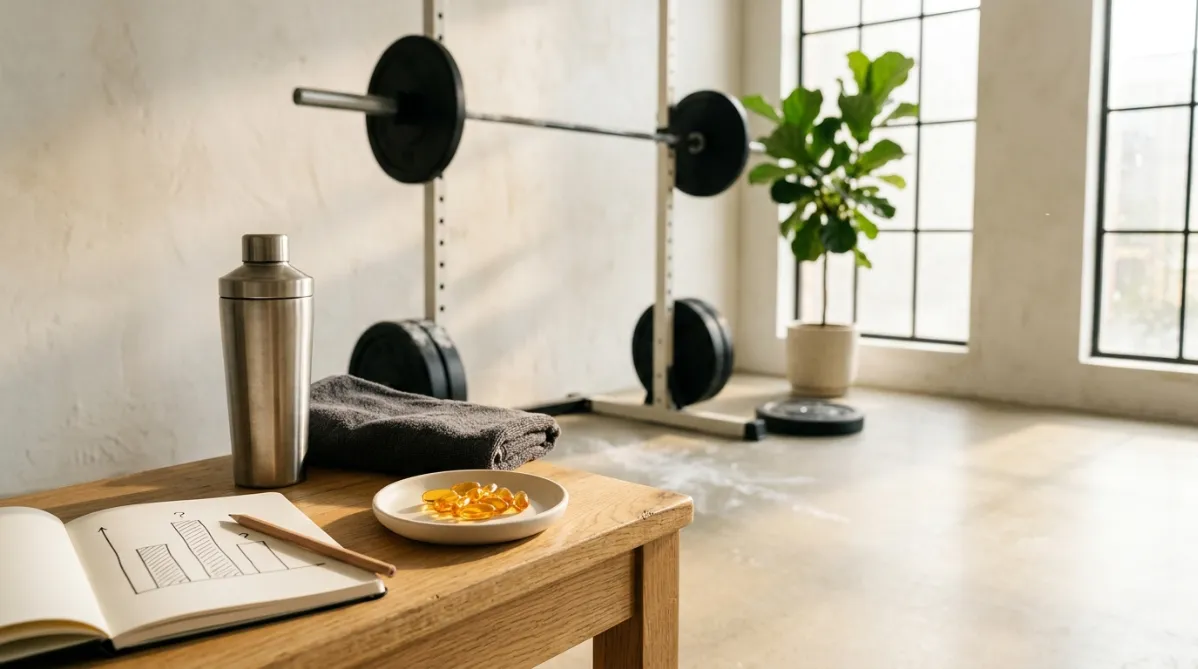
A wide landscape editorial photograph of a sunlit minimalist gym corner with warm, natural morning light streaming through tall windows. In the foreground on a light oak wooden bench sits a small matte ceramic dish holding a few translucent amber softgel capsules, next to a brushed steel shaker bottle and a folded charcoal gray towel. The capsules catch the light with a soft golden glow, shallow depth of field blurring them slightly against the background.

In the softly blurred midground, a barbell loaded with black plates rests on a squat rack, with chalk dust lightly floating in the sunbeams. The walls are textured off-white plaster, and the floor is pale polished concrete. A potted green plant adds a touch of organic color near the window.

Laid casually beside the dish is an open notebook with a clean, hand-drawn bar chart in black ink: two bars of slightly different heights, one marked with a small question mark, suggesting uncertainty and interpretation. A slim pencil rests across the page. No readable text beyond simple marks.

The color palette is muted and modern: cream, warm beige, soft amber, charcoal, and sage green accents. The composition follows the rule of thirds, with the capsules and notebook in the lower left third and open negative space toward the upper right, ideal for headline overlay. Soft shadows, subtle film grain, and a calm, contemplative mood reminiscent of a contemporary health and science magazine. Shot as if with a 50mm lens at f/2.0, high-end lifestyle editorial aesthetic, clean and trendy, with no futuristic or sci-fi elements.
Science & Research

750 mg de PA aumentan un 2,6 % de masa magra en 8 semanas, pero hay un truco

Dr. Gymbro · · 4 min read

El número que llamó la atención de todos

En un estudio piloto de 8 semanas, hombres entrenados que tomaron ácido fosfatídico (PA) ganaron un 2,6 % de masa magra. El grupo placebo ganó solo un 0,1 %. Esa brecha es la razón por la que la PA sigue apareciendo en pilas de suplementos pre‑entrenamiento y en foros de musculación.

Pero las estadísticas del propio estudio no respaldan ese número como lo haría el marketing de suplementos. A continuación, lo que la investigación encontró – y lo que no encontró.

¿Qué es el ácido fosfatídico y por qué podría aumentar músculo?

El ácido fosfatídico es un fosfolípido que funciona como molécula de señal en las células. La lógica de suplementarlo se apoya en la vía mTOR (objetivo mamífero de la rapamicina), un interruptor central de la síntesis de proteínas musculares. Se ha observado que la PA activa la señalización de mTOR, por lo que los investigadores plantearon la hipótesis de que tomarla por vía oral podría potenciar la respuesta anabólica al entrenamiento de resistencia.

Ese es un mecanismo plausible, no un resultado demostrado en humanos. Hoffman y colegas diseñaron este estudio para comprobar si la idea se sostiene en levantadores reales.

El diseño: quiénes, cuánto y cuánto tiempo

El estudio de 2012, publicado en Journal of the International Society of Sports Nutrition, se describió explícitamente como estudio piloto. Los detalles:

  • Participantes: 16 hombres entrenados en resistencia, edad promedio ≈ 23 años.
  • Grupo PA: 7 hombres tomando 750 mg de PA al día.
  • Grupo placebo: 9 hombres.
  • Entrenamiento: programa de resistencia de 4 días/semana durante 8 semanas.
  • Mediciones: 1‑RM en press de banca y sentadilla, composición corporal, grosor del vasto lateral y ángulo de pennación.

La dosis de 750 mg diarios es el número que ahora muchos citan al buscar productos de PA.

Los resultados: mayores ganancias… en el papel

A primera vista, el grupo PA quedó por delante:

  • Sentadilla 1‑RM: +12,7 % con PA vs. +9,3 % con placebo.
  • Masa magra: +2,6 % con PA vs. +0,1 % con placebo.

Ambos grupos se hicieron más fuertes, algo esperado tras ocho semanas de entrenamiento estructurado. La diferencia radica en cuánto extra pareció ganar el grupo PA, sobre todo en masa magra.

El truco: no hubo diferencias estadísticamente significativas

Los autores afirman que el análisis paramétrico no pudo demostrar diferencias significativas entre los grupos. Según los criterios convencionales, el estudio no mostró que la PA superara al placebo.

En su lugar, los investigadores aplicaron inferencia basada en magnitud, que estima la probabilidad de que un efecto sea relevante. Con ese método:

  • Las ganancias en fuerza de sentadilla mostraron un beneficio «probable» de la PA.
  • La masa magra mostró un beneficio «muy probable».

La inferencia basada en magnitud es un enfoque más indulgente que las pruebas de significación estándar y ha sido criticado en la comunidad de ciencia del deporte. Suele utilizarse en estudios pequeños donde los tests convencionales carecen de potencia para detectar diferencias. Puede señalar señales prometedoras, pero no equivale a confirmación.

Limitaciones que debes conocer

  • Muestra diminuta: 7 vs. 9 participantes. Un par de valores atípicos pueden alterar drásticamente los promedios.
  • Sin diferencias significativas bajo el análisis estadístico estándar.
  • Duración corta: 8 semanas no dicen nada sobre efectos a largo plazo.
  • Población estrecha: hombres jóvenes entrenados en resistencia. Los resultados pueden no aplicarse a mujeres, adultos mayores o principiantes.
  • Diseño piloto: los autores lo presentan como preliminar. Genera hipótesis más que confirmaciones.
  • Diferencias de partida: con grupos tan pequeños, la composición corporal inicial y la capacidad de respuesta al entrenamiento pueden variar mucho entre individuos.

Conclusiones prácticas

  1. Dosis: se utilizó 750 mg al día, tomados diariamente junto con el entrenamiento. No hay evidencia aquí de que una dosis mayor sea mejor.
  2. Momento: el estudio menciona ingestión diaria, pero no especifica la hora relativa al entrenamiento. Revisa el texto completo antes de afirmar que se trata de un protocolo pre‑ o post‑entrenamiento basado en evidencia.
  3. El entrenamiento es lo primero: ambos grupos entrenaron cuatro días a la semana y ambos mejoraron. El suplemento fue un añadido a un programa sólido, no un sustituto.
  4. Esperar efectos modestos e inciertos: en el mejor de los casos, este estudio sugiere una posible ventaja en masa magra y fuerza de tren inferior. No garantiza nada.
  5. No descuides lo básico: la ingesta de proteína, el total de calorías, la sobrecarga progresiva y el sueño tendrán mucho mayor impacto que cualquier suplemento aislado.

Conclusión final

El estudio ofrece a la PA un caso razonable de partida: un mecanismo plausible, una dosis práctica y tendencias favorables en fuerza de sentadilla y masa magra. Pero con solo 16 sujetos, sin significación estadística convencional y con una ventana de 8 semanas, sigue siendo un estudio piloto y no una prueba definitiva. Si pruebas la PA, trátala como un experimento, registra tu propio progreso y mantén expectativas realistas. Solo ensayos más grandes, de mayor duración y replicados de manera independiente podrían convertir una señal prometedora en un resultado establecido.
Original study

Read the original research on pubmed.ncbi.nlm.nih.gov →

This article summarizes published research for general information. It is not medical advice.

DG

Written by

Dr. Gymbro

Dr. Gymbro writes for Dr. Gymbro: science-backed fitness, nutrition & performance.

Related Articles

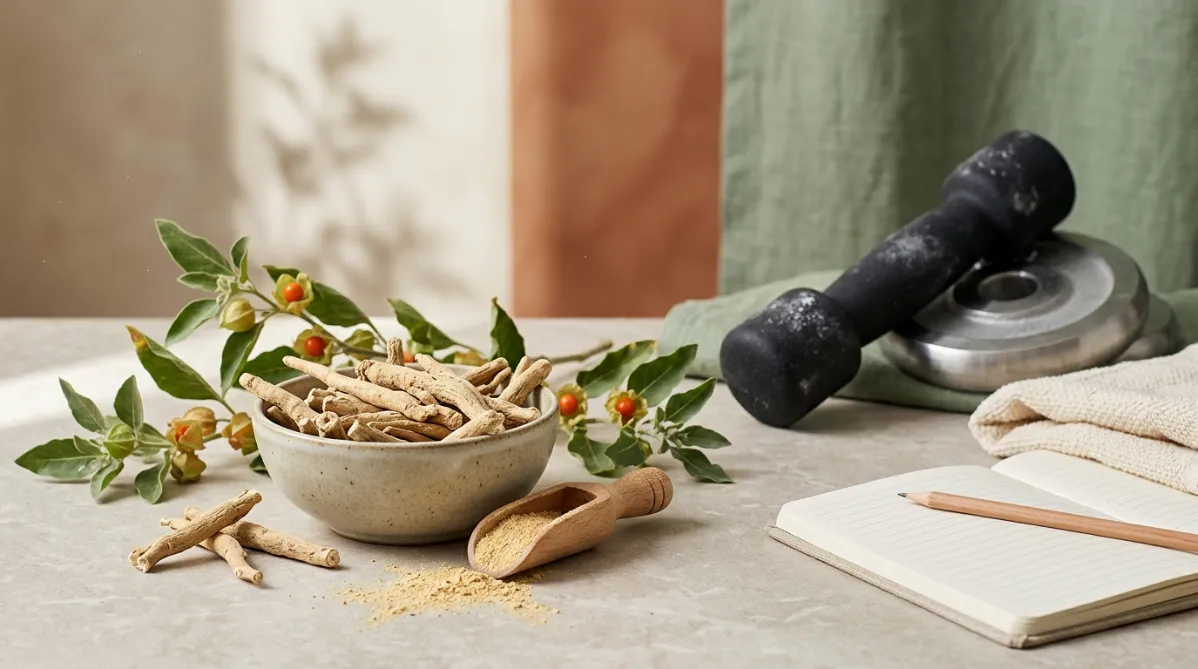
A wide editorial still life on a pale, warm-gray stone surface lit by soft morning window light from the left. In the foreground, a rustic ceramic bowl in matte oatmeal glaze holds dried ashwagandha roots, pale tan and gnarled, with a few scattered beside it. A small wooden scoop dusted with fine golden-beige powder rests next to the bowl. Behind them, a few olive-green ashwagandha sprigs with small orange-red berries in papery husks arc across the frame, adding a quiet pop of color.

Midground right: a matte black chalk-dusted dumbbell handle and a single brushed-steel weight plate lean casually against a linen-textured backdrop in muted sage. A folded cream cotton towel and a slim notebook with a pencil suggest a training log. The notebook is open to blank, softly lined pages with no legible text.

The background fades into a gentle blur of neutral beige and soft terracotta tones, with a hint of a plant shadow cast across the wall in dappled light. Fine dust and powder particles float in the light beams, giving a tactile, organic feel.

The composition follows the rule of thirds: botanical elements on the left and center, gym elements on the right, and negative space in the upper right for headline overlay. Shallow depth of field, crisp focus on the roots and powder, creamy bokeh behind. Color palette: sage green, warm sand, terracotta, charcoal black, and a touch of burnt orange. The mood is calm, modern, and trustworthy, like a premium wellness and science magazine. Photographed on a 50mm lens, natural grain, subtle film-like contrast, clean minimalist styling, high-end editorial photography.
nutrition

La hierba milenaria que superó al placebo en un estudio de 8 semanas: fuerza, masa muscular y testosterona

BY DR. GYMBRO ·

¿Podría una raíz ayurvédica de siglos de antigüedad superar realmente a un placebo en el gimnasio? En un ensayo aleatorio de 8 semanas con 57 levantadores novatos, los hombres que tomaron 300 mg de extracto de ashwagandha dos veces al día aumentaron más la fuerza en el press de banca, incrementaron la masa de brazos y pecho, y mostraron un mayor aumento de testosterona que el grupo placebo. Además, perdieron más grasa corporal. El inconveniente es que el estudio fue pequeño, breve y limitado a hombres principiantes. Aquí tienes los datos, cómo se administró la dosis, a quién podría beneficiar y por qué debes mantener el escepticismo.

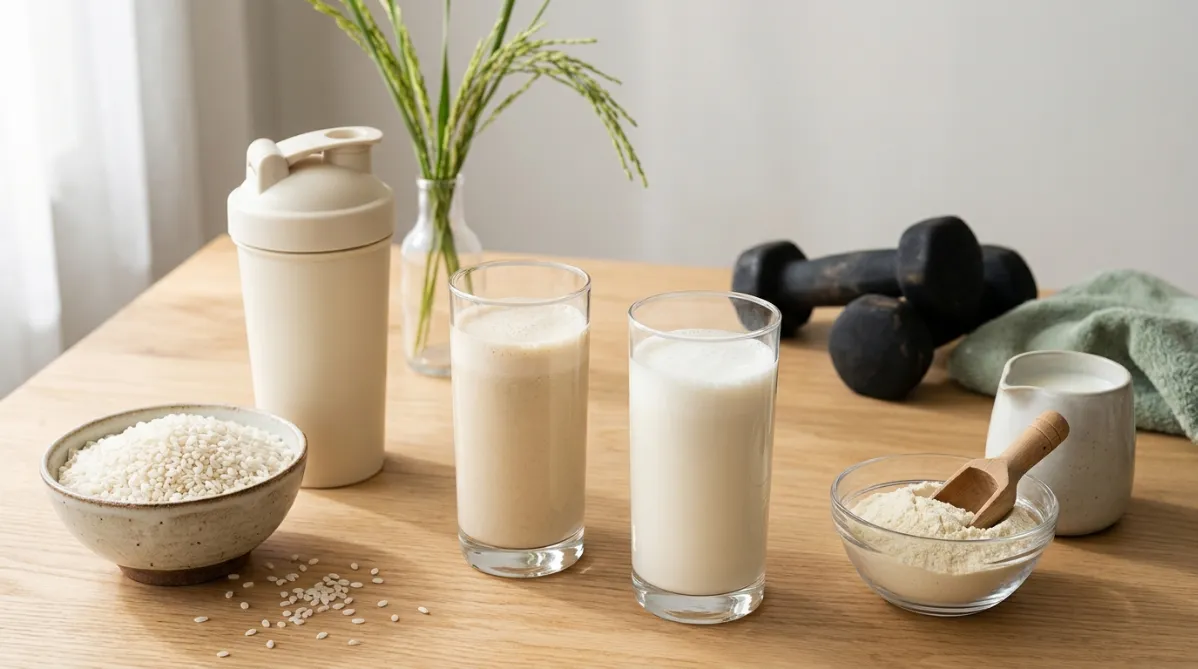
A bright, minimalist editorial still life on a pale oak table, shot from a slightly elevated three-quarter angle in soft natural window light. On the left sits a rustic ceramic bowl of uncooked short-grain white rice, with a few grains scattered across the wood. Beside it is a matte cream-colored shaker bottle. On the right is a small glass bowl of fine ivory whey powder with a wooden scoop resting in it, and a small pitcher of milk behind it. Two identical tall glasses of creamy, lightly frothed shake stand side by side in the center, one a touch warmer beige and the other a soft white. They suggest equal outcomes without any text or labels. A pair of worn black neoprene-coated dumbbells and a folded sage-green gym towel sit slightly out of focus in the background. A sprig of green rice stalks in a slim vase adds a fresh, natural accent.

The palette is warm neutrals: cream, oatmeal, soft sage, and muted terracotta, with gentle shadows and a shallow depth of field. The surface has subtle grain, and fine powder dust is caught in the light. The composition is clean and balanced, with generous negative space on the upper right for a headline overlay. The mood is calm, modern, and health-forward, like a contemporary nutrition magazine or wellness journal. Photorealistic, crisp detail, creamy bokeh, and a gentle matte film-like finish.
nutrition

48 g de proteína de arroz igualaron a la whey en músculo y fuerza tras 8 semanas

BY DR. GYMBRO ·

Se suele decir que la proteína vegetal se queda atrás de la whey, pero un estudio de 2013 realizado en hombres entrenados mostró lo contrario cuando se emplea una dosis alta. En 24 sujetos con entrenamiento de resistencia, 48 g de aislado de proteína de arroz después del ejercicio produjeron los mismos aumentos en masa magra, grosor muscular, fuerza y potencia que 48 g de whey durante ocho semanas. La gran dosis probablemente cerró la brecha de leucina. A continuación, se detalla lo que reveló el estudio, sus limitaciones y cómo los deportistas veganos o intolerantes a la lactosa pueden aprovecharlo.

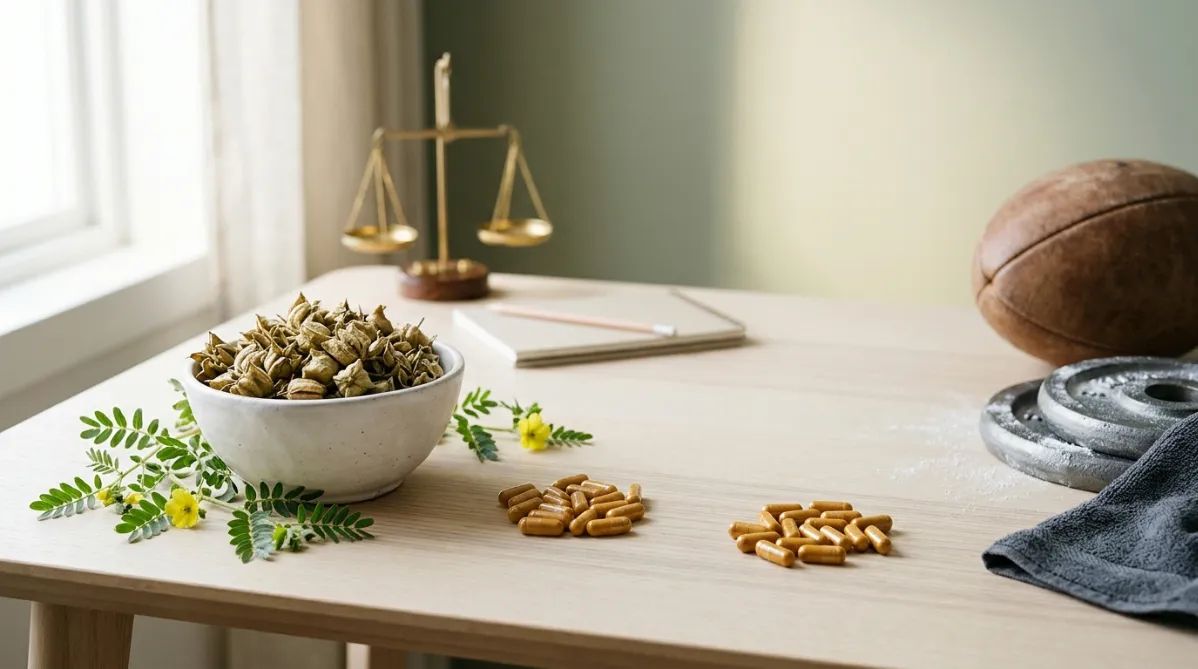
A wide, landscape editorial photograph shot from slightly above, showing a rustic matte-white ceramic bowl of dried tribulus terrestris, spiky star-shaped seed pods in warm tan and khaki tones, with a few fresh green trailing vines and tiny yellow flowers draped beside it. The bowl sits at the left third of the frame on a pale ash-wood table. Scattered nearby are two identical sets of plain, unlabeled amber supplement capsules, one pile slightly apart from the other, hinting at a placebo comparison. To the right, slightly out of focus, a worn leather rugby ball rests next to a chalk-dusted steel barbell plate and a folded charcoal-gray athletic towel.

Soft diffused natural light streams in from a window on the left, creating gentle long shadows and a calm, clean atmosphere. The background is a muted sage-green and cream gradient with a shallow depth of field, leaving generous negative space on the right side for title overlay. A small, minimal notebook with a pencil and a simple balance scale made of brushed brass sits subtly in the midground, suggesting scientific scrutiny without any laboratory clutter.

The color palette is earthy and refined: sage green, sand, warm amber, charcoal, and off-white. The style is modern lifestyle-magazine photography, crisp textures, subtle film grain, and a high-end wellness journal feel. The composition is balanced, uncluttered, and minimalist, with a quiet, thoughtful mood that conveys skepticism and evidence-based inquiry. No text, no logos, no people, no futuristic or sci-fi elements.
science research

Tribulus Terrestris fracasa en jugadores élite de rugby: ensayo de 5 semanas

BY DR. GYMBRO ·

Tribulus terrestris se comercializa como un potenciador natural de testosterona capaz de aumentar la masa muscular en menos de un mes. Un estudio doble ciego lo probó en jugadores élite de rugby league; tanto el grupo que lo tomó como el placebo mejoraron su fuerza y masa libre de grasa por igual, y la relación urinaria T/E no se modificó. A continuación, se presentan los hallazgos, sus limitaciones y recomendaciones de gasto.

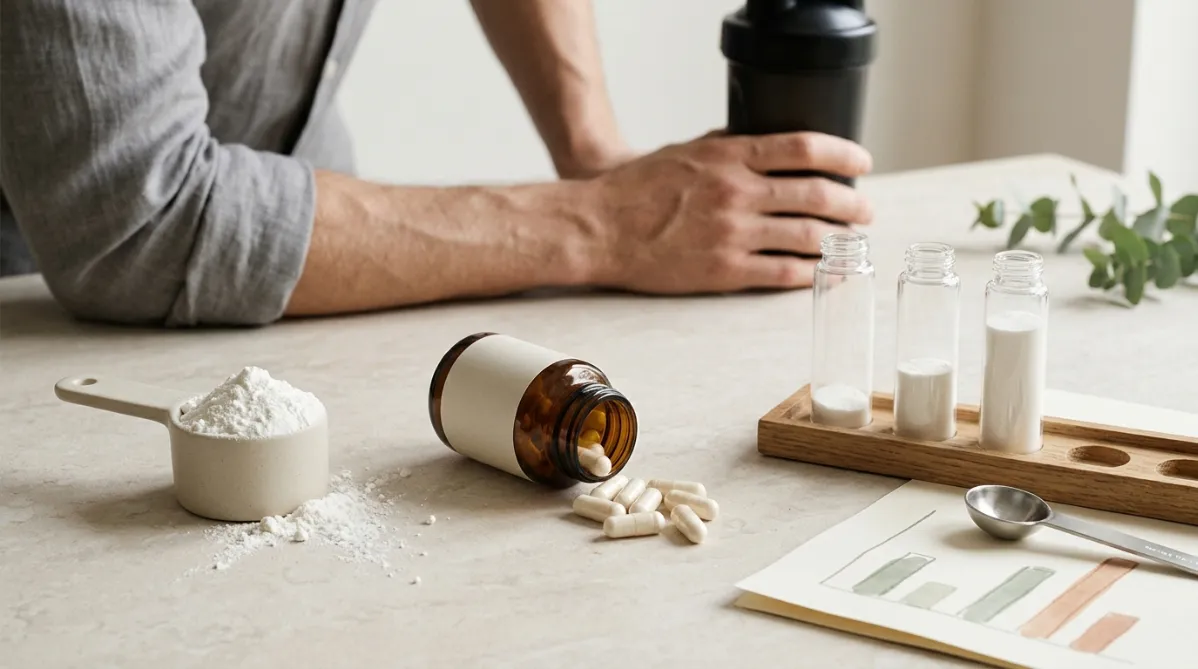
A modern editorial still life photographed from a slightly elevated angle on a pale, matte stone surface in soft natural window light. On the left, a heaping mound of fine white creatine monohydrate powder spills from a matte ceramic scoop, with a few crisp grains scattered across the surface. In the center, a small, minimalist amber glass capsule bottle sits tipped on its side, with a handful of off-white capsules spilling out. The label is blank and clean. On the right, a neat row of three clear glass lab-style vials rests on a slim oak tray. The vials hold different amounts of white powder: the first nearly empty, the second slightly fuller, the third filled almost to the brim. This quietly suggests the difference in dose and result. Beside the tray lies a simple stainless steel measuring spoon and a folded sheet of cream paper with soft, abstract bar-chart lines in muted sage green and terracotta. The lines are hand-drawn and unlabeled.

Behind the objects, slightly out of focus, a lean athletic forearm in a gray linen sleeve rests on the edge of the surface, one hand loosely holding a matte shaker bottle. This hints at a training context without showing a face. A single sprig of eucalyptus in the corner adds a soft organic touch.

The palette is warm neutral: bone white, oatmeal, soft sage, muted terracotta, and touches of amber. Shadows are gentle and long, with a shallow depth of field that gives creamy bokeh in the background. The mood is calm, clean, and trustworthy, like a premium health and science journal's feature spread, with generous negative space at the top and right for headline overlay. The composition is wide, balanced, and uncluttered, with subtle film-like grain and a natural, true-to-life color grade. No text, no logos, no futuristic elements.
nutrition

La dosis recomendada de Kre‑Alkalyn no aumentó la creatina muscular, según biopsias

BY DR. GYMBRO ·

La creatina tamponada (Kre‑Alkalyn) se vende como más absorbible, con dosis menores y menos distensión abdominal. Un ensayo doble ciego de Texas A&M, que analizó biopsias musculares de 36 levantadores durante 28 días, demostró que, con la dosis de etiqueta de 1,5 g/día, la creatina muscular apenas cambió, mientras que la creatina monohidrato produjo un aumento mucho mayor.

This page is available in