Dr. Gymbro
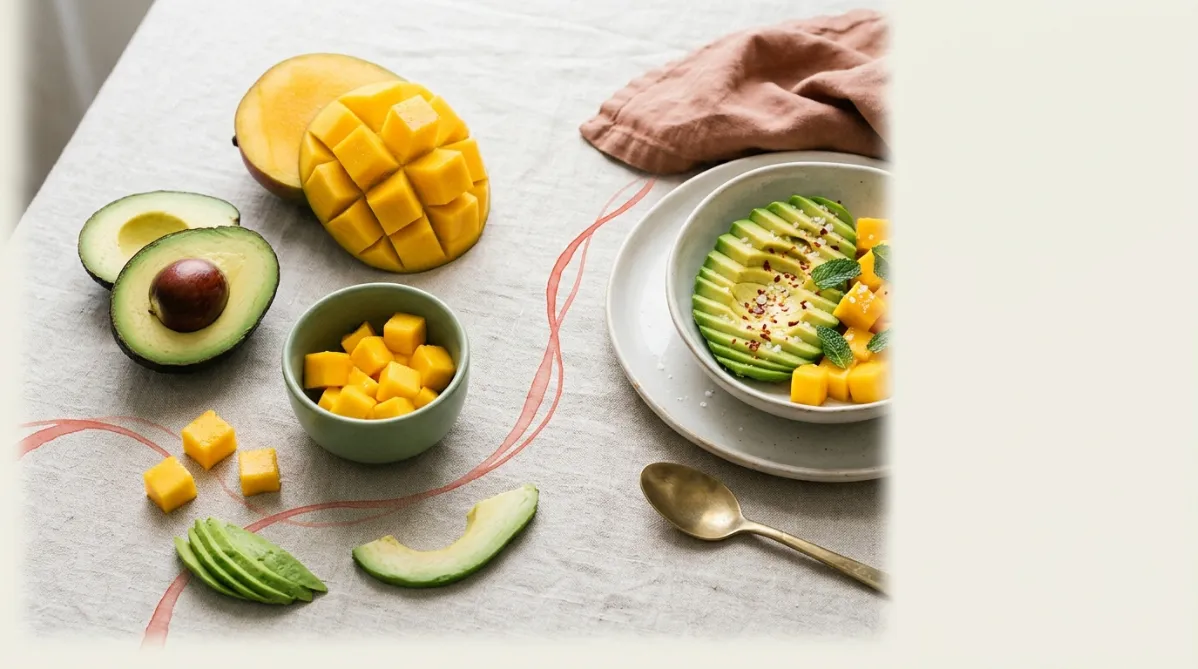
A wide, softly lit editorial still life photographed from slightly above on a pale oat-colored linen surface. On the left, a halved ripe Hass avocado with its glossy pit still nestled in one half, the flesh a buttery gradient from deep green at the skin to creamy yellow at the center. Beside it, a ripe mango is sliced into thick cheeks with a neat crosshatch pattern, the golden-orange flesh catching the light. A small ceramic bowl in matte sage green holds a cup of diced mango cubes. A few scattered mango cubes and a thin avocado slice fan out across the surface.

On the right, a minimalist ceramic plate holds a simple composed bowl: sliced avocado fanned over mango, with a sprinkle of flaky sea salt, a pinch of chili flakes, and a few torn mint leaves. A linen napkin in muted terracotta is draped casually at the edge of the frame. A single brushed-brass spoon rests nearby.

A subtle graphic touch ties in the artery theme: a thin, elegant line of warm coral red, like a hand-drawn ribbon or gentle wave, curves through the negative space on the surface, suggesting a blood vessel and flow without looking clinical. It passes softly beneath the fruit as if painted on the table in watercolor.

Natural morning window light enters from the upper left, creating soft long shadows and gentle highlights on the fruit's surface. The palette is warm and fresh: avocado greens, mango golds and oranges, cream, sage, and a hint of coral. Shallow depth of field blurs the background edges into creamy neutrals, leaving generous clean empty space on the right third for title text. Modern wellness magazine aesthetic, crisp but organic, high-end food photography, with a subtle film-like grain and calm, balanced composition.
Nutrition

Aguacate + Mango Diario: Qué Cambió en las Arterias (y Qué No)

Dr. Gymbro · · 4 min read

Aguacate + Mango Diario: Qué Cambió en las Arterias (y Qué No)

Ocho semanas, un aguacate y una taza de mango todos los días. Los vasos sanguíneos de personas con prediabetes respondieron, pero la glucemia, la inflamación y la mayoría de los demás marcadores no mostraron cambios.

Ese contraste es toda la historia de un nuevo ensayo aleatorizado publicado en Journal of the American Heart Association. Es un hallazgo útil, siempre que lo leamos por lo que realmente muestra.

Qué hicieron realmente los investigadores

Un equipo del Illinois Institute of Technology, liderado por Britt Burton‑Freeman, asignó aleatoriamente a 82 adultos con prediabetes. La edad media fue de unos 45 años y el IMC medio, aproximadamente 30 kg/m². Todos siguieron una dieta parcialmente controlada, con los alimentos proporcionados semanalmente: 1 500 kcal/día para mujeres y 1 750 kcal/día para hombres.

Un grupo recibió un aguacate entero y una taza de mango cada día durante 8 semanas. El grupo de control recibió alimentos equivalentes en energía, bajos en grasa y en fibra, en su lugar. Las calorías fueron idénticas, de modo que la comparación se basa en la calidad y composición de los alimentos, no en ingerir más o menos.

El criterio primario fue la dilatación mediada por flujo (FMD). Esta prueba ecográfica mide qué tan bien se dilata una arteria cuando aumenta el flujo sanguíneo y es una medida estándar de la función endotelial.

El resultado principal: el FMD cambió

El FMD aumentó aproximadamente un punto porcentual con la dieta de aguacate‑mango y disminuyó con la dieta de control. La diferencia entre grupos fue de unos 2,1 puntos porcentuales (efecto − 2,11 ± 0,77 %, P = 0,008), con el signo reflejando la comparación control vs fruta.

La caída del grupo de control es tan relevante como el aumento del grupo de fruta. Una dieta baja en fibra y frutas pudo haber empeorado la función vascular durante dos meses, mientras que la dieta basada en frutas revirtió esa tendencia. La ingesta total de fruta, fibra, vitamina C y grasa monoinsaturada aumentó significativamente con la combinación aguacate‑mango.

Presión arterial: señal solo en hombres

La presión arterial diastólica también difirió entre dietas, y el efecto se observó principalmente en los hombres. La presión diastólica braquial alcanzó P = 0,03; la presión diastólica central quedó en P = 0,07, lo que indica una tendencia más que un resultado contundente.

Considera este hallazgo específico de sexo como una pista para futuros estudios. Los efectos en subgrupos dentro de un ensayo de 82 personas son fáciles de sobre‑interpretar, y el estudio no estaba diseñado para explicar por qué los hombres respondieron más.

Qué no cambió

La mayoría de los criterios secundarios no mostraron diferencias significativas (P > 0,05). Eso incluye los marcadores de glucosa, los indicadores inflamatorios y gran parte del panel metabólico. Algunos lípidos y marcadores renales fueron marginales (P < 0,1), pero eso no basta para afirmar un efecto.

Así que no se trata de un truco para bajar la glucosa ni de una solución antiinflamatoria. Es evidencia de que dos frutas enteras pueden mejorar una medida vascular importante en un grupo de alto riesgo, aun sin un cambio visible en la glucemia.

Lee la letra pequeña

El ensayo contó con financiación parcial del Hass Avocado Board y del National Mango Board, y los autores divulgaron ese apoyo. La financiación industrial no invalida los datos, pero sí justifica esperar una replicación independiente.

El diseño tampoco permite separar el efecto del aguacate del del mango. El estudio probó la combinación, así que no sabemos qué fruta o qué nutriente (fibra, vitamina C, grasa monoinsaturada, polifenoles) impulsó el efecto vascular. El FMD es un marcador sustituto, no un evento cardiovascular real, y ocho semanas es un periodo corto.

Cómo incorporarlo a tu dieta

El cálculo calórico es la cuestión práctica. Un aguacate mediano aporta entre 240 y 320 kcal según su tamaño, y una taza de cubos de mango ronda los 100 kcal. En conjunto, la pareja suma entre 350 y 420 kcal. En este ensayo representó una proporción importante de la jornada de 1 500‑1 750 kcal, y se compensó con los demás alimentos proporcionados.

  • Dieta de déficit: Considera la pareja como un bloque denso en calorías y ajústalo dentro de tu presupuesto. Sustituye otras grasas (aceites, queso, frutos secos) y carbohidratos refinados en lugar de añadirlo encima. Medio aguacate con media taza de mango aportan aproximadamente 175‑210 kcal.
  • Mantenimiento: La dosis completa es fácil de encajar. Reemplaza un snack o postre procesado por ella y el día apenas varía.
  • Aumento de masa: Añádela encima, ya que probablemente tendrás espacio calórico disponible.

Quién podría beneficiarse más: Personas con prediabetes o sobrepeso, y cualquiera cuya dieta sea pobre en fruta y fibra. Si ya consumes mucha produce, la ganancia podría ser menor, y el estudio no lo aclara.

Ideas sencillas de comidas

  • Tostada de aguacate sobre pan integral, acompañada de una taza de mango.
  • Batido con medio aguacate, mango, espinacas y yogur griego para proteína.
  • Bowl de pollo o camarones con mango picado, aguacate en rebanadas, frijoles negros y limón.
  • Salsa de mango‑aguacate sobre pescado a la parrilla.
  • Trozos de mango congelado como snack nocturno, usando el aguacate en el almuerzo o la cena.

Conclusión

En adultos con prediabetes, añadir un aguacate y una taza de mango al día durante 8 semanas mejoró la dilatación mediada por flujo comparado con una dieta de control baja en fibra y grasa, y la presión arterial diastólica mejoró en los hombres. La glucosa y la mayoría de los demás marcadores no cambiaron. La comida no es un fármaco, y este resultado es modesto. Sin embargo, sustituir alimentos bajos en fibra por fruta entera y grasas saludables es un cambio económico y de bajo riesgo, y tus arterias pueden responder incluso cuando los análisis de laboratorio no lo hacen.
Original study

Read the original research on pubmed.ncbi.nlm.nih.gov →

This article summarizes published research for general information. It is not medical advice.

DG

Written by

Dr. Gymbro

Dr. Gymbro writes for Dr. Gymbro: science-backed fitness, nutrition & performance.

Related Articles

A wide, softly lit editorial still life on a pale warm-gray stone surface. In the center, three small clear glass vials of differing liquid heights stand in a staggered row, filled with luminous citrus-orange liquid. The shortest vial holds a thin layer of liquid, the middle one is about half full, and the tallest is nearly full, subtly suggesting rising levels without any charts or text. Beside the vials, a halved blood orange and a halved lemon sit with glistening, dewy pulp, and a few loose orange segments scatter across the surface. In the foreground, a shallow ceramic dish holds a few translucent golden softgel capsules catching the light, and a single droplet of orange liquid rests on the stone with a delicate glossy highlight.

Behind the vials, a large, out-of-focus backdrop in muted peach and cream tones fades into a gentle gradient. Soft morning window light enters from the left and casts long, elegant shadows to the right. Thin sprigs of green citrus leaves add a fresh contrast in the upper corner. A few macro-scale glossy spheres, resembling tiny bubbles of oil or water, float on the surface near the vials, their rounded, shimmering skins hinting at encapsulation in a natural, organic way.

The palette is warm and restrained: apricot, tangerine, cream, soft sage, and pale stone gray. The composition follows the rule of thirds, with the vials slightly right of center and generous negative space on the left for a headline overlay. Shallow depth of field, crisp focus on the middle vial, fine film-like grain, and a clean, minimalist styling reminiscent of contemporary wellness and science magazine photography. No people, no text, no lab equipment, no futuristic elements. A calm, modern, trustworthy, editorial mood.
nutrition

La vitamina C liposomal alcanzó niveles sanguíneos seis veces más altos; una nueva forma los duplicó

BY DR. GYMBRO ·

Un nuevo estudio cruzado mostró que la vitamina C liposomal convencional generó aproximadamente seis veces más exposición en sangre que la vitamina C pura, mientras que una nueva forma de doble encapsulación llegó a unas once veces. La diferencia es llamativa, pero el ensayo contó solo con 12 participantes, una dosis única de 350 mg y una ventana de ocho horas. Además, fue financiado por el fabricante de la nueva forma, que ya solicitó una patente. A continuación, explicamos qué indican realmente los números, cómo la encapsulación altera la absorción y quién podría (o no) beneficiarse.

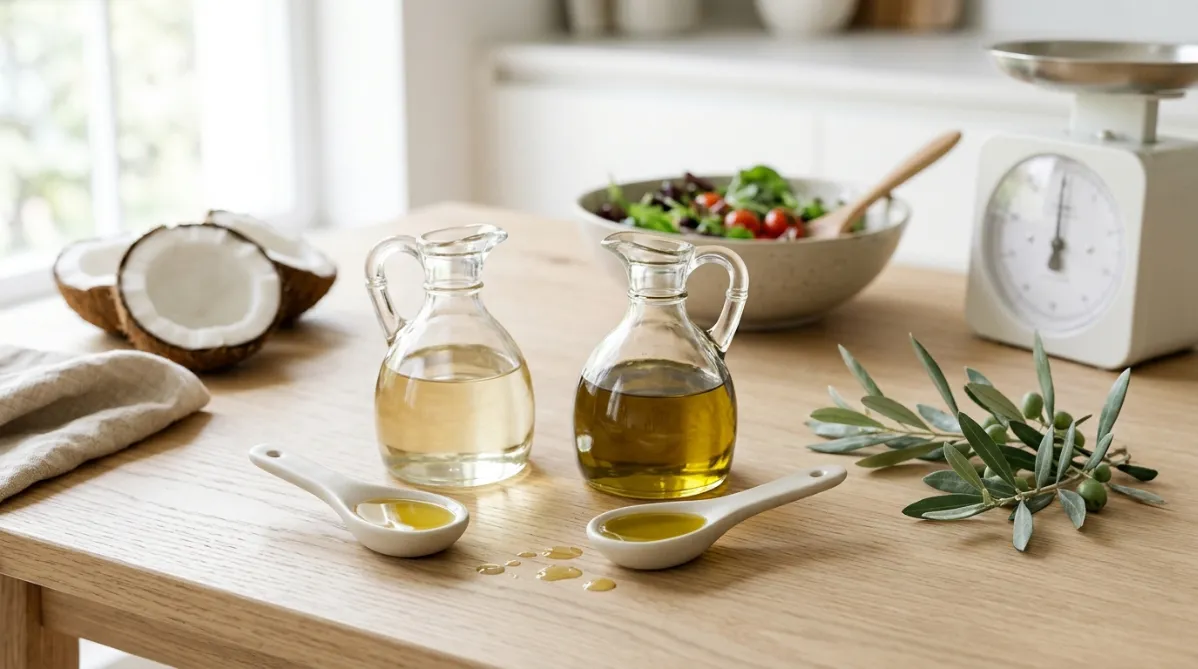
A calm, editorial-style still life shot from a slightly elevated angle, in a bright minimalist kitchen with soft natural window light coming from the left. On a pale oak wooden table sit two small glass cruets side by side: one filled with clear, pale golden MCT oil, the other with deeper green-gold extra virgin olive oil. Between and in front of them, two shallow ceramic spoons in matte off-white, each holding a glistening pour of its respective oil, with a few droplets catching the light on the table surface. A sprig of fresh olive branch with silvery-green leaves rests to the right, and a halved coconut with white flesh sits softly out of focus at the left edge, hinting at the source of MCTs. In the background, a blurred linen cloth in warm beige and a small bowl of mixed greens and cherry tomatoes suggest a healthy diet. A simple analog kitchen scale in brushed white metal sits subtly in the soft-focus background, a quiet nod to weight loss without being literal. Color palette: creamy whites, warm sand, soft sage green, and glowing golden amber highlights. Shallow depth of field, gentle shadows, delicate specular highlights on the oil, subtle film grain, clean negative space on the right third for headline overlay. Modern wellness magazine aesthetic, tactile, airy, and sophisticated, shot as if with an 85mm lens, 16:9 landscape composition.
nutrition

Aceite MCT vs Aceite de oliva en una dieta: un grupo terminó 1,7 kg más ligero

BY DR. GYMBRO ·

Un ensayo de 16 semanas comparó aceite MCT con aceite de oliva, y el grupo que usó MCT terminó aproximadamente 1,7 kg más ligero. También mostró menos grasa abdominal al final, aunque las diferencias en pérdida de grasa fueron solo tendencias. Más de un tercio de los participantes abandonó el estudio y la investigación data de 2008. Aquí se resume lo que realmente demostró, por qué los MCT podrían funcionar, cómo dosificarlos sin problemas digestivos y quién debería evitarlos.

A bright, minimalist editorial still life on a soft warm-white surface, shot from a slightly elevated angle in natural morning light. In the center-left, a small matte ceramic dish holds a handful of pale cream capsules and tablets, a few spilling casually onto the surface. Beside it sits a sleek analog blood pressure cuff, softly coiled, in muted sage green fabric. Fresh potassium-rich foods are arranged in a loose, balanced composition around the pills: a halved ripe avocado with its pit, a peeled banana, a cut sweet potato with glowing orange flesh, a few leafy spinach stems, and a small cluster of white beans in a wooden bowl. A single slim pair of chrome dumbbell handles or a small chalked kettlebell rests discreetly at the right edge, hinting at the lifter audience without dominating the frame.

The palette is soft and modern: warm cream, sage green, terracotta orange, and buttery yellow, with subtle blush-pink shadows. The background is a smooth, out-of-focus pale oatmeal wall with a gentle diagonal shadow from a window, creating a calm, airy mood. The right third of the frame has generous negative space for headline text. A faint, delicate line of hand-drawn-style red accent, such as a small red ribbon or a thin red pencil resting near the pills, adds a quiet "caution" note without feeling alarming.

The overall look is clean, contemporary health-journal photography with shallow depth of field, crisp focus on the pills and produce, soft diffused highlights, and fine natural texture in the ceramic, linen, and food surfaces. Subtle film-like grain, editorial styling, and a calm, trustworthy, slightly cautionary tone. 16:9 landscape composition.
science research

Las píldoras de potasio reducen la presión arterial en 5 mmHg en 4 semanas, pero hay una trampa

BY DR. GYMBRO ·

Un nuevo meta‑análisis de 19 ensayos aleatorizados demostró que el potasio oral reduce la presión sistólica en clínica en aproximadamente 5 mmHg tras unas cuatro semanas. Sin embargo, la historia no es tan simple: las lecturas de 24 horas mejoraron menos y los efectos adversos se presentaron en el 12,8 % de los participantes frente al 3,2 % de los grupos de control. Los resultados son aplicables a la hipertensión primaria no tratada, y los suplementos de potasio pueden resultar peligrosos para personas con enfermedad renal o que usan inhibidores de la ECA, ARBs o diuréticos ahorradores de potasio. A continuación, se detalla qué demuestran los datos, qué no, y cómo deberían interpretarlos los deportistas con dietas pobres en verduras y frutas.

A bright, airy editorial still life photographed from slightly above on a pale oat-colored linen surface, in soft natural window light with gentle long shadows. In the foreground, a rustic ceramic bowl holds halved and whole oranges, glossy red bell pepper slices, and a few kiwi halves with emerald flesh. Beside it sit loose strawberries and a small pile of bright yellow lemon wedges. Their colors pop against the muted neutral palette. A single clear glass of water with a slice of orange rests nearby, catching the light.

On the right side of the frame, a pair of well-worn but clean walking sneakers in sage green and cream sits casually on the surface, with one lace loosely trailing. Behind them, a simple wooden chair with a light ash finish is partly visible and slightly out of focus, a quiet nod to the sit-to-stand test. A small stainless-steel stopwatch lies next to the shoes, with a subtle reflective glint.

A minimalist ceramic dish holds a few small, round, pale-yellow vitamin capsules, kept understated. A sprig of green leaves and a folded cotton napkin in soft terracotta add a warm accent. A small open notebook with a pencil rests in the upper left, its page blank except for faint, abstract pencil lines suggesting a simple rising graph, with no legible text.

The composition leaves generous negative space on the left third for title overlay, with a soft cream-to-peach gradient background. The mood is fresh, healthy, and contemplative, like a modern wellness magazine or a trendy online journal. The color palette is warm citrus orange, sunny yellow, sage green, and soft cream, with gentle terracotta accents. The depth of field is shallow, with crisp focus on the fruit and shoes and a creamy blur in the background. The overall look is clean, natural, and editorial, with fine film-like grain, true-to-life color, and a calm, optimistic tone. Landscape 16:9 framing.
nutrition

Una vitamina económica vinculada a piernas más fuertes al envejecer

BY DR. GYMBRO ·

Un amplio estudio británico con más de 5 000 adultos de 48 a 92 años mostró que las personas con niveles óptimos de vitamina C en sangre (≥ 50 µmol/L) caminaban más rápido y se levantaban de una silla con mayor rapidez que quienes tenían niveles bajos. En las mujeres, además, se observó una mayor fuerza de agarre ajustada por altura; en los hombres no se encontró relación alguna. La vitamina C procedente de los alimentos se asoció solo en mujeres y sin un patrón claro. Al ser un estudio transversal, no se puede afirmar que la vitamina C cause una mejor función. A continuación se explica qué indican los datos, qué no, y por qué podría valer la pena conocer tu nivel sanguíneo.

This page is available in