Dr. Gymbro
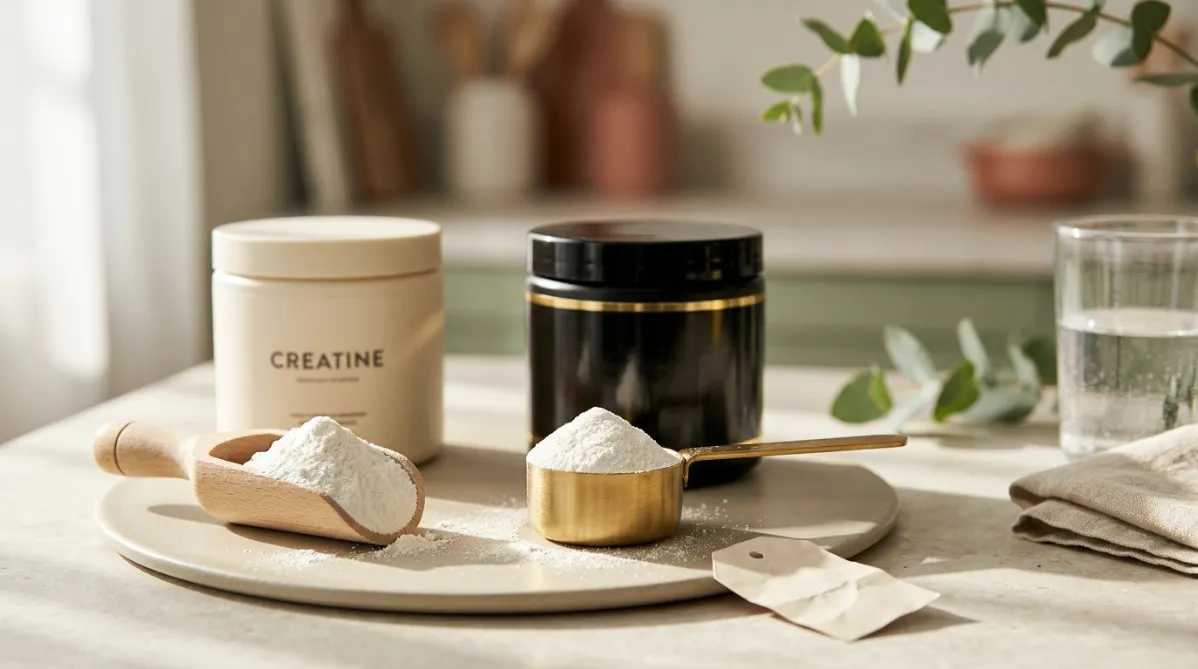
A wide, landscape editorial photograph of a clean, sunlit kitchen counter or pale stone tabletop, styled like a modern wellness magazine spread. Two scoops sit side by side on a matte ceramic surface. The left one is a plain, humble wooden scoop heaped with fine white creatine powder. The right is a glossy, ornate brushed-gold scoop holding the same white powder, which hints at "premium" branding. Behind each scoop stands a tub. The left tub is minimal, matte, and cream-colored with simple sans-serif lettering and no readable words. The right tub is sleek black with metallic gold accents and an overly polished look. A few fine grains of powder are scattered across the surface, catching the light.

The composition uses a shallow depth of field. The foreground scoops are crisp, and the background softly blurs into a warm neutral palette of oatmeal, soft sage green, and muted terracotta. Soft morning window light comes in from the left, casting long, gentle shadows and a subtle highlight along the scoops' edges. A small price tag shape, blank and unmarked, sits near the gold scoop, with a slightly crumpled paper texture to suggest the "pricey" angle without any text. A glass of water with condensation and a folded linen napkin sit at the edge of the frame. A single green sprig or eucalyptus stem adds a natural accent.

The overall mood is calm, intelligent, and quietly skeptical, with the plain option feeling confident and the flashy one a bit overdressed. The color grading is soft and slightly desaturated with creamy highlights, and there is fine film grain. The layout leaves generous negative space on the right third for a headline overlay. It looks like a high-end lifestyle and science journal cover, with a minimalist, tactile, trendy feel and no futuristic or sci-fi elements.
Science & Research

Éster Etílico de Creatina vs Monohidrato: La Opción Costosa que No Vale la Pena

Dr. Gymbro · · 5 min read

Éster Etílico de Creatina vs Monohidrato: La Opción Costosa que No Vale la Pena

Excerpt: Los fabricantes de suplementos adoran promocionar la creatina "avanzada" como más absorbible que la versión tradicional. Un ensayo doble ciego de 2009 comparó el éster etílico de creatina (CEE) con el monohidrato y con placebo en 30 hombres sin experiencia previa, durante siete semanas de entrenamiento intenso. El CEE mostró menores concentraciones de creatina plasmática y un notable aumento de creatinina sérica, lo que indica que se descompone en desechos. La creatina muscular aumentó en ambos grupos de creatina, pero la fuerza, la potencia y la composición corporal no presentaron diferencias entre los grupos. Conclusión: evita la forma premium y mantén la simplicidad.

Lo que asegura el CEE

El monohidrato de creatina es el estándar; la mayor parte de la investigación se ha realizado con esta forma. Las formulaciones alternativas surgieron principalmente con el objetivo de maximizar la absorción y, por ello, se alegaba que el CEE incrementaba la biodisponibilidad. El argumento es sencillo: al unir un grupo éster etílico, la creatina supuestamente ingresaría al torrente sanguíneo y al músculo de manera más eficiente, lo que permitiría usar una dosis menor y obtener mejores resultados.

Esa afirmación puede ponerse a prueba, y Spillane y sus colegas lo hicieron. La pregunta era si el CEE elevaría los niveles de creatina en suero y músculo y mejoraría los resultados del entrenamiento al menos tanto como el monohidrato.

Diseño del estudio y dosis

Los investigadores reclutaron a 30 hombres sin experiencia en entrenamiento de resistencia. Los participantes fueron asignados aleatoriamente, en un estudio doble ciego, a uno de tres grupos:

  • Placebo (maltodextrina)
  • Creatina monohidrato (CRT)
  • Éster etílico de creatina (CEE)

Todos siguieron un programa de entrenamiento de resistencia pesado durante siete semanas. El protocolo de suplementación consistió en:

  • Fase de carga: 0,30 g/kg de masa corporal libre de grasa (aprox. 20 g/día) durante cinco días.
  • Fase de mantenimiento: 0,075 g/kg de masa libre de grasa (aprox. 5 g/día) durante los 42 días restantes.

Las dosis fueron equiparadas entre los grupos, de modo que cualquier diferencia debería deberse a la forma de creatina y no a la cantidad ingerida.

Se midieron composición corporal, masa muscular, fuerza, potencia, creatina en suero y músculo, y creatinina sérica.

El hallazgo de la creatinina sérica

Este fue el resultado más revelador. La concentración de creatina plasmática fue significativamente mayor en el grupo placebo (p = 0,007) y en el de monohidrato (p = 0,005) que en el grupo CEE. Una "creatina mejor absorbida" que deja menos creatina en sangre resulta difícil de conciliar con la publicidad.

Por otro lado, la creatinina sérica, producto de degradación de la creatina, estuvo más alta en el grupo CEE que en el placebo (p = 0,001) o en el de monohidrato (p = 0,001). Esta diferencia se observó en los días 6, 27 y 48 del estudio. El patrón sugiere que el CEE se descompone en creatinina en lugar de convertirse en creatina utilizable. El estudio midió marcadores sanguíneos, no la química de la degradación directamente, pero la dirección de los datos es clara: la forma éster termina generando más productos de desecho.

Hay un efecto práctico. La creatinina sérica es un marcador estándar que los médicos utilizan para estimar la función renal. Un suplemento que la eleva puede dificultar la interpretación de análisis de sangre rutinarios. El artículo no reportó daño renal, y el aumento de creatinina no debe interpretarse como evidencia de lesión. Sin embargo, si tomas creatina y te hacen análisis de sangre, informa al clínico para que pueda contextualizar los resultados.

Resultados de creatina muscular

Los datos musculares son más matizados. La creatina total en el músculo fue significativamente mayor tanto en el grupo de monohidrato (p = 0,026) como en el de CEE (p = 0,041) respecto al placebo, sin diferencias significativas entre los dos suplementos. Así, el CEE sí incrementó la creatina muscular en comparación con el placebo.

Los autores concluyeron que el CEE no fue tan eficaz como el monohidrato para elevar la creatina en suero y músculo. Los niveles musculares no difirieron entre ambos suplementos, pero los resultados en sangre favorecieron claramente al monohidrato, y el CEE no ofreció ventaja alguna en ningún desenlace.

¿Hubo diferencias en fuerza o tamaño?

No, y esto se aplicó a todos los grupos. La composición corporal, el agua corporal, la fuerza muscular y la potencia cambiaron significativamente con el tiempo, pero no hubo diferencias significativas entre los grupos. El grupo placebo mejoró al mismo nivel que los grupos de creatina.

Los autores interpretaron que las mejoras se debieron probablemente al entrenamiento mismo más que a la suplementación. Se trata de un estudio de siete semanas en principiantes no entrenados, una población que gana rápidamente con casi cualquier programa bien estructurado, lo que puede enmascarar efectos modestos de los suplementos. El ensayo no puede afirmar que el CEE no construya músculo en ningún contexto, solo que aquí no mostró beneficio. Tampoco demostró que el monohidrato superara al placebo en fuerza en esta muestra, por lo que es más apropiado decir "CEE no ofreció ventaja" que afirmar una victoria del monohidrato.

Conclusión y puntos prácticos

El marketing prometía mejor absorción. Los datos mostraron menor creatina plasmática, mayor creatinina sérica, similar aumento de creatina muscular respecto al monohidrato y ningún beneficio adicional en composición corporal, fuerza o potencia.

  • Mantente con creatina monohidrato. Es la forma con más respaldo científico y, por lo general, la más económica. Una ingesta típica es de 3‑5 g/día.
  • La fase de carga es opcional. En este ensayo se utilizó una carga de cinco días de ~20 g/día, pero una dosis diaria constante (3‑5 g) es una alternativa frecuente que alcanza los mismos niveles, aunque más lentamente.
  • No pagues de más por formas "avanzadas" a menos que exista evidencia directa que las compare cara a cara con el monohidrato; para el CEE eso no ocurre.
  • Cuida tus análisis de sangre. Un nivel elevado de creatinina sérica, especialmente con CEE, puede confundir pruebas renales. Informa a tu médico sobre los suplementos que tomas.
  • El entrenamiento es lo primero. En este estudio, el programa hizo la mayor parte del trabajo.

Fuente

Spillane M, et al. The effects of creatine ethyl ester supplementation combined with heavy resistance training on body composition, muscle performance, and serum and muscle creatine levels. J Int Soc Sports Nutr. 2009. DOI: 10.1186/1550-2783-6-6. PubMed: 19228401.
Original study

Read the original research on pubmed.ncbi.nlm.nih.gov →

This article summarizes published research for general information. It is not medical advice.

DG

Written by

Dr. Gymbro

Dr. Gymbro writes for Dr. Gymbro: science-backed fitness, nutrition & performance.

Related Articles

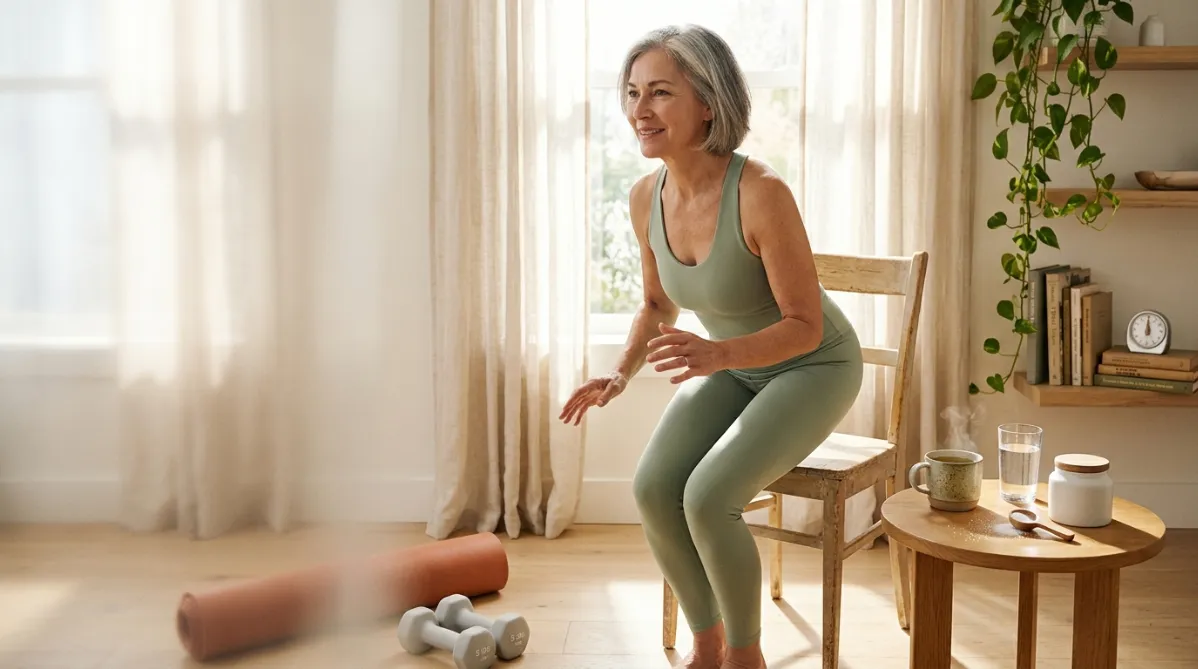
A wide landscape editorial photograph of a bright, airy sunlit living room with pale oak floors and a large window with sheer linen curtains. In the center, a woman in her late 50s with silver-streaked hair, wearing soft sage-green athletic wear, rises from a simple wooden chair, caught mid-motion with a calm, determined expression. Her hands are lightly extended forward for balance. Beside her on a small round oak side table sits a ceramic mug of tea, a glass of water, and a small matte white jar with a wooden scoop resting beside it, a few fine white crystalline grains scattered on the tabletop. In the soft-focus foreground, a pair of light-gray dumbbells and a rolled terracotta-colored yoga mat rest on the floor. A trailing green pothos plant spills from a shelf in the background, with a stack of books and a small analog kitchen timer nearby.

The color palette is warm and muted: cream, sage green, soft terracotta, natural wood, and gentle morning-gold light. Light streams diagonally across the scene, creating long soft shadows and a subtle glow on the woman's shoulders. Shallow depth of field blurs the background gently, while the woman and the table remain crisp. The composition follows the rule of thirds, with the woman on the right and generous negative space on the left, suited for headline overlay. The mood is hopeful, grounded, and modern, like a high-end wellness magazine or a trendy health journal. Natural film-like grain, soft contrast, and a slight matte finish give it a contemporary lifestyle photography feel. There are no futuristic elements, no digital overlays, and no text.
science research

La creatina ayuda a mujeres con rodillas dañadas a levantarse mejor, pero no por lo que piensas

BY DR. GYMBRO ·

La creatina suele promocionarse entre los jóvenes que levantan pesas, pero un ensayo aleatorizado y doble ciego la probó en mujeres posmenopáusicas con osteoartritis de rodilla. Tras 12 semanas de entrenamiento de piernas, el grupo que tomó creatina mejoró su puntuación en la prueba de levantarse de una silla de 15,7 a 18,1, mientras que el placebo apenas cambió (de 15,0 a 15,2). La creatina también redujo la rigidez, aumentó la masa magra y mejoró la calidad de vida. Sin embargo, el alivio del dolor y la fuerza máxima en la prensa de piernas no fueron superiores al placebo. Aquí se muestra lo que revelan los números y a quién podría ayudar realmente.

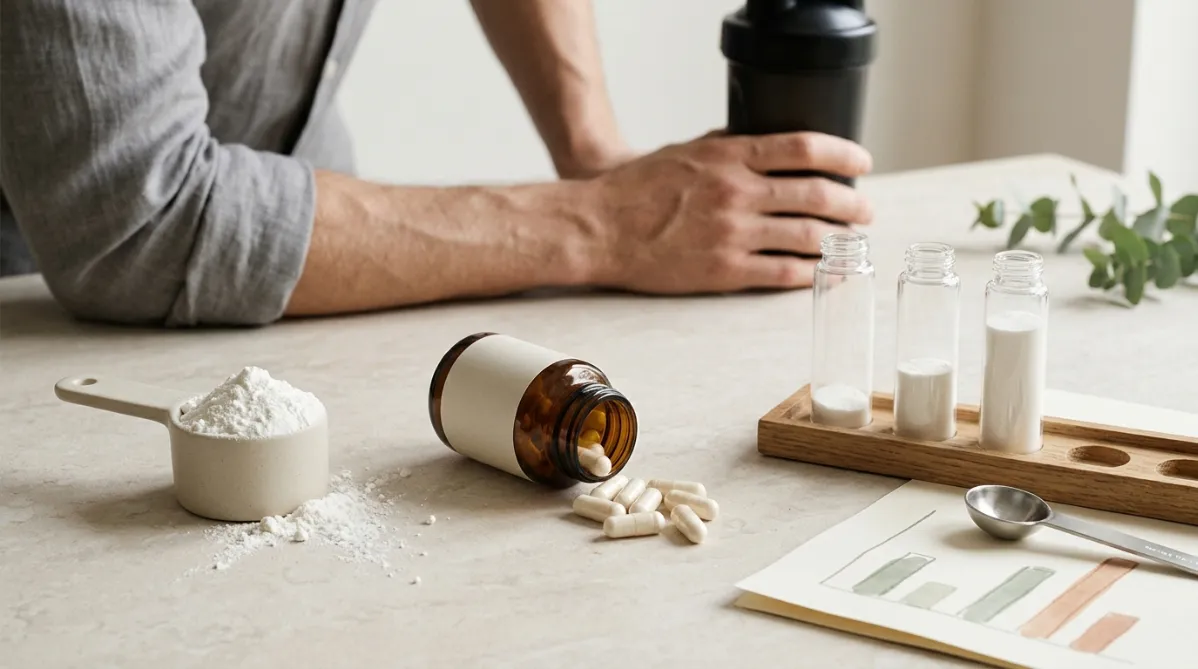
A modern editorial still life photographed from a slightly elevated angle on a pale, matte stone surface in soft natural window light. On the left, a heaping mound of fine white creatine monohydrate powder spills from a matte ceramic scoop, with a few crisp grains scattered across the surface. In the center, a small, minimalist amber glass capsule bottle sits tipped on its side, with a handful of off-white capsules spilling out. The label is blank and clean. On the right, a neat row of three clear glass lab-style vials rests on a slim oak tray. The vials hold different amounts of white powder: the first nearly empty, the second slightly fuller, the third filled almost to the brim. This quietly suggests the difference in dose and result. Beside the tray lies a simple stainless steel measuring spoon and a folded sheet of cream paper with soft, abstract bar-chart lines in muted sage green and terracotta. The lines are hand-drawn and unlabeled.

Behind the objects, slightly out of focus, a lean athletic forearm in a gray linen sleeve rests on the edge of the surface, one hand loosely holding a matte shaker bottle. This hints at a training context without showing a face. A single sprig of eucalyptus in the corner adds a soft organic touch.

The palette is warm neutral: bone white, oatmeal, soft sage, muted terracotta, and touches of amber. Shadows are gentle and long, with a shallow depth of field that gives creamy bokeh in the background. The mood is calm, clean, and trustworthy, like a premium health and science journal's feature spread, with generous negative space at the top and right for headline overlay. The composition is wide, balanced, and uncluttered, with subtle film-like grain and a natural, true-to-life color grade. No text, no logos, no futuristic elements.
nutrition

La dosis recomendada de Kre‑Alkalyn no aumentó la creatina muscular, según biopsias

BY DR. GYMBRO ·

La creatina tamponada (Kre‑Alkalyn) se vende como más absorbible, con dosis menores y menos distensión abdominal. Un ensayo doble ciego de Texas A&M, que analizó biopsias musculares de 36 levantadores durante 28 días, demostró que, con la dosis de etiqueta de 1,5 g/día, la creatina muscular apenas cambió, mientras que la creatina monohidrato produjo un aumento mucho mayor.

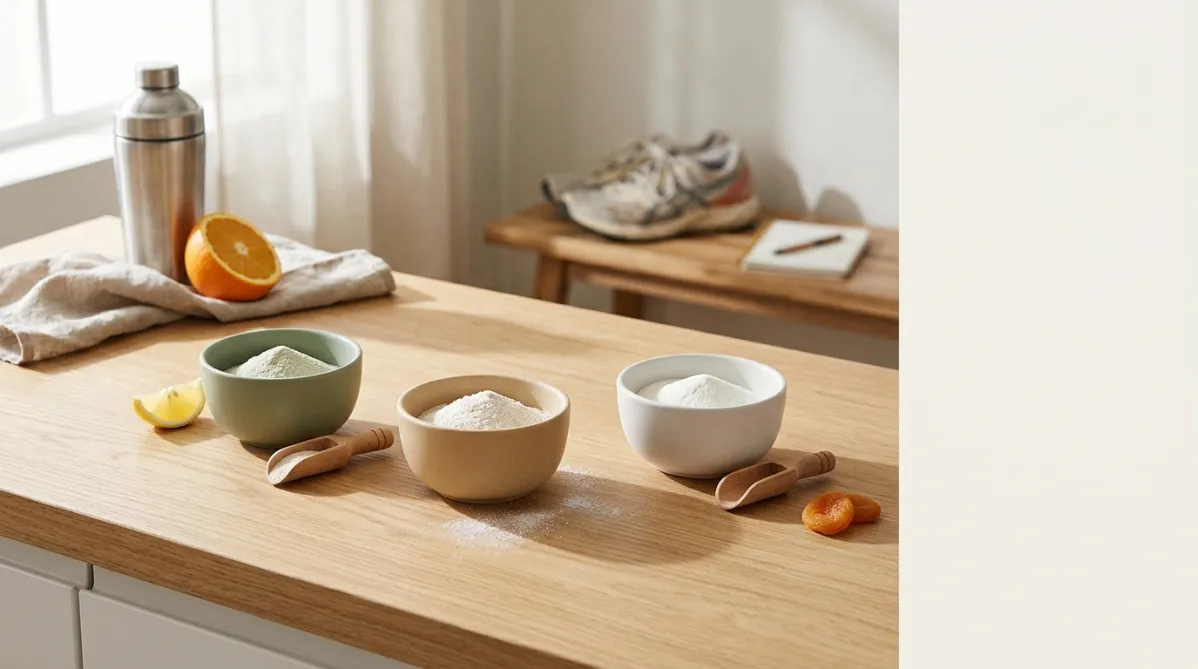
A landscape editorial photograph of a clean, sunlit kitchen-counter or light oak table, shot from slightly above at a gentle angle. Three small matte ceramic bowls in muted sage green, warm sand, and soft white sit in a loose row. Each holds a different fine white powder, and each has a small wooden scoop resting beside it. The middle bowl is slightly closer to the camera and sharper in focus, with a faint dusting of powder spilling onto the surface. In the soft-focus background, a stainless steel shaker bottle and a half-peeled orange sit beside a folded linen napkin, suggesting citrus without being literal. A single lemon wedge sits near the left bowl, and a small dried apricot sits near the right, a subtle visual nod to citrate and pyruvate.

In the background, a blurred athletic scene: a running shoe resting on a wooden bench and a small notebook with a pen, suggesting a training log. Soft diffused morning light enters from the left through a window and casts long, gentle shadows. The palette is warm neutrals, creamy whites, soft greens, and a hint of terracotta orange. The look is a modern wellness magazine with a shallow depth of field, a fine-grain film feel, and generous negative space on the right third of the frame for title text. The mood is calm, trustworthy, and scientific yet approachable, with no text, labels, or logos.
nutrition

Piruvato de creatina vs citrato: una forma mantuvo la fuerza elevada por más tiempo

BY DR. GYMBRO ·

Dos formas de creatina superaron al placebo en un ensayo de 28 días, pero solo una mantuvo la fuerza muscular alta durante los diez intervalos máximos, mientras que la otra perdió el efecto. El piruvato de creatina aumentó la fuerza en todos los intervalos (p < 0,001), mientras que el beneficio del citrato desapareció a partir del sexto intervalo. Además, el piruvato mejoró la velocidad de relajación y el consumo de oxígeno en reposo. Antes de desechar tu creatina habitual, hay un detalle importante: el estudio no incluyó un grupo de monohidrato de creatina.

A wide, editorial-style still life photographed from slightly above on a pale oak surface in soft morning window light. At the center, a small matte white supplement tub with a plain, unlabeled front sits tipped on its side, spilling a modest pile of fine white powder across the wood. Beside it, a wooden scoop rests in the powder, and a few white capsules are scattered in a loose arc. To the left, a clean glass of water catches the light and throws a delicate caustic shadow. To the right, a neatly arranged group of whole foods sits in contrast: two brown eggs, a small wedge of salmon fillet on parchment, a handful of raw almonds, and a sprig of rosemary. A matte black steel dumbbell handle is partly visible at the top edge of the frame, grounding the fitness theme. In the lower foreground, a slim, open linen-bound notebook holds a hand-drawn line graph with a single line trending gently downward, a thin ink pen lying across the page. The palette is muted and warm: cream, soft sage green, pale oak, charcoal accents, and a touch of terracotta from a ceramic dish holding the almonds. Shallow depth of field blurs the background, a softly lit minimalist kitchen counter with a hint of a plant leaf. The mood is calm, thoughtful, and scientific without being clinical, like a cover image for a contemporary health and nutrition journal. Natural shadows, subtle film grain, and generous negative space on the upper left leave room for a headline overlay. Crisp focus on the powder and scoop, with refined, understated composition and no text or logos visible.
nutrition

El ácido D‑aspártico redujo la testosterona a 6 g/día en levantadores entrenados

BY DR. GYMBRO ·

El ácido D‑aspártico se promociona como un potenciador natural de la testosterona, pero en un ensayo controlado con 24 hombres entrenados en resistencia, 6 g/día disminuyeron tanto la testosterona total como la libre. La dosis de 3 g que aparece en muchas etiquetas no produjo ningún efecto medible. Un estudio posterior de tres meses tampoco encontró ventajas en fuerza ni en masa muscular. A continuación, lo que reveló la investigación, por qué los hombres entrenados pueden responder de forma distinta a los sedentarios y en qué es mejor invertir tu dinero en suplementos.

This page is available in