Dr. Gymbro
A wide, editorial-style flat lay photographed from above on a pale warm-gray concrete surface, lit by soft natural window light with gentle long shadows. On the left, two matte ceramic bowls in muted sage green and cream sit side by side. One holds fine white crystalline powder, the other holds slightly coarser off-white powder. Between them, a small brass measuring scoop rests on the surface, dusted with powder. Behind the bowls, two simple amber glass jars with minimal cream labels and no legible text stand slightly out of focus.

On the right side, a pair of chalk-dusted black hex dumbbells and a worn leather lifting strap curve across the frame. A folded charcoal gym towel sits beneath them. A rumpled matte-black shaker bottle lies on its side near the top edge. A slice of watermelon, the natural source of citrulline, sits on a small white ceramic plate in the lower center. Its vivid coral-pink flesh and dark seeds add a saturated pop of color against the neutral palette. A few loose watermelon seeds and a scattering of white powder dust trail across the surface toward the dumbbells, tying the composition together.

In the lower left corner, an open notebook with blank cream pages holds a slim silver pen and a minimalist analog stopwatch. A thin line of hand-drawn tally marks suggests counted reps, with no readable words or numbers.

The palette is restrained and contemporary: warm grays, sage, cream, charcoal, and amber, with the watermelon's coral-pink as the single bright accent. The mood is calm, clean, and precise, like a modern wellness or science-journal feature. Shallow depth of field keeps the powder bowls and watermelon crisp while the background items soften slightly. Generous negative space across the upper center leaves room for a headline overlay. The photograph looks high-end and tactile, with a subtle film-grain finish.
Nutrition

L‑citrulina vs citrulina malato: el giro de la resistencia de la parte superior

Dr. Gymbro · · 5 min read

L‑citrulina vs citrulina malato: el giro de la resistencia de la parte superior

Has visto ambos en el mostrador: la L‑citrulina pura y la citrulina malato. Uno es más barato por gramo de citrulina, el otro incluye un famoso "extra". La publicidad de los suplementos dice que la forma importa. Un nuevo estudio de seis semanas en hombres entrenados con resistencia muestra que la respuesta es más sorprendente y más limitada de lo que sugiere el bombo.

El estudio en un vistazo

Publicado en 2025 en el Journal of the International Society of Sports Nutrition, el ensayo doble ciego y controlado con placebo fue realizado por Bayat, Azizi, Behpour y Tinsley. Treinta y tres hombres entrenados con resistencia fueron asignados aleatoriamente a uno de tres protocolos diarios:

  • L‑citrulina (LC): 8 g al día
  • Citrulina DL‑malato (CM): 12 g al día
  • Placebo (PL)

Todos los grupos siguieron el mismo programa de entrenamiento de resistencia durante 6 semanas. Antes y después, los investigadores midieron:

  • Fuerza: 1RM en hack squat y press de banca
  • Resistencia muscular: repeticiones hasta el fallo en hack squat, extensión de piernas, press de banca y press inclinado
  • Percepción del esfuerzo (RPE)
  • Marcadores sanguíneos: lactato, urea y metabolitos de óxido nítrico (NOx)

El hallazgo llamativo: repeticiones de la parte superior

El resultado más destacado se dio en la parte superior del cuerpo. Cuando los investigadores sumaron las repeticiones hasta el fallo en press de banca y press inclinado, ambos grupos de citrulina superaron al placebo:

  • LC vs. placebo: p < 0,001
  • CM vs. placebo: p = 0,026

En la parte inferior los datos fueron menos claros. Para la suma de hack squat y extensiones de piernas, LC vs. placebo mostró solo una tendencia (p = 0,070). Es indicativo, pero no una victoria confirmada.

En resumen, la citrulina ayudó a realizar más repeticiones en movimientos de empuje, mientras que la evidencia para las piernas sigue siendo tenue.

El ángulo NOx

Los metabolitos de óxido nítrico (NOx) son el proxy que usan los investigadores en sangre para estimar la disponibilidad de óxido nítrico, un vasodilatador asociado con el "pump" que buscan los levantadores.

Los datos mostraron:

  • Un efecto tiempo significativo para NOx solo en los grupos LC (p = 0,014) y CM (p = 0,003). El placebo no mostró cambios.
  • En NOx post‑ejercicio al final del estudio, CM fue significativamente mayor que el placebo (p = 0,009). LC estuvo solo marginalmente diferente (p = 0,057).

Los autores concluyeron que la citrulina parece incrementar tanto la resistencia muscular de la parte superior como la respuesta de NOx post‑entrenamiento, sin una diferencia aparente entre LC y CM en esos resultados.

Lo que la citrulina no hizo

Esta parte es importante si compras por fuerza. El resumen indica que no hubo otras diferencias entre grupos en ningún parámetro adicional, entre ellos:

  • Fuerza 1RM: sin ventaja para hack squat ni press de banca.
  • RPE: sin diferencias.
  • Lactato y urea: sin diferencias.

Si tu único objetivo es levantar más peso en una sola repetición, este estudio no brinda evidencia de que la citrulina lo logre. El beneficio se observó en la cantidad de repeticiones.

¿Importa la forma?

Según los autores, no hubo una diferencia clara entre las dos formas en resistencia de la parte superior ni en NOx post‑ejercicio. Hay algunos matices:

  • El grupo LC mostró una señal estadística más fuerte para repeticiones de la parte superior (p < 0,001 vs. p = 0,026), aunque el artículo no afirma que sea superior.
  • El grupo CM tuvo la separación más clara de NOx post‑ejercicio respecto al placebo.
  • Las dosis fueron distintas (8 g vs. 12 g), de modo que no es una comparación perfectamente equiparada. Además, la citrulina malato incluye malato; por tanto, 12 g de CM entregan menos citrulina real que 12 g de L‑citrulina pura.

La conclusión práctica es que probablemente no necesites agonizar sobre la forma. Revisa la etiqueta para saber cuánta citrulina real recibes por porción y compara el precio por dosis efectiva.

Consejos prácticos para los levantadores

Dosis: El estudio utilizó 8 g/día de L‑citrulina o 12 g/día de citrulina malato, tomados diariamente durante seis semanas de entrenamiento. Esas son las dosis con evidencia aquí.

Momento de toma: El resumen menciona suplementación diaria pero no un intervalo concreto antes del entrenamiento, por lo que el artículo no puede decirte si la temporización alrededor del ejercicio importa. Muchos levantadores la consumen antes de entrenar por costumbre, pero eso es más una convención que un hallazgo de este ensayo. La consistencia a lo largo de las seis semanas es lo que realmente se probó.

Para quién es:

  • Levantadores que valoran el rendimiento en repeticiones en movimientos de empuje, como fisicoculturistas y quienes hacen series altas.
  • Hombres entrenados, similares a la población del estudio.
  • Personas que buscan apoyar los marcadores de óxido nítrico alrededor del entrenamiento.

Quién debería moderar expectativas:

  • Atletas centrados en la fuerza máxima que persiguen aumentos en 1RM.
  • Quienes esperan un gran impulso en el día de piernas, ya que el resultado en la parte inferior fue solo una tendencia.

Las advertencias

Antes de reabastecer tu estantería, ten en cuenta las limitaciones:

  • Muestra pequeña: 33 participantes divididos en tres grupos es modesto, y los ensayos con pocos sujetos pueden exagerar o pasar por alto efectos.
  • Solo hombres entrenados: los resultados no se extrapolan automáticamente a mujeres, principiantes o adultos mayores.
  • Duración corta: seis semanas aportan poca información sobre efectos a largo plazo.
  • Dosis desparejadas: 8 g de LC vs. 12 g de CM complica conclusiones directas.
  • Los marcadores sanguíneos no son músculo: NOx es una medida indirecta, y el artículo no muestra que un NOx más alto haya causado las repeticiones extra.

Conclusión

En este ensayo, tanto la L‑citrulina (8 g/día) como la citrulina malato (12 g/día) ayudaron a hombres entrenados con resistencia a lograr más repeticiones en la parte superior del cuerpo durante seis semanas y elevaron la respuesta de NOx, sin un ganador claro entre formas. No mejoraron la fuerza máxima, la percepción del esfuerzo, el lactato ni la urea en comparación con el placebo. Es una señal prometedora para la resistencia muscular, pero un estudio pequeño no es la palabra final. La replicación en grupos más amplios y diversos determinará hasta dónde llegan estos hallazgos.
Original study

Read the original research on pubmed.ncbi.nlm.nih.gov →

This article summarizes published research for general information. It is not medical advice.

DG

Written by

Dr. Gymbro

Dr. Gymbro writes for Dr. Gymbro: science-backed fitness, nutrition & performance.

Related Articles

A bright, minimalist editorial still life shot from a slightly elevated three-quarter angle on a pale oat-colored stone countertop, bathed in soft natural window light with gentle long shadows. In the center sit two matching matte white supplement scoops, side by side. One is heaped with fine white crystalline powder, the other holds an almost identical pile, so the viewer is invited to compare them. Beside them are two simple frosted glass tumblers of cloudy water, each with a small whisper of powder swirling at the bottom. A third glass of clear water sits slightly apart, as a quiet nod to the placebo.

Scattered around the scene are fresh, sliced watermelon wedges with vivid coral-pink flesh and pale green rinds, and a few sliced green apples with crisp white interiors, hinting at the natural sources of citrulline and malic acid. A small brushed-brass measuring spoon and a minimalist matte sage-green shaker bottle rest at the edge of the frame. Off to one side, a clean ceramic dish holds a few loose grains of powder, and a slim linen notebook with a pencil lies open to a blank page, suggesting data and study notes without any legible text.

The color palette is soft and modern: warm cream, blush coral, sage green, and touches of brass, with a faintly blurred background of a sunlit kitchen or studio with a pale plaster wall. Shallow depth of field keeps the scoops tack sharp while the background melts into a creamy bokeh. The composition leaves generous negative space on the left third of the frame for a title overlay. The overall mood is calm, trustworthy, and trendy, like a contemporary wellness and science journal cover, with crisp detail, subtle film-like grain, and a clean, airy, balanced feel.
science research

Citrulina malato vs L‑citrulina: ¿realmente importa el malato?

BY DR. GYMBRO ·

¿Citrulina malato o L‑citrulina pura? Un ensayo aleatorizado, doble ciego y cruzado en 43 adultos entrenados comparó ambas formas contra placebo, y la respuesta podría ahorrarte dinero. Ninguna de las dos mejoró la fuerza, la potencia, el salto, el número de repeticiones ni la percepción de esfuerzo, y el malato no aportó nada extra a la citrulina. Aquí describimos qué se midió, qué dosis se usaron y los matices que impiden considerarlo la palabra final. Si estás decidiendo qué poner en tu shaker, empieza por aquí.

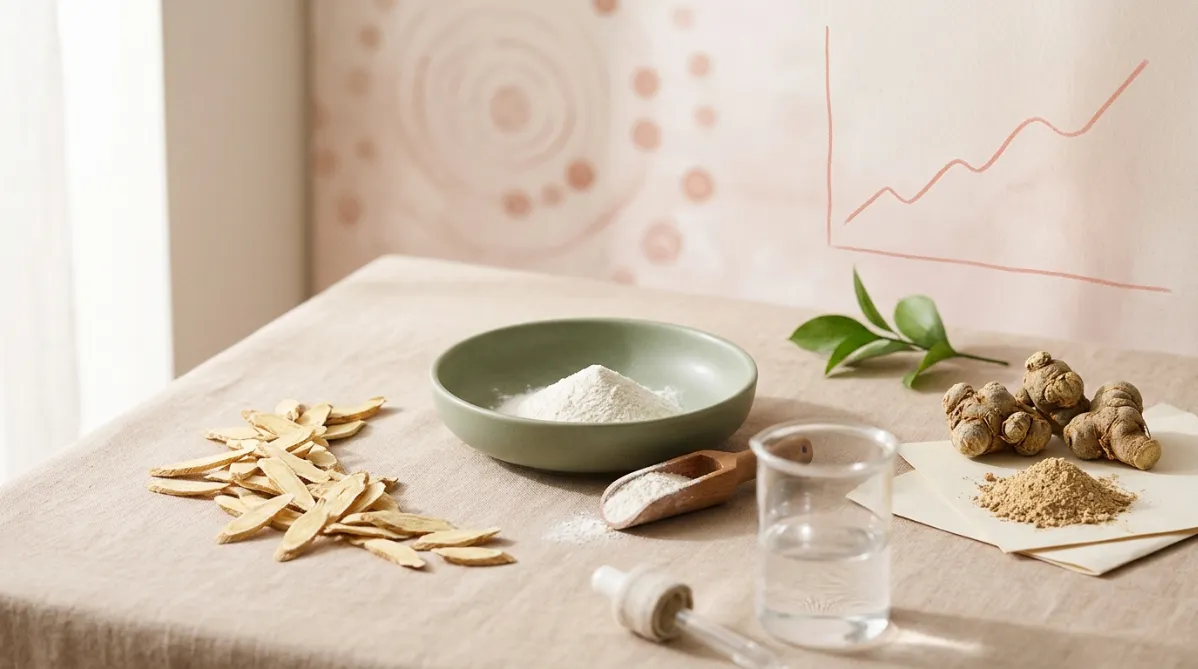
A landscape editorial still life on a soft, warm oat-colored linen surface, lit by diffused natural window light from the left. In the center sits a shallow matte ceramic bowl in muted sage green holding a small mound of fine white arginine powder. Beside it rests a wooden scoop dusted with powder. To the left, a loose arrangement of dried Astragalus root slices, pale golden and delicate, fans out in a graceful curve. To the right, a few whole Panax notoginseng roots, knobbly and earthy brown, sit next to a small pile of finely ground tan powder on a folded cream paper. A single sprig of fresh green leaf adds a gentle accent in the background.

In the foreground, a minimalist glass beaker with clear water and a thin linen-wrapped glass dropper sit slightly out of focus. Behind the objects, a softly blurred backdrop in pale blush and sand tones carries a faint, abstract pattern of soft circular shapes, like ripples or molecular dots drawn in subtle terracotta ink. A thin hand-drawn line graph in dusty coral rises gently across the upper right of the background, as if sketched on textured paper, with no readable text.

The composition uses generous negative space on the upper left, which leaves room for a headline overlay. The palette is earthy and calm: sage, cream, terracotta, honey gold, and soft blush. The shallow depth of field gives creamy bokeh. Gentle shadows fall to the right. The overall feel is clean and contemporary, like a wellness and science journal cover, with subtle film grain, high-end editorial photography, and tactile natural textures.
nutrition

El suplemento que incrementó la absorción de arginina en un 17 % en un pequeño estudio

BY DR. GYMBRO ·

Un ensayo cruzado de 2023 mostró que combinar 5 g de arginina con una cápsula de saponinas de Astrágalo y Panax notoginseng (APS) incrementó la absorción de arginina en un 17,3 % y elevó la relación arginina/ADMA en un 167,1 %. Los marcadores urinarios de nitrato y cGMP también subieron. Sin embargo, solo 24 participantes fueron analizados después de descartar a seis por diferencias individuales pronunciadas, y nadie midió el rendimiento deportivo. Aquí vemos qué demuestran los datos, qué no y a quién le conviene ser cauteloso.

A wide, editorial-style still life photographed on a pale limestone countertop in soft morning window light. At the center sits a matte white scoop of fine white powder resting beside a frosted glass tumbler of cloudy, pale pink-orange water, with a few watermelon slices and a halved wedge showing glossy coral flesh and thin green rind, a nod to citrulline's natural source. To the left, a neatly folded charcoal gym towel and a brushed steel dumbbell rest at the edge of the frame, slightly out of focus. To the right, a minimalist open notebook with a few hand-drawn tally marks and a simple line graph sketched in black ink rises toward the right edge, next to a slim mechanical pencil and a small analog stopwatch with a clean white face. A few loose grains of powder are scattered across the stone, catching the light. Soft diagonal shadows fall across the surface from a nearby window, and a gentle sage-green wall in the background adds calm contrast. The palette is warm cream, watermelon coral, sage green, and soft graphite gray, with plenty of negative space on the upper left for headline overlay. Shallow depth of field, crisp focus on the powder scoop and watermelon, subtle film grain, natural tones, and a clean, modern wellness-journal aesthetic. Shot at eye level with a slight downward angle, like a contemporary health and science magazine cover. No text, no logos, no people.
nutrition

8 g de Citrulline Malate = ¿53 % más repeticiones y 40 % menos dolor? Lo que muestra el estudio

BY DR. GYMBRO ·

Un ensayo cruzado de 2010 encontró que una dosis de 8 g de citrulina malato se asoció con alrededor de un 53 % más de repeticiones en la última serie evaluada y aproximadamente un 40 % menos de dolor muscular a las 24 y 48 h. El mayor aumento de repeticiones apareció al final de la sesión, cuando la fatiga ya estaba acumulada. Aquí mostramos qué se probó, cómo aplicar la dosis y el momento de forma sensata, quién puede beneficiarse y por qué el 14,63 % de molestias estomacales y las limitaciones del estudio merecen atención.

A wide, softly lit editorial still life on a pale warm-gray concrete surface, shot from a slightly elevated three-quarter angle. In the center-left, two matte ceramic scoops sit side by side. One holds fine ivory whey powder, the other holds slightly coarser, pale golden collagen peptide powder. A small, elegant dusting of both powders spills between them and blends into a soft swirl. Behind them, three minimalist cream and sage-green supplement tubs with no legible text stand in a staggered row, with a frosted glass shaker bottle of creamy liquid beside them.

On the right, a brushed-steel barbell plate and a compact chalk-dusted kettlebell rest slightly out of focus, suggesting resistance training. Pale wisps of chalk hang in the air. A folded charcoal gym towel and a pair of worn leather lifting straps lie in the foreground. A single cross-section of a clean white bone model, a stylized vertebra, rests on a small oak block at the far right. It subtly signals the bone-density theme without looking clinical.

Natural window light enters from the left, casting long, gentle shadows and a warm highlight on the powders. The palette is muted and modern: oatmeal, bone white, sage green, soft charcoal, and touches of warm amber. Shallow depth of field keeps the scoops tack-sharp and melts the background into creamy blur. Leave generous negative space in the upper right for headline overlay. The overall feel is a premium health and science journal cover: clean, tactile, minimalist, with fine film-like grain and a calm, editorial mood.
nutrition

Whey + colágeno supera a cualquiera por separado en levantadores: hay una trampa

BY DR. GYMBRO ·

Mezclar 30 g de suero con 10 g de colágeno superó al suero solo, al colágeno solo y al placebo en todos los resultados de un ensayo de 8 semanas con hombres entrenados en resistencia. La combinación aportó 2,66 kg de masa muscular (según BIA), aumentó la densidad mineral ósea de la columna lumbar y mejoró la sentadilla, el press de banca y los marcadores de recambio óseo. El colágeno solo benefició al hueso y el suero solo al músculo. Sin embargo, con solo 40 participantes, totales de proteína desiguales y un aumento de DMO inesperadamente grande, hay una trampa. A continuación se muestra lo que ganó la combinación, a quién le puede convenir y a quién debería evitarla.

This page is available in