Dr. Gymbro
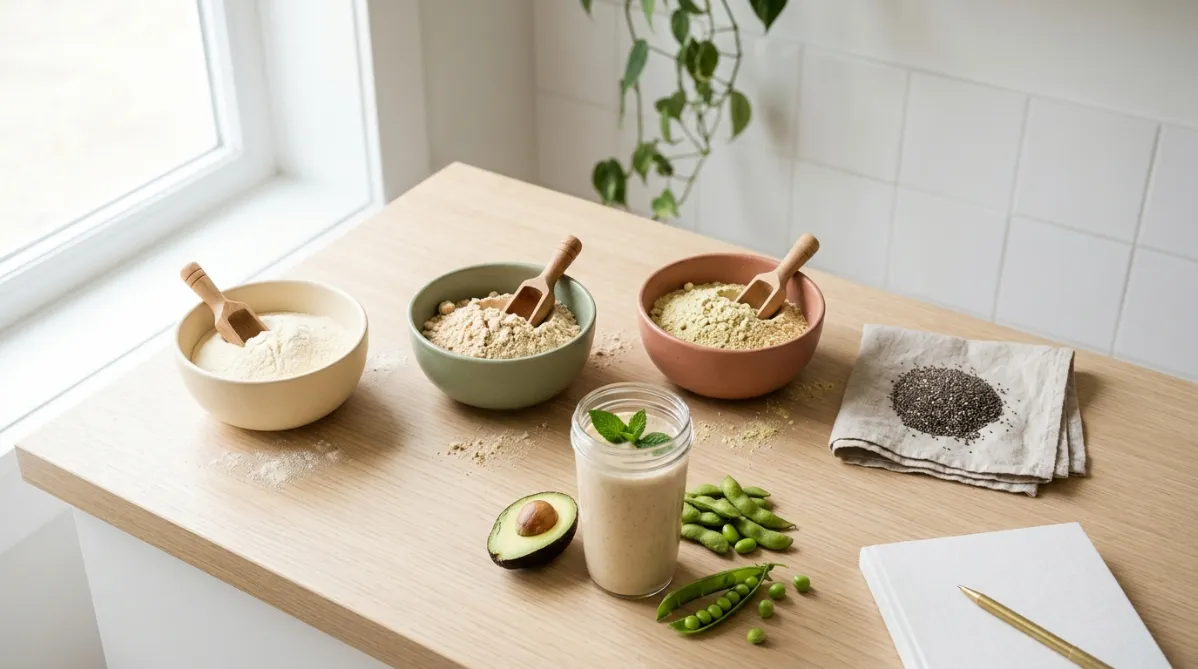
A wide landscape editorial photograph shot from above at a slight angle, showing a bright, minimalist kitchen counter of pale oak wood. Three matching ceramic bowls in soft matte tones (warm cream, sage green, and muted terracotta) sit in a loose row. Each holds a different protein powder: fine ivory whey, slightly coarser beige soy, and speckled pale yellow-green pea protein. A small fourth pile of tiny gray-black chia seeds sits apart on a folded linen napkin, off to the side, to suggest the lone outlier. Wooden scoops rest in each bowl, with a few soft dustings of powder on the surface. In the foreground, a clear glass shaker with a creamy blended drink and a single sprig of fresh mint stands beside a small stack of fresh produce: a halved avocado, a handful of edamame pods, and a few green peas in an open pod. A matte white notebook and a thin brass pen are tucked at the edge of the frame, suggesting research and note-taking. Natural morning light pours in from the left through an unseen window, casting long, soft shadows and gentle highlights on the powder textures. The color palette is calm and earthy, with creams, sage, soft terracotta, and warm wood tones, and a clean, slightly muted editorial grade. Shallow depth of field keeps the bowls crisp while the background, a blurred white tiled wall and a hint of a trailing green plant, melts away. Plenty of negative space on the right side of the frame leaves room for a headline overlay. The overall mood is fresh, trustworthy, and modern, like a contemporary wellness and science journal.
Nutrition

¿La proteína de suero no es especial para principiantes? La soja y el guisante simplemente la igualan

Dr. Gymbro · · 4 min read

Si acabas de empezar a levantar pesas y te encuentras entre un envase de suero y otro de proteína de guisante, preguntándote si la opción vegetal te hará perder ganancias, un nuevo meta‑análisis tiene algo que decir al respecto. Cuando los investigadores agruparon los ensayos medidos con DEXA, el grupo basado en plantas no tuvo resultados significativamente peores que el grupo de suero. Eso no es lo mismo que demostrar que son idénticos, y los autores lo recalcan.

El estudio en 30 segundos

Callegari y colaboradores de la Universidad Estatal de São Paulo (UNESP) en Brasil publicaron una revisión sistemática y meta‑análisis en el Journal of the International Society of Sports Nutrition (2026;23(1):2752317). Buscaron en PubMed, Web of Science y ScienceDirect, siguiendo las directrices PRISMA 2020 y registrando el protocolo en PROSPERO (CRD420251145410). Cinco estudios cumplieron los criterios.

Los criterios de inclusión fueron estrictos:

  • Población: adultos no entrenados de 18‑59 años.
  • Intervención: entrenamiento de resistencia + suplementación con proteína vegetal o suero.
  • Variable de resultado: composición corporal medida por absorciometría dual de rayos X (DEXA).

El artículo es de acceso abierto; su DOI es https://doi.org/10.1080/15502783.2026.2752317 y el registro en PubMed es PMID 42954267.

El hallazgo principal

Tanto la proteína vegetal como la de suero, combinadas con entrenamiento de resistencia, se asociaron con mejoras en la masa magra y en la masa grasa. Entre ambos grupos no se observaron diferencias estadísticamente significativas. Los autores concluyen que los suplementos a base de soja o guisante pueden favorecer cambios positivos en la composición corporal de adultos que inician entrenamiento de resistencia, y pueden considerarse alternativas viables al suero.

Este resultado es relevante porque el suero ha sido tratado durante años como la "mejor" proteína para el músculo. En este análisis, con la ingesta total de proteína y el entrenamiento igualados entre grupos, la fuente proteica no produjo una diferencia detectable en los resultados de composición corporal para principiantes.

Lee la letra pequeña antes de cambiar

"No hay diferencia significativa" no equivale a "son iguales". Los autores lo recalcan repetidamente. Con solo cinco estudios y amplios intervalos de confianza, el análisis no puede descartar una diferencia real en cualquier dirección. El artículo declara explícitamente que sus hallazgos no deben interpretarse como evidencia de equivalencia fisiológica y que siguen necesiéndose ensayos con mayor potencia.

Tres limitaciones adicionales son importantes:

  • Solo adultos no entrenados. Los principiantes responden fuertemente a casi cualquier combinación sensata de entrenamiento y proteína. Los resultados no informan qué ocurre en levantadores experimentados, donde los márgenes son menores y las diferencias pueden ser más fáciles o más difíciles de detectar.
  • Proteína emparejada. La comparación mantuvo constante la ingesta total de proteína y las variables de entrenamiento. No dice nada sobre qué ocurre si sustituyes una cucharada de suero por la misma cantidad de un producto vegetal menos concentrado, o si la ingesta total de proteína es insuficiente.
  • Base de evidencia reducida. Cinco ensayos constituyen una base muy limitada para afirmaciones generalizadas.

La lectura equilibrada es que el suero probablemente no sea indispensable para principiantes, pero tampoco se ha probado que la proteína vegetal sea su gemela exacta.

¿Y la proteína de chía?

Por ahora, descarta el bombo publicitario. La revisión encontró solo un estudio con proteína de chía, y éste no mostró cambios significativos en la masa magra. Los autores afirman que aún no se pueden extraer conclusiones firmes sobre la eficacia de la chía. Las conclusiones sobre soja y guisante no se extienden a la chía.

Recomendaciones prácticas

El resumen del artículo no prescribe dosis, por lo que lo siguiente es una guía general de nutrición deportiva, no hallazgos de este meta‑análisis.

Lo primero es la proteína total diaria. Un referente ampliamente citado para personas que entrenan con pesas es aproximadamente 1,6 g de proteína por kilogramo de peso corporal al día. Un levantador de 75 kg debería apuntar a unos 120 g diarios de todas las fuentes. Un suplemento ayuda a alcanzar esa cifra; no es magia por sí solo.

Dosis por toma. Las proteínas vegetales suelen contener menos leucina por gramo que el suero, y la leucina es clave para activar la síntesis proteica muscular. Una respuesta práctica frecuente es usar una porción ligeramente mayor de guisante o soja, o escoger una mezcla, y repartir la proteína en 3‑4 comidas. Es una precaución razonada, no algo que este estudio haya puesto a prueba.

Momento de consumo. El estudio no aborda la sincronización. La constancia importa más que una rígida "ventana anabólica". Tómala cuando te ayude a cumplir tu objetivo diario, por ejemplo después del entrenamiento o como snack.

¿Quién debería elegir qué?

La proteína vegetal (soja o guisante) tiene sentido si:

  • eres vegano o vegetariano;
  • tienes problemas con los lácteos o la lactosa;
  • prefieres una opción más sostenible, punto que los autores destacan;
  • eres nuevo en el levantamiento y buscas un suplemento económico que se ajuste a tu dieta.

El suero sigue siendo razonable si:

  • toleras bien los lácteos y ya los consumes;
  • deseas una proteína con la mayor base de investigación detrás;
  • resulta más barato o práctico en tu zona.

Precaución si:

  • eres alérgico a la soja o al guisante; revisa siempre las etiquetas;
  • eres levantador avanzado, pues la evidencia proviene de adultos no entrenados;
  • estabas planeando usar proteína de chía para ganar músculo, ya que la evidencia aún no la respalda.

Conclusión

La antigua suposición de que el suero es indispensable para principiantes se debilita tras este análisis. Con proteína y entrenamiento equiparados, la soja y el guisante no quedaron significativamente atrás del suero en cambios de masa magra o grasa en adultos no entrenados. No obstante, cinco estudios y amplios intervalos de confianza dejan el caso abierto, no cerrado. Asegura tu ingesta total de proteína, entrena de forma constante y elige el polvo que realmente vayas a usar.

Fuente: Callegari IOM, Silva GM, Oliveira AG. Is plant‑based protein supplementation as effective as whey protein? A systematic review and meta‑analysis in untrained adults undergoing resistance training. J Int Soc Sports Nutr. 2026;23(1):2752317. doi:10.1080/15502783.2026.2752317. PMID: 42954267.
Original study

Read the original research on pubmed.ncbi.nlm.nih.gov →

This article summarizes published research for general information. It is not medical advice.

DG

Written by

Dr. Gymbro

Dr. Gymbro writes for Dr. Gymbro: science-backed fitness, nutrition & performance.

Related Articles

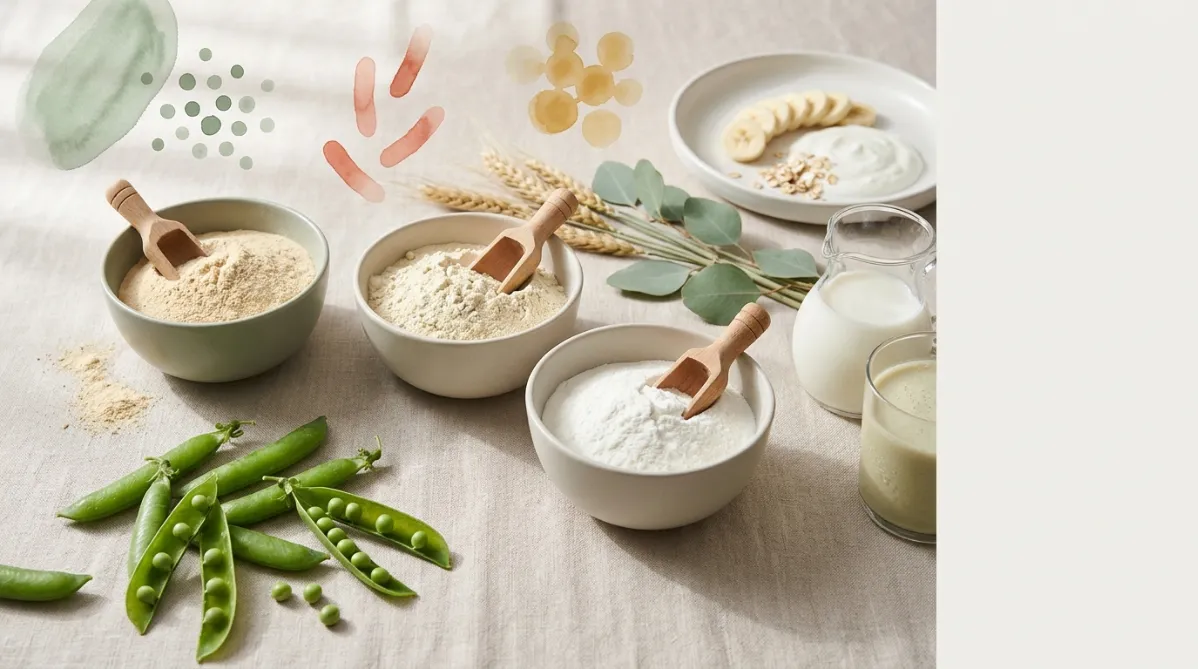
A wide, softly lit editorial flat-lay on a pale oat-colored linen surface, shot from slightly above. Three matte ceramic bowls sit in a loose diagonal across the frame. One holds fine, creamy beige pea protein concentrate, another holds paler, powdery pea protein isolate, and the third holds bright white whey protein isolate. Each bowl has a small wooden scoop resting beside it, with a few fine dustings of powder on the linen. Fresh green pea pods, split open to show round peas, spill naturally in the left foreground. A small glass pitcher of milk sits near the right edge, next to a half-full glass of a smooth, pale green-beige shake with condensation on the surface.

Behind the bowls, a few sprigs of dried wheat and soft eucalyptus leaves add organic texture. In the upper right, a shallow white ceramic plate holds a small arrangement of gut-friendly foods: sliced banana, a spoonful of plain yogurt, and a few oats. Delicate watercolor-style abstract shapes in sage green, warm coral, and soft mustard float subtly in the background. They suggest microscopic organisms, like loose dots, rods, and clustered circles, but stay painterly and minimal, not scientific or futuristic.

Natural window light enters from the left, casting long, gentle shadows and a warm, airy glow. The palette is muted and modern: sage green, cream, warm beige, blush, and touches of terracotta. The composition leaves generous clean negative space on the right third for a headline overlay. The depth of field is shallow, with the nearest pea pods and the front bowl crisp and the background softly blurred. The style is high-end wellness magazine photography with a subtle tactile, handmade feel, calm, fresh, and contemporary, in a 16:9 landscape format.
science research

¿Qué proteína en polvo remodela tu intestino? La de guisante lo hizo en 4 semanas

BY DR. GYMBRO ·

Un ensayo sueco de cuatro semanas comparó concentrado de proteína de guisante, aislado de proteína de guisante y aislado de proteína de suero, con la microbiota intestinal como principal variable. Ambos tipos de proteína de guisante modificaron significativamente la diversidad del intestino, y cada forma favoreció distintas especies beneficiosas. El concentrado aumentó Bifidobacterium longum y Anaerobutyricum hallii, mientras que el aislado impulsó Lactobacillus crispatus y Limosilactobacillus frumenti. Los investigadores advierten que todavía no sabemos qué implican esos cambios para la función del microbioma. Aquí tienes lo que esto significa para tu próximo bote de polvo.

A wide, editorial-style flat lay shot from directly above on a pale oak table in soft morning window light. At the center, an open matte cream-colored protein powder tub sits tipped slightly, with a wooden scoop resting beside it and a small, elegant dusting of fine powder spilling across the wood grain. To the left, a neat balanced arrangement of whole foods: two soft-boiled eggs in a ceramic dish, a small bowl of Greek yogurt with a drizzle of honey, a handful of almonds, and a halved avocado. To the right, a minimalist brass kitchen scale holding a small ceramic bowl, with a handwritten notebook page beside it showing simple pencil-drawn bar charts and a few scribbled numbers, no legible text. A matte shaker bottle in muted sage green stands near the top edge, along with a folded linen napkin in warm oatmeal tone. The color palette is restrained and modern: warm creams, soft sage, terracotta accents, and natural wood, with gentle diffused shadows and subtle film-like grain. Composition leaves generous negative space on the left third of the frame for headline overlay. The mood is calm, thoughtful, and quietly skeptical, like a contemporary health and science magazine cover. Shallow depth of field, crisp textures on powder and ceramic, high-end lifestyle photography, clean and uncluttered.
nutrition

El lado sucio de la proteína en polvo: las ganancias desaparecen cuando las calorías coinciden

BY DR. GYMBRO ·

¿Realmente la proteína en polvo mejora tu rendimiento y recuperación, o simplemente te aporta más calorías? Un meta‑análisis bayesiano de 75 ensayos aleatorizados y 1 206 atletas encontró beneficios reales pero limitados. La clave es que todos los resultados significativos provienen de estudios donde la ingesta energética no se igualó entre los grupos. La recomendación más concreta del artículo es la dosis: alrededor de 1 g/kg/día extra mediante suplementos, para un total cercano a 2 g/kg/día.

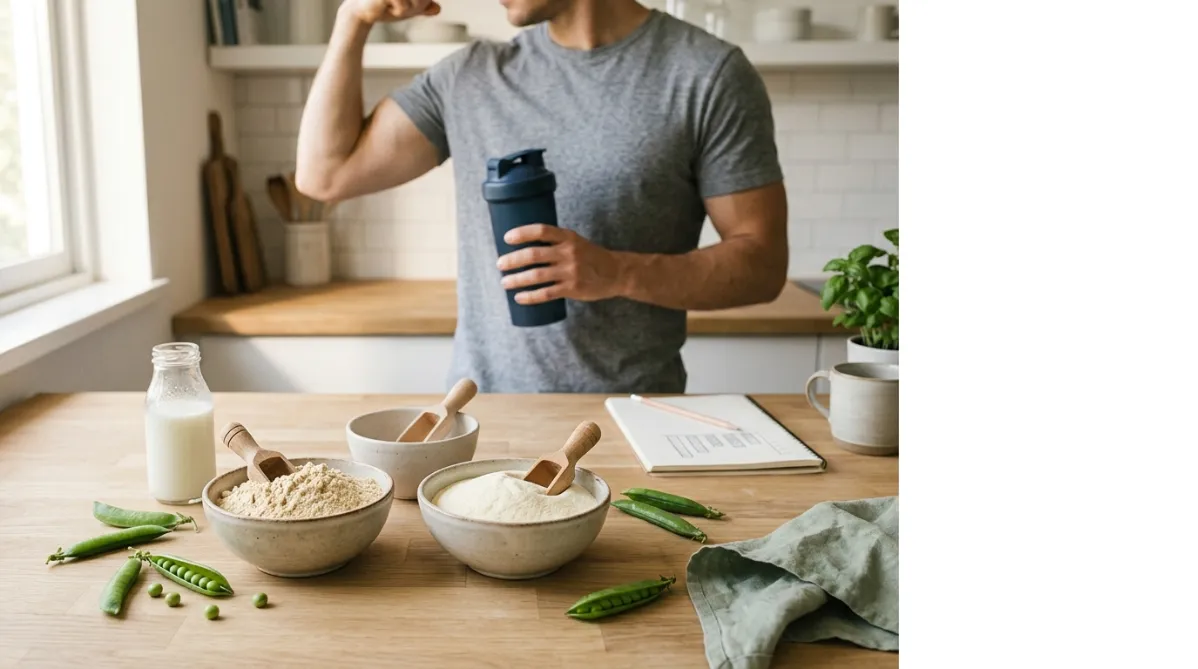
A bright, airy, minimalist kitchen counter in soft morning light, shot from a slightly elevated three-quarter angle in a wide landscape composition. Two matching ceramic bowls sit side by side on a pale oak butcher-block surface. The left bowl holds fine, creamy-beige pea protein powder with a small wooden scoop resting in it. The right bowl holds smooth, ivory-white whey powder with an identical scoop. Between and slightly behind them sits a third, smaller empty bowl with a plain scoop, hinting at the placebo. Scattered around the bowls are fresh green pea pods, some split open to reveal bright, round peas, and a small glass bottle of milk with delicate condensation. A sage-green linen napkin is folded loosely at the edge of the frame.

In the soft-focus background, a young man in a fitted heather-gray t-shirt is seen from the shoulders down, casually flexing one arm while holding a matte shaker bottle, the biceps subtly defined and the pose relaxed and natural. A minimalist notebook with a pencil and a simple hand-drawn bar chart lies open on the counter, suggesting analysis without legible text. A small potted herb plant and a ceramic mug add warmth.

The color palette is muted and editorial: warm cream, sage green, soft terracotta, pale wood, and touches of charcoal. Light streams in from a window on the left, casting gentle long shadows and a subtle golden glow across the powders so their textures look fine and tactile. Shallow depth of field keeps the bowls crisp while the background melts into a creamy blur. The look is modern lifestyle-magazine photography, clean and uncluttered, with generous negative space on the right third of the frame for headline overlay. It is natural, appetizing, and trustworthy, in the style of a contemporary wellness and nutrition journal.
nutrition

Proteína de guisante vs suero: el resultado inesperado para principiantes

BY DR. GYMBRO ·

¿Puede la proteína vegetal generar músculo como el suero? Un ensayo de 12 semanas con 161 hombres comparó proteína de guisante, suero y placebo, y los resultados para principiantes llamaron la atención: +20,2 % de grosor de bíceps con guisante frente a +8,6 % con placebo. Sin embargo, la diferencia en el grupo completo fue solo una tendencia, y el hallazgo destacado surgió de un análisis de subgrupos. Aquí lo que descubrió el estudio, lo que no demostró y cómo los levantadores veganos o intolerantes a la lactosa pueden aprovecharlo.

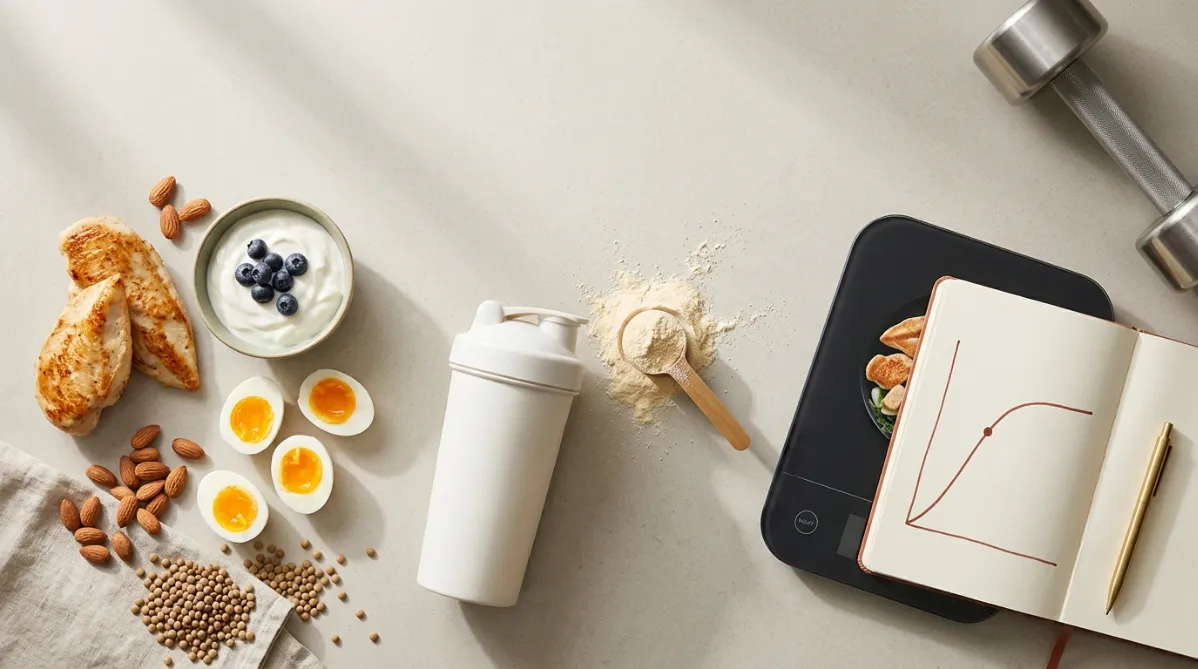
A wide, editorial flat-lay photograph shot from directly above on a pale warm-gray stone countertop, lit by soft natural morning window light with gentle diagonal shadows. On the left, a neatly arranged cluster of whole-food protein sources: two seared chicken breast slices with a golden crust, a small ceramic bowl of creamy Greek yogurt topped with blueberries, three halved soft-boiled eggs with jammy orange yolks, a handful of raw almonds, and a small pile of dried lentils scattered on a linen napkin. At the center, a matte white shaker bottle and a wooden scoop resting in a pile of fine vanilla-colored protein powder, a few grains dusted artfully across the surface. On the right, a minimalist kitchen scale in matte black displaying a portion of food, next to an open notebook with a hand-drawn curve that rises steeply and then flattens into a plateau, drawn in a deep terracotta ink pen, with a small dot marking the bend. A brass pen lies beside the notebook. A single dumbbell with a brushed steel finish sits partially in frame at the upper right corner, grounding the fitness theme without feeling gym-like. Color palette: warm cream, sage green, terracotta, soft charcoal, and butter yellow accents, with generous negative space along the top edge for title overlay. Shallow depth of field, crisp textures, subtle film grain, modern lifestyle magazine aesthetic, clean and calm composition, 16:9 landscape.
nutrition

¿Cuánta proteína realmente maximiza el músculo? La meseta de 1,6 g/kg explicada

BY DR. GYMBRO ·

¿Crees que necesitas más de 2 g de proteína por kilo para crecer? Un meta‑análisis con 49 ensayos y 1 863 adultos demostró que los beneficios se estabilizan alrededor de 1,6 g/kg al día. El límite superior del intervalo de confianza llega a unos 2,2 g/kg, lo que brinda a los levantadores un rango práctico en lugar de una dosis arbitraria. Los deportistas entrenados obtuvieron el mayor beneficio de la suplementación, mientras que la ventaja disminuye con la edad. Aquí te explicamos qué significa todo eso para tu plato, tu batido y tu bolsillo.

This page is available in