Dr. Gymbro
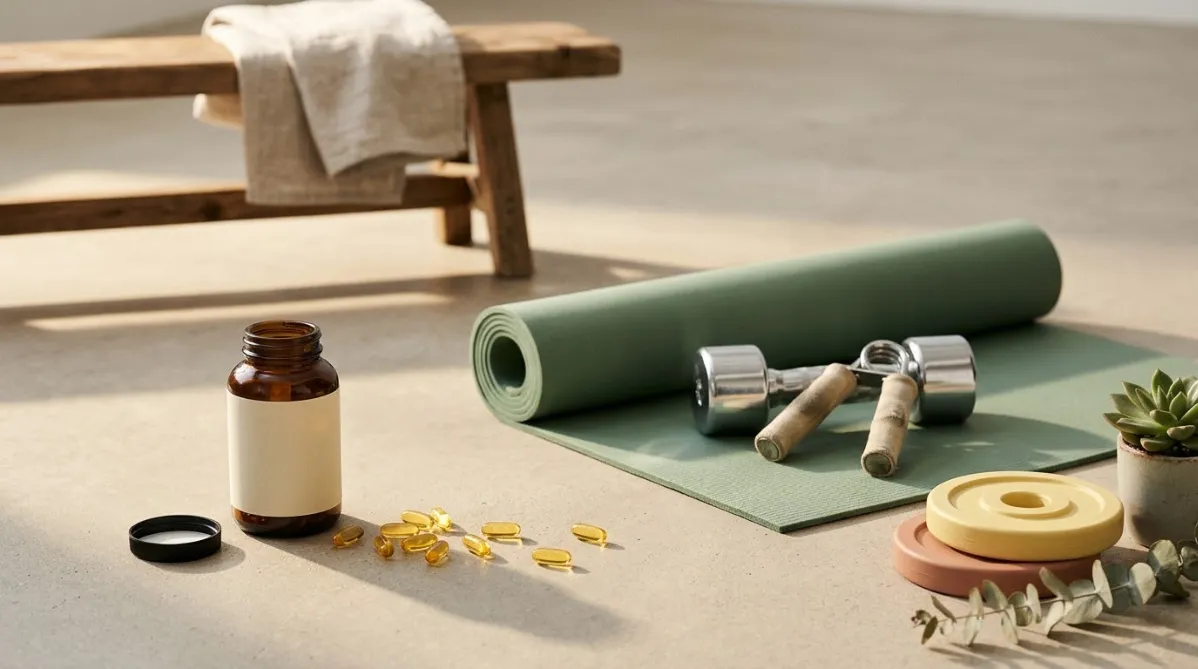
A soft-lit editorial still life on a pale warm-gray concrete surface, shot from a slightly elevated three-quarter angle in a wide landscape frame. On the left, a single amber glass supplement bottle with a minimalist cream label, its lid set beside it. A few golden-yellow softgel capsules are scattered in a loose arc across the surface, catching the light like small drops of honey. At the center-right, a matte sage-green yoga mat is partly unrolled, with a polished chrome dumbbell resting on it. Next to the dumbbell sits a worn canvas hand gripper, a nod to the handgrip finding. Behind them, a wooden gym bench is slightly out of focus, and a folded linen towel sits on top of it.

Warm morning sunlight enters from the upper left through a large window. It casts long, gentle diagonal shadows and a faint golden glow across the scene, a quiet reference to vitamin D and sunshine. A sprig of dried eucalyptus or a small potted succulent adds an organic touch near the bottom right. A small, neatly stacked pile of two or three matte pastel-toned weight plates in butter yellow and dusty terracotta adds color blocking.

The palette is muted and modern: butter yellow, sage, warm sand, soft terracotta, and off-white, with a single strong amber accent from the bottle. The depth of field is shallow, with crisp focus on the capsules and bottle and a creamy blur falling off toward the background. The negative space on the upper right is clean and uncluttered, which leaves room for a headline overlay. The overall feel is calm, minimalist, and contemporary, like a premium health and wellness magazine or a trendy online journal. The grain is subtle, the contrast gentle, and the textures tactile: brushed metal, frosted glass, linen, and concrete. There are no people, no text, and no futuristic elements.
Science & Research

La vitamina D no te hará perder grasa ni ganar músculo, salvo una excepción

Dr. Gymbro · · 4 min read

Si has estado combinando vitamina D con tu entrenamiento con la esperanza de conseguir unos abdominales más marcados y levantar más peso, un nuevo meta‑análisis trae una noticia clara. La vitamina D aumentó de forma fiable los niveles sanguíneos, pero no hizo que la gente se adelgazara ni que se volviera notablemente más fuerte en general. Hay una excepción que merece atención, y es especialmente relevante si eres mayor o si tienes deficiencia de la vitamina.

El estudio: 28 ensayos, 1.675 adultos

El artículo, publicado en Nutrition Reviews, es una revisión sistemática y un meta‑análisis de dosis‑respuesta de ensayos controlados aleatorios. Los investigadores buscaron en PubMed, Web of Science y Scopus hasta el 1 de abril de 2024. Incluyeron estudios que compararan la suplementación con vitamina D más ejercicio contra el ejercicio solo.

Esa comparación es la clave. La pregunta no era si el ejercicio funciona; era si añadir vitamina D aporta algo extra. En total, se agruparon 28 estudios con 1.675 participantes. Los resultados evaluados incluyeron la concentración sanguínea de 25‑hidroxivitamina D [25(OH)D], peso corporal, IMC, masa grasa, porcentaje de grasa corporal, masa libre de grasa y fuerza medida mediante agarre manual, prensa de piernas y extensión de rodilla. Los autores también aplicaron un modelo polinómico fraccionario para probar si la dosis (UI por semana) y la duración de la intervención modificaban los efectos.

Qué funcionó: los niveles en sangre aumentaron

El suplemento cumplió su función básica. La combinación de vitamina D y ejercicio elevó la 25(OH)D una diferencia media ponderada de 34,11 nmol/L frente al ejercicio solo (p = 0,001). El aumento se observó tanto en adultos sanos como en los que presentaban alguna condición.

Esto indica que las píldoras fueron absorbidas y que los ensayos no fallaron por problemas de administración. Cuando la composición corporal no cambió, no fue porque la vitamina D nunca llegó a la sangre. Incrementar un valor de laboratorio no equivale a mejorar la apariencia o el rendimiento, y este análisis muestra cuán alejados pueden estar ambos.

Qué no funcionó: composición corporal

Las esperanzas de pérdida de grasa y ganancia muscular no se confirmaron. El análisis no encontró efectos significativos en:

  • Peso corporal
  • IMC
  • Masa grasa
  • Porcentaje de grasa corporal
  • Masa libre de grasa

Todos estos resultados mostraron p > 0,05. Los autores concluyeron que vitamina D más ejercicio no mejora la composición corporal más que el ejercicio por sí solo. Si tu objetivo es reducir grasa o ganar masa magra, el entrenamiento y la dieta son los que hacen el trabajo; la vitamina D, al menos en estos ensayos, no aporta nada extra.

Fuerza: mayormente sin efecto, con una excepción

Los resultados de fuerza fueron mixtos y, en su mayor parte, poco convincentes. La fuerza en prensa de piernas no mostró beneficio significativo. La fuerza en extensión de rodilla sí mejoró de forma modesta, en 4,36 kg (p = 0,039). La fuerza de agarre manual mejoró de manera significativa en adultos mayores y en quienes recibieron dosis más altas de vitamina D.

Esa es la excepción y merece una contextualización cuidadosa. El aumento en extensión de rodilla es modesto, y la conclusión general de los autores fue que la fuerza muscular no se vio afectada de forma relevante. El hallazgo del agarre se limitó a subgrupos específicos: adultos mayores y regímenes con dosis altas. El agarre manual es una medida sencilla que suele usarse como indicador de fuerza general en la edad avanzada, pero este estudio no demuestra que la vitamina D transforme el rendimiento en personas jóvenes y saludables.

Quién podría beneficiarse realmente

Las señales apuntan a grupos particulares más que a la población general:

  • Adultos mayores: aquí fueron los que mostraron ganancias en el agarre.
  • Personas con dosis altas: las dosis mayores se asociaron con mejoras en el agarre, aunque no debe interpretarse como permiso para automedicarse con megadosis.
  • Personas con deficiencia de vitamina D: el resumen no detalla el estado basal, pero elevar los niveles es donde el suplemento demostró su eficacia, por lo que quienes están deficientes tienen la razón más clara para suplementarse.

Conclusiones prácticas

  1. No compres vitamina D como suplemento para la composición corporal. En los cinco indicadores de composición corporal no hubo beneficio añadido respecto al solo ejercicio.
  2. Hazte una prueba antes de suplementar. Un análisis de sangre de 25(OH)D indica si tienes un déficit que cubrir. Suplementar a ciegas es la versión más débil de esta estrategia.
  3. Los adultos mayores tienen el caso más sólido. Si eres mayor y entrenas, los resultados del agarre son alentadores y vale la pena discutirlo con un profesional de la salud.
  4. Mantén expectativas realistas. Un aumento de 4,36 kg en extensión de rodilla es modesto, y la prensa de piernas no mostró cambios.
  5. Prioriza los fundamentos. El entrenamiento de resistencia progresivo, una ingesta adecuada de proteínas, control calórico y buen descanso siguen siendo los factores que realmente impulsan los resultados que este estudio muestra que la vitamina D no puede mejorar.

Limitaciones y contexto

Se trata de un análisis agrupado de ensayos aleatorios, lo que constituye evidencia sólida para la pregunta concreta planteada. Sin embargo, los hallazgos reflejan las poblaciones, dosis y duraciones de los estudios incluidos. El resumen menciona que se realizaron análisis de subgrupos y de respuesta a la dosis, y los beneficios en fuerza aparecieron solo en ciertos subconjuntos. Esos hallazgos deben considerarse más como señales para futuras investigaciones que como garantías firmes.

Conclusión

La vitamina D combinada con ejercicio elevó los niveles sanguíneos aproximadamente 34 nmol/L, pero no quemó grasa, no aumentó masa magra ni mejoró la fuerza en prensa de piernas más allá del entrenamiento solo. Los modestos avances en extensión de rodilla y agarre, sobre todo en adultos mayores y con dosis altas, son la excepción. Corrige una deficiencia si la tienes, pero no esperes que una vitamina reemplace al peso en la barra.

Original study

Read the original research on pubmed.ncbi.nlm.nih.gov →

This article summarizes published research for general information. It is not medical advice.

DG

Written by

Dr. Gymbro

Dr. Gymbro writes for Dr. Gymbro: science-backed fitness, nutrition & performance.

Related Articles

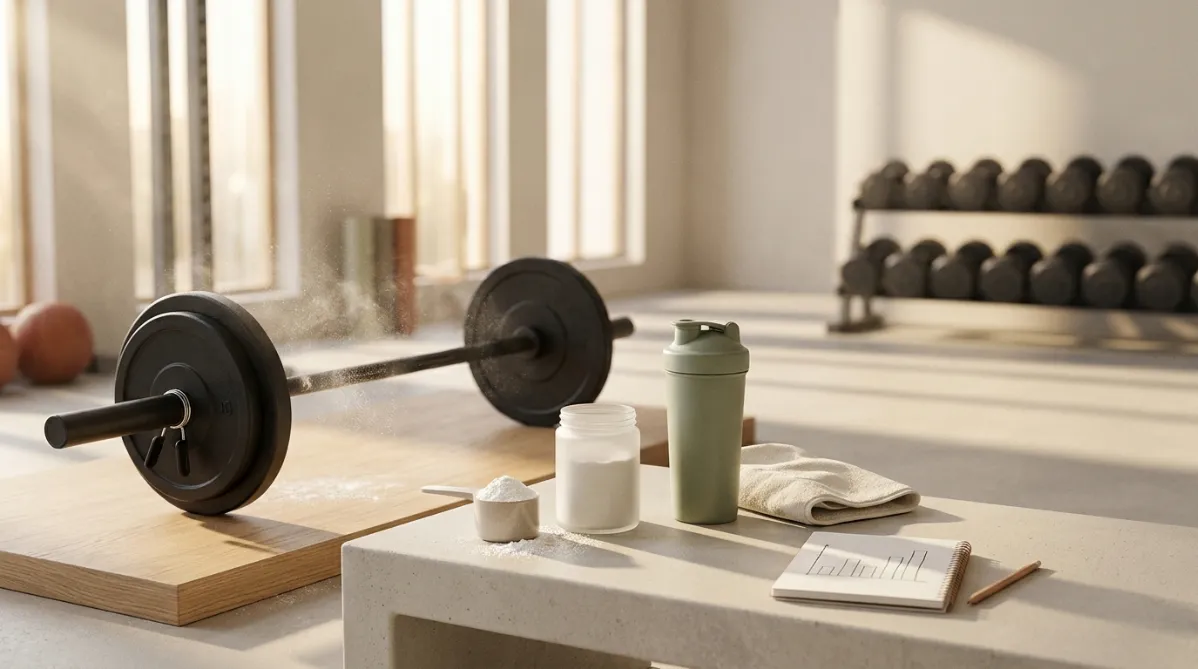
A softly lit, minimalist strength-training studio photographed in a modern editorial style. In the foreground, a matte black barbell loaded with weight plates rests on a light oak platform, with fine chalk dust floating in warm morning light. Beside it on a pale concrete bench sits a simple ceramic scoop of white creatine powder, with a small spill of fine crystals catching the light, next to a minimal frosted glass jar with no label. A matte sage-green shaker bottle and a folded cream towel sit nearby. In the soft-focus background, tall windows let in diffused golden sunlight, casting long, gentle shadows across the floor. A rack of neatly arranged dumbbells is blurred in muted charcoal tones.

The color palette is calm and sophisticated: warm off-white, sand, sage green, soft charcoal, and touches of terracotta. A small open notebook with a pencil lies on the bench, suggesting research and data tracking, with abstract hand-drawn bar graph lines faintly visible on the page but not legible. The composition follows the rule of thirds, with the barbell and powder on the left and generous negative space on the right for headline text. Shallow depth of field, crisp textures on the metal knurling and powder grains, subtle film grain, and a contemporary wellness-magazine look. Clean, airy, and editorial, with a grounded, scientific yet approachable mood. Landscape 16:9 composition.
science research

Creatina y entrenamiento de fuerza: mayores ganancias sin que la dosificación importe

BY DR. GYMBRO ·

Un meta‑análisis de 63 estudios con 1.489 participantes evaluó el efecto de la creatina en el entrenamiento con pesas. El aumento de fuerza fue moderado y consistente tanto en la parte superior como inferior del cuerpo, mientras que la ganancia de masa magra fue menor y la grasa corporal no cambió de forma significativa. Sorprendentemente, la estrategia de dosificación, la cantidad diaria y el protocolo no influyeron significativamente en los resultados. La edad surgió como la única pista exploratoria, mostrando efectos mayores en participantes más jóvenes.

A wide, editorial-style still life photographed in soft natural window light on a pale oak gym bench. In the foreground, a small rustic ceramic bowl in warm sand tones holds a mound of fine golden-beige ashwagandha root powder, with a few dried gnarled ashwagandha roots and a sprig of green leaves with tiny orange-red berries resting beside it. A wooden scoop dusted with powder lies at an angle. Just behind, a matte black barbell with a single chalk-dusted steel plate sits slightly out of focus, a light haze of white chalk hanging in the air and catching the sunlight.

On the left side, a neat stack of printed research papers with a sharp black pen and a few muted sage-green sticky tabs. One page shows a simple, abstract forest-plot-style line graph with small squares and horizontal lines, subtly out of focus, hinting at statistics without legible text. A pair of minimal round reading glasses rests on the pages. A small linen gym towel is folded near the edge of the bench.

The palette is restrained and modern: warm cream, soft sage green, muted terracotta, charcoal black, and brushed steel highlights. The background is a softly blurred minimalist studio space with a pale plaster wall and a long soft shadow cast by a window frame, giving a calm, contemplative mood. Shallow depth of field, crisp detail on the powder and roots, gentle film-like grain, and generous negative space on the right third of the frame for a headline overlay. The overall look is a clean, trendy health-and-science journal cover, thoughtful and skeptical rather than promotional, balancing the natural herbal element against the discipline of strength training.
nutrition

Ashwagandha para levantadores: ¿Impulso de fuerza o espejismo estadístico?

BY DR. GYMBRO ·

Ashwagandha se vende a los levantadores como potenciador de fuerza y masa, y un nuevo metaanálisis de ensayos controlados de entrenamiento de resistencia mostró aumentos en press de banca y sentadilla que parecen impresionantes en papel. Sin embargo, sólo se pudieron agrupar tres estudios con 161 participantes. Los resultados de fuerza perdieron significación bajo pruebas HKSJ más rigurosas y dependían de un único ensayo influyente. La evidencia fue calificada por GRADE como baja a muy baja, y no se observó un efecto fiable sobre la grasa corporal. Aquí se resume lo que realmente muestra la revisión y quién podría aún querer probarla.

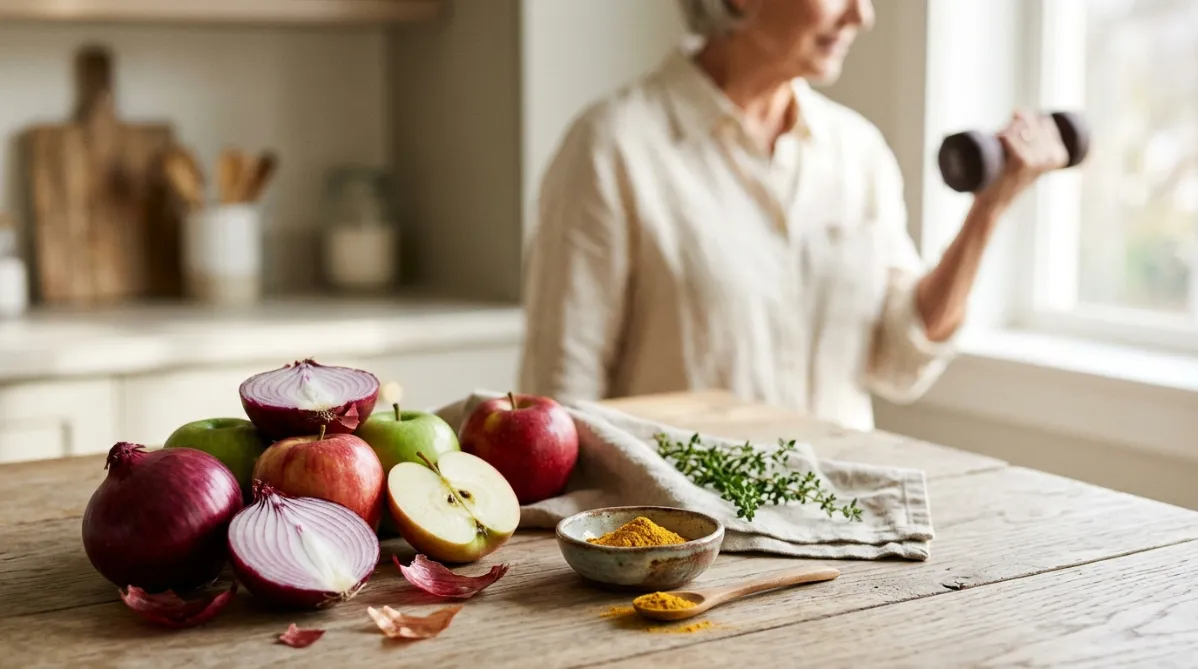
A landscape editorial photograph of a rustic kitchen table in soft morning window light. On a weathered light oak surface, a loose arrangement of fresh red onions, a few halved to show their purple-white rings, and crisp red and green apples, one sliced open to reveal pale flesh. A small ceramic bowl holds a pinch of golden-yellow quercetin powder, with a wooden spoon resting beside it. In the softly blurred background, an older woman in a cream linen shirt lifts a modest dumbbell near a sunlit window, her posture strong and relaxed. Her silhouette is out of focus, which keeps the produce as the main subject.

The palette is warm and natural: deep magenta onion skins, glossy apple reds, buttery yellow accents, and creamy neutrals. A gentle shallow depth of field gives creamy bokeh in the background. The light is diffused and golden, with delicate shadows and a few dried onion skin flakes scattered across the wood for texture. A folded linen napkin and a small sprig of thyme add a curated, modern lifestyle-magazine feel.

The composition follows the rule of thirds, with the produce at lower left and negative space on the right, where the blurred lifter and window glow provide balance. The overall look is clean, calm, and contemporary, like a premium health and wellness journal cover: natural, tactile, and optimistic, with fine film-like grain and true-to-life color.
nutrition

La quercetina triplicó las ganancias de fuerza en levantadores mayores, sin más músculo

BY DR. GYMBRO ·

Una flavonoide barato presente en cebolla y manzana podría haber aumentado las ganancias de fuerza en adultos mayores mucho más allá de lo que el entrenamiento solo logra. En un ensayo aleatorizado, doble ciego, los participantes que tomaron 200 mg/día de glicósidos de quercetina incrementaron su fuerza de rodilla alrededor de un 15 % en seis semanas, frente a un 5 % con placebo. Curiosamente, la masa muscular no cambió en ninguno de los grupos. La ventaja parece provenir del sistema nervioso, con unidades motoras de umbral alto disparando más rápido. Aquí lo que mostró el estudio, cómo aplicarlo y por qué la muestra pequeña exige cautela.

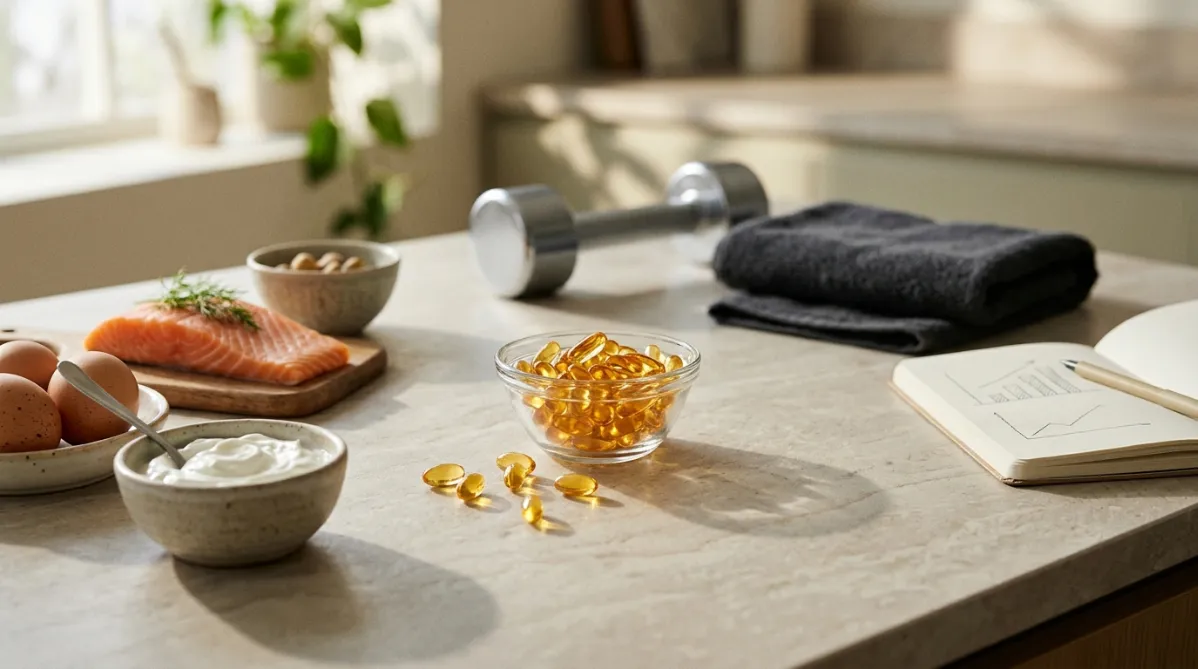
A bright, modern editorial still life shot from a slightly elevated angle on a pale warm-gray stone countertop, bathed in soft natural window light with gentle diffused shadows. In the center, a small glass bowl holds a scatter of translucent golden-amber fish oil softgel capsules, a few spilled casually onto the surface and catching the light like tiny glowing beads. Beside the bowl sits a single chrome dumbbell with a matte finish, slightly out of focus, and a neatly folded charcoal gym towel. To the left, a clean arrangement of alternative "better spent" items: a ceramic dish of raw eggs, a wedge of salmon fillet on a wooden board with a sprig of dill, and a small bowl of Greek yogurt with a spoon, all styled with restraint. A minimalist notebook with a thin pen lies at the right edge, with faint, abstract pencil-drawn bar charts and a flat horizontal line suggesting "no effect," legible only as soft shapes with no readable text. The color palette is muted and sophisticated: warm cream, soft sage green, sandy beige, and pops of golden amber from the capsules, with a single accent of coral from the salmon. Shallow depth of field keeps the capsules crisp while the background melts into a creamy blur of a sunlit kitchen with a hint of green plant leaves. The composition leaves generous negative space on the right third for title overlay, in a 16:9 landscape format. The mood is calm, thoughtful, and quietly skeptical, in the style of a contemporary health and science magazine, with a crisp editorial photography look, fine grain, and natural color grading. No people, no futuristic elements, and no text.
science research

¿Aceite de pescado para ganar músculo? 8 estudios dicen que no cuentes con él

BY DR. GYMBRO ·

El aceite de pescado se ha promocionado como un potenciador de la recuperación y el desarrollo muscular, pero un meta‑análisis publicado en *Nutrition* muestra que la evidencia es escasa. Al combinar cuatro ensayos sobre masa libre de grasa y ocho ensayos (22 efectos) sobre fuerza en adultos sanos no obesos, los investigadores no encontraron beneficios claros. La estimación del efecto sobre la fuerza fue prácticamente nula y la de la masa libre de grasa demasiado imprecisa para sacarle conclusiones. La certeza de la evidencia es muy baja, lo que no prueba que el suplemento no tenga efecto, pero tampoco justifica comprar aceite de pescado para ganar músculo. Aquí explicamos qué significan los números y dónde es mejor invertir tu dinero.

This page is available in