Dr. Gymbro
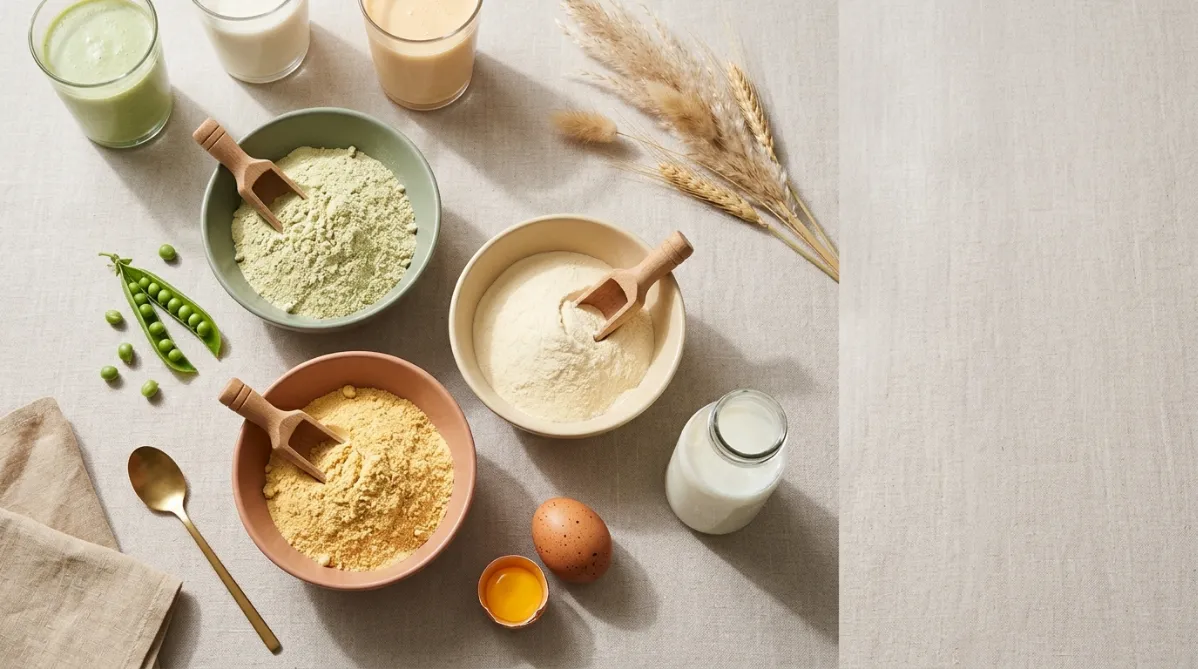
A overhead flat-lay photograph in a modern editorial style, shot on a pale oatmeal-colored linen surface with soft, diffused natural window light coming from the upper left, casting gentle, elongated shadows. Three ceramic bowls in matte, muted tones sit in a loose, balanced triangle composition: one in dusty sage green holding fine pale-green pea protein powder, one in warm cream holding silky ivory whey powder, and one in soft terracotta holding golden-yellow egg protein powder. Each bowl has a small wooden scoop resting against its rim, with a few powder specks scattered naturally across the linen.

Around the bowls, subtle ingredient cues add storytelling without clutter: a handful of fresh green peas in their open pod beside the sage bowl, a small glass bottle of milk with a faint condensation sheen near the cream bowl, and two brown speckled eggs, one whole and one cracked open to reveal a bright yolk, near the terracotta bowl. A sprig of dried wheat or pampas grass enters the frame from the top right corner for texture and height.

Three glass tumblers of smoothie-like shakes in slightly different hues, soft green, creamy white, and pale apricot, stand along the upper edge of the frame, slightly out of focus, creating depth and a gentle rhythm. A thin brass spoon and a folded sand-colored napkin add a refined touch in the lower left.

The palette is warm and earthy: sage, cream, terracotta, butter yellow, and soft beige, with tiny accents of brass. Negative space is left on the right third of the composition for possible title overlay, keeping the layout airy and uncluttered. The overall mood is calm, thoughtful, and approachable, like a contemporary wellness magazine or minimalist food journal, with crisp focus on the bowls, shallow depth of field toward the edges, subtle film-like grain, and a clean, sophisticated, slightly matte finish.
Fitness

Suero, guisante y huevo: 51 estudios clasifican cuál proteína favorece más el crecimiento muscular tras el entrenamiento con pesas

Coach Ryan · · 4 min read

Gran hallazgo

Se esperaría que un duelo entre proteína de suero, guisante y huevo coronara a un claro ganador. En este caso no ocurrió, y la razón es más intrigante que una simple clasificación.

Un equipo de la Universidad de Viena reunió 51 ensayos basados en trazadores para comparar cómo diferentes fuentes de proteína estimulan la síntesis de proteína muscular (MPS) después del entrenamiento de resistencia. Varias proteínas, tanto animales como vegetales, quedaron muy próximas entre sí. Sin embargo, solo una, la proteína de suero estándar, produjo un efecto estadísticamente significativo.

Cómo se construyó el estudio

El artículo, publicado en el Journal of the International Society of Sports Nutrition (2026), es una revisión sistemática con análisis de red meta‑analítica (NMA) y de dosis‑respuesta. Una meta‑analítica de red permite comparar tratamientos que nunca se han enfrentado directamente, vinculándolos a través de comparadores comunes.

  • Búsquedas: PubMed, EBSCOhost (MEDLINE, SPORTDiscus, CINAHL) y Scopus.
  • Participantes: adultos sanos de 18 años o más.
  • Protocolo: una sesión aguda de ejercicio de resistencia seguida de una única dosis de proteína, sin alimentos adicionales entre medio.
  • Medición: biopsias musculares antes y después, con tasas horarias de MPS medidas mediante técnicas de trazadores.
  • Exclusiones: mezclas de proteínas y productos enriquecidos con otros agentes anabólicos.
  • Muestra: 51 ensayos cumplieron los criterios.

Los autores declararon no tener conflictos de interés.

La tabla de clasificación

Las proteínas fueron ordenadas por P‑score, un valor de 0 a 1 que refleja la probabilidad estimada de quedar entre los primeros puestos en la MPS horaria post‑ejercicio:

Proteína P‑score Diferencia media (%/h)
Native whey 0.81 0.05 [0.00; 0.10]
Guisante 0.77 0.05 [-0.02; 0.11]
Huevo entero 0.72 0.04 [-0.01; 0.09]
Micoproteína 0.66 0.03 [-0.02; 0.08]
Suero (whey) 0.58 0.02 [0.01; 0.04]

La certeza de la evidencia se calificó como baja a moderada.

Por qué la proteína mejor clasificada fue la única "significativa"

Este es el giro inesperado. El suero estándar quedó en quinto lugar de cinco, pero solo él mostró un intervalo de confianza que excluye el cero (0.01 – 0.04). El native whey, el guisante, el huevo entero y la micoproteína tuvieron estimaciones puntuales iguales o superiores, pero sus intervalos fueron lo suficientemente anchos como para incluir el cero.

La explicación más plausible es la precisión estadística, no una superioridad biológica. El suero ha sido estudiado en muchísimos ensayos, por lo que su estimación es estrecha. En cambio, el guisante y la micoproteína están representados por farísimos menos estudios, lo que genera estimaciones más difusas. Los autores lo puntualizan: las fuentes respaldadas por pocos estudios deben interpretarse con cautela.

Los P‑scores indican posición, no magnitud. Un P‑score de 0.77 para el guisante no significa que esté demostrado que funciona mejor; solo indica que, con los datos disponibles, el guisante suele situarse cerca de la cima.

El punto óptimo de dosificación: 18‑25 g

El análisis de dosis‑respuesta encontró que las respuestas de MPS más altas se prevén entre 18 y 25 g para native whey, huevo entero, guisante y micoproteína. Tanto fuentes animales como vegetales aparecen en ese rango, lo que sugiere que la cantidad puede ser tan importante como la procedencia para la respuesta aguda.

Qué significa esto para ti

  • Dosis: apunta a consumir aproximadamente entre 18 y 25 g de proteína en la comida post‑entrenamiento. Es allí donde el modelo predijo el pico de MPS para las fuentes con mejor desempeño.
  • Momento: los ensayos evaluaron una única bolus después del ejercicio de resistencia. El artículo respalda una ingesta post‑entrenamiento, pero no delimita una "ventana anabólica" exacta, así que no te obsesiones con los minutos.

Recomendaciones según tu perfil

  • Levantadores que toleran lácteos: el suero tiene la evidencia estadísticamente más sólida.
  • Levantadores veganos o que evitan lácteos: el guisante y la micoproteína aparecen como opciones competitivas en clasificación y dosis‑respuesta, aunque la evidencia es más escasa.
  • Consumidores de huevo: el huevo entero quedó en tercer lugar y encaja en el mismo rango de dosis.

Quién debe ser cauto

  • Personas alérgicas a lácteos, huevo o guisante deben evitar la fuente correspondiente.
  • Quienes padecen enfermedad renal u otras condiciones que limiten la ingesta proteica deben consultar a un profesional antes de modificar su consumo.
  • Quien espere que este estudio justifique una marca o mezcla específica: las mezclas fueron excluidas, por lo que combinaciones multifuente (por ejemplo, guisante + arroz) no fueron evaluadas.

Limitaciones importantes

  • MPS aguda ≠ crecimiento muscular. Los ensayos midieron tasas de síntesis de proteína a corto plazo, no ganancias de masa o fuerza a lo largo de meses. Un mayor valor de MPS en unas pocas horas no garantiza más músculo o fuerza a largo plazo; el total diario de proteína, la calidad del entrenamiento, la ingesta calórica y la recuperación también influyen.
  • Las diferencias son pequeñas. Las diferencias medias oscilaron entre 0.02 y 0.05 %/h. Es una diferencia estadísticamente detectable, pero no necesariamente relevante en la práctica.
  • Calidad de la evidencia moderada. Una certeza de baja a moderada implica que futuros ensayos podrían cambiar la clasificación, sobre todo para las proteínas menos estudiadas.

Conclusión

Ninguna proteína destronó al suero, pero tampoco se descartó a ninguna. El suero es la única fuente con un efecto estadísticamente significativo en este análisis, mientras que guisante, micoproteína y huevo entero aparecen como alternativas creíbles que requieren más investigación. Si buscas un plan sencillo, toma una porción de 18‑25 g de proteína después del entrenamiento, elige la fuente que toleres y disfrutes, y mantén bajo control tu consumo total diario y tu entrenamiento constante, porque esos son los verdaderos motores del progreso a largo plazo.
Original study

Read the original research on pubmed.ncbi.nlm.nih.gov →

This article summarizes published research for general information. It is not medical advice.

CR

Written by

Coach Ryan

Coach Ryan writes for Dr. Gymbro: science-backed fitness, nutrition & performance.

Related Articles

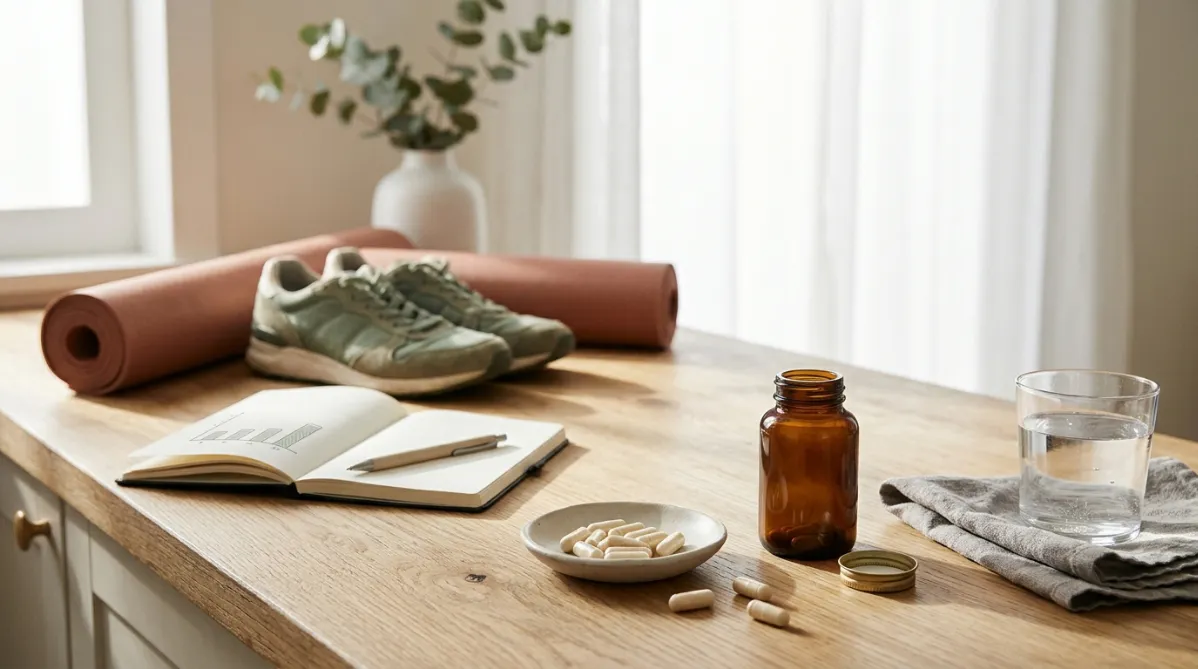
A wide landscape editorial photograph of a clean, sunlit kitchen counter in soft morning light, shot from a slightly elevated three-quarter angle with shallow depth of field. In the foreground, a small matte ceramic dish holds a handful of pale cream-colored supplement capsules, with a few spilled casually onto a pale oak surface. Beside them sits an unlabeled amber glass bottle with its cap off. A folded gray linen napkin and a glass of water with delicate condensation add a calm, everyday feel.

In the softly blurred midground, a pair of well-worn running shoes in muted sage green rests beside a rolled yoga mat in dusty terracotta. A small notebook lies open with a pencil resting across it, its pages showing faint hand-drawn bar charts that are nearly flat, with one or two slightly taller bars. The charts are suggestive rather than legible.

The background is a bright window with sheer white curtains, casting long, gentle shadows across the counter. A potted eucalyptus sprig in a simple white vase adds a touch of organic green.

The palette is restrained and modern: warm creams, soft sage, terracotta, muted oatmeal, and pale wood tones, with subtle highlights on the glass and ceramic. The mood is thoughtful, skeptical, and quietly informative, like a contemporary health and science magazine feature. Natural film-like grain, soft contrast, and generous negative space on the right third of the frame leave room for headline text. There are no people, no logos, no text, and no futuristic elements, only a minimalist, trendy, lifestyle-journal aesthetic.
fitness

2 g de carnosina al día durante 12 semanas: el ensayo con 299 participantes no mostró resultados

BY IRON MARCUS ·

Las cápsulas de carnosina se promocionan como potenciadoras de la resistencia muscular. Un ensayo aleatorizado, controlado con placebo y con 299 participantes puso a prueba esa afirmación, y la mayoría de los resultados resultaron nulos. Surgieron un par de señales en subgrupos, que deben analizarse sin exagerar sus implicaciones. El estudio, publicado en una revista especializada, no encontró diferencias significativas en los resultados globales.

A sunlit outdoor running track in late afternoon, shot from a low angle with shallow depth of field. In the foreground, a matte black bottle with a minimal off-white label sits on the edge of a warm terracotta-colored track lane, beside a folded white towel and a small glass of amber liquid catching golden light. Condensation beads on the bottle. A faint heat shimmer rises from the track surface and softens the background.

In the midground, slightly out of focus, a lean athlete in a sage-green tank top and charcoal shorts runs on a treadmill-like stretch of track, a thin sheen of sweat on their shoulders, their expression focused and calm. Their motion is gently blurred, suggesting endurance and rhythm. Long soft shadows stretch across the lane lines.

The background fades into hazy peach, apricot, and pale yellow tones, with the suggestion of tall trees and a distant stadium wall. Warm sun flare enters from the upper right, creating a subtle glow and a few soft light streaks across the frame.

Subtle editorial touches: a small notebook with a pencil and a stopwatch rest beside the bottle, hinting at data and timing without any text legible. The color palette is warm and muted, with terracotta, cream, sage, and charcoal accents, and a fine film-like grain. The composition leaves open negative space on the left third for a headline overlay. The overall mood is clean, modern, and health-journal inspired, natural and aspirational, with a calm scientific curiosity rather than hype.
nutrition

Bebidas de cetona en el calor: ¿Más resistencia y mejor memoria?

BY DR. GYMBRO ·

Se dice que las bebidas de cetona son para los biohackers que buscan quemar grasa, pero un nuevo ensayo bajo estrés térmico sugiere que también pueden ayudar a terminar más fuerte. En 17 hombres entrenados, el monoéster de cetona más cafeína extendió el tiempo hasta el agotamiento a 8,9 minutos frente a 7,0 con carbohidratos más cafeína, después de 90 minutos de ejercicio en cinta a 34 °C. La precisión de la memoria de trabajo en la tarea de 1‑back también mejoró, mientras que la frecuencia cardíaca y la temperatura central no mostraron diferencias relevantes. Sin embargo, en la tarea de 2‑back, el tiempo de reacción y la prueba de golpear‑evitar no hubo beneficio, y el estudio es pequeño, solo con hombres y de una sola sesión.

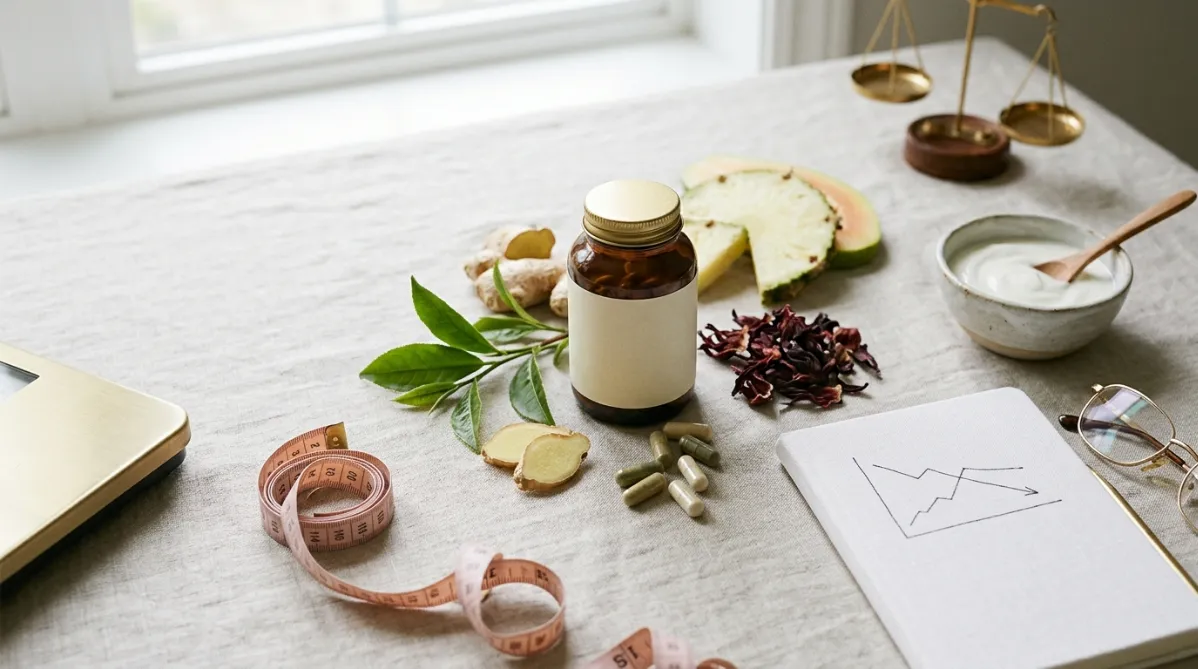
A clean, modern editorial flat-lay on a pale oat-colored linen surface, shot from slightly above in soft diffused natural window light. At the center sits an amber glass supplement bottle with a minimalist cream label, unbranded, with a few capsules spilling onto the fabric in soft greens and ivory tones. Around it are fresh botanical elements: a sprig of green tea leaves, sliced ginger root, a small bundle of dried hibiscus petals, and a few pale green pineapple and papaya slices hinting at digestive enzymes. A small ceramic bowl of creamy plain yogurt with a wooden spoon suggests probiotics. To the left, a flexible tailor's measuring tape in soft blush pink loosely curls across the linen, with a slim brushed-brass scale partly visible at the frame edge. On the right, a minimalist white notebook lies open with a hand-drawn simple line chart showing two diverging lines, one trending downward and one flat, with no readable text. A pair of reading glasses with thin gold frames rests beside it, and a tiny pair of balanced brass scales sits in the background, subtly suggesting weighing evidence and caution.

The palette is muted sage green, warm cream, soft terracotta, and touches of blush and brass. Shadows are gentle and long, the depth of field is shallow with a creamy blurred background, and the negative space on the left third of the frame leaves room for a headline overlay. The overall feel is a contemporary health and science journal, calm, trustworthy, and slightly skeptical, in the style of a premium wellness magazine photographed with a 50mm lens, with crisp texture on linen, glass, and botanicals.
nutrition

SlimSEB: Mezcla probiótica‑enzimática supera al placebo, pero hay una trampa

BY DR. GYMBRO ·

Una combinación de probióticos, enzimas y extractos botánicos llamada SlimSEB superó al placebo en un ensayo aleatorizado de 12 semanas con 87 adultos con riesgo de diabetes tipo 2. Los participantes obesos perdieron 4,5 kg más que el grupo placebo y redujeron su cintura 11 cm, mientras que los niveles de colesterol y la resistencia a la insulina también mejoraron. Sin embargo, el producto fue suministrado por su fabricante, el estudio fue pequeño y de corta duración, y la fórmula multicomponente impide atribuir el efecto a un solo ingrediente. A continuación se analizan los datos, se comparan con los fármacos GLP‑1 y se indica a quién conviene ser cauteloso.

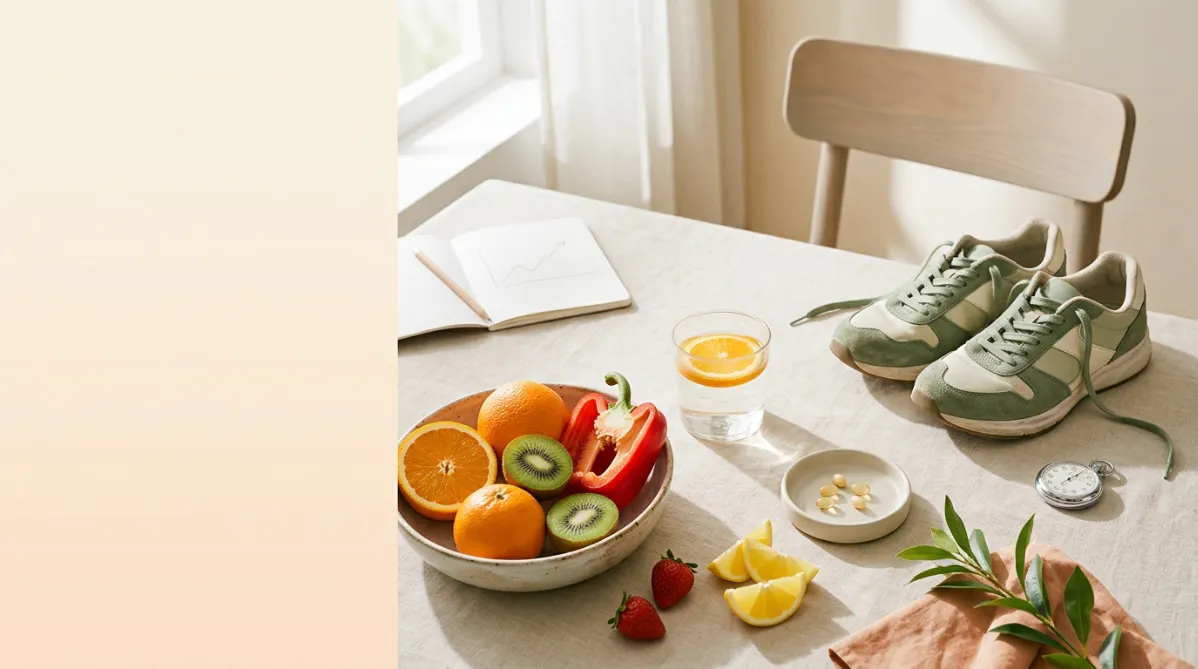
A bright, airy editorial still life photographed from slightly above on a pale oat-colored linen surface, in soft natural window light with gentle long shadows. In the foreground, a rustic ceramic bowl holds halved and whole oranges, glossy red bell pepper slices, and a few kiwi halves with emerald flesh. Beside it sit loose strawberries and a small pile of bright yellow lemon wedges. Their colors pop against the muted neutral palette. A single clear glass of water with a slice of orange rests nearby, catching the light.

On the right side of the frame, a pair of well-worn but clean walking sneakers in sage green and cream sits casually on the surface, with one lace loosely trailing. Behind them, a simple wooden chair with a light ash finish is partly visible and slightly out of focus, a quiet nod to the sit-to-stand test. A small stainless-steel stopwatch lies next to the shoes, with a subtle reflective glint.

A minimalist ceramic dish holds a few small, round, pale-yellow vitamin capsules, kept understated. A sprig of green leaves and a folded cotton napkin in soft terracotta add a warm accent. A small open notebook with a pencil rests in the upper left, its page blank except for faint, abstract pencil lines suggesting a simple rising graph, with no legible text.

The composition leaves generous negative space on the left third for title overlay, with a soft cream-to-peach gradient background. The mood is fresh, healthy, and contemplative, like a modern wellness magazine or a trendy online journal. The color palette is warm citrus orange, sunny yellow, sage green, and soft cream, with gentle terracotta accents. The depth of field is shallow, with crisp focus on the fruit and shoes and a creamy blur in the background. The overall look is clean, natural, and editorial, with fine film-like grain, true-to-life color, and a calm, optimistic tone. Landscape 16:9 framing.
nutrition

Una vitamina económica vinculada a piernas más fuertes al envejecer

BY DR. GYMBRO ·

Un amplio estudio británico con más de 5 000 adultos de 48 a 92 años mostró que las personas con niveles óptimos de vitamina C en sangre (≥ 50 µmol/L) caminaban más rápido y se levantaban de una silla con mayor rapidez que quienes tenían niveles bajos. En las mujeres, además, se observó una mayor fuerza de agarre ajustada por altura; en los hombres no se encontró relación alguna. La vitamina C procedente de los alimentos se asoció solo en mujeres y sin un patrón claro. Al ser un estudio transversal, no se puede afirmar que la vitamina C cause una mejor función. A continuación se explica qué indican los datos, qué no, y por qué podría valer la pena conocer tu nivel sanguíneo.

This page is available in