Dr. Gymbro
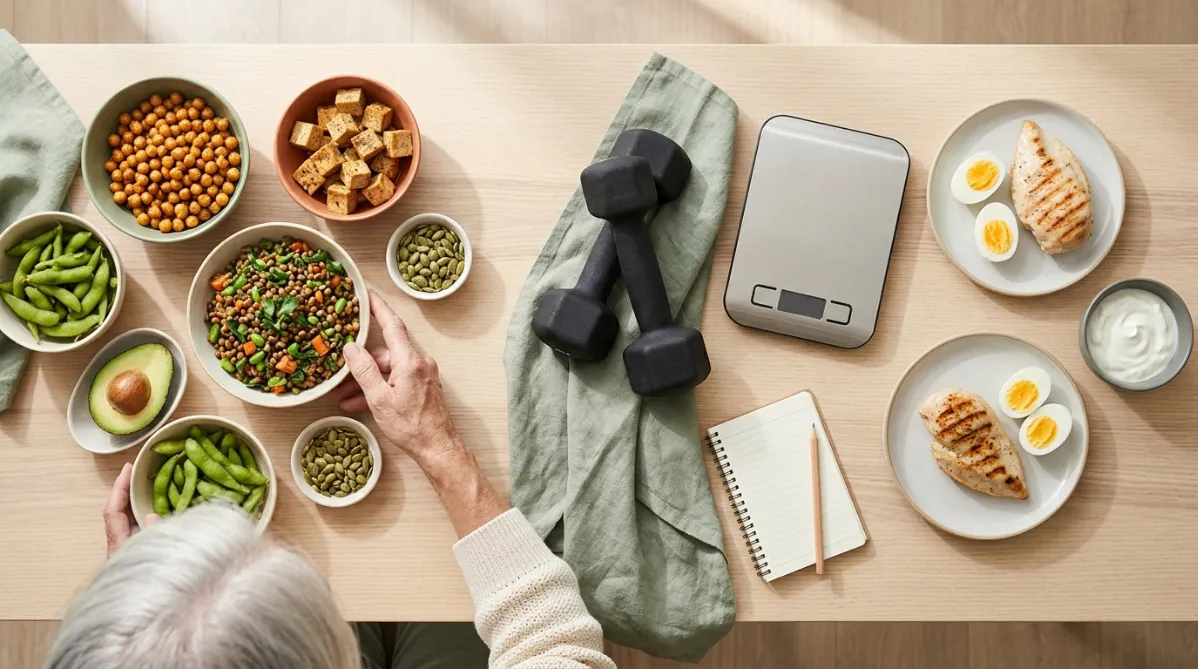
A bright, airy overhead flat-lay on a pale oak table in soft morning light. On the left, a vibrant plant-based protein spread in ceramic bowls: roasted chickpeas, marinated tofu cubes, lentil salad with herbs, edamame, sliced avocado, and a small dish of pumpkin seeds. On the right, a few contrasting items: a simple plate with grilled chicken breast, a hard-boiled egg halved, and a small bowl of Greek yogurt. Between the two sides, a pair of compact, matte-black hexagonal dumbbells rests on a folded sage-green linen towel, with a simple stainless-steel kitchen scale and a small open notebook with a pencil, suggesting tracking protein intake. A pair of weathered, elegant older hands, silver-haired and mid-60s, reaches in gently to pick up a bowl, with a casual cream knit sleeve visible. Natural window light casts soft diagonal shadows across the table. The palette is warm and muted: sage green, cream, terracotta, soft charcoal, with pops of fresh green and orange from the vegetables. Shallow depth of field, crisp focus on the food and dumbbells, gentle blur at the edges. The composition follows a clean editorial style with generous negative space at the top and right for headline text. The overall feel is modern wellness-magazine photography: calm, clean, and inviting, with tactile textures of linen, ceramic, wood, and fresh produce. Landscape 16:9 framing.
Nutrition

¿Te vuelves vegetariano después de los 55? Lo que reveló un ensayo de entrenamiento con 108 personas

Dr. Gymbro · · 4 min read

¿Se puede ganar músculo con una dieta vegetariana después de los 55? Sí, según un reciente ensayo aleatorio. Sin embargo, los participantes vegetarianos consumieron menos proteína y ganaron menos masa muscular, y los investigadores no lograron demostrar que ambas dietas fueran equivalentes.

El estudio es el ensayo IMPACT, publicado en The American Journal of Clinical Nutrition por van Oppenraaij, Weijs, Verlaan y colegas. Aquí tienes lo que encontró, lo que no encontró y lo que significa para tu plato.

El diseño del estudio: qué se evaluó realmente

IMPACT fue un ensayo aleatorio de no inferioridad. Preguntó si una dieta lacto‑ovo vegetariana (alimentos vegetales más lácteos y huevos, sin carne ni pescado) podía igualar a una dieta omnívora en ingesta de proteína y ganancia muscular durante entrenamiento de resistencia.

  • Participantes: 108 adultos de 55 años o más (edad mediana 66; 58 % mujeres; IMC medio 25,7 kg/m²)
  • Entrenamiento: 12 semanas, tres sesiones de resistencia por semana, en ambos grupos
  • Dieta: Consejería dietética para una dieta lacto‑ovo vegetariana o una omnívora. Los participantes eligieron sus propios alimentos, apuntando a al menos 1,2 g/kg/día de proteína.
  • Objetivos de fuentes de proteína: al menos 60 % de proteína de origen vegetal en el grupo vegetariano y al menos 60 % de proteína de origen animal en el grupo omnívoro
  • Resultados primarios: ingesta de proteína (registros alimentarios de 3 días) y masa muscular apendicular (masa magra de brazos y piernas, medida por DXA)
  • Resultados secundarios: fuerza en prensa de piernas, rendimiento en silla y fuerza de agarre manual

Los autores declararon no tener conflictos de interés y el resumen no menciona financiación. El ensayo está registrado como NCT06172725.

Los números principales

Ambos grupos alcanzaron sus metas, pero no con la misma magnitud.

Vegetariano Omnívoro
Ingesta de proteína 1,24 g/kg/día 1,58 g/kg/día
Fuente de proteína 76 % vegetal 67 % animal
Cambio en masa muscular apendicular +0,38 kg +0,66 kg

Ambas ganancias musculares fueron estadísticamente significativas (vegetariano P = 0,004; omnívoro P < 0,001). La fuerza en prensa de piernas y el rendimiento en silla mejoraron en ambos grupos, sin diferencias entre ellos.

El problema: no se demostró la no inferioridad

Los investigadores establecieron de antemano un margen: el grupo vegetariano podría consumir hasta 0,12 g/kg/día menos proteína, o ganar hasta 0,25 kg menos músculo, y seguir considerándose no inferior. Ninguno de los dos criterios se cumplió.

La brecha de proteína fue de –0,33 g/kg/día (IC 95 % –0,49 a –0,17), claramente fuera del margen. La brecha de músculo fue de –0,33 kg (IC 95 % –0,69 a 0,03). Ese intervalo incluye el cero, por lo que el estudio no puede afirmar que haya una diferencia real en la ganancia muscular. Además, supera el margen de –0,25 kg, así que tampoco puede decirse que las dietas sean equivalentes. En conclusión, el resultado muscular es inconcluso, no que los vegetarianos pierdan masa.

Debido a que la ingesta de proteína también difirió, el ensayo no puede determinar si la cantidad de proteína, el tipo de proteína u otro factor explican la diferencia muscular. No se diseñó para separar esos factores.

Consejos prácticos para levantadores que prefieren una alimentación basada en plantas

Cantidad. El piso del ensayo fue al menos 1,2 g/kg/día. El grupo vegetariano promedió 1,24 g/kg/día, mientras que los omnívoros promediaron 1,58 g/kg/día. Como cálculo simple, una persona de 80 kg necesita unos 99 g versus 126 g de proteína al día. Si decides ser vegetariano, considera 1,2 g/kg como mínimo, no como una meta de conformidad. Apuntar por encima de ese nivel es una forma razonable de cerrar la brecha, aunque el ensayo no evaluó ingestas vegetarianas más altas.

Elección de alimentos. Los participantes seleccionaron sus alimentos bajo consejería. El resumen no enumera qué alimentos consumieron, así que no hay un menú específico respaldado por el artículo. Se permitieron lácteos y huevos en el brazo vegetariano, por lo que estos resultados no se aplican a veganos.

Distribución. El resumen no informa ninguna estrategia de timing o distribución de la proteína, así que no se pueden extraer recomendaciones al respecto.

Para quién es adecuado. Adultos mayores que quieren reducir el consumo de carne por razones de salud o sostenibilidad y están dispuestos a planificar la proteína deliberadamente. Ambos grupos mejoraron masa muscular, fuerza y función con entrenamiento de resistencia.

Para quién hay que tener cautela. Cualquier persona con poco apetito, baja ingesta de proteína basal o que busque maximizar la ganancia muscular debería ser cuidadosa. Las dietas vegetarianas en este ensayo produjeron menor ingesta de proteína y ganancias musculares numéricamente menores. Personas con enfermedad renal u otras condiciones médicas deben consultar a un profesional antes de cambiar la ingesta de proteína.

Limitaciones a tener en cuenta

  • Duración corta: 12 semanas dice poco sobre la retención muscular a largo plazo o efectos sobre la salud.
  • Ingesta autorreportada: Los registros de 3 días son útiles pero imperfectos.
  • Dietas auto‑seleccionadas: Refleja comportamiento real, pero implica que la ingesta de proteína varió según la elección y no se controló.
  • Medida sustituta: La masa magra apendicular por DXA es un proxy del músculo, no una medida directa del tejido muscular.
  • Población: Mayormente adultos sanos, que viven en la comunidad, con IMC medio de 25,7. Los hallazgos pueden no aplicar a adultos mayores frágiles o bajo peso.
  • Detalle no incluido en el resumen: Los resultados de fuerza de agarre no se reportan allí.

Conclusión

El entrenamiento de resistencia funcionó en ambas dietas. Los adultos mayores bajo una dieta lacto‑ovo vegetariana con consejería ganaron músculo y se hicieron más fuertes. Pero consumieron menos proteína y ganaron menos masa muscular apendicular, y no se estableció la no inferioridad. La lección práctica no es evitar la alimentación vegetariana, sino ser deliberado con la proteína: alcanzar al menos 1,2 g/kg/día y no asumir que un plato basado en plantas lo logrará por sí solo.
Original study

Read the original research on pubmed.ncbi.nlm.nih.gov →

This article summarizes published research for general information. It is not medical advice.

DG

Written by

Dr. Gymbro

Dr. Gymbro writes for Dr. Gymbro: science-backed fitness, nutrition & performance.

Related Articles

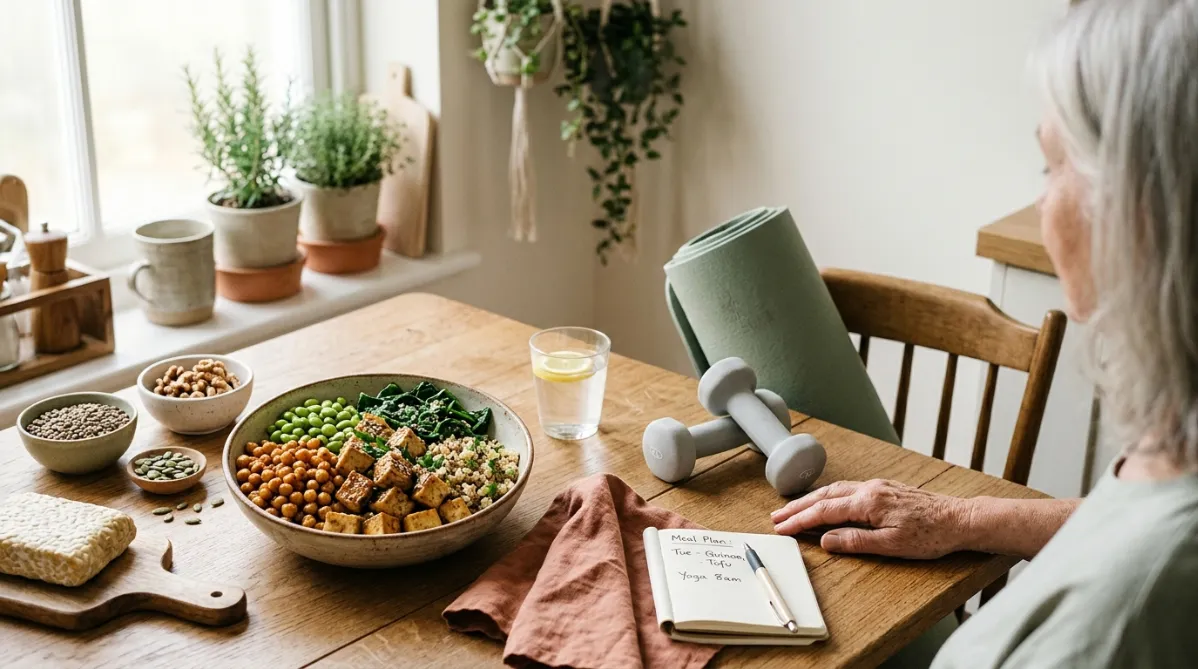
A landscape editorial photograph of a sunlit kitchen table, shot from a slightly elevated three-quarter angle. On the left, a rustic ceramic bowl holds a warm plant-based protein meal: roasted chickpeas, marinated tofu cubes, edamame, quinoa, and wilted greens, topped with toasted sesame seeds. Around it are small dishes of lentils, walnuts, pumpkin seeds, and a block of tempeh on a wooden board. On the right, a pair of weathered hands belonging to an older adult with silver hair, partially visible and softly out of focus, rests beside a pair of light dumbbells and a rolled sage-green yoga mat leaning against a chair. A linen napkin, a glass of water with a lemon slice, and a small handwritten notebook with a pen suggest careful planning. Soft morning light streams through a large window on the left and casts gentle long shadows across the pale oak tabletop. The color palette is muted and earthy: warm cream, sage green, terracotta, soft mustard, and natural wood tones. The background has shallow depth of field, with blurred shelves of herbs in pots and a few hanging plants. The mood is calm, hopeful, and health-focused, in the style of a modern lifestyle magazine or science journal feature, with clean composition, generous negative space in the upper right for headline text, and a subtle film-like grain. No text, no logos, no futuristic elements.
nutrition

¿Veganismo a los 65 años? La masa magra cayó 1,15 kg en 12 semanas

BY DR. GYMBRO ·

Un ensayo aleatorizado de 12 semanas con 72 adultos de 65 años o más mostró que pasar a una dieta vegana sin planificar la proteína les costó 1,15 kg de masa magra. El grupo omnívoro se mantuvo estable. Añadir entrenamiento de resistencia redujo la pérdida a 0,62 kg, lo que ayudó bastante pero no la eliminó. El culpable real fue una caída de la ingesta proteica de unos 20 a 28 g/día, no las plantas en sí. A continuación, se resumen los datos y se dan recomendaciones para proteger el músculo con una dieta basada en plantas.

A landscape editorial photograph of a rustic kitchen table in soft morning window light. On a weathered light oak surface, a loose arrangement of fresh red onions, a few halved to show their purple-white rings, and crisp red and green apples, one sliced open to reveal pale flesh. A small ceramic bowl holds a pinch of golden-yellow quercetin powder, with a wooden spoon resting beside it. In the softly blurred background, an older woman in a cream linen shirt lifts a modest dumbbell near a sunlit window, her posture strong and relaxed. Her silhouette is out of focus, which keeps the produce as the main subject.

The palette is warm and natural: deep magenta onion skins, glossy apple reds, buttery yellow accents, and creamy neutrals. A gentle shallow depth of field gives creamy bokeh in the background. The light is diffused and golden, with delicate shadows and a few dried onion skin flakes scattered across the wood for texture. A folded linen napkin and a small sprig of thyme add a curated, modern lifestyle-magazine feel.

The composition follows the rule of thirds, with the produce at lower left and negative space on the right, where the blurred lifter and window glow provide balance. The overall look is clean, calm, and contemporary, like a premium health and wellness journal cover: natural, tactile, and optimistic, with fine film-like grain and true-to-life color.
nutrition

La quercetina triplicó las ganancias de fuerza en levantadores mayores, sin más músculo

BY DR. GYMBRO ·

Una flavonoide barato presente en cebolla y manzana podría haber aumentado las ganancias de fuerza en adultos mayores mucho más allá de lo que el entrenamiento solo logra. En un ensayo aleatorizado, doble ciego, los participantes que tomaron 200 mg/día de glicósidos de quercetina incrementaron su fuerza de rodilla alrededor de un 15 % en seis semanas, frente a un 5 % con placebo. Curiosamente, la masa muscular no cambió en ninguno de los grupos. La ventaja parece provenir del sistema nervioso, con unidades motoras de umbral alto disparando más rápido. Aquí lo que mostró el estudio, cómo aplicarlo y por qué la muestra pequeña exige cautela.

A bright, modern editorial still life on a clean, softly lit kitchen countertop of pale ash wood. In the foreground, a tall glass of creamy off-white protein shake sits beside a small ceramic spoon holding a mound of fine white powder. Next to it is a minimalist matte-white scoop and a small glass dish with a few pinches of powder. Scattered nearby are a few natural elements: a halved banana, a handful of raw almonds, and a sprig of fresh green herbs for a splash of color.

In the soft-focus midground, an older woman in her late 60s with silver-gray hair, wearing a sage-green linen shirt, smiles gently as she lifts a glass. Her face is slightly blurred and warm, bathed in natural window light. Beside her, slightly further back and out of focus, an older man in a navy sweater leans on the counter, a neutral presence that subtly contrasts with her. A wide window behind them floods the scene with soft morning light, with sheer curtains and a few leafy houseplants.

The color palette is muted and fresh: warm cream, soft sage, pale peach, and light oak, with a touch of terracotta from a small ceramic bowl. Shallow depth of field, creamy bokeh, subtle film-like grain, and gentle shadows give it a contemporary lifestyle-magazine feel. Composition follows the rule of thirds, with the shake and powder on the left third and open negative space on the right for headline overlay. The mood is calm, optimistic, and health-focused, polished like a trendy wellness journal cover, with no text, no logos, and no futuristic or sci-fi elements.
nutrition

3 g de HMB + 40 g de whey: El impulso inesperado benefició a mujeres, no a hombres

BY DR. GYMBRO ·

Todos suponían que un suplemento para ganar músculo favorecería más a los hombres mayores. Un estudio con trazadores demostró lo contrario: añadir 3 g de calcio‑HMB a un batido de 40 g de whey incrementó la síntesis de proteína muscular en mujeres mayores, pero no en hombres. El HMB también redujo la degradación muscular en la fase tardía de la alimentación en todo el grupo. Sin embargo, se trató de un experimento agudo de 3 h con solo 24 adultos y coautores de Abbott Nutrition, por lo que no constituye evidencia de ganancias musculares a largo plazo. A continuación, la dosis, el momento de toma, quién podría beneficiarse y quién debería evitarlo.

A soft-lit editorial still life on a pale warm-gray concrete surface, shot from a slightly elevated three-quarter angle in a wide landscape frame. On the left, a single amber glass supplement bottle with a minimalist cream label, its lid set beside it. A few golden-yellow softgel capsules are scattered in a loose arc across the surface, catching the light like small drops of honey. At the center-right, a matte sage-green yoga mat is partly unrolled, with a polished chrome dumbbell resting on it. Next to the dumbbell sits a worn canvas hand gripper, a nod to the handgrip finding. Behind them, a wooden gym bench is slightly out of focus, and a folded linen towel sits on top of it.

Warm morning sunlight enters from the upper left through a large window. It casts long, gentle diagonal shadows and a faint golden glow across the scene, a quiet reference to vitamin D and sunshine. A sprig of dried eucalyptus or a small potted succulent adds an organic touch near the bottom right. A small, neatly stacked pile of two or three matte pastel-toned weight plates in butter yellow and dusty terracotta adds color blocking.

The palette is muted and modern: butter yellow, sage, warm sand, soft terracotta, and off-white, with a single strong amber accent from the bottle. The depth of field is shallow, with crisp focus on the capsules and bottle and a creamy blur falling off toward the background. The negative space on the upper right is clean and uncluttered, which leaves room for a headline overlay. The overall feel is calm, minimalist, and contemporary, like a premium health and wellness magazine or a trendy online journal. The grain is subtle, the contrast gentle, and the textures tactile: brushed metal, frosted glass, linen, and concrete. There are no people, no text, and no futuristic elements.
science research

La vitamina D no te hará perder grasa ni ganar músculo, salvo una excepción

BY DR. GYMBRO ·

Un meta‑análisis de dosis‑respuesta que incluyó 28 ensayos aleatorios y 1.675 adultos evaluó si la suplementación con vitamina D junto al ejercicio superaba al entrenamiento solo. Los niveles sanguíneos de vitamina D aumentaron alrededor de 34 nmol/L, pero el peso corporal, el IMC, la masa grasa, el porcentaje de grasa corporal y la masa libre de grasa no mejoraron más que con el ejercicio únicamente. La fuerza en la prensa de piernas tampoco mostró cambios. La única excepción fueron modestos incrementos en la extensión de rodilla (+4,36 kg) y mejoras en la fuerza de agarre en adultos mayores y con dosis más altas. Aquí quién podría beneficiarse y qué hacer antes de comprar otro frasco.

This page is available in