Dr. Gymbro
←

#alpha-lactalbumin

1 article
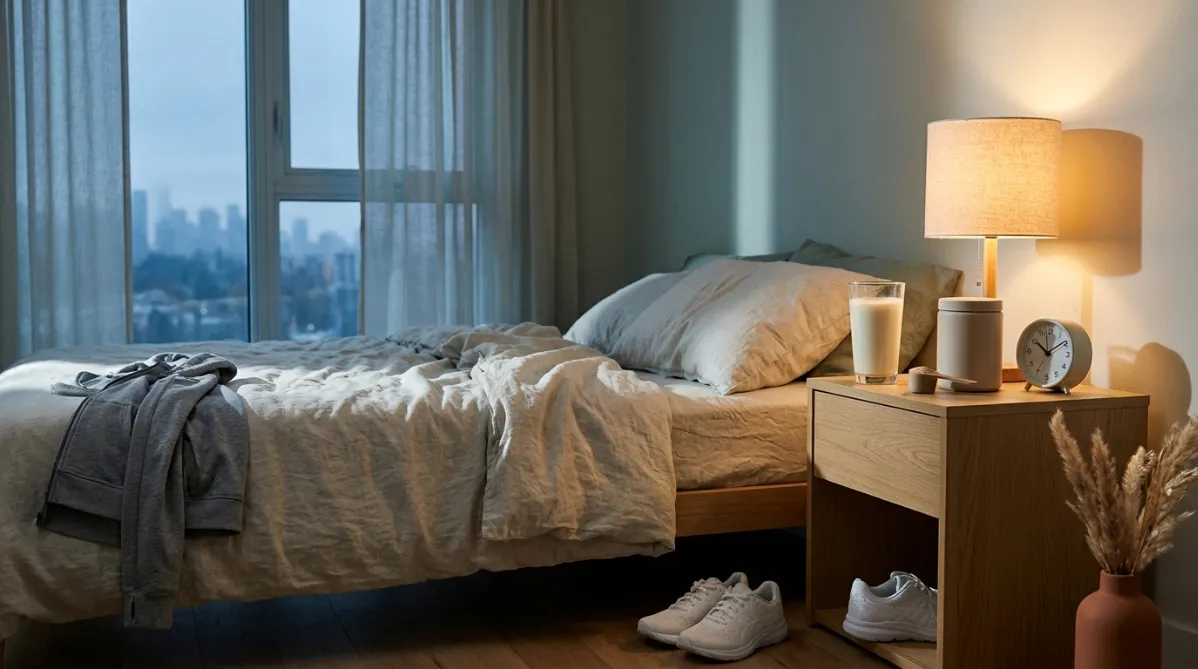
A wide, softly lit bedroom scene at dusk, styled like a modern editorial photograph. In the foreground, a rumpled bed with textured oatmeal linen sheets and a single dented pillow sits beside a light oak nightstand. On the nightstand is a tall glass of creamy, milky white protein shake, a small wooden scoop and a matte ceramic tub with no readable label, beside a minimalist analog alarm clock. The clock's hands show a late hour, and it casts a faint shadow on the wall. A pair of clean white running shoes rests on the floor by the bed. A folded gray athletic hoodie lies at the foot of the bed, suggesting an athlete's lifestyle.

Warm amber light from a bedside lamp mixes with cool blue-gray twilight from a tall window with sheer curtains. The glow lands on the glass and gives the milky surface a soft sheen. Through the window, a muted city skyline fades into evening haze.

The palette is calm and sophisticated: warm cream, soft sage green, dusty blue, and a touch of terracotta from a small ceramic vase holding dried pampas grass. The composition follows the rule of thirds, with the glass and clock in the right third and open negative space on the left for headline text. Shallow depth of field keeps the glass and clock crisp while the background blurs gently.

The mood is quiet, slightly restless, and thoughtful, hinting at a night that does not go as planned. A subtle detail, a half-drawn curtain letting in a thin stripe of light across the rumpled sheets, suggests interrupted sleep. The look is clean, contemporary, and magazine-quality, with fine film grain, natural tones, and soft shadows, like a lifestyle wellness journal cover. No people, no text, no futuristic elements.
recovery

La « protéine du sommeil » qui fait davantage se réveiller les mauvais dormeurs

BY DR. GYMBRO ·

L'α‑lactalbumine est présentée comme la « protéine du sommeil » et des études aiguës laissaient penser qu’elle pouvait aider les athlètes à mieux dormir et à performer. Un essai randomisé croisé a testé ce principe chez 24 athlètes qui rencontrent réellement des troubles du sommeil. Après une semaine de prise de 40 g deux heures avant le coucher, aucun bénéfice n’a été observé : les réveils nocturnes ont légèrement augmenté (11,01 vs 10,25) et la hauteur de saut a baissé (27,68 vs 28,58 cm). Le seul point positif était une réduction de l’humeur négative le soir.

This page is available in