Dr. Gymbro
←

#anabolic resistance

1 article
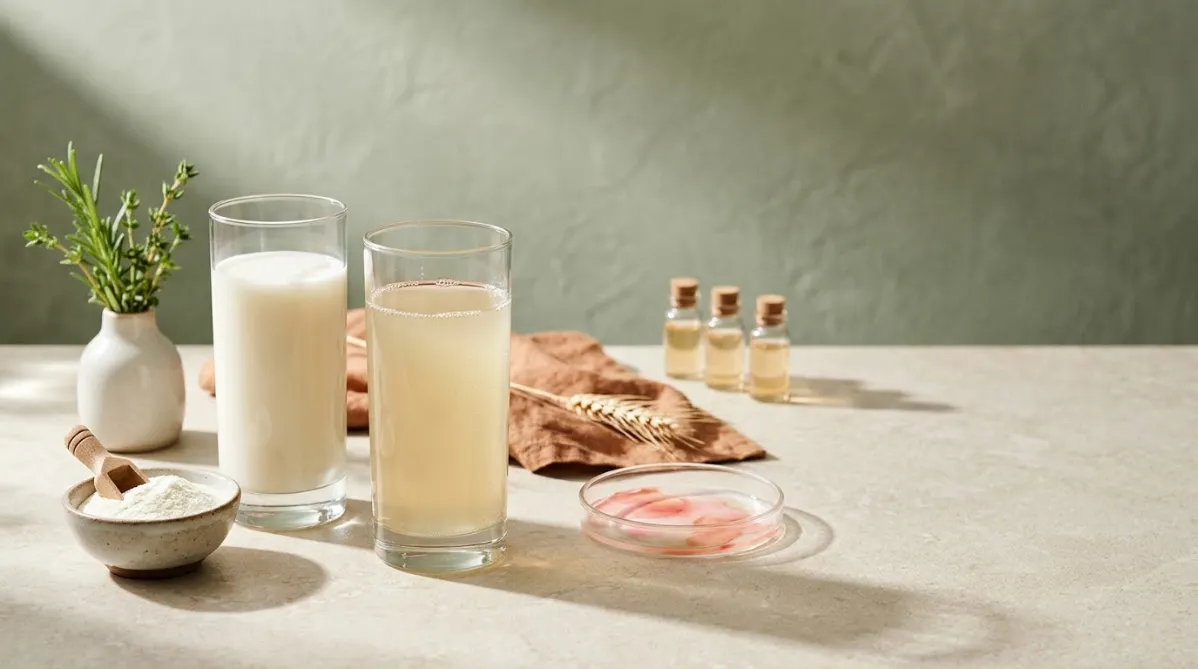
A softly lit editorial still life on a pale oat-colored stone surface, shot from a slightly elevated three-quarter angle. In the foreground, two matching tall glasses of milky, creamy liquid stand side by side. The left glass holds a smooth, opaque white whey drink. The right holds a slightly more translucent, pale champagne-yellow fermented whey with fine, delicate bubbles clinging to the inside of the glass. Beside them sits a small ceramic bowl of white whey powder with a wooden scoop, and a few sprigs of fresh herbs in a minimalist ceramic vase add a touch of green.

Behind the glasses, slightly out of focus, a row of three small clear glass vials with cork stoppers contains pale amber serum. A delicate glass petri dish in the mid-ground holds a soft, abstract blush-pink and coral watercolor-like swirl suggesting cultured cells, with no clinical or futuristic detailing. A folded linen napkin in warm terracotta and a single sprig of dried wheat grass add organic texture.

The background is a muted sage-green plaster wall with a gentle gradient of natural window light falling from the left, casting long, soft shadows and subtle caustic reflections from the glasses across the surface. The palette is warm and earthy: cream, oat, sage, soft terracotta, and pale amber, with small accents of blush pink.

The composition leaves generous negative space on the right third of the frame for headline overlay. Shallow depth of field, fine film grain, and a calm, contemporary wellness-journal aesthetic, like a high-end nutrition or food-science magazine spread. Crisp focus on the glasses, with a creamy bokeh falloff in the background. No text, no labels, no people, no laboratory machinery, no futuristic elements.
science research

Le sérum issu de lactosérum fermenté favorise davantage la croissance des cellules musculaires que le lactosérum ordinaire

BY DR. GYMBRO ·

Le sérum prélevé après que des sujets aient consommé du lactosérum fermenté a favorisé davantage la croissance des cellules musculaires que le sérum prélevé après un lactosérum classique, même si les cellules étudiées étaient de souris en culture. Dans cette étude japonaise en croisé, le sérum de jeunes hommes et de seniors a été appliqué à des myotubes C2C12, augmentant le diamètre, le signal S6K1 (mTOR) et les marqueurs du métabolisme oxydatif. La synthèse protéique musculaire était plus élevée avec le sérum provenant de donneurs âgés, ce qui pourrait intéresser ceux qui souffrent de résistance anabolique. Voici ce que ces résultats signifient réellement, pourquoi le lactosérum ordinaire reste la valeur sûre et ce qu’il faut surveiller à l’avenir.

This page is available in