Dr. Gymbro
←

#coffeeberry

1 article
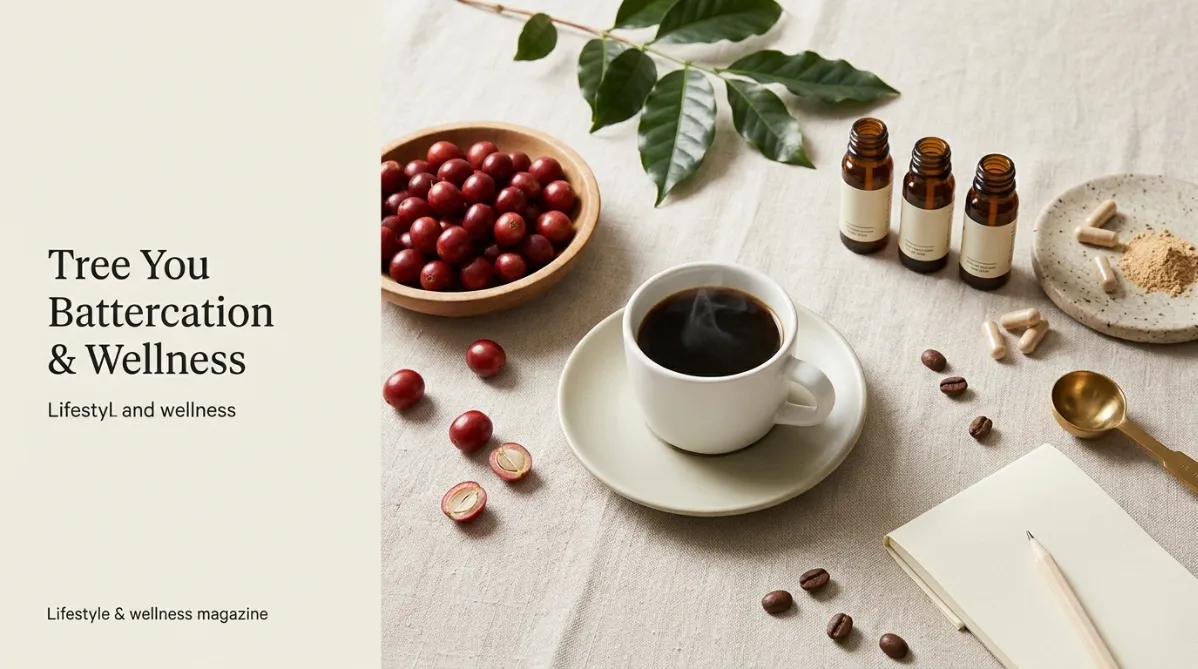
A bright, editorial flat-lay photograph shot from slightly above on a pale oat-colored linen surface in soft natural window light. At the center, a small white ceramic cup of black coffee sits on a matte saucer, with a delicate curl of steam. To its left, a shallow wooden bowl holds glossy red coffee cherries, the fruit of the coffee plant, with a few scattered on the linen and one sliced open to show the pale seed inside. To the right, three identical small amber glass vials with minimalist cream labels stand in a row, and a few loose beige capsules and a small pile of fine tan powder rest on a speckled stone dish beside them. A few roasted coffee beans are scattered casually across the composition. A thin sprig of green coffee leaves with waxy, dark foliage arcs in from the top edge. A brass measuring spoon and a folded cream notepad with a pencil sit near the lower right, hinting at a lab-style comparison without any clinical equipment. The palette is warm and restrained: terracotta red, cream, espresso brown, soft sage green, and touches of amber and brushed brass. Shadows are gentle and diffuse, with shallow depth of field that softens the background edges. The composition leaves generous negative space on the left third for title text, and the whole scene feels calm, modern, and curated, like a lifestyle and wellness magazine cover. Fine film-like grain, true-to-life color, and crisp textures in the linen weave, the glossy cherry skins, and the glass vials. No text, no logos, no people, wide 16:9 landscape framing.
science research

L'extrait de fruit de café échoue face à 75 mg de caféine dans un nouvel essai

BY DR. GYMBRO ·

L'extrait de fruit de café est présenté comme un stimulant plus intelligent et plus doux, mais un nouvel essai croisé en double‑aveugle l'a comparé à de la caféine pure et a révélé un écart surprenant. Chez 28 adultes, ni 100 mg ni 300 mg d'extrait de coffeeberry n'ont modifié la vigilance, l'énergie mentale, la fatigue mentale ou la performance cycliste. Une dose modeste de 75 mg de caféine a, quant à elle, amélioré la vigilance et l'énergie mentale pendant un court laps de temps. Il s'agit d'une étude aiguë sur des doses uniques, donc ce n'est pas la conclusion définitive. Voici ce que l'essai a trouvé, ce qu'il ne peut pas nous dire, et comment lire les étiquettes des compléments.

This page is available in