Dr. Gymbro
←

#cordyceps

1 article
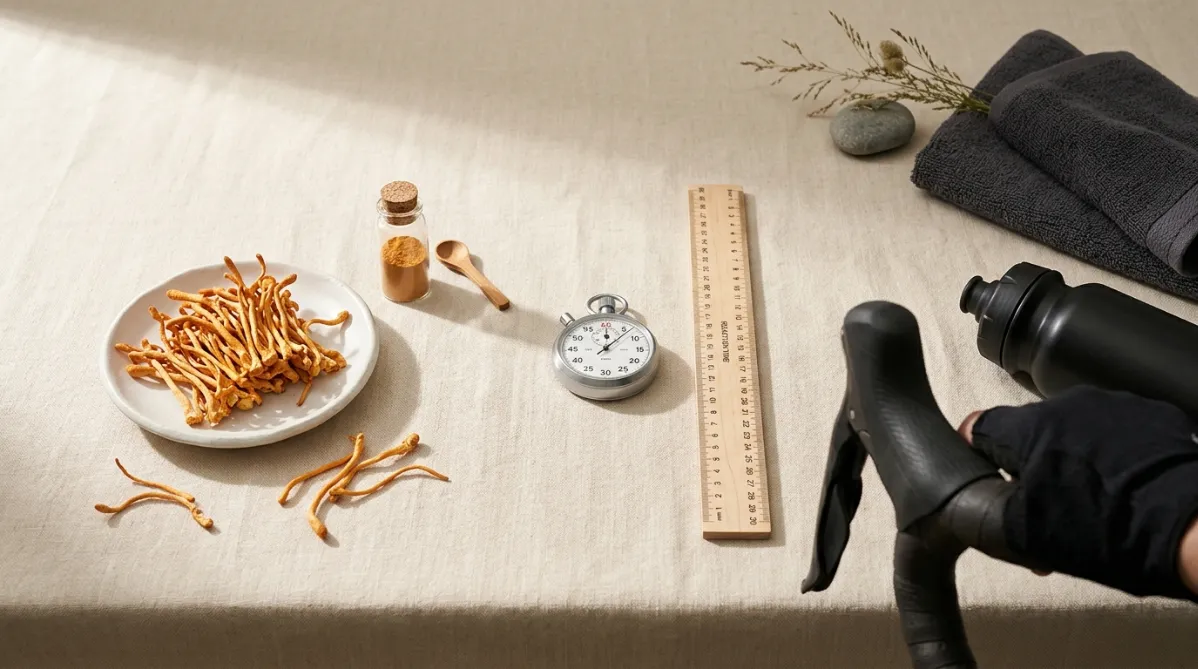
A softly lit editorial flat-lay on a pale oat-colored linen surface, shot from slightly above in a wide landscape frame. On the left, a small matte white ceramic dish holds a modest heap of golden-orange Cordyceps militaris, slender clustered fruiting bodies with a delicate, fibrous texture, a few strands scattered across the linen. Next to the dish sits a tiny clear glass vial with a pinch of fine amber powder, and a minimalist wooden spoon rests beside it. In the center of the frame, a sleek stainless steel stopwatch lies beside a simple analog reaction-timing ruler in light birch wood, its thin black measurement ticks sharply in focus. On the right, partially cropped, the handlebar and gloved hand of a road bicycle are visible. A matte black bottle and a folded gray cotton towel add a subtle athletic note. A sprig of dried grass and a single smooth river stone provide organic balance. Soft diffused morning window light enters from the upper left and casts long, gentle shadows. The palette is warm and restrained: cream, burnt orange, soft sage green, charcoal, and touches of brushed steel. The depth of field is shallow, with the mushrooms and stopwatch crisp and the background gently blurred into creamy neutral tones. The mood is calm, clean, and contemporary, like a high-end wellness and science journal cover, with generous negative space in the upper right for headline text. No people, no text, no logos, and no futuristic elements.
supplements

Le Cordyceps avant un test de cyclisme maximal accélère le temps de réaction : résultats d’une petite étude

BY DR. GYMBRO ·

Une dose unique d’1 g de *Cordyceps militaris* prise 30 minutes avant un test de cyclisme maximal a été associée à des temps de réaction plus rapides après l’effort chez de jeunes hommes. La prise a également augmenté la consommation d’oxygène au repos, sans modifier le VO₂max. Le résultat principal – une amélioration du temps de réaction – n’est pas soutenu par une interaction significative avec l’exercice. L’étude, très petite (12 participants), nécessite donc une interprétation prudente. Voici ce qui a réellement changé, ce qui n’a pas changé, et comment interpréter ces données sans exagération.

This page is available in