Dr. Gymbro
←

#endurance training

1 article
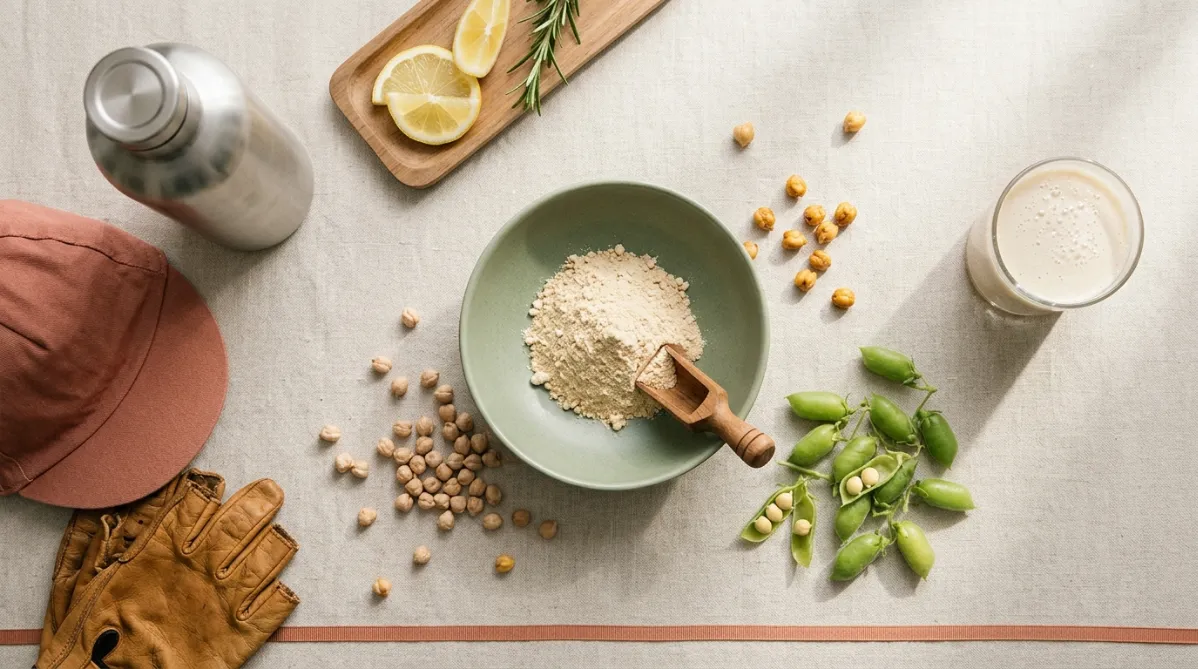
A wide, editorial-style flat lay photographed from above on a pale, warm oatmeal-colored linen surface, lit by soft natural window light with gentle long shadows. In the center, a matte ceramic bowl in muted sage green holds a small mound of fine, creamy beige chickpea protein powder, with a wooden scoop resting beside it. Scattered around the bowl are whole dried chickpeas, a few golden roasted chickpeas, and a handful of fresh green chickpea pods, some split open to show the pale round seeds. On the left side of the frame sits a sleek, minimalist stainless steel cycling bottle, slightly out of focus, with a folded cycling cap in dusty terracotta and a pair of well-worn leather cycling gloves. A slim wooden board holds sliced lemon and a sprig of rosemary, adding a fresh touch. On the right, a small glass of cloudy, cream-colored protein shake with condensation droplets catches the light. Between the objects there is generous negative space, so a headline could be overlaid. A thin, delicate line of terracotta ribbon crosses the lower edge of the frame. The palette is earthy and calm: cream, sage, terracotta, soft gold, and warm wood tones, with a subtle film-like grain. The look is contemporary and trendy, like a wellness and nutrition science magazine: clean, tactile, shallow depth of field, crisp focus on the powder and chickpeas, and soft, creamy falloff toward the edges. No text, no logos, no people, and no futuristic elements.
nutrition

La protéine de pois chiche réduit le CRP et le LDH chez les cyclistes en deux semaines

BY DR. GYMBRO ·

Deux semaines d’une petite dose post‑entraînement d’hydrolysat de protéine de pois chiche ont entraîné une diminution du CRP et du LDH chez des cyclistes compétitifs, comparativement à un placebo. L’essai en double‑aveugle a administré 12 g/jour à 24 coureurs déjà consommant plus de 2 g/kg de protéines quotidiennement. Cette évolution des biomarqueurs est d’autant plus intrigante, même si l’étude n’a mesuré aucun indicateur de performance, de récupération ou de courbature. Voici ce que sont les hydrolysats, à qui ils peuvent intéresser, et pourquoi il s’agit d’un signal prometteur plutôt que d’un outil de récupération avéré.

This page is available in