Dr. Gymbro
←

#fucoidan

1 article
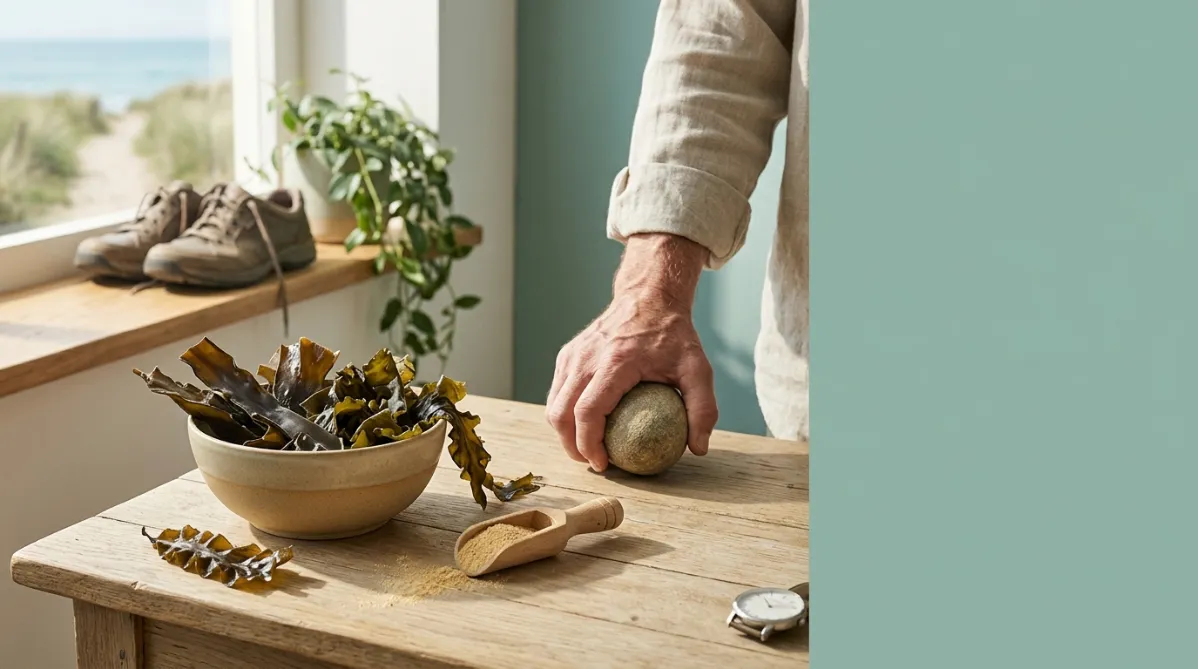
A wide, softly lit editorial photograph of a rustic light-oak table by a sunny window. On it, a handful of dried brown kelp and wakame seaweed fronds spill from a handmade matte ceramic bowl in warm sand tones, their glossy, ruffled edges catching the light. Beside the bowl sits a small wooden scoop holding fine golden-beige powder, with a little of it dusted across the table. In the middle ground, an older adult's weathered but strong hand grips a smooth, rounded river stone, with the knuckles and tendons subtly emphasized to suggest strength and vitality. Only the hand and part of a forearm in a soft oatmeal linen sleeve are visible.

In the background, slightly out of focus, a pair of worn leather walking shoes rests on a windowsill next to a trailing green plant. Beyond the window, a blurred coastal path winds through dune grass toward a pale blue sea, hinting at walking and an active daily life. A simple analog wristwatch lies on the table's edge, a quiet nod to the twelve-week timeline.

The palette is muted and natural: sage green, warm sand, soft ocean teal, and creamy off-white, with deep olive-brown accents from the seaweed. Morning light streams in from the left, casting long, gentle shadows and a faint golden glow. The depth of field is shallow, with crisp focus on the hand and seaweed and a creamy bokeh background. The composition follows the rule of thirds, with the hand and bowl on the left and generous negative space on the right for headline text. The mood is calm and hopeful, with a clean, contemporary wellness-magazine feel. The image is shot as if on a 50mm lens with subtle film grain and a natural, uncluttered, tactile look.
science research

Le fucoïdale d'algue marine augmente la force de préhension chez les plus de 60 ans en 12 semaines

BY DR. GYMBRO ·

Perdre de la force en vieillissant est l’un des aspects les plus courants et les moins abordés du vieillissement ; l’entraînement en résistance n’est pas accessible à tout le monde. Un essai randomisé sur 12 semaines a montré qu’un fucoïdale à faible poids moléculaire, dosé à 1 650 mg par jour, améliore nettement la force de préhension et la performance au test de marche de six minutes chez les plus de 60 ans. Étonnamment, la masse musculaire n’a pas changé et l’ajout de BCAA et de vitamine D n’a apporté aucun bénéfice supplémentaire. L’étude, petite et centrée sur un produit de marque unique, constitue donc une piste prometteuse plutôt qu’un verdict définitif.

This page is available in