Dr. Gymbro
←

#magtein

1 article
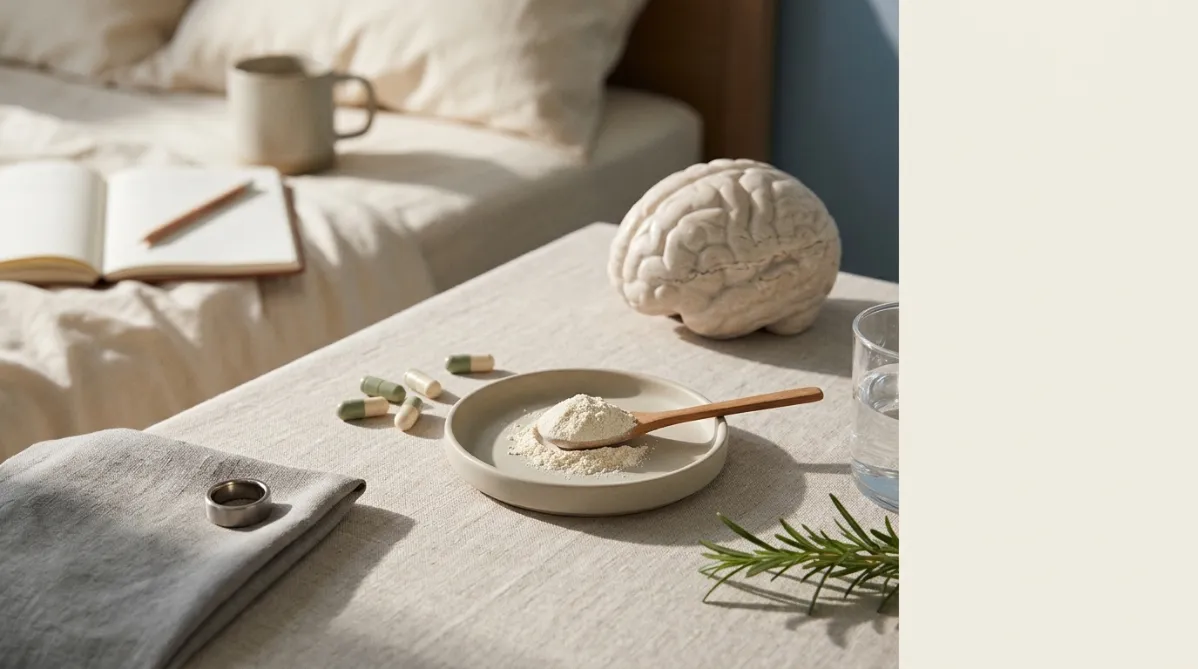
A wide, editorial still life photographed in soft natural window light on a pale oatmeal linen surface. At the center sits a small matte ceramic dish holding a modest scoop of fine off-white powder, with a few loose capsules in muted sage green and cream scattered beside it. A slim wooden scoop rests at the dish's edge. To the left, a minimalist smart ring in brushed titanium sits on a folded stone-gray cloth, catching a thin highlight. To the right, a glass of water with soft refraction and a sprig of fresh rosemary add a touch of organic color.

In the background, a softly blurred bedside scene: a rumpled cream bedsheet, a ceramic mug, and an open notebook with a pencil, suggesting sleep tracking and cognitive testing without any readable text. A single sculptural brain-shaped form carved from pale travertine stone sits slightly behind the dish, cool and understated, with subtle veining that echoes the linen texture. Long, gentle shadows stretch across the table from a morning sun source on the upper left.

The palette is calm and modern: warm neutrals, sage green, soft sand, and muted terracotta accents, with a hint of dusty blue in the shadows. Shallow depth of field, crisp focus on the powder and ring, creamy bokeh in the background. Generous negative space on the right third for headline overlay. The mood is quiet, thoughtful, and trustworthy, like a contemporary health and science journal's cover photograph, clean, tactile, and airy, with fine film-like grain and balanced contrast.
science research

Magnésium L‑thrénate : 6 semaines, un cerveau 7,5 ans plus jeune ?

BY DR. GYMBRO ·

Six semaines de magnésium L‑thrénonate (Magtein) ont été associées à une amélioration de la cognition globale, de la mémoire de travail et épisodique, ainsi qu’à un temps de réaction plus rapide, avec une réduction estimée de 7,5 ans de « âge cognitif cérébral » dans un essai randomisé de 100 participants. Un Oura Ring a également détecté une baisse de la fréquence cardiaque nocturne et une hausse de la HRV, alors que le sommeil mesuré n’a pas changé. L’étude a utilisé 2 g/jour du composé, soit environ 144 mg de magnésium élémentaire, chez des adultes de 18 à 45 ans insatisfaits de leur sommeil. Cependant, le financement provient du fabricant, plusieurs p‑valeurs sont proches de 0,05 et de nombreux paramètres du sommeil sont nuls. Voici ce qui est prometteur, ce qui relève du battage médiatique et ce qui mérite réellement votre attention.

This page is available in