Dr. Gymbro
←

#nutrition

1 article
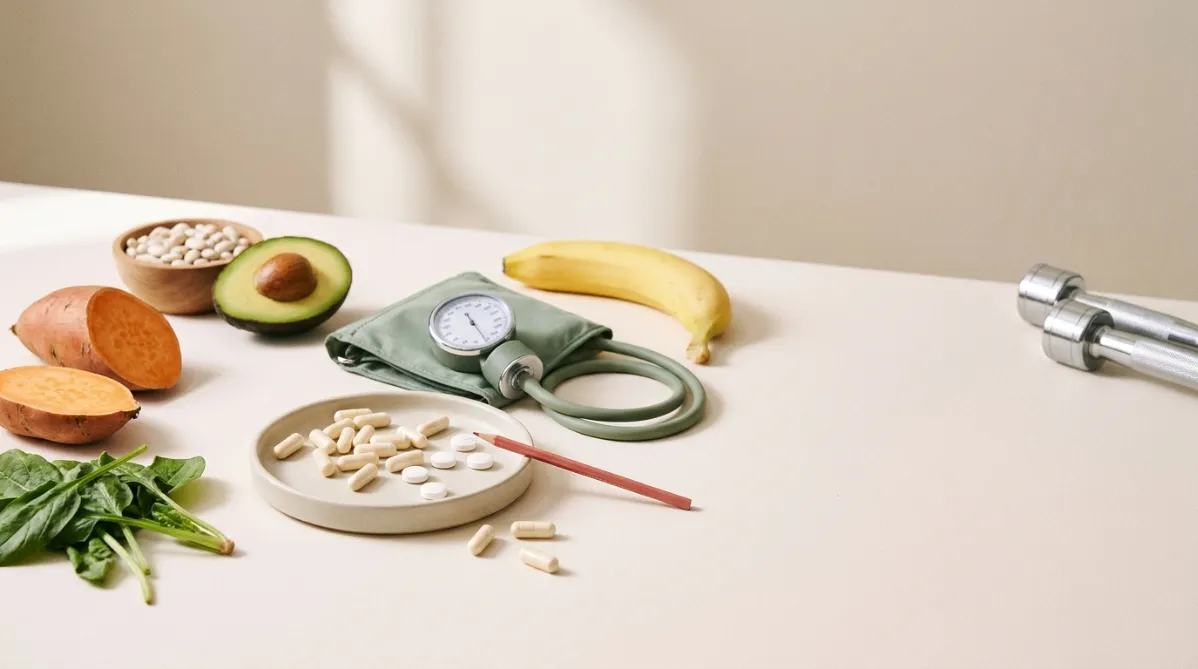
A bright, minimalist editorial still life on a soft warm-white surface, shot from a slightly elevated angle in natural morning light. In the center-left, a small matte ceramic dish holds a handful of pale cream capsules and tablets, a few spilling casually onto the surface. Beside it sits a sleek analog blood pressure cuff, softly coiled, in muted sage green fabric. Fresh potassium-rich foods are arranged in a loose, balanced composition around the pills: a halved ripe avocado with its pit, a peeled banana, a cut sweet potato with glowing orange flesh, a few leafy spinach stems, and a small cluster of white beans in a wooden bowl. A single slim pair of chrome dumbbell handles or a small chalked kettlebell rests discreetly at the right edge, hinting at the lifter audience without dominating the frame.

The palette is soft and modern: warm cream, sage green, terracotta orange, and buttery yellow, with subtle blush-pink shadows. The background is a smooth, out-of-focus pale oatmeal wall with a gentle diagonal shadow from a window, creating a calm, airy mood. The right third of the frame has generous negative space for headline text. A faint, delicate line of hand-drawn-style red accent, such as a small red ribbon or a thin red pencil resting near the pills, adds a quiet "caution" note without feeling alarming.

The overall look is clean, contemporary health-journal photography with shallow depth of field, crisp focus on the pills and produce, soft diffused highlights, and fine natural texture in the ceramic, linen, and food surfaces. Subtle film-like grain, editorial styling, and a calm, trustworthy, slightly cautionary tone. 16:9 landscape composition.
science research

Les pilules de potassium abaissent la pression artérielle de 5 mmHg en 4 semaines, mais il y a un piège

BY DR. GYMBRO ·

Une nouvelle méta‑analyse de 19 essais randomisés a montré que le potassium oral abaissait la pression systolique mesurée en cabinet d’environ 5 mmHg en à peine quatre semaines. Mais l’histoire n’est pas si simple : les mesures sur 24 h étaient moins impressionnantes et les effets indésirables apparaissaient chez 12,8 % des sujets contre 3,2 % dans les groupes de comparaison. Les résultats concernent les patients atteints d’hypertension primaire non traitée, et les suppléments de potassium peuvent être dangereux chez les personnes souffrant d’insuffisance rénale ou prenant des IEC, des ARA ou des diurétiques épargneurs de potassium. Voici ce que les données montrent, ce qu’elles ne montrent pas, et comment les pratiquants de musculation avec un régime pauvre en fruits et légumes devraient les interpréter.

This page is available in