Dr. Gymbro
←

#protein intake

4 articles
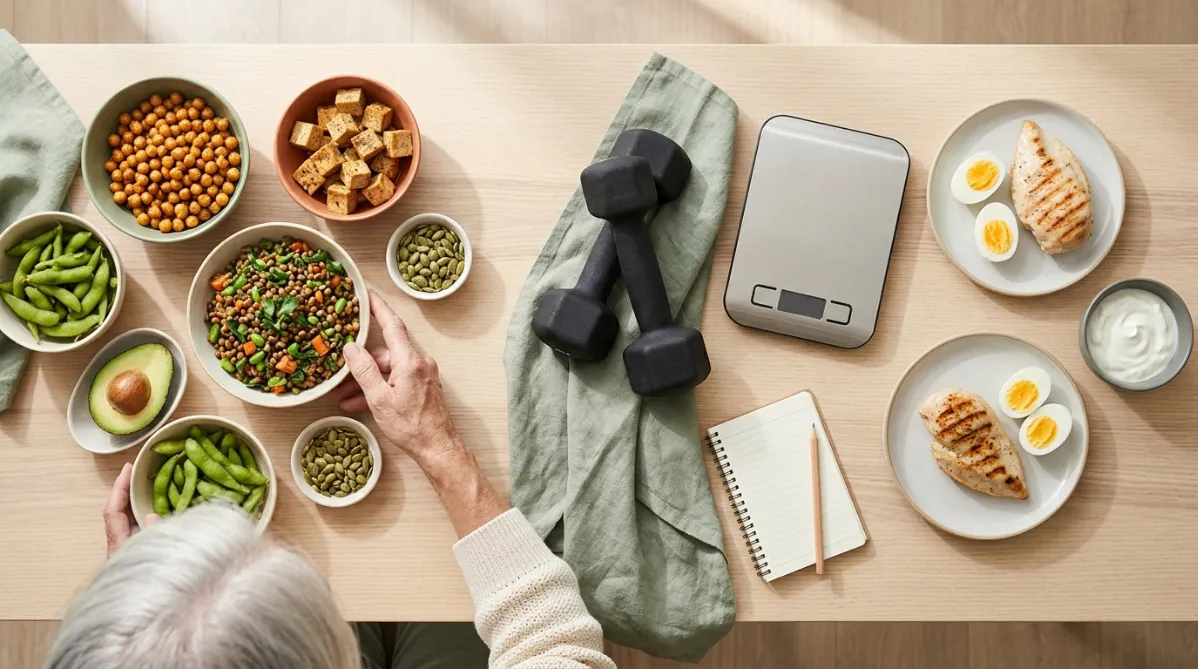
A bright, airy overhead flat-lay on a pale oak table in soft morning light. On the left, a vibrant plant-based protein spread in ceramic bowls: roasted chickpeas, marinated tofu cubes, lentil salad with herbs, edamame, sliced avocado, and a small dish of pumpkin seeds. On the right, a few contrasting items: a simple plate with grilled chicken breast, a hard-boiled egg halved, and a small bowl of Greek yogurt. Between the two sides, a pair of compact, matte-black hexagonal dumbbells rests on a folded sage-green linen towel, with a simple stainless-steel kitchen scale and a small open notebook with a pencil, suggesting tracking protein intake. A pair of weathered, elegant older hands, silver-haired and mid-60s, reaches in gently to pick up a bowl, with a casual cream knit sleeve visible. Natural window light casts soft diagonal shadows across the table. The palette is warm and muted: sage green, cream, terracotta, soft charcoal, with pops of fresh green and orange from the vegetables. Shallow depth of field, crisp focus on the food and dumbbells, gentle blur at the edges. The composition follows a clean editorial style with generous negative space at the top and right for headline text. The overall feel is modern wellness-magazine photography: calm, clean, and inviting, with tactile textures of linen, ceramic, wood, and fresh produce. Landscape 16:9 framing.
nutrition

Devenir végétarien après 55 ans ? Ce que révèle une étude sur 108 pratiquants de musculation

BY DR. GYMBRO ·

Vous envisagez d’abandonner la viande tout en continuant la musculation après la cinquantaine ? L’essai randomisé IMPACT, mené auprès de 108 adultes de plus de 55 ans, montre que végétariens et omnivores gagnent tous deux du muscle et de la force en 12 semaines d’entraînement. Cependant, les participants végétariens ont consommé moins de protéines (1,24 g/kg/j) et ont ajouté moins de masse musculaire des membres (+0,38 kg contre +0,66 kg). Les chercheurs n’ont pas pu démontrer la non‑infériorité du régime végétarien, et le résultat sur le muscle reste statistiquement indéterminé.
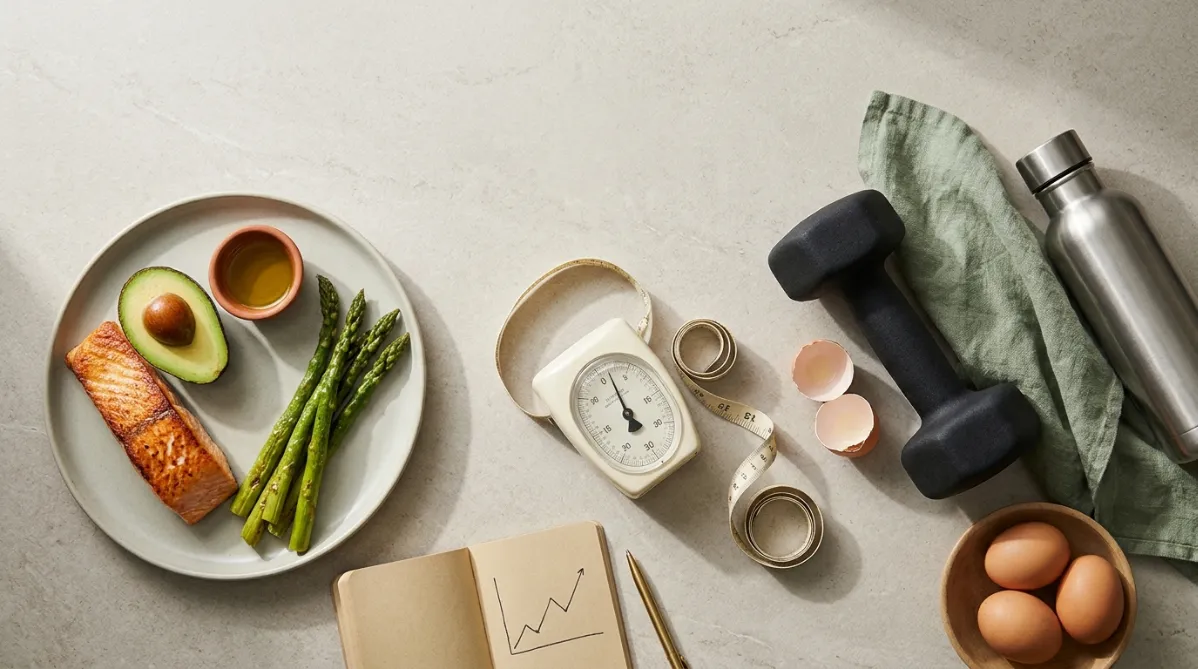
A bright, minimalist editorial flat-lay photographed from above on a pale warm-gray stone countertop in soft natural window light. On the left, a ceramic plate holds a keto-style meal: a seared salmon fillet with crisp skin, half an avocado with a glossy pit, a scattering of bright green asparagus spears, and a small dish of golden olive oil. On the right, a matte black dumbbell rests beside a folded sage-green linen towel and a slim stainless steel water bottle. A raw egg and a few whole eggs in a shallow wooden bowl add a protein cue. In the center, a clean analog kitchen scale and a flexible cream-colored measuring tape curl gracefully in a loose spiral, hinting at body composition tracking. A small open notebook with a minimal hand-drawn line graph, with no legible text, sits at the lower edge with a thin brass pen.

The palette is calm and modern: muted sage green, creamy ivory, warm terracotta accents from a small clay ramekin, and deep charcoal from the dumbbell. Shadows are soft and long, falling diagonally, giving gentle depth. The composition leaves generous negative space at the top and right for title placement. Shallow depth of field, crisp focus on the salmon and dumbbell, subtle film-like grain, and a refined, trendy health-journal look reminiscent of contemporary wellness magazines. Natural, airy, balanced, and slightly editorial, with no people, no text, and no futuristic elements.
nutrition

Le keto préserve-t-il la masse musculaire pendant un régime ? Les données sur la masse maigre surprennent

BY DR. GYMBRO ·

Le keto est souvent présenté comme une méthode de perte de poids qui préserve les muscles, grâce aux effets anti‑cataboliques supposés des cétones. Une nouvelle revue narrative publiée dans *Nutrients* met cette idée à l’épreuve des données cliniques et la trouve insuffisante. Les régimes cétogènes font surtout perdre de la graisse, mais les méta‑analyses montrent des pertes légèrement plus importantes de masse maigre que les régimes non cétogènes. Le problème, c’est que le DXA et le BIA ne distinguent pas le muscle de l’eau et du glycogène, rendant l’effet réel sur le muscle flou. Ce qui protège réellement les tissus maigres, c’est le trio bien connu : apport protéique suffisant, entraînement de résistance et déficit modéré.

A landscape editorial photograph of a sunlit kitchen table, shot from a slightly elevated three-quarter angle. On the left, a rustic ceramic bowl holds a warm plant-based protein meal: roasted chickpeas, marinated tofu cubes, edamame, quinoa, and wilted greens, topped with toasted sesame seeds. Around it are small dishes of lentils, walnuts, pumpkin seeds, and a block of tempeh on a wooden board. On the right, a pair of weathered hands belonging to an older adult with silver hair, partially visible and softly out of focus, rests beside a pair of light dumbbells and a rolled sage-green yoga mat leaning against a chair. A linen napkin, a glass of water with a lemon slice, and a small handwritten notebook with a pen suggest careful planning. Soft morning light streams through a large window on the left and casts gentle long shadows across the pale oak tabletop. The color palette is muted and earthy: warm cream, sage green, terracotta, soft mustard, and natural wood tones. The background has shallow depth of field, with blurred shelves of herbs in pots and a few hanging plants. The mood is calm, hopeful, and health-focused, in the style of a modern lifestyle magazine or science journal feature, with clean composition, generous negative space in the upper right for headline text, and a subtle film-like grain. No text, no logos, no futuristic elements.
nutrition

Passer au véganisme à 65 ans et plus : perte de 1,15 kg de masse maigre en 12 semaines

BY DR. GYMBRO ·

Un essai randomisé de 12 semaines chez 72 adultes de 65 ans et plus a montré que passer au véganisme sans planifier son apport en protéines leur a coûté 1,15 kg de masse maigre. Le groupe omnivore est resté stable. L’ajout d’entraînement en résistance a limité la perte à 0,62 kg, ce qui aide beaucoup mais n’efface pas la diminution. Le vrai coupable était une baisse d’environ 20 à 28 g de protéines par jour, et non les plantes elles‑mêmes. Voici ce que montrent les données et comment protéger vos muscles avec un régime à base de plantes.
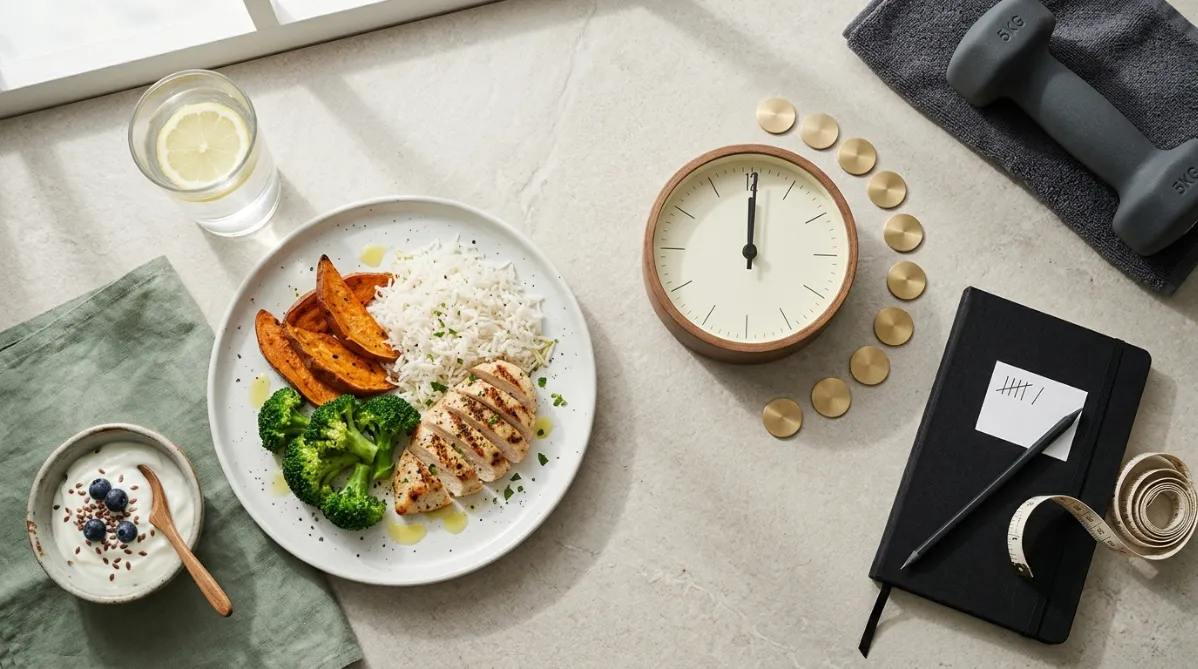
A wide, editorial-style flat lay photographed from above on a pale warm-gray stone surface, bathed in soft natural window light with gentle diagonal shadows. On the left side, a minimalist matte white ceramic plate holds a balanced bulking meal: sliced grilled chicken breast, a mound of fluffy basmati rice, roasted sweet potato wedges, and bright green broccoli, with a drizzle of olive oil glistening. Beside it sits a tall glass of water with a lemon slice and a small bowl of Greek yogurt topped with blueberries. On the right side, a round analog clock face is subtly placed, or a simple wooden clock with a minimalist design, its hands marking noon, with a soft arc of eight small brushed-brass discs arranged in a curved line beside it, suggesting an eight-hour eating window. A sleek black notebook with a pencil rests nearby, with a few hand-drawn tally marks and a tape measure loosely coiled next to it. A single dumbbell with a matte charcoal finish sits at the top right edge, partially cropped, hinting at strength training. The color palette is muted and sophisticated: sage green, warm cream, terracotta, soft charcoal, and touches of brass. Generous negative space on the right third for title text overlay. Shallow depth of field with crisp focus on the plate, subtle film grain, and a calm, modern wellness-magazine aesthetic reminiscent of contemporary health and fitness journals. Clean composition, natural textures like linen napkin and speckled ceramic, and no people or text visible.
nutrition

Jeûne 16 : 8 pendant la prise de masse : même muscle, moins de moitié de prise de graisse

BY DR. GYMBRO ·

Les culturistes qui ont limité leur prise de masse à une fenêtre de 8 heures ont gagné autant de muscle et de force que ceux qui mangent de façon classique, tout en accumulant moins de la moitié de la graisse supplémentaire. Le secret n’est pas un effet miracle du jeûne : le groupe 16 : 8 a simplement consommé moins que le surplus prévu, avec donc moins de protéines et de glucides. Cette étude randomisée sur 12 semaines indique que le repas limité dans le temps constitue surtout un outil d’adhérence pour un « lean‑bulk », et non un hack métabolique. Vous trouverez ci‑dessous les chiffres, la cible protéique qui a fonctionné, ainsi que les profils pour qui l’essayer ou l’éviter.

This page is available in