Dr. Gymbro
←

#rem sleep

1 article
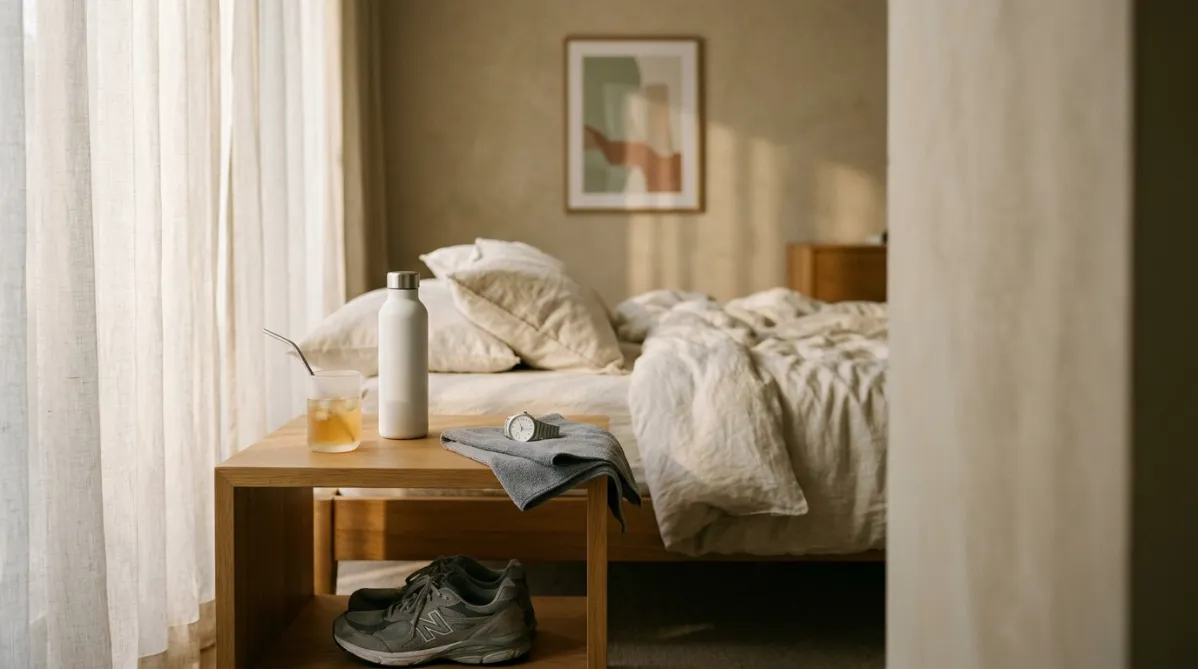
A calm, editorial-style landscape photograph of an athlete's bedroom at dawn, shot with soft natural light. In the foreground, a minimalist wooden bedside table holds a small frosted glass of pale amber drink beside a slim matte-white bottle with no label, a worn pair of running shoes tucked just beneath it. Soft morning light filters through sheer linen curtains, casting long, gentle gold and peach gradients across rumpled off-white bedding in the background, slightly out of focus. A folded gray training towel and a simple analog wristwatch rest on the table edge. On the wall above, a single abstract print in muted sage and terracotta tones adds a trendy, curated feel. The color palette is warm neutrals, oat, soft sage green, and dusty amber, with gentle shadows and a shallow depth of field. The composition uses generous negative space on the right third, ideal for headline overlay. The mood is quiet, restorative, and contemporary, like a lifestyle and wellness magazine cover. Fine film grain, natural textures of linen, oak, and glass, crisp but soft focus, high-end editorial photography.
recovery

Entraînement intensif réduit discrètement le sommeil REM. Une boisson à base de cétones l’a bloqué

BY DR. GYMBRO ·

Sept semaines d’entraînement de plus en plus intensif ont diminué le sommeil REM chez les athlètes qui ont reçu une boisson placebo, alors que ceux qui ont consommé une boisson à base d’ester de cétone ont, au contraire, vu leur REM augmenter. L’étude en double‑aveugle a utilisé la polysomnographie pour suivre le sommeil au début, à mi‑parcours et à la fin du protocole. L’ester de cétone n’a pas amplifié les gains de sommeil précoce, et ni la qualité du sommeil perçue ni les scores stress‑récupération ne montrent d’amélioration nette. Voici le dosage, le timing, les publics concernés et les limites à connaître avant de s’enthousiasmer.

This page is available in