Dr. Gymbro
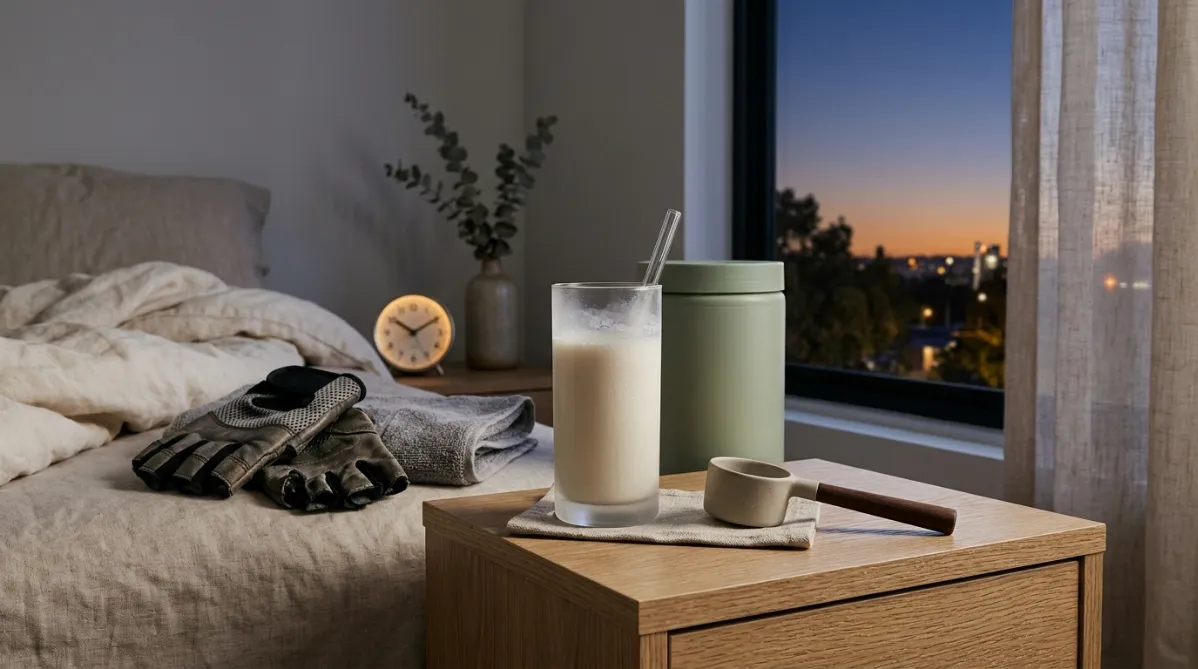
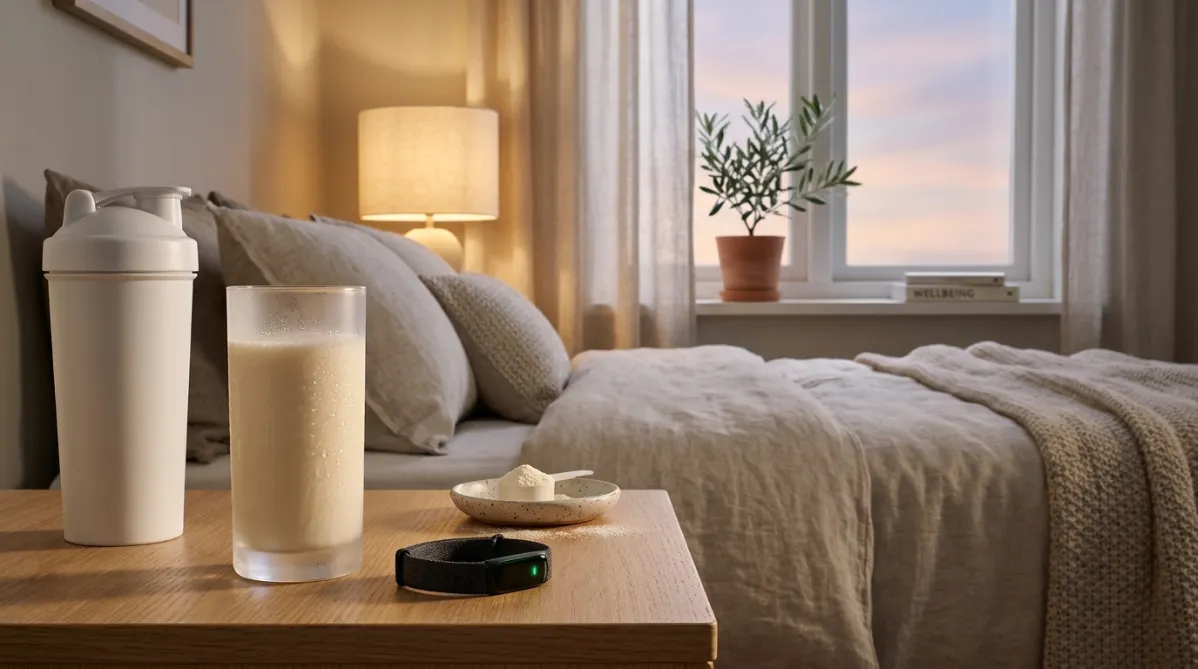
A softly lit bedside table in a calm, modern bedroom at dusk, photographed in wide landscape format with shallow depth of field. In the foreground, a matte white shaker bottle sits beside a tall frosted glass of creamy, pale vanilla-colored protein shake, with a few condensation droplets catching warm light. Next to the glass rests a slim fitness band on a dark charcoal fabric strap, its small LED glowing a gentle green, lying casually on a light oak wooden surface. A small scoop of fine white protein powder rests on a ceramic dish nearby, with a light dusting of powder on the wood.

In the soft-focus background, a neatly made bed with oatmeal-colored linen bedding and a textured knit throw blanket. A sheer curtain filters the last peach and lavender light of evening from a large window. A small potted olive branch in a terracotta vase and a closed paperback book add a quiet editorial touch. A bedside lamp with a warm, cream-colored shade casts a golden glow across the scene and creates gentle highlights on the glass.

The palette is muted and harmonious: warm cream, soft sand, oatmeal beige, faint sage green accents, and touches of dusty lavender in the window light. The mood is peaceful, reassuring, and clean, like a contemporary wellness magazine or a trendy health journal feature. Lighting is natural and cinematic, with soft shadows and a subtle film-like grain. The composition follows the rule of thirds, with the shake and band on the left third and open negative space on the right for headline overlay. Minimalist, Scandinavian-inspired styling, high-end lifestyle photography, crisp details, and a tranquil, premium editorial feel.
Recovery

La caseina prima di dormire non rovina il sonno: i dati di WHOOP

Dr. Gymbro · · 4 min read

La caseina prima di dormire non rovina il sonno: i dati di WHOOP

Hai probabilmente sentito l’avvertimento: un frullato proteico abbondante subito prima di coricarti ti farà girare nel letto e comprometterà il recupero. Un nuovo studio randomizzato su atlete d’élite ha messo alla prova questa teoria usando i wearable WHOOP. Il risultato è più sfumato di un semplice sì o no: il frullato non ha rovinato il sonno, ma non lo ha neanche migliorato.

Il mito sotto il microscopio

Il consumo di cibo prima di dormire è diventato una strategia di recupero popolare. Le proteine a lento assorbimento, come la caseina, sono la scelta più comune perché si suppone forniscano aminoacidi durante la notte. Il timore è che le calorie serali possano disturbare il sonno, aumentare la frequenza cardiaca o attenuare il recupero notturno.

Ricercatori della Florida State University, in collaborazione con la South Dakota State University, hanno deciso di verificare la cosa. Nel loro articolo, pubblicato sul Journal of the International Society of Sports Nutrition (Paterson et al., 2026), si osserva che gli studi randomizzati, in doppio cieco e crossover che confrontano i macronutrienti pre‑sonno in atlete femminili d’élite sono davvero rari.

Come è stato condotto lo studio

Sono state reclutate venticinque atlete universitarie di Divisione I, età 18‑25 anni; 21 hanno completato il trial. Ogni atleta ha sperimentato quattro condizioni in un disegno crossover, randomizzato, in doppio cieco e controllato con placebo:

  • 40 g di caseina (160 kcal)
  • 40 g di alfa‑lactalbumina, proteina del latte derivata dal siero (160 kcal)
  • 40 g di carboidrati (160 kcal)
  • 40 g di placebo (circa 5 kcal)

Ogni condizione è durata tre notti consecutive, con almeno tre giorni di wash‑out fra le prove. L’intero protocollo si è svolto in 4‑8 settimane. L’integratore è stato assunto circa due ore dopo l’ultimo pasto e mezz’ora prima di andare a letto, rappresentando l’ultimo apporto calorico della giornata.

Cosa è stato misurato

I dati oggettivi sono stati raccolti dal braccialetto WHOOP 4.0: tempo totale di sonno, latenza dell’addormentamento, efficienza del sonno, frequenza cardiaca a riposo e variabilità della frequenza cardiaca (HRV). Ogni mattina le atlete hanno compilato questionari sulla qualità percepita del sonno, il tempo impiegato per addormentarsi e il livello di recupero. In un piccolo sottogruppo di sei atlete è stato inserito un monitor continuo del glucosio (CGM) cieco per valutare la glicemia notturna.

I numeri: praticamente un lavaggio

Non sono emersi effetti significativi per nessuna delle misure di sonno o recupero (tutti p > 0,05). Nei quattro gruppi:

  • Tempo totale di sonno: 7,47‑7,62 ore
  • Efficienza del sonno: 91,5 %‑92,0 %
  • Frequenza cardiaca a riposo: 53,5‑54,1 bpm
  • HRV: 98,2‑103,9 ms

I dati soggettivi raccontano la stessa storia. I punteggi di qualità del sonno variano dal 69 % al 75 %, il tempo auto‑riferito per addormentarsi da 16 a 20 minuti, e il recupero percepito dal 61 % al 66 %. Nessuna differenza significativa tra i trattamenti.

Nell’analisi del glucosio, la glicemia notturna è cambiata nel tempo (p = 0,008), come ci si aspetta, ma non c’è differenza tra i trattamenti (p = 0,187) né interazione trattamento‑tempo (p = 0,550).

Gli autori concludono che tre notti di caseina, alfa‑lactalbumina o carboidrati prima di coricarsi non compromettono né il sonno oggettivo né quello soggettivo, né il recupero, rispetto al placebo.

Il colpo di scena: non ha nemmeno migliorato il sonno

Non è una storia del tipo “le proteine prima di dormire migliorano il sonno”. Nessuna delle condizioni attive ha superato il placebo su alcuna misura del sonno. Se usi la caseina per stimolare la sintesi proteica muscolare, garantire l’assunzione giornaliera o la compliance, questo studio suggerisce che puoi farlo senza timore di impattare il sonno. Se, invece, speravi in un effetto “sonno‑indotto”, lo studio non lo supporta.

Lo studio non ha valutato esiti muscolari, prestazionali o composizionali, perciò non può affermare se le proteine pre‑sonno favoriscano il recupero a livello muscolare.

Limiti da tenere a mente

  • Esposizione breve: ogni condizione è durata solo tre notti; gli effetti a lungo termine restano sconosciuti.
  • Dati di sonno da wearable: WHOOP è pratico, ma non è la polysomnografia, lo standard di laboratorio per lo staging del sonno.
  • Popolazione ristretta: tutti i partecipanti erano giovani atlete universitarie di élite, già ottimiste nel sonno (≈7,5 h, efficienza > 91 %). I risultati potrebbero non valere per chi dorme poco, per adulti più anziani, per gli uomini o per i non‑atleti.
  • Campione CGM molto piccolo: solo sei atlete con monitor del glucosio, quindi le conclusioni sono preliminari.
  • Dimensione del campione: 21 completatrici è modesto per rilevare effetti di piccola entità.
  • Disclosure: un autore è membro non pagato dell’International Protein Board.

Consigli pratici

Dosaggio: lo studio ha usato 40 g di proteina o carboidrati (160 kcal). È la quantità con dati a sostegno in questo contesto.

Tempistica: le atlete lo hanno assunto circa 30 minuti prima di coricarsi, due ore dopo l’ultimo pasto, come ultima fonte calorica della giornata.

Per chi è indicato: atleti e persone attive che vogliono utilizzare il pre‑sleep feeding per raggiungere i fabbisogni proteici o energetici. In questo gruppo di giovani atlete con sonno di buona qualità, non ha danneggiato sonno, HRV o frequenza cardiaca a riposo.

Chi dovrebbe evitarlo o farci attenzione:

  • Persone allergiche al latte o che non tollerano le proteine del latte, dato che entrambe le proteine testate sono derivati del latte.
  • Chi nota personalmente che mangiare tardi disturba il proprio sonno. Questi sono dati medi di gruppo; le risposte individuali possono variare.
  • Chi non ha bisogno di calorie o proteine aggiuntive. Lo studio non ha mostrato benefici sul sonno, quindi non c’è motivo di aggiungerlo solo per migliorare il riposo.

In sintesi: l’affermazione “il frullato proteico a letto rovinerebbe il sonno” non regge in questo trial. Considera il frullato pre‑sonno come uno strumento nutrizionale, non come un trucco per dormire meglio, e controlla i tuoi dati WHOOP o di sonno se vuoi capire come reagisci personalmente.
Original study

Read the original research on pubmed.ncbi.nlm.nih.gov →

This article summarizes published research for general information. It is not medical advice.

DG

Written by

Dr. Gymbro

Dr. Gymbro writes for Dr. Gymbro: science-backed fitness, nutrition & performance.

Related Articles

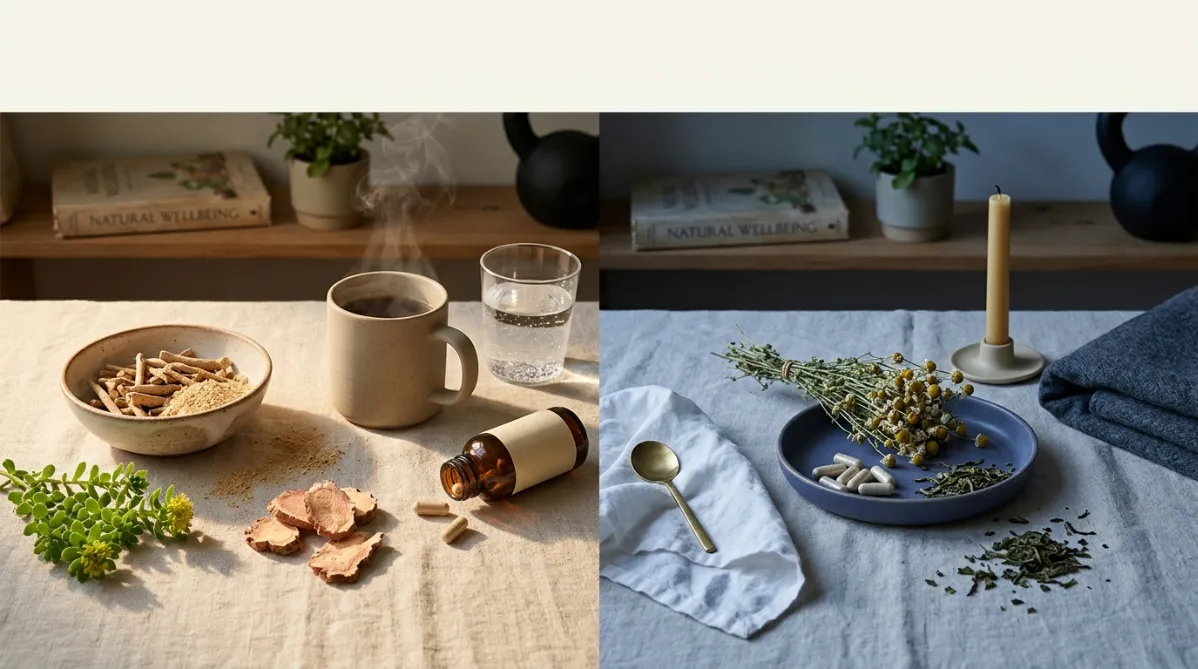
A landscape editorial still life shot from slightly above on a pale oat-colored linen surface, lit by soft morning window light with gentle long shadows. On the left, in warm golden sunlight, sits a small ceramic bowl of dried ashwagandha root pieces and a scatter of fine tan powder. Beside it are a few rough, rosy-gold slices of Rhodiola rosea root and a sprig of tiny succulent-like green leaves with yellow blossoms. A matte sand-colored stoneware mug of steaming tea and a simple glass of water stand nearby. A small amber glass bottle with a minimal unbranded label tips out two capsules.

The right side of the frame is cooler and bluer, as if dusk is arriving. It holds a muted indigo ceramic dish with a few pale capsules, a small bundle of dried chamomile flowers (the source of apigenin), and a few green tea leaves. A slim, unlit beeswax candle and a folded charcoal wool blanket suggest evening. The warm and cool halves meet softly in the center, where a rumpled white cotton napkin sits beneath a small brass spoon.

In the background, out of focus, a wooden shelf holds a worn paperback, a small potted plant, and the edge of a kettlebell in matte black, hinting at an active lifestyle. Subtle film grain, shallow depth of field, and a muted palette of cream, terracotta, sage green, and deep indigo give it a clean, modern wellness-magazine feel. Leave generous negative space in the upper third for a headline overlay. No text, no logos, no people.
recovery

Ashwagandha e Rhodiola funzionano: lo stack serale per il sonno è inefficace

BY DR. GYMBRO ·

Un nuovo studio a quattro bracci scuote il mondo degli integratori “stackati”. Su 103 adulti sani e attivi, una combinazione mattutina di 600 mg di ashwagandha e 300 mg di Rhodiola rosea è risultata associata a una minore percezione di stress, a una qualità del sonno più alta e a un umore migliorato. Lo “stack” serale più diffuso – magnesio L‑treonato, L‑teanina e apigenina – non ha portato alcun beneficio, e l’assunzione di entrambi gli stack ha persino peggiorato l’affetto positivo. Di seguito i risultati dello studio, i motivi per cui vanno interpretati con cautela (solo due settimane, gruppi piccoli) e come gli sportivi potrebbero impiegarli.

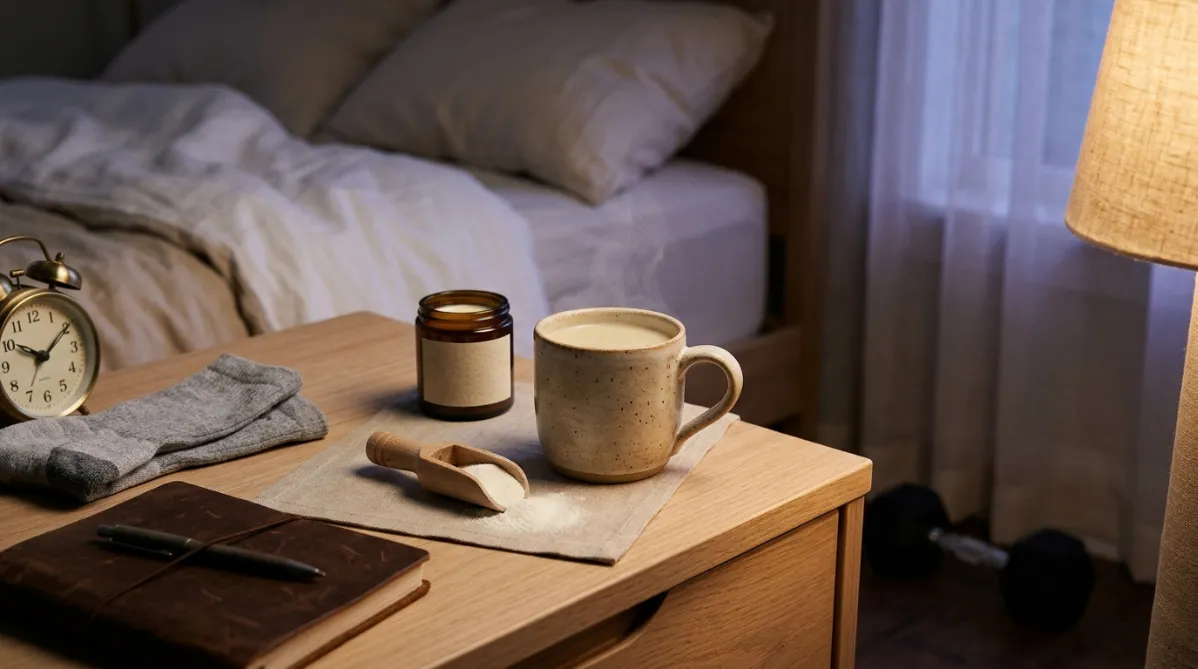
A softly lit bedroom nightstand scene in landscape format, photographed in a modern editorial lifestyle style. In the center of the frame sits a handmade ceramic mug in warm oatmeal tones, filled with a pale creamy drink. A thin wisp of steam rises from it. Beside the mug, a small wooden scoop rests on a matte linen-textured surface with a fine dusting of white collagen powder. A minimal amber glass jar with a cream label stands just behind, with no readable text. The nightstand is pale oak with subtle grain.

To the left, a neatly folded pair of gray cotton athletic socks and a worn leather-bound training journal with a pen on top hint at a lifter's routine. A small brass alarm clock reads about 9:30 and is slightly out of focus. On the right side, a sheer curtain filters the last blue-violet twilight from a window, while a warm bedside lamp with a linen shade casts a honey-colored glow across the scene. The glow contrasts gently with the cool dusk tones.

Behind the nightstand, the edge of a rumpled bed with soft white and sand-colored bedding is visible, with a dumbbell resting quietly on the floor in the soft-focus background to suggest recovery after training. The depth of field is shallow, with the mug and scoop in crisp focus and the background dissolving into creamy bokeh.

The palette is calm and earthy: warm beige, soft cream, muted terracotta, and dusk blue accents. The lighting is cinematic and low-key, with gentle highlights on the ceramic rim and a subtle rim light on the steam. The composition follows the rule of thirds, with the mug placed on the left third and generous negative space on the right for title overlay. The mood is serene, restorative, and quietly scientific without any clinical elements. The finish is clean, high-end, and magazine-worthy, with fine film grain and natural color grading, like a wellness feature in a contemporary online journal.
recovery

Il trucco del collagene da 15 g prima di dormire che riduce le sveglie notturne del 27 %

BY DR. GYMBRO ·

Svegliarsi più volte durante la notte può compromettere silenziosamente il recupero, anche quando allenamento e nutrizione sono al top. Una piccola sperimentazione ha scoperto che 15 g di peptidi di collagene assunti un'ora prima di coricarsi hanno ridotto gli eventi di risveglio registrati con polisonnografia da 29,3 a 21,3, ossia circa il 27 % in meno. I partecipanti hanno inoltre ottenuto risultati migliori al test Stroop mattutino. Tuttavia, la durata totale del sonno, la latenza e l’efficienza non sono cambiate, e lo studio ha coinvolto solo 13 uomini per 7 notti con un prodotto fornito dall’industria. Ecco cosa mostrano davvero i dati e come chi solleva pesi può testare questa strategia in sicurezza.

A quiet bedside scene at dusk, shot in soft natural light with a shallow depth of field. A tall frosted glass of creamy, pale-white shake sits on a light oak nightstand, with a thin film of condensation on the glass and a faint milky residue near the rim. Beside it, a matte ceramic scoop rests on a small linen coaster. A minimalist tub of unbranded protein powder in muted sage green sits slightly out of focus in the background.

To the left, a neatly made bed with oatmeal-colored linen sheets and a rumpled cream duvet. A pair of worn lifting gloves and a folded gray gym towel sit on the edge of the bed, suggesting an evening workout just finished. A small analog alarm clock reads about 10:30 PM, its soft face glowing faintly. A sprig of dried eucalyptus in a small stoneware bud vase adds an organic touch.

Through a large window on the right, deep indigo twilight fades into a warm amber horizon, and the last light spills across the wall in long, gentle gradients. A sheer curtain moves slightly. The palette is warm neutrals (cream, oak, sand, soft terracotta) with a few muted blue-violet accents from the evening sky.

The composition uses the rule of thirds, with the glass at the left-center foreground and generous negative space on the right, where headline text could sit. The mood is calm, restorative, and editorial, like a modern wellness and nutrition journal. The lighting is gentle and diffused, with subtle film grain and slightly lifted shadows. The textures of linen, wood, glass, and ceramic are crisp. The image is clean and uncluttered, with no text, logos, or people, and no futuristic or sci-fi elements.
nutrition

Lo shake da 40 g prima di dormire: cosa fa la caseina pre‑sonno durante la notte

BY DR. GYMBRO ·

Allenarsi di sera e poi passare otto ore senza mangiare: questo ostacola il recupero? Uno studio del 2012 ha somministrato a 16 giovani uomini 40 g di caseina 30 minuti prima di andare a dormire, monitorando cosa accadeva durante la notte. La proteina è stata digerita e assorbita, la sintesi proteica dell’intero corpo è aumentata (311 vs 246 µmol/kg) e il bilancio proteico netto è passato da negativo a positivo. La sintesi proteica muscolare è risultata circa il 22 % più alta, sebbene con una significatività marginale. Scopri cosa indicano questi risultati, cosa non dimostrano e come usarli.

A sunlit, minimalist home gym corner photographed in soft golden morning light, with a young athletic man seated on a wooden bench, leaning forward with his elbows resting on his knees, catching his breath after a hard leg session. He wears a muted sage-green t-shirt and charcoal shorts, his face turned slightly away from the camera, calm and focused. A matte ceramic dish in the foreground holds a few small, translucent golden softgel capsules, with a glass of water beside it catching the light and casting a soft caustic shadow across a pale oak floor. Behind him, a loaded barbell rests on a squat rack, slightly out of focus, and a tall window pours warm sunlight diagonally across the scene, creating long gentle shadows and a hazy glow. A small potted green plant sits on a shelf at the edge of the frame. The color palette is warm and editorial: cream, soft gold, sage green, pale wood, and charcoal accents. Shallow depth of field, with crisp focus on the capsules and glass in the lower third and a creamy bokeh background. The composition leaves generous negative space on the right side for a headline overlay. The mood is clean, modern, and aspirational, like a high-end wellness magazine or a trendy health journal feature. Shot on a 50mm lens, natural light, fine film grain, subtle matte finish, landscape 16:9 framing.
recovery

Vitamina D favorisce il recupero della forza negli uomini con livelli sufficienti

BY DR. GYMBRO ·

Uomini con vitamina D nella norma hanno recuperato la forza più velocemente dopo un intenso allenamento delle gambe assumendo 4.000 UI al giorno. In uno studio randomizzato, controllato con placebo, su 28 soggetti attivi, la forza isometrica di picco è tornata circa l’8 % più alta a 24 h e i marcatori di danno muscolare (ALT, AST) sono aumentati meno. Tuttavia, l’indolenzimento non è migliorato. Scopri i risultati, i limiti dello studio e chi può trarne davvero beneficio.

This page is available in