Dr. Gymbro
A landscape editorial photograph of a lone runner's hands resting on a weathered wooden table beside a small white ceramic dish of fine white powder and a clear glass of water, shot in soft morning light. A slim matte aluminum energy drink can, unbranded with a minimalist pale sage-green label, stands slightly out of focus in the background, with a single scoop of powder dusted lightly on the tabletop. A pair of worn running shoes and a folded gray towel sit at the edge of the frame. Through a large window behind them, a blurred misty trail winds through green trees at sunrise, with warm golden light spilling across the scene.

The color palette is calm and modern: creamy off-white, sage green, warm honey gold, and soft charcoal. The composition follows the rule of thirds, with the dish and glass in the lower left third and generous negative space on the right for a title overlay. The depth of field is shallow, with a crisp focus on the powder's delicate texture and tiny glints of light on the glass rim. The mood is clean, thoughtful, and quietly energetic, like a contemporary health and science magazine feature. Natural grain, subtle film-like softness, and gentle shadows give it an authentic lifestyle-editorial look. There are no text, logos, or futuristic elements, only tactile, real-world materials like wood, ceramic, glass, cotton, and metal.
Nutrition

L'ingrediente delle bevande energetiche che da solo aumenta la resistenza

Dr. Gymbro · · 4 min read

Dimentica la caffeina per un attimo

L'altro ingrediente della lattina energetica, quello che la maggior parte delle persone ignora, potrebbe fare davvero la differenza da solo. Una meta‑analisi del 2018 pubblicata su Sports Medicine ha scoperto che la taurina isolata migliora le prestazioni di resistenza, e una singola dose è sufficiente. Niente fase di caricamento, niente settimane di compresse.

Di seguito trovi una sintesi di quello che hanno fatto i ricercatori, di cosa hanno scoperto e di cosa tutto ciò significhi per te.

Cosa ha realmente fatto lo studio

L’articolo, a cura di Waldron, Patterson, Tallent e Jeffries, è una revisione sistematica e una meta‑analisi. Il team ha consultato diversi database a settembre 2017, ha applicato criteri di ammissibilità e ha selezionato 10 studi peer‑reviewed che testavano la taurina per via orale da sola, senza caffeina né zucchero.

Sette di questi studi hanno impiegato test di tempo‑fino‑esaurimento (TTE), in cui gli atleti mantengono un’intensità fissa finché non possono più continuare. Gli autori hanno poi condotto un’analisi secondaria su questi trial.

Hanno inoltre utilizzato la meta‑regressione per rispondere a due domande pratiche:

  1. La dose influisce sull’efficacia?
  2. Fa differenza assumere la taurina in modo acuto (una dose) o cronico (per più giorni)?

Le dosi variavano da 1 a 6 g al giorno, somministrate come dose singola o per un periodo fino a due settimane, su campioni di partecipanti eterogenei.

Cosa hanno trovato: i numeri

Il risultato principale è che la taurina ha migliorato la performance di resistenza con un Hedges’ g di 0,40 (IC 95 % 0,12–0,67, p = 0,004). Per convenzione, un effetto di questa entità è piccolo‑moderato, un risultato rispettabile per un integratore economico e facilmente reperibile.

Nei trial di tempo‑fino‑esaurimento la storia è la stessa: g = 0,43 (IC 95 % 0,12–0,75, p = 0,007).

Le due domande pratiche hanno prodotto risposte sorprendenti:

  • Acuto vs. cronico: nessuna differenza significativa (p = 0,897 per il campione totale e p = 0,896 per il gruppo TTE). Assumere la taurina per più giorni non ha mostrato vantaggi rispetto a una singola dose.
  • Dose: la dose non ha moderato l’effetto (p > 0,05). Nell’intervallo 1‑6 g, dosi più alte non hanno prodotto benefici aggiuntivi.

Gli autori hanno concluso che la performance di resistenza può essere migliorata assumendo una singola dose orale di taurina, in qualsiasi quantità compresa tra 1 e 6 g.

Il punto critico: leggi questo prima di comprare una lattina

Il risultato è incoraggiante, ma non è una sentenza definitiva. Tieni presente queste limitazioni:

  • Base di evidenza ridotta. Dieci studi non sono molti, e le singole prove erano di piccole dimensioni. Una stima aggregata da studi piccoli può cambiare con trial più ampi.
  • Intervalli di confidenza ampi. L’intervallo generale (0,12‑0,67) è compatibile con benefici molto modesti fino a risultati piuttosto consistenti.
  • "Nessun effetto di dose" non significa equivalenza. Con così pochi studi, la meta‑regressione ha poca potenza per rilevare una relazione dose‑risposta. I dati dicono che la dose non ha moderato significativamente l’effetto, non che 1 g e 6 g siano uguali.
  • Popolazioni e protocolli eterogenei. Gli studi hanno coinvolto soggetti e test di esercizio diversi, perciò i risultati potrebbero non trasferirsi direttamente al tuo sport o al tuo livello di fitness.
  • Non è uno studio su bevande energetiche. L’analisi ha esaminato la taurina isolata. Non possiamo affermare che una lattina tipo Red Bull produca lo stesso beneficio, dato che quei prodotti combinano taurina, caffeina e altri ingredienti.

In sintesi, la taurina è un segnale promettente a basso rischio, ma non un trucco garantito.

Come usarla

Lo studio dimostra che la taurina funziona con dosi tra 1 e 6 g, sia in un’unica somministrazione sia per un massimo di due settimane. Ecco un approccio pratico basato sui protocolli tipici della ricerca.

  • Dose: inizia nella fascia bassa, 1‑3 g. La maggior parte degli studi ha usato quantità in questo intervallo e non ha evidenziato vantaggi chiari superando i 3 g.
  • Tempistica: assumi una dose singola circa 1‑2 ore prima dell’attività di resistenza, come nella maggior parte dei trial.
  • Caricamento: non necessario. L’analisi non ha trovato differenze tra supplementazione acuta e cronica, quindi non serve un regime di settimane.
  • Forma: polvere di taurina pura o capsule sono le opzioni più semplici e corrispondono a quanto è stato testato. La polvere è solitamente più economica per dose e facile da mescolare in una bevanda pre‑allenamento.
  • Chi può beneficiarne: runner, ciclisti, canoisti, nuotatori e chiunque pratici esercizi di resistenza prolungata e voglia provare un’opzione poco costosa.
  • Chi dovrebbe evitarla (o consultare prima):
    • Persone con condizioni mediche o che assumono farmaci dovrebbero parlare con un medico o un dietista.
    • Donne in gravidanza o in allattamento dovrebbero chiedere consiglio medico.
    • Atleti di discipline brevi, esplosive o focalizzate sulla forza non dovrebbero aspettarsi gli stessi benefici, dato che l’analisi riguarda solo la resistenza.
    • Chi spera di sostituire un piano di allenamento e nutrizione adeguato. Un effetto di g = 0,40 è utile, non magico.

Conclusione

La taurina è più di un semplice riempitivo sull’etichetta delle bevande energetiche. In questa meta‑analisi su 10 studi, la taurina orale isolata ha prodotto un miglioramento piccolo‑moderato delle performance di resistenza (g = 0,40) e una singola dose è sembrata sufficiente. La base di evidenza è limitata, perciò considerala un esperimento intelligente e poco costoso, non una certezza. Provala prima in allenamento, mantieni la dose moderata e valuta i risultati in base alla tua esperienza.
Original study

Read the original research on pubmed.ncbi.nlm.nih.gov →

This article summarizes published research for general information. It is not medical advice.

DG

Written by

Dr. Gymbro

Dr. Gymbro writes for Dr. Gymbro: science-backed fitness, nutrition & performance.

Related Articles

A sleek aluminum energy drink can and a matte scoop of white pre-workout powder sit side by side on a pale concrete gym bench, lit by soft morning window light. The can is slim and minimalist, with a muted sage green label and no legible text. Beside it is a clear glass shaker half full of cloudy, lightly frothy liquid with condensation beading on its surface. A few fine grains of powder are scattered across the bench, catching the light. Behind them, slightly out of focus, a stainless steel barbell rests on a rack, and a folded charcoal gym towel sits at the edge of the frame.

The color palette is warm neutral: oatmeal, soft gray, and sage, with a single accent of pale citrus yellow from a halved lemon wedge placed near the glass. A thin, elegant shadow from the window blinds falls diagonally across the scene, giving it an editorial, magazine-style rhythm. The composition leaves generous negative space on the right third of the frame, a smooth blurred wall in warm off-white, suitable for headline text overlay.

The shot is a low-angle, shallow depth-of-field product-style photograph, as if taken with an 85mm lens at f/2. The foreground objects are tack sharp and the background melts into creamy blur. The mood is calm, clean, and modern, like a wellness or science journal feature. Subtle film grain and gentle contrast add a tactile, contemporary lifestyle feel. There are no people, no logos, and no futuristic or sci-fi elements, just a quiet, considered still life that suggests the choice between a canned drink and a scooped supplement.
nutrition

La tua bevanda energetica potrebbe fungere da pre‑allenamento—con un unico inconveniente

BY DR. GYMBRO ·

Caffeina e taurina sono spesso associate nelle bevande energetiche e nei supplementi pre‑allenamento, ma la loro combinazione migliora davvero le performance? Una meta‑analisi di 11 studi randomizzati (234 partecipanti) indica un moderato incremento della potenza massima e del tempo di esaurimento, oltre a una percezione dell’esercizio più leggera. La frequenza cardiaca non cambia e il risultato sul tempo di reazione risulta troppo eterogeneo per essere affidabile. Il limite principale è la dimensione ridotta degli studi, che non permette di stabilire se la taurina aggiunga un vero beneficio rispetto alla sola caffeina.

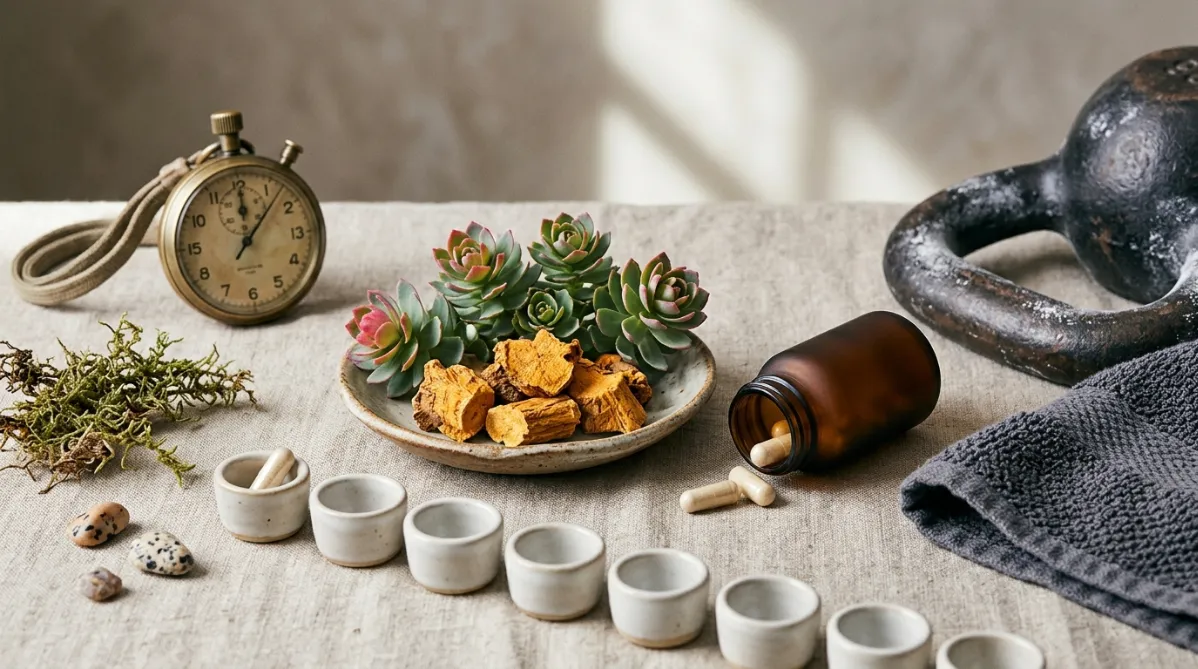
A wide, editorial still life photographed in soft natural window light on a pale oatmeal-colored linen surface. At the center sits a small, rustic ceramic dish holding a handful of dried golden-orange Rhodiola rosea root pieces and a few fresh, fleshy green-gray succulent rosettes with rosy-pink tips. Beside it, a single matte amber glass capsule bottle lies on its side, with two cream-colored capsules spilling out. On the left, a minimalist analog stopwatch with a brushed brass case rests slightly out of focus, its hands suggesting a duration just past the quarter-hour mark. On the right, a worn, chalk-dusted steel kettlebell handle and a folded charcoal gym towel fill the negative space, hinting at lifting without showing a full gym scene.

In the foreground, a neat row of seven tiny ceramic pill cups arranged in a gentle diagonal line, the first cup holding one capsule and the rest sitting empty, as a quiet visual metaphor for a single dose versus daily dosing. A sprig of dried alpine moss and a few small speckled pebbles add organic texture. The background is a softly blurred warm-gray plaster wall with a gentle gradient shadow cast by a window frame, creating diagonal light stripes across the scene.

The palette is muted and earthy: sage green, terracotta, warm cream, brushed brass, and soft charcoal, with one subtle pop of coral from the Rhodiola tips. Shallow depth of field, crisp focus on the root and capsules, and fine film-like grain. The composition leaves generous clean negative space in the upper left for a headline overlay. The overall feel is a modern wellness and science journal: calm, tactile, minimal, and sophisticated, with a slightly moody, high-end magazine look. There is no text, no people, and no futuristic elements.
nutrition

200 mg di Rhodiola aumentano la resistenza di 24 secondi; quattro settimane di utilizzo quotidiano non aggiungono nulla

BY DR. GYMBRO ·

Una singola dose di 200 mg di Rhodiola rosea assunta un'ora prima dell'allenamento ha prolungato il tempo alla fatica da 16,8 a 17,2 minuti e ha aumentato il VO₂peak in uno studio crossover in doppio cieco. La sorpresa è che quattro settimane di assunzione quotidiana non hanno amplificato quell'effetto né hanno modificato alcuna altra variabile misurata. Il guadagno è di appena 24 secondi, mentre forza, tempi di reazione e attenzione sono rimasti invariati. Scopri cosa ha rivelato realmente lo studio, chi può sperimentare una dose acuta e perché non dovresti puntare sul “caricamento” della rhodiola.

A wide, editorial-style flat lay photographed from above on a pale warm-gray linen surface in soft natural window light. At the center, a small open amber glass jar tips gently onto its side, spilling a few cream-colored capsules across the fabric. Next to the jar sits a loose arrangement of fresh mushrooms: a cluster of golden-tan reishi with glossy, lacquered caps, a few slender white enoki stems, a halved shiitake showing its pale gills, and a curl of turkey tail with concentric bands of rust, cream, and charcoal. A small wooden scoop holds a pile of fine beige mushroom powder.

On the left third of the frame, a matte black sports watch with a minimal face lies beside a folded sage-green running shirt and a pair of lightweight off-white running shoes, hinting at athletic training without showing a person. A slim white notebook with a single pencil rests nearby, open to a blank page with a faint hand-drawn line graph trending upward, in thin graphite strokes.

On the right side, a pair of clear glass beakers and a single small petri dish with a soft amber-tinted liquid add a subtle laboratory note, kept calm and organic. A single sprig of dried herbs and a few scattered oat-colored grains add texture.

The palette is earthy and refined: oatmeal, soft sage, terracotta, warm amber, and charcoal accents against the muted neutral background. Shadows are soft and diffused, with a gentle highlight on the glass and the glossy reishi cap. The composition leaves generous negative space in the upper right for a headline overlay. Shallow depth of field blurs the edges slightly, while the central mushrooms and capsules stay crisp. The overall feel is modern, clean, and trendy, like a wellness and science magazine cover, with tactile natural textures, minimal styling, and a quiet sense of curiosity and skepticism.
science research

Una capsula di funghi ha aumentato il VO2max del 14,8 % — ma c'è un grosso limite

BY DR. GYMBRO ·

Una capsula di funghi, 40 giorni di assunzione e un incremento del VO2max del 14,8 % suonano quasi troppo belli per essere veri. In un nuovo studio pubblicato su *Antioxidants* 50 giovani atleti maschi hanno assunto 320 mg al giorno di un estratto multi‑funghi ricco di beta‑glucani, passando da 46,26 a 53,12 mL/kg/min. Il problema è che lo studio non prevedeva gruppo placebo, né randomizzazione, né cieco, e gli atleti hanno continuato ad allenarsi. Gli esperimenti cellulari su cardiomiociti di ratto suggeriscono un legame con l'ipossia, ma hanno testato composti singoli, non la capsula. Ecco cosa è stato davvero dimostrato, cosa resta incerto e a chi conviene prestare più attenzione.

A wide, editorial-style still life shot from a slightly elevated angle on a pale oatmeal-colored linen surface in soft, diffused morning light. At the center, a shallow matte ceramic bowl in warm terracotta holds a small mound of fine, golden-tan ashwagandha root powder. Beside it lie a few gnarled, dried ashwagandha roots and a sprig of green leaves with tiny orange-red berries in their papery husks. To the left, a minimalist amber glass supplement bottle sits with a few capsules spilled beside it, label blank and clean. A wooden scoop rests on the surface, dusted with powder.

On the right side of the frame, a pair of sleek, muted sage-green running shoes sits slightly off-center. A folded cream towel and a stainless steel water bottle sit just behind them, with a single brushed-steel kettlebell partly out of focus in the background to hint at strength training without dominating the scene. The running shoes and the botanical elements share equal visual weight, suggesting the endurance theme.

A thin, curved line of scattered powder sweeps across the linen from the bowl toward the shoes, like a gentle path or track. Soft shadows fall to the left, and a warm sunbeam crosses the surface and picks out the texture of the powder and the roots.

The palette is restrained and modern: warm terracotta, sage green, cream, soft gold, and touches of charcoal. The background is a blurred pale plaster wall with a hint of a window shadow. Shallow depth of field, crisp focus on the bowl and roots, and generous negative space in the upper left for a headline. Contemporary wellness magazine aesthetic, calm, natural, tactile, high-end lifestyle photography, no text, no people, no futuristic elements.
science research

La sorpresa dell’Ashwagandha: aiuta più l’endurance che la forza

BY DR. GYMBRO ·

L’Ashwagandha è spesso pubblicizzata come integratore per aumentare forza e massa muscolare, ma una nuova meta‑analisi mette in luce un beneficio diverso. Analizzando 13 studi randomizzati su 599 partecipanti, i ricercatori hanno riscontrato l’effetto più consistente sull’endurance aerobica (g medio = 0,54). I guadagni in forza sono positivi ma incerti, mentre i dati sulla potenza sono scarsi. La fascia di dose più promettente è 500‑600 mg al giorno di estratto, ma l’intervallo di previsione attraversa lo zero, quindi i risultati possono variare.

This page is available in