Dr. Gymbro
A wide, editorial-style still life shot from a slightly elevated angle on a pale oatmeal-colored linen surface in soft, diffused morning light. At the center, a shallow matte ceramic bowl in warm terracotta holds a small mound of fine, golden-tan ashwagandha root powder. Beside it lie a few gnarled, dried ashwagandha roots and a sprig of green leaves with tiny orange-red berries in their papery husks. To the left, a minimalist amber glass supplement bottle sits with a few capsules spilled beside it, label blank and clean. A wooden scoop rests on the surface, dusted with powder.

On the right side of the frame, a pair of sleek, muted sage-green running shoes sits slightly off-center. A folded cream towel and a stainless steel water bottle sit just behind them, with a single brushed-steel kettlebell partly out of focus in the background to hint at strength training without dominating the scene. The running shoes and the botanical elements share equal visual weight, suggesting the endurance theme.

A thin, curved line of scattered powder sweeps across the linen from the bowl toward the shoes, like a gentle path or track. Soft shadows fall to the left, and a warm sunbeam crosses the surface and picks out the texture of the powder and the roots.

The palette is restrained and modern: warm terracotta, sage green, cream, soft gold, and touches of charcoal. The background is a blurred pale plaster wall with a hint of a window shadow. Shallow depth of field, crisp focus on the bowl and roots, and generous negative space in the upper left for a headline. Contemporary wellness magazine aesthetic, calm, natural, tactile, high-end lifestyle photography, no text, no people, no futuristic elements.
Science & Research

La sorpresa dell’Ashwagandha: aiuta più l’endurance che la forza

Dr. Gymbro · · 4 min read

Il gancio: probabilmente l'hai comprata per l'obiettivo sbagliato

L’Ashwagandha è spesso presentata come potenziatore di forza e muscoli. Una nuova meta‑analisi suggerisce che il beneficio più costante si trovi altrove: l’endurance aerobica.

Lo studio, pubblicato su Nutrients nel 2026 da ricercatori della Shaanxi Normal University e della Sichuan Agricultural University, ha aggregato trial controllati randomizzati sull’uso orale di Withania somnifera e sul suo impatto sulle prestazioni sportive misurate in modo oggettivo. I risultati sono incoraggianti, ma sono accompagnati da avvertenze importanti da considerare prima di spendere soldi.

Cosa hanno fatto i ricercatori

Si tratta di una review sistematica e meta‑analisi a tre livelli. Il team ha ricercato su PubMed, Web of Science, Cochrane Library, Embase e SPORTDiscus dall’inizio dei database fino al 1 aprile 2026. Sono stati inclusi trial controllati randomizzati che confrontavano l’assunzione orale di ashwagandha con placebo o con controllo e riportavano risultati di performance oggettivi.

Il campione finale è stato modesto: 13 studi, 599 partecipanti e 79 dimensioni d’effetto. Un modello a tre livelli consente di gestire studi che riportano più outcome senza trattarli come indipendenti. Sono stati forniti intervalli di previsione al 95 %, valutazioni di certezza GRADE, analisi di sotto‑gruppi e meta‑regressioni su dose e durata.

I partecipanti erano per lo più giovani adulti o atleti. Quattro studi includevano solo uomini, uno solo donne, tre avevano gruppi misti e cinque non riportavano pienamente la composizione di sesso.

Il numero che fa capire tutto

Considerando tutti gli outcome di performance, l’ashwagandha ha migliorato i risultati in media, con un Hedges’ g di 0,47 (IC 95 % 0,25‑0,69, p < 0,001). Si tratta di un effetto medio‑moderato.

Gli autori hanno segnalato due avvertenze:

  • L’eterogeneità era elevata (I² = 60 %); i risultati variavano in modo significativo tra gli studi.
  • L’intervallo di previsione al 95 % spaziava da –0,40 a 1,33. Include lo zero, perciò un futuro studio in un contesto diverso potrebbe non trovare alcun beneficio, o addirittura un leggero effetto negativo.

La media è buona, ma non garantisce lo stesso risultato per tutti gli atleti o sollevatori.

Il colpo di scena: l’endurance supera la forza

Il tipo di esercizio è stato il moderatore più chiaro dell’effetto (P_between = 0,006). I risultati si suddividono così:

  • Endurance aerobica: la prova più consistente, con g = 0,54 (IC 95 % 0,22‑0,85, p = 0,002).
  • Forza: gli effetti erano positivi, ma gli autori li hanno descritti come incerti.
  • Potenza e resistenza muscolare: dati troppo scarsi per trarre conclusioni.

Il risultato sulla forza non è negativo; i dati sono semplicemente meno certi, e l’etichetta «integratore per la forza» è meno supportata rispetto al segnale per l’endurance. Se il tuo obiettivo è aumentare il bench press, questo studio non ti fornisce un via‑libera sicura. Se invece corri, vai in bici o remi, le evidenze sono più solide.

Il punto dolce di dose: 500‑600 mg al giorno

Gli autori hanno identificato 500‑600 mg al giorno di estratto come la fascia di dose più sostenuta dalle evidenze. Sottolineano che le analisi di dose sono generatrici di ipotesi, cioè indicano un pattern da testare, non una dose ottimale definitiva.

Le meta‑regressioni hanno considerato sia dose sia durata. L’abstract non specifica un protocollo temporale (pre‑allenamento vs. sera), così questo studio non può dirti quando assumerla. Non indica nemmeno quale formulazione sia la migliore; la standardizzazione delle formulazioni è evidenziata come una lacuna da colmare nella ricerca futura.

Takeaway pratici

Chi potrebbe trarne beneficio

  • Atleti focalizzati sull’endurance: corridori, ciclisti, nuotatori amatoriali curiosi di un integratore con un segnale di ricerca.
  • Giovani adulti e atleti, che costituiscono la maggior parte del campione.

Un approccio ragionevole sulla base di questo studio

  • Mantieni il consumo nell’intervallo 500‑600 mg al giorno di estratto, dove le evidenze si raggruppano.
  • Controlla l’etichetta del prodotto per capire quanta estrazione stai assumendo, poiché gli autori evidenziano differenze fra formulazioni.
  • Monitora una misura oggettiva, come un time trial o un test ripetibile, così da verificare se funziona per te.

Chi dovrebbe essere cauto o evitarla

  • Chi la compra soprattutto per guadagni di forza o potenza. Le evidenze sono incerti o scarse.
  • Chi non rientra nella popolazione studiata. La maggior parte dei dati proviene da giovani adulti e atleti; il paper non stabilisce effetti su adulti più anziani, adolescenti (eccetto una coorte atleta) o altri gruppi.
  • Persone con condizioni mediche, sotto farmaci o in gravidanza. Lo studio non ha valutato questi gruppi; gli autori chiedono un monitoraggio più accurato degli eventi avversi nei futuri trial. È una precauzione generale, non un risultato specifico, quindi consulta un professionista prima di iniziare.

Limiti da non trascurare

Gli autori sono trasparenti sui punti deboli:

  1. Base di evidenza ridotta. Tredici trial e 599 persone non sono molti, soprattutto quando i risultati si suddividono per tipo di outcome.
  2. Eterogeneità moderata‑alta. Un I² del 60 % e un intervallo di previsione che attraversa lo zero limitano la fiducia nell’applicabilità della media a qualsiasi situazione specifica.
  3. Scoperta di dose generatrice di ipotesi. La fascia 500‑600 mg al giorno è un’indicazione, non una conclusione definitiva.
  4. Report incompleti. Cinque trial non hanno riportato pienamente la composizione di sesso, limitando le conclusioni specifiche per genere.
  5. Dati scarsi per potenza e resistenza muscolare.

Gli autori suggeriscono che i futuri trial dovrebbero essere preregistrati, adeguatamente potenziati, in doppio cieco, con formulazioni standardizzate e stratificate per sesso. Chiedono anche controlli rigorosi del blinding, endpoint meccanistici, monitoraggio degli eventi avversi e test di performance specifici per sport. Non sono stati dichiarati conflitti di interesse.

Conclusione

Questa meta‑analisi indica che l’ashwagandha orale potrebbe migliorare alcuni outcome di performance sportiva, con le evidenze più solide per l’endurance aerobica e un possibile punto dolce di 500‑600 mg al giorno. Le affermazioni sulla forza, che dominano il marketing degli integratori, sono meno certe. Considera l’ashwagandha come un’opzione promettente ma ancora in evoluzione per gli atleti di endurance, non come un potenziatore di forza dimostrato.
Original study

Read the original research on pubmed.ncbi.nlm.nih.gov →

This article summarizes published research for general information. It is not medical advice.

DG

Written by

Dr. Gymbro

Dr. Gymbro writes for Dr. Gymbro: science-backed fitness, nutrition & performance.

Related Articles

A landscape editorial photograph of a lone runner's hands resting on a weathered wooden table beside a small white ceramic dish of fine white powder and a clear glass of water, shot in soft morning light. A slim matte aluminum energy drink can, unbranded with a minimalist pale sage-green label, stands slightly out of focus in the background, with a single scoop of powder dusted lightly on the tabletop. A pair of worn running shoes and a folded gray towel sit at the edge of the frame. Through a large window behind them, a blurred misty trail winds through green trees at sunrise, with warm golden light spilling across the scene.

The color palette is calm and modern: creamy off-white, sage green, warm honey gold, and soft charcoal. The composition follows the rule of thirds, with the dish and glass in the lower left third and generous negative space on the right for a title overlay. The depth of field is shallow, with a crisp focus on the powder's delicate texture and tiny glints of light on the glass rim. The mood is clean, thoughtful, and quietly energetic, like a contemporary health and science magazine feature. Natural grain, subtle film-like softness, and gentle shadows give it an authentic lifestyle-editorial look. There are no text, logos, or futuristic elements, only tactile, real-world materials like wood, ceramic, glass, cotton, and metal.
nutrition

L'ingrediente delle bevande energetiche che da solo aumenta la resistenza

BY DR. GYMBRO ·

Mentre tutti citano la caffeina, c’è un altro componente della lattina energetica che potrebbe operare in silenzio: la taurina. Una meta‑analisi del 2018 su 10 studi ha evidenziato che la taurina pura migliora le prestazioni di resistenza (Hedges' g = 0,40) e che basta una singola dose. Né la quantità (1‑6 g) né la durata dell’assunzione hanno modificato l’effetto in maniera significativa. L’evidenza è però limitata e gli intervalli di confidenza ampi, perciò si tratta di un indizio promettente, non di una certezza. Scopri cosa ha rivelato lo studio e come sperimentare la taurina in modo ragionevole.

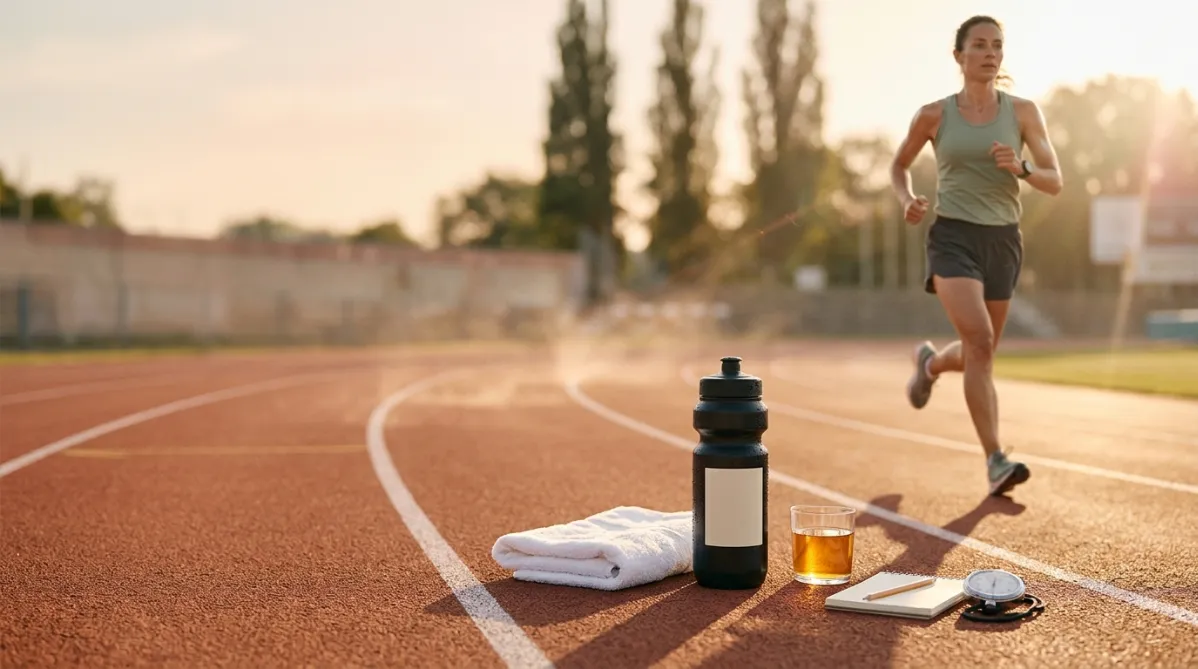
A sunlit outdoor running track in late afternoon, shot from a low angle with shallow depth of field. In the foreground, a matte black bottle with a minimal off-white label sits on the edge of a warm terracotta-colored track lane, beside a folded white towel and a small glass of amber liquid catching golden light. Condensation beads on the bottle. A faint heat shimmer rises from the track surface and softens the background.

In the midground, slightly out of focus, a lean athlete in a sage-green tank top and charcoal shorts runs on a treadmill-like stretch of track, a thin sheen of sweat on their shoulders, their expression focused and calm. Their motion is gently blurred, suggesting endurance and rhythm. Long soft shadows stretch across the lane lines.

The background fades into hazy peach, apricot, and pale yellow tones, with the suggestion of tall trees and a distant stadium wall. Warm sun flare enters from the upper right, creating a subtle glow and a few soft light streaks across the frame.

Subtle editorial touches: a small notebook with a pencil and a stopwatch rest beside the bottle, hinting at data and timing without any text legible. The color palette is warm and muted, with terracotta, cream, sage, and charcoal accents, and a fine film-like grain. The composition leaves open negative space on the left third for a headline overlay. The overall mood is clean, modern, and health-journal inspired, natural and aspirational, with a calm scientific curiosity rather than hype.
nutrition

Bevande chetone al caldo: più resistenza e memoria più acuta?

BY DR. GYMBRO ·

Le bevande a base di chetoni sono spesso associate a biohacker che vogliono bruciare grassi, ma uno studio sullo stress termico suggerisce che potrebbero anche migliorare la capacità di sostenere uno sforzo intenso. In 17 uomini allenati, il mono‑ester di chetone combinato con caffeina ha prolungato il tempo fino all’esaurimento di 8,9 minuti contro 7,0 con carboidrati più caffeina, dopo 90 minuti di corsa su tapis‑roulant a 34 °C. Inoltre, l’accuratezza al test 1‑back è aumentata, mentre frequenza cardiaca e temperatura corporea non hanno mostrato differenze significative. I risultati, però, sono limitati da un campione piccolo, maschile e da una singola sessione. Ecco cosa dicono i dati e cosa resta incerto.

A wide, editorial-style flat lay photographed from above on a pale warm-gray linen surface in soft natural window light. At the center, a small open amber glass jar tips gently onto its side, spilling a few cream-colored capsules across the fabric. Next to the jar sits a loose arrangement of fresh mushrooms: a cluster of golden-tan reishi with glossy, lacquered caps, a few slender white enoki stems, a halved shiitake showing its pale gills, and a curl of turkey tail with concentric bands of rust, cream, and charcoal. A small wooden scoop holds a pile of fine beige mushroom powder.

On the left third of the frame, a matte black sports watch with a minimal face lies beside a folded sage-green running shirt and a pair of lightweight off-white running shoes, hinting at athletic training without showing a person. A slim white notebook with a single pencil rests nearby, open to a blank page with a faint hand-drawn line graph trending upward, in thin graphite strokes.

On the right side, a pair of clear glass beakers and a single small petri dish with a soft amber-tinted liquid add a subtle laboratory note, kept calm and organic. A single sprig of dried herbs and a few scattered oat-colored grains add texture.

The palette is earthy and refined: oatmeal, soft sage, terracotta, warm amber, and charcoal accents against the muted neutral background. Shadows are soft and diffused, with a gentle highlight on the glass and the glossy reishi cap. The composition leaves generous negative space in the upper right for a headline overlay. Shallow depth of field blurs the edges slightly, while the central mushrooms and capsules stay crisp. The overall feel is modern, clean, and trendy, like a wellness and science magazine cover, with tactile natural textures, minimal styling, and a quiet sense of curiosity and skepticism.
science research

Una capsula di funghi ha aumentato il VO2max del 14,8 % — ma c'è un grosso limite

BY DR. GYMBRO ·

Una capsula di funghi, 40 giorni di assunzione e un incremento del VO2max del 14,8 % suonano quasi troppo belli per essere veri. In un nuovo studio pubblicato su *Antioxidants* 50 giovani atleti maschi hanno assunto 320 mg al giorno di un estratto multi‑funghi ricco di beta‑glucani, passando da 46,26 a 53,12 mL/kg/min. Il problema è che lo studio non prevedeva gruppo placebo, né randomizzazione, né cieco, e gli atleti hanno continuato ad allenarsi. Gli esperimenti cellulari su cardiomiociti di ratto suggeriscono un legame con l'ipossia, ma hanno testato composti singoli, non la capsula. Ecco cosa è stato davvero dimostrato, cosa resta incerto e a chi conviene prestare più attenzione.

A bright, minimalist flat-lay photograph of two supplement scoops on a pale warm-gray stone surface, shot from directly above in soft natural window light. On the left, a matte ceramic scoop holds fine white creatine monohydrate powder, heaped in a clean mound. On the right, a second scoop of the same shape holds slightly coarser off-white beta-alanine powder, with a small, deliberate gap between the two. Each scoop sits in its own soft shadow, which suggests separation rather than combination. Between them, a thin brushed-brass ruler or a single slim line of fine powder runs across the surface and subtly divides the composition.

Around the scoops, a few restrained props in a muted editorial palette of sage green, cream, terracotta, and soft charcoal: a small glass jar with a minimalist label that has no readable text, a folded linen napkin, a single sprig of eucalyptus, and a stainless-steel shaker bottle softly out of focus in the upper corner. A few loose powder grains are scattered naturally across the stone. A small stack of blank cream index cards with a pencil rests in the lower right, hinting at research and note-taking without any legible writing.

The composition follows a clean rule-of-thirds layout, with generous negative space on the right third for headline overlay. The lighting is gentle and diffused, with long, soft shadows falling to the lower left. The color grading is calm and slightly desaturated, with creamy highlights and a subtle film-like grain. The overall look is a modern wellness and science journal cover, with an airy, trustworthy, contemporary editorial feel, shallow depth of field, and crisp detail on the powders.
nutrition

Creatina + beta‑alanina: il beneficio dello stack che i ricercatori non hanno riscontrato

BY DR. GYMBRO ·

Lo stack creatina + beta‑alanina è pubblicizzato come la coppia perfetta per migliorare le prestazioni, ma una nuova meta‑analisi a rete su 52 studi randomizzati non ha riscontrato alcuna sinergia tra i due. La sola creatina ha migliorato in modo significativo sprint, salto, sprint ripetuti e la resistenza della parte superiore del corpo rispetto al placebo. Gli effetti della beta‑alanina si sono rivelati non significativi o contingenti al contesto, e la combinazione non ha apportato alcun beneficio aggiuntivo rispetto alla sola creatina. Scopri come è stato condotto lo studio, quali sono i suoi limiti e cosa implica per il tuo budget di integratori.

This page is available in